
VoiceDrop
VoiceDrop is an AI-powered platform for sending personalized, ringless voicemails at scale. It uses advanced voice cloning technology …
VoiceDrop is an AI-powered platform for sending personalized, ringless voicemails at scale. It uses advanced voice cloning technology to create natural-sounding messages, helping sales and marketing teams increase callback rates and engagement without manual calling. It integrates with CRMs and automates outreach campaigns for maximum efficiency.
Autocalls
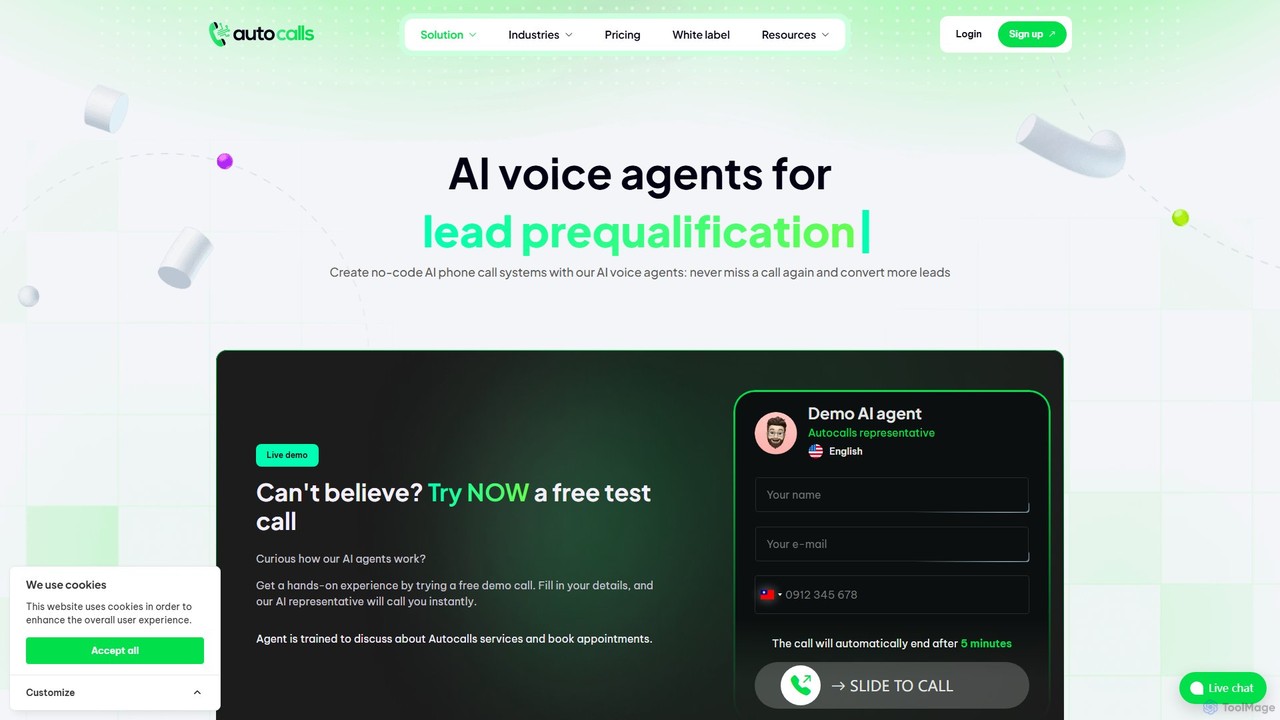
Autocalls is an AI-powered platform that automates inbound and outbound phone calls with realistic voice agents. It's designed …
Autocalls is an AI-powered platform that automates inbound and outbound phone calls with realistic voice agents. It's designed for businesses to scale customer engagement, schedule appointments, and handle inquiries 24/7 through a no-code platform with extensive integrations and voice cloning capabilities.
fallbackai
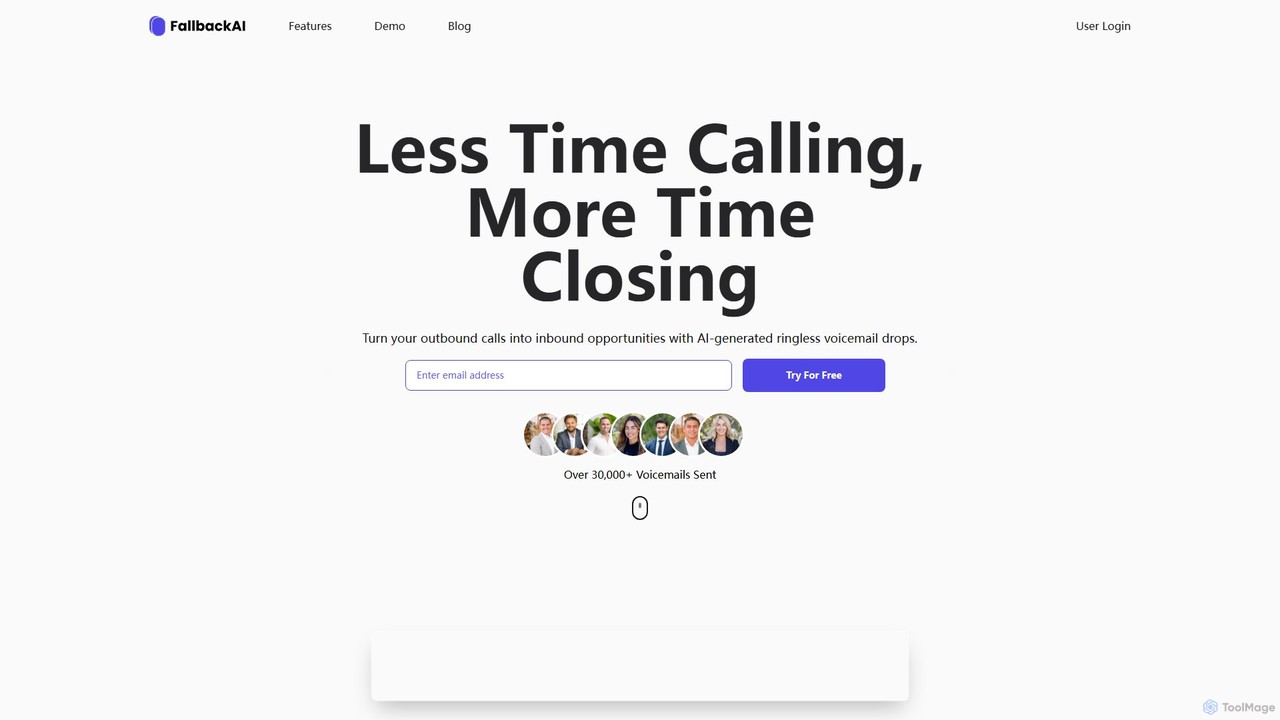
An AI-powered platform that transforms outbound sales efforts into inbound opportunities using personalized, ringless voicemail drops. It leverages …
An AI-powered platform that transforms outbound sales efforts into inbound opportunities using personalized, ringless voicemail drops. It leverages voice cloning and text-to-speech to automate outreach, increase callback rates, and help sales teams focus on closing deals with ready-to-buy prospects.
Terrakotta
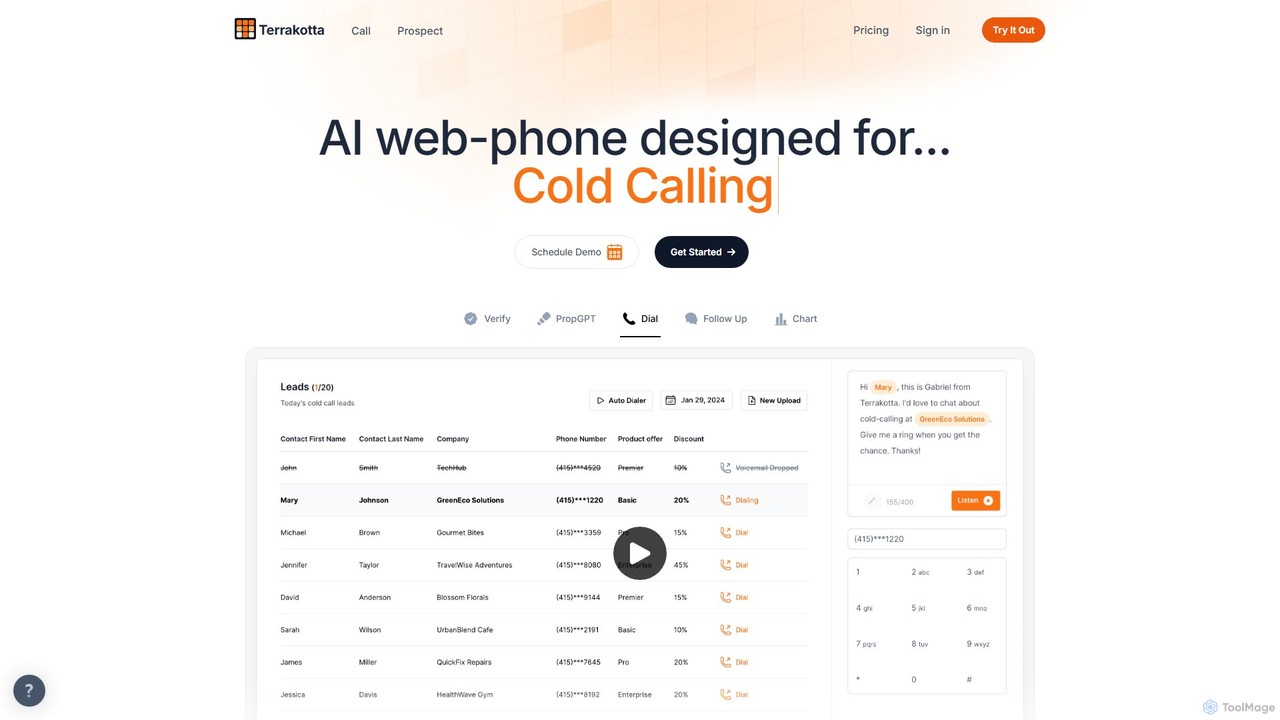
Terrakotta is an AI-powered web-phone designed for sales and real estate professionals. It automates cold calling with advanced …
Terrakotta is an AI-powered web-phone designed for sales and real estate professionals. It automates cold calling with advanced voice cloning, personalized AI voicemails, and an autodialer. Enhance your outreach with data enrichment, phone number verification, and seamless CRM integrations to significantly boost lead generation and efficiency.

Callin.io
Callin.io is a white-label AI call center platform that enables businesses and agencies to create and deploy conversational …
Callin.io is a white-label AI call center platform that enables businesses and agencies to create and deploy conversational AI voice agents for both inbound and outbound calls. It offers 24/7 automated customer support, lead generation, appointment setting, and more, with seamless CRM integration and multilingual capabilities.

Voicesend
Voicesend is an AI-powered platform for sending unlimited ringless voicemail drops. It enables businesses to deliver voice messages …
Voicesend is an AI-powered platform for sending unlimited ringless voicemail drops. It enables businesses to deliver voice messages directly to customers' voicemail boxes without their phones ringing, ideal for non-intrusive marketing, sales follow-ups, and notifications.
About Voice Marketing
Voice Marketing tools are a specialized category of marketing software designed to create, manage, and analyze customer engagement through audio and voice-activated channels. These platforms leverage technologies like natural language processing (NLP) and speech synthesis to build interactive experiences for smart speakers, voice assistants, and podcasts. They enable brands to connect with audiences in screen-free moments, enhancing accessibility and building deeper brand affinity. By focusing on audio-first content, these tools open up new avenues for storytelling and direct customer interaction within the broader marketing landscape.
Core Features
- Voice Search Optimization (VSO): Analyzes and optimizes content to rank for conversational, voice-based search queries.
- Interactive Voice Ad (IVA) Creation: Builds audio ads that users can respond to with voice commands for dynamic engagement.
- Voice App/Skill Development: Provides frameworks for creating custom branded applications for platforms like Amazon Alexa and Google Assistant.
- Sonic Branding Management: Creates and consistently deploys a brand's unique audio identity or sound logo across channels.
- Podcast Analytics & Hosting: Offers solutions for hosting, distributing, and measuring the performance of branded podcasts.
Use Cases
Voice Marketing tools are particularly valuable for consumer brands (retail, CPG), media companies, and service-based businesses like hospitality and finance. They are used to create hands-free shopping experiences, deliver branded content through podcasts, provide instant answers via voice assistants, and run interactive ad campaigns on audio streaming platforms.
How to Choose
When selecting a Voice Marketing tool, consider its platform compatibility (Alexa, Google Assistant), the ease of use of its voice app builder, its analytics capabilities for tracking voice interactions, and its integration options with your existing CRM or marketing automation systems. Also, evaluate the quality of its text-to-speech and speech recognition engines.
Voice MarketingUse Cases
Launch an Interactive Audio Ad Campaign
A marketing manager for a fast-food chain wants to promote a new menu item. Using a Voice Marketing platform, they create an interactive audio ad for music streaming services. When the ad plays, it prompts listeners to say 'I'm interested' to receive a coupon via text message. The tool manages the voice interaction, captures user consent, and integrates with an SMS service to send the offer, providing detailed analytics on engagement rates and conversions.
Develop a Branded Voice Assistant Skill
An e-commerce manager for a cosmetics brand aims to provide personalized beauty tips. They use a no-code voice app builder to create an Alexa skill called 'Beauty Advisor.' Customers can ask, 'Alexa, ask Beauty Advisor for a tip for dry skin.' The skill, powered by the Voice Marketing tool, delivers a relevant audio tip and can even suggest products, which users can add to their shopping cart by voice command.
Optimize Local Business for Voice Search
The owner of a local coffee shop wants to attract more foot traffic from people using voice search on their phones. They use a Voice Marketing tool's VSO feature to structure their business data (hours, address, menu) into a format easily understood by voice assistants. The tool ensures that when a user asks, 'Hey Google, find a coffee shop near me with oat milk,' their shop is accurately presented as a top result.
Create a Branded Podcast for Thought Leadership
A B2B software company seeks to establish itself as an industry expert. Using a Voice Marketing platform's podcasting suite, their content team records, edits, and hosts a weekly podcast featuring interviews with industry leaders. The platform distributes the podcast to all major directories like Spotify and Apple Podcasts and provides detailed analytics on listener demographics, download numbers, and episode completion rates.
Implement Voice-Enabled Customer Support
A logistics company wants to reduce call center volume for simple queries. They deploy a voice bot using a Voice Marketing tool that integrates with their tracking system. Customers can call a number or use a smart speaker to ask, 'Where is my package?' The system uses speech recognition to understand the tracking number and provides an automated, real-time status update, freeing up human agents for more complex issues.
Establish a Consistent Sonic Brand Identity
A global financial institution is rebranding and wants a unified audio identity across all touchpoints. They use a sonic branding management tool to create and catalog their official sound logo (audio mnemonic). The platform serves as a central repository, ensuring that all marketing agencies and internal teams use the correct, high-quality audio file in TV commercials, radio ads, podcast sponsorships, and in-app sounds.