Os & Utilities Best in category 1 results System Integration AI Tool

Popular AI tools in the System Integration field of Os & Utilities include WriteMage, etc., helping you quickly improve efficiency.

WriteMage

WriteMage

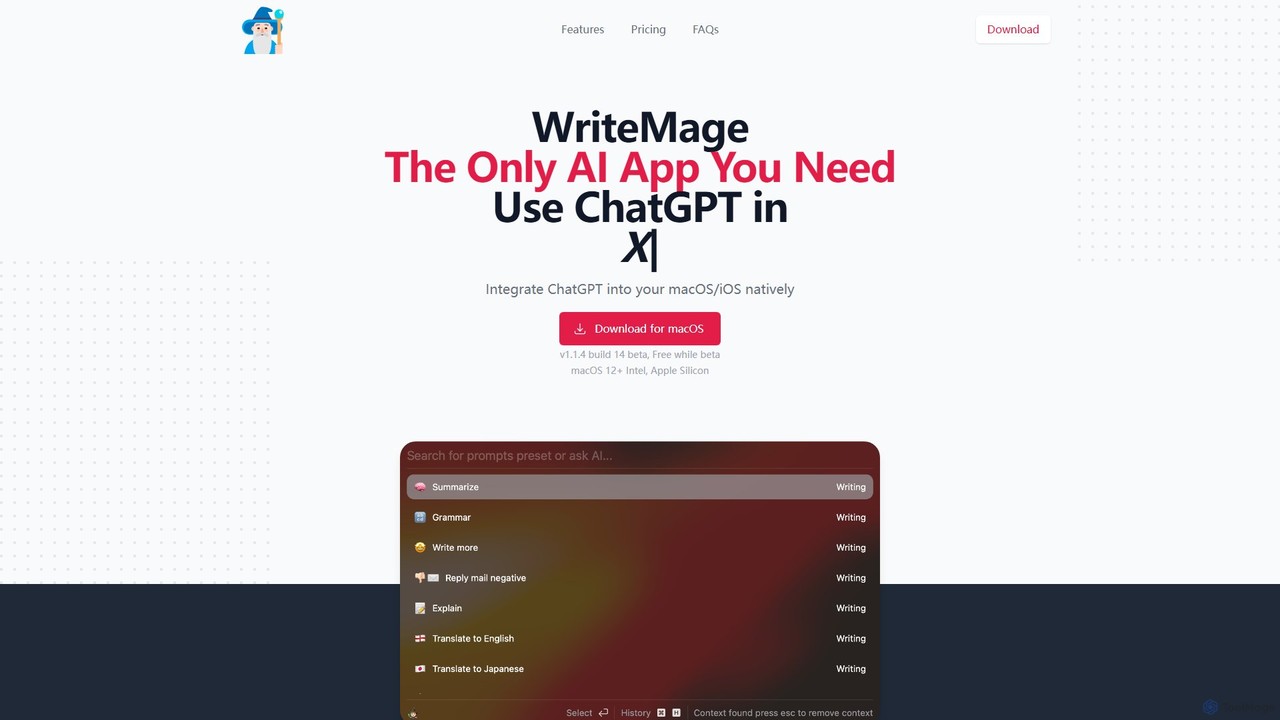
WriteMage is a native AI assistant for macOS and iOS, integrating ChatGPT seamlessly into any application. It functions …

2.8K

About System Integration

System Integration tools are a category of AI-powered solutions designed to connect disparate software applications, data sources, and workflows within an organization. These tools leverage artificial intelligence to automate complex data mapping, transformation, and synchronization processes, ensuring seamless communication between systems. They enable businesses to create unified operational environments, enhance data consistency, and streamline cross-functional processes, ultimately improving efficiency and decision-making across the digital ecosystem.

Core Features

  • Intelligent Data Mapping: AI-driven identification and mapping of data fields across different systems, reducing manual effort and errors.
  • Automated Workflow Orchestration: Designing and executing multi-step workflows that trigger actions across integrated applications based on predefined rules or AI insights.
  • Real-time Data Synchronization: Ensuring data consistency and up-to-dateness across all connected systems through continuous, automated updates.
  • Predictive Error Detection: AI algorithms analyze integration patterns to anticipate and flag potential issues before they cause system failures or data discrepancies.
  • API Management & Governance: Centralized management of APIs for secure, efficient, and scalable integration, often with AI-powered monitoring.

Applicable Scenarios

System Integration tools are crucial for enterprises undergoing digital transformation, needing to connect legacy systems with modern cloud applications. They are widely used in e-commerce for synchronizing inventory with sales, in finance for integrating accounting with CRM, and in healthcare for unifying patient data across various platforms. IT departments also use them to automate operational tasks and ensure data flow between monitoring, ticketing, and deployment tools.

How to Choose

When selecting a System Integration tool, evaluate its compatibility with your existing tech stack, including available connectors and API support. Consider the level of AI automation offered for tasks like data mapping and error handling, which can significantly reduce manual overhead. Assess its scalability to handle future data volumes and integration complexity, along with robust security features for data protection. Finally, prioritize tools with intuitive low-code/no-code interfaces to empower business users, alongside comprehensive monitoring and analytics capabilities.

System IntegrationUse Cases

1

Automate Customer Onboarding Across Platforms

A sales operations manager needs to streamline the customer onboarding process, which involves data entry into CRM, ERP, and marketing automation systems. AI System Integration tools automatically transfer new customer data from the CRM to the ERP for invoicing and to the marketing platform for welcome campaigns, eliminating manual re-entry and reducing onboarding time by 60%.

2

Synchronize E-commerce Inventory and Sales Data

An e-commerce business owner manages inventory across multiple online marketplaces and an internal ERP system. An AI System Integration solution automatically synchronizes sales orders from platforms like Shopify and Amazon with the ERP's inventory levels in real-time. This prevents overselling, ensures accurate stock counts, and automates order fulfillment triggers, leading to a 25% reduction in stock discrepancies and improved customer satisfaction.

3

Create a Unified Customer View for Service Agents

Customer service agents often struggle with fragmented customer information spread across CRM, support ticketing, and billing systems. AI System Integration tools consolidate all customer interaction history, purchase records, and support tickets into a single, unified view within the agent's primary interface. This empowers agents with complete context, reducing resolution times by 30% and significantly improving the customer experience.

4

Automate IT Operations and Incident Response

An IT operations team needs to respond quickly to system alerts and automate routine maintenance. AI System Integration tools connect monitoring systems (e.g., Nagios, Prometheus) with incident management platforms (e.g., Jira Service Management, ServiceNow) and automation tools (e.g., Ansible). When an alert is triggered, an incident ticket is automatically created, relevant diagnostic data is attached, and pre-defined remediation scripts are initiated, reducing mean time to resolution (MTTR) by 40%.

5

Integrate HR Systems for Payroll and Benefits

A human resources department needs to ensure accurate and timely data flow between various HR systems, including applicant tracking, employee records, payroll, and benefits administration. AI System Integration tools automate the transfer of new hire data from the ATS to the HRIS, then to the payroll and benefits providers. This eliminates manual data entry errors, ensures compliance, and reduces the time spent on administrative tasks by 35%, allowing HR staff to focus on strategic initiatives.

6

Connect IoT Devices with Cloud Analytics Platforms

A manufacturing company wants to monitor machine performance and predict maintenance needs using data from IoT sensors. AI System Integration tools facilitate the seamless ingestion of high-volume, real-time data from various IoT devices on the factory floor into cloud-based analytics platforms (e.g., AWS IoT Analytics, Azure IoT Hub). This enables predictive maintenance, optimizes operational efficiency, and reduces unplanned downtime by 20% through intelligent data routing and transformation.

System IntegrationFrequently Asked Questions