
ToolMage
Sign in

Best 1 Brain Training AI tools for Personal Development

Popular Brain Training AI tools in Personal Development include Uansa, helping you work more efficiently.

Uansa
Freemium

Uansa

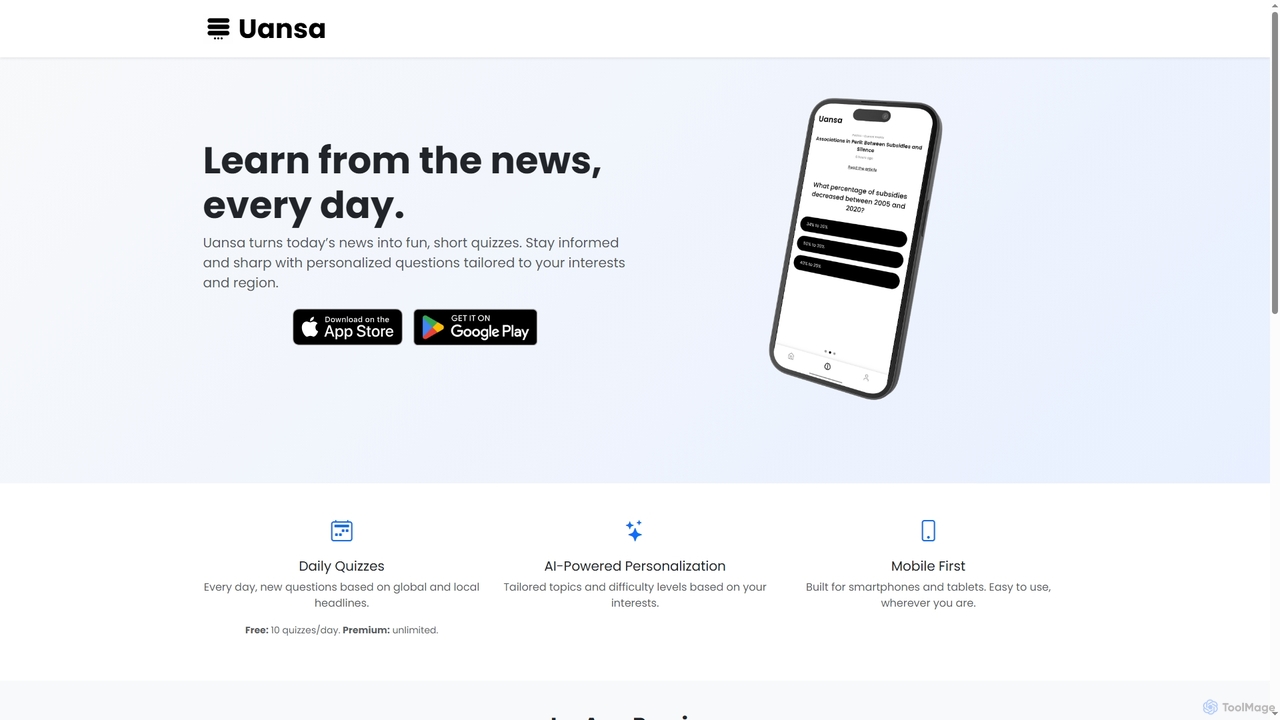
Uansa is an AI-powered mobile application offering daily smart news quizzes based on global and local headlines. It provides personalized learning experiences by tailoring topics and difficulty levels to user interests, helping individuals stay informed and sharpen their knowledge on the go.

Learning
Visits 3.7KFavorites 102Likes 94

About Brain Training

AI Brain Training tools are applications that use artificial intelligence to create personalized cognitive exercises. They leverage algorithms to adapt difficulty levels in real-time based on user performance, targeting specific skills like memory, attention, and problem-solving. These tools provide an engaging, data-driven method for individuals to enhance mental acuity and support long-term cognitive health. Their key advantage over traditional methods is the dynamic personalization that ensures users are always optimally challenged.

Core Features

  • Adaptive Difficulty Adjustment: The AI analyzes performance to automatically increase or decrease the challenge level of exercises.
  • Personalized Training Plans: Generates daily or weekly exercise routines based on individual cognitive goals and weaknesses.
  • Cognitive Skill Tracking: Provides detailed analytics and visual reports on progress across different mental faculties.
  • Gamified Exercises: Presents cognitive tasks in an engaging, game-like format to improve user motivation and consistency.

Use Cases

These tools are widely used by students preparing for exams, professionals aiming to enhance focus, and older adults seeking to maintain mental sharpness. They are also applied in some clinical settings for cognitive rehabilitation, helping users systematically improve specific brain functions under guided programs.

How to Choose

When selecting an AI Brain Training tool, consider the scientific backing and whether its exercises are based on neuroscience research. Evaluate the range of cognitive skills it covers and the effectiveness of its personalization engine. Finally, consider the user interface and engagement factor, as consistent use is key to achieving results.

Featured tool rankings

Brain Training use cases

1

Enhancing Student Focus and Memory for Exams

A university student uses an AI brain training app to prepare for final exams. The AI assesses their cognitive profile and creates a personalized plan focusing on memory retention and logical reasoning exercises. The student spends 15 minutes daily on gamified tasks. The app's adaptive difficulty keeps them challenged but not overwhelmed, helping improve recall speed and problem-solving skills under pressure, leading to better academic performance.

2

Maintaining Cognitive Health in Seniors

An older adult uses a tablet-based AI brain training tool to stay mentally active. The app offers simple, engaging games that target processing speed, attention, and memory. The AI adjusts the difficulty to prevent frustration while still providing a cognitive workout. Progress reports can be shared with family or caregivers, providing a clear overview of cognitive vitality and helping to track long-term brain health in an accessible way.

3

Boosting Professional Productivity and Focus

A software developer uses an AI brain training tool to improve concentration and problem-solving skills. They engage in short, 5-minute 'focus sessions' before starting complex coding tasks. The AI provides exercises that enhance executive functions, such as working memory and cognitive flexibility. This practice helps reduce distractions and improve logical flow, leading to fewer errors in code and more efficient debugging sessions.

4

Cognitive Rehabilitation after Injury

A patient recovering from a mild traumatic brain injury uses a prescribed AI brain training platform. Under a therapist's guidance, the AI targets specific impaired functions like attention and working memory. The platform provides objective data on performance and progress, allowing the therapist to precisely adjust the rehabilitation plan. The gamified nature of the exercises increases patient engagement in what can be a challenging recovery process.

5

Improving Reaction Time for Competitive Gamers

A competitive esports player uses an AI brain training app to sharpen reaction time and strategic thinking. The app features exercises that simulate high-pressure gaming scenarios, requiring rapid decision-making and visual processing. The AI analyzes performance data to identify cognitive bottlenecks, such as a delay in task-switching, and provides targeted drills to improve that specific skill, giving the player a measurable competitive edge.

6

Managing ADHD Symptoms with Cognitive Exercises

An adult with ADHD uses an AI brain training tool to improve executive functions like planning and impulse control. The app provides structured, gamified tasks that help train sustained attention in short, manageable bursts. The AI's immediate feedback and reward system helps maintain engagement, which can be a challenge with traditional methods. Consistent use helps build better cognitive habits and provides a non-pharmacological approach to symptom management.

Brain Training FAQ

What are AI Brain Training tools?

AI Brain Training tools are digital applications that use artificial intelligence to deliver personalized cognitive exercises. Unlike static brain games, they analyze your performance in real-time to create a dynamic training program that targets specific cognitive skills such as memory, attention, processing speed, and problem-solving. The core purpose is to provide an adaptive and engaging way to enhance mental fitness and support overall brain health.

How to choose the right AI Brain Training tool?

Consider these key factors when choosing a tool:

  • Scientific Validity: Look for apps developed with input from neuroscientists or based on peer-reviewed cognitive research.
  • Targeted Skills: Ensure the tool offers exercises for the specific cognitive areas you want to improve (e.g., memory, focus, logic).
  • Adaptivity: A good tool should have a sophisticated AI that effectively adjusts difficulty based on your performance to keep you challenged.
  • Engagement and Usability: Choose an app with an intuitive interface and motivating exercises, as consistency is crucial for results.
What's the difference between AI Brain Training and regular puzzle apps?

The key difference is personalization and adaptation. Regular puzzle apps, like Sudoku or crosswords, offer a static challenge that doesn't change based on your skill level. AI Brain Training tools, on the other hand, use algorithms to continuously monitor your performance. They dynamically adjust the difficulty of exercises to ensure you are always working at an optimal level for cognitive growth, making the training process more efficient and tailored to your unique brain.

Who can benefit from using AI Brain Training tools?

A wide range of users can benefit from these tools. This includes:

  • Students: To improve focus, memory, and academic performance.
  • Professionals: To enhance productivity, problem-solving, and multitasking skills.
  • Older Adults: To maintain cognitive vitality and support healthy brain aging.
  • Gamers: To sharpen reaction time and strategic thinking.
  • Anyone seeking self-improvement: To proactively manage and improve their overall mental fitness and cognitive resilience.
Are the results from AI Brain Training scientifically proven?

The effectiveness of brain training is a subject of ongoing scientific debate, and results can vary between tools. Reputable AI Brain Training platforms often base their exercises on established principles from cognitive psychology and neuroscience. Many collaborate with universities and research institutions to conduct studies and validate their methods. When choosing a tool, it is advisable to look for those that are transparent about their scientific backing, cite peer-reviewed research, and avoid making exaggerated claims about curing diseases.