
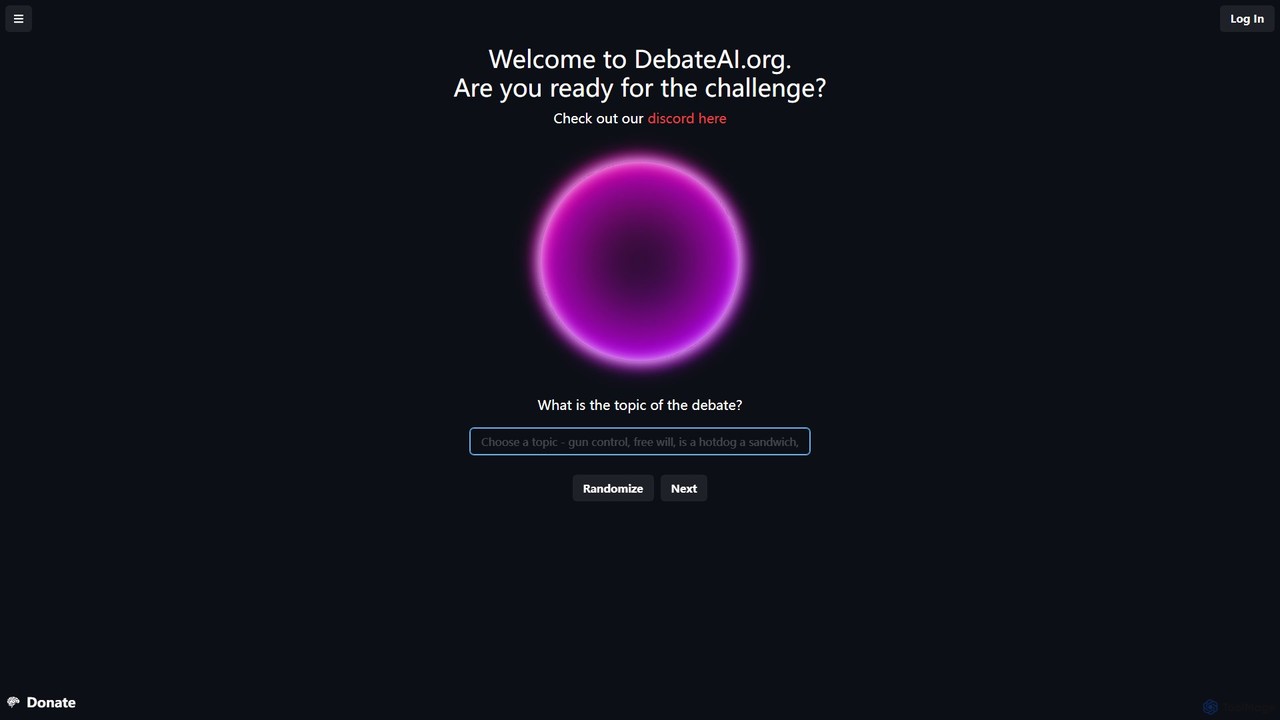
Debate AI
Debate AI is an AI-powered platform designed to be your ultimate sparring partner and coach for mastering the …
Debate AI is an AI-powered platform designed to be your ultimate sparring partner and coach for mastering the art of argumentation. It helps users enhance critical thinking, sharpen rebuttals, and build confidence by engaging in real-time debates with an advanced AI and receiving detailed performance feedback.
About Critical Thinking
Critical Thinking tools are a specialized category of AI designed to help users analyze information, evaluate arguments, and identify logical inconsistencies. These tools leverage Natural Language Processing (NLP) to deconstruct text, map out logical structures, and detect potential biases or fallacies. They are invaluable for enhancing research quality, making informed business decisions, and navigating the complexities of online information. By providing a structured framework for analysis, these tools empower users to move beyond surface-level reading and engage with content more deeply and skeptically.
Core Features
- Argument Analysis: Deconstructs texts into core components like premises, evidence, and conclusions to visualize the logical flow.
- Bias and Fallacy Detection: Scans content to identify cognitive biases, emotional language, and common logical fallacies.
- Source Credibility Assessment: Evaluates the reliability of sources by analyzing factors like author authority, publication bias, and citation patterns.
- Evidence Evaluation: Assesses the strength and relevance of evidence used to support claims within a document.
- Structured Thinking Frameworks: Offers templates and guided processes for methods like SWOT analysis, root cause analysis, or pros-and-cons lists.
Use Cases
These tools are widely used in academia by students and researchers for literature reviews and thesis validation. In the business world, analysts and strategists use them to vet market reports and business proposals. Journalists and fact-checkers also rely on them to quickly assess the veracity of news sources and identify potential misinformation.
How to Choose
When selecting a Critical Thinking tool, consider the depth of its analytical capabilities—does it simply find keywords or truly understand logical structures? Evaluate its integration options, such as browser extensions or document uploads. Also, consider the clarity of its user interface for presenting complex analyses and whether it offers specific thinking frameworks relevant to your needs.
Critical ThinkingUse Cases
Academic Research and Paper Analysis
A graduate student uses an AI Critical Thinking tool to analyze dozens of complex academic papers for their literature review. The tool automatically maps out the core arguments of each paper, highlights unsupported claims, and identifies potential biases in the authors' methodologies. This allows the student to quickly compare different perspectives, spot gaps in existing research, and strengthen the foundation of their own thesis, saving weeks of manual analysis and improving the overall quality of their work.
Vetting News and Online Information
A journalist investigating a controversial topic uses a critical thinking tool to analyze multiple online news sources. By inputting the article URLs, the tool scans for emotionally charged language, identifies logical fallacies in the arguments, and cross-references claims with a database of fact-checking websites. The output provides a 'credibility score' for each source and a visual breakdown of its rhetorical strategies, enabling the journalist to quickly filter out unreliable information and focus on well-supported facts for their report.
Business Proposal and Report Evaluation
A management team evaluating a high-stakes investment proposal uploads the document to an AI critical thinking platform. The AI analyzes the financial projections for hidden assumptions, scrutinizes the market analysis for potential confirmation bias, and maps out the logical structure of the proposal's core value proposition. The system generates a summary report highlighting key risks, logical weaknesses, and questions for the proposing team. This provides the managers with a structured, unbiased foundation for their due diligence process, leading to a more informed and defensible decision.
Enhancing Legal Argumentation
A legal team preparing for a trial uses an AI tool to deconstruct the opposing counsel's briefs. The software breaks down complex legal arguments into a visual map of premises, evidence, and conclusions. It flags logical fallacies, identifies inconsistencies between different documents, and highlights claims that lack sufficient evidentiary support. This automated analysis allows the legal team to quickly pinpoint the weakest points in their opponent's case and strategically craft more effective counter-arguments, improving their preparation efficiency and case strategy.
Refining Content and Persuasive Writing
A content marketer drafts a long-form blog post arguing for the superiority of their product. Before publishing, they run the text through a critical thinking AI. The tool identifies several instances of hasty generalizations and highlights paragraphs where the emotional appeal outweighs the logical evidence. Based on the feedback, the marketer adds more specific data points to support their claims and rephrases sentences to be more objective. The result is a more credible and persuasive article that builds greater trust with the audience.
Structured Decision-Making Support
An individual facing a major career decision—such as choosing between a stable corporate job and a risky startup venture—uses a critical thinking tool with a decision matrix framework. They input various factors like salary, work-life balance, growth potential, and personal fulfillment, assigning weights to each. The AI then guides them to list the pros and cons for each option against these factors, flagging potential cognitive biases like 'sunk cost fallacy' or 'optimism bias' in their reasoning. This structured process helps clarify their priorities and leads to a more rational, well-considered choice.