TargetHub
TargetHub is an AI-powered goal and task management platform that helps you achieve your objectives. It uses AI …
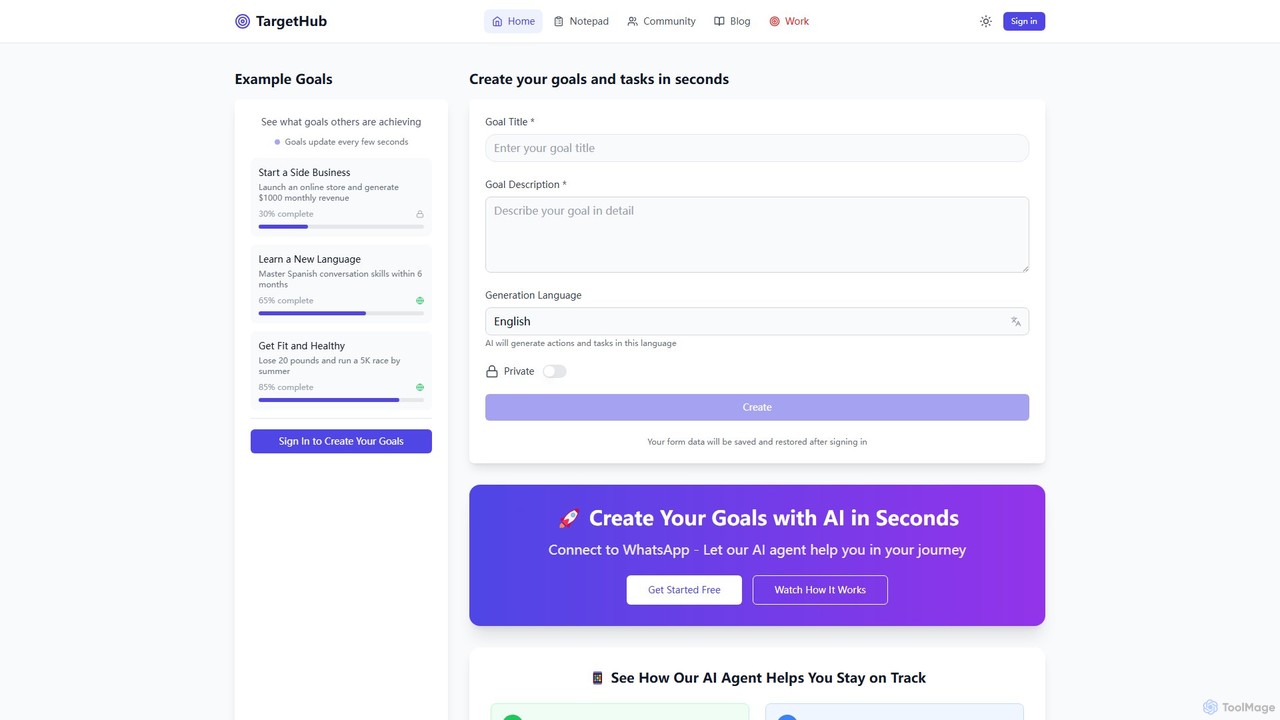
TargetHub is an AI-powered goal and task management platform that helps you achieve your objectives. It uses AI to instantly generate actionable steps and tasks for any goal. With its unique WhatsApp integration, you receive personalized reminders, motivation, and progress tracking directly from an AI assistant, keeping you on track and focused.
About Habit Tracker
AI Habit Trackers are applications that use artificial intelligence to help users build, monitor, and maintain positive routines. Unlike simple digital checklists, these tools leverage data analysis and machine learning to provide personalized insights, predictive feedback, and adaptive goal setting. They empower individuals to understand their behavioral patterns, identify correlations between different activities, and make lasting lifestyle changes more effectively. The core value lies in transforming raw data into actionable guidance, acting as a personal digital coach.
Core Features
- Personalized Habit Suggestions: Recommends new habits based on user goals, existing routines, and success patterns.
- Predictive Analytics: Analyzes past performance to forecast potential lapses and offers proactive encouragement or adjustments.
- Behavioral Pattern Recognition: Identifies hidden correlations, such as how sleep quality affects productivity or exercise impacts mood.
- Adaptive Reminders & Scheduling: Optimizes notification timing based on user responsiveness and daily schedule to increase adherence.
- Intelligent Progress Reporting: Provides deeper insights beyond simple streaks, showing trends and the impact of habits over time.
Use Cases
These tools are ideal for individuals focused on personal development, wellness, and productivity. This includes students building effective study routines, professionals managing work-life balance, athletes optimizing training schedules, and anyone looking to cultivate healthier habits like regular exercise, meditation, or learning a new skill. They are particularly useful for those who have struggled with consistency and need a more dynamic support system.
How to Choose
When selecting an AI Habit Tracker, consider the depth of its analytical capabilities—does it offer genuine insights or just basic statistics? Evaluate its integration options with other apps like calendars or health trackers. Assess the user interface for ease of use and its motivational approach (e.g., gamification vs. data-driven). Finally, carefully review the privacy policy to understand how your personal data is handled.

Habit TrackerUse Cases
Build a Consistent Fitness Routine
A user aiming to exercise three times a week inputs their goal into an AI Habit Tracker. The AI analyzes their calendar and suggests optimal workout times that don't conflict with other commitments. Based on performance, it adaptively adjusts reminders, sending a motivational push if it detects a pattern of missed sessions on a specific day. Over time, it generates reports showing the correlation between workout consistency and improved sleep quality, reinforcing the positive feedback loop and increasing long-term adherence.
Improve Study Habits for Students
A student uses an AI tracker to manage study sessions for different subjects. The tool learns their peak productivity hours and suggests scheduling difficult subjects during those times. It can also integrate a Pomodoro timer, reminding them to take breaks. The AI provides weekly reports visualizing study distribution and progress, helping the student identify which subjects need more attention and whether their study methods are effective, leading to better time management and academic performance.
Cultivate Mindfulness and Mental Wellness
A user wants to meditate daily to reduce stress. An AI Habit Tracker can suggest different types of meditation based on the user's stated mood or time of day. After each session, the user can log their stress level. The AI then analyzes this data to identify patterns, such as which meditation techniques are most effective for that individual, and provides insights like, 'Your stress levels are consistently lower on days you meditate before 9 AM.' This personalization helps create a more effective and sustainable wellness practice.
Enhance Professional Productivity
A freelancer uses an AI tracker to enforce 'deep work' blocks and reduce context switching. They set a habit to 'Avoid social media from 9 AM to 12 PM.' The AI can integrate with device usage apps to monitor adherence. If it detects frequent switching to distracting apps, it sends a gentle nudge. Weekly reports visualize the impact of these deep work sessions on project completion rates, providing tangible evidence of the habit's effectiveness and motivating the user to maintain the discipline.
Break a Bad Habit like Procrastination
A user wants to stop procrastinating on a major project. They set a habit to work on it for 30 minutes each day. The AI tracker can identify patterns leading to procrastination, such as checking emails first thing in the morning. It might then suggest an alternative habit: 'Start your day with the project for 15 minutes.' It celebrates small wins and visualizes cumulative progress, which is crucial for motivation when breaking ingrained negative patterns. The predictive feature can warn the user on days they are statistically more likely to procrastinate, offering extra support.
Track and Improve Financial Habits
A user sets a goal to save more money by tracking daily spending habits, such as 'No impulse buys' or 'Pack lunch for work.' The AI tracker can connect to financial apps to automatically log transactions. It then analyzes spending patterns and provides insights, for example, 'You spend 30% more on food on Fridays.' Based on this, it might suggest a new micro-habit, like 'Plan Friday's dinner on Thursday,' to proactively manage spending triggers and help the user achieve their financial goals more effectively.