ToolMage
Sign in

Best 2 Memory AI tools for Personal

Popular Memory AI tools in Personal include Limitless and ImmverseAI, helping you work more efficiently.

ImmverseAI
Freemium

ImmverseAI

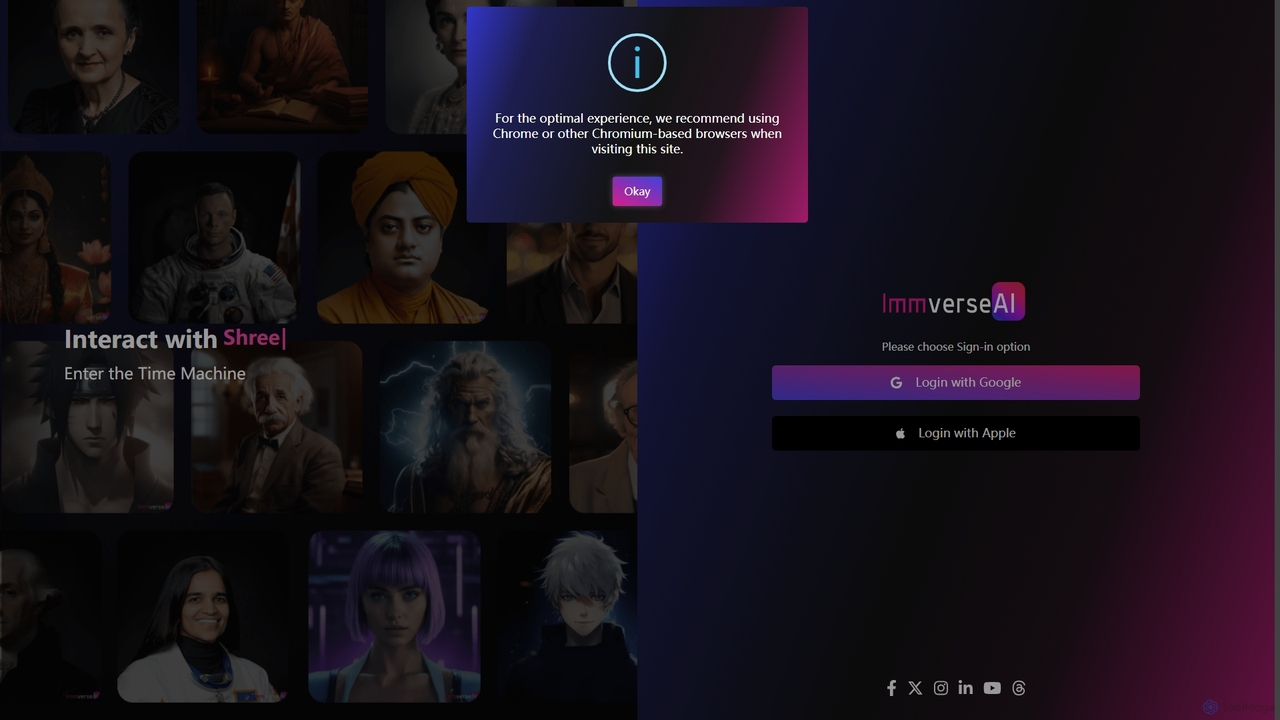
ImmverseAI is a groundbreaking platform that allows you to interact with AI-powered digital personas. Through its 'Time Machine' feature, you can converse with historical figures, fictional characters, or even create digital legacies of loved ones, preserving their memories and stories for generations to come.

Learning
Visits 7.1KFavorites 146Likes 152
Limitless
Freemium

Limitless

Limitless is a personal AI system featuring a wearable Pendant that captures what you've seen, said, and heard. It acts as an external memory, transcribing conversations, generating summaries, and allowing you to query your past experiences with HIPAA-grade privacy.

Wearables
Visits 150KFavorites 136Likes 124

About Memory

Memory AI tools are intelligent applications designed to augment human cognitive functions by capturing, organizing, and retrieving personal information. Leveraging advanced AI, these tools act as a personalized digital extension of your brain, helping you manage vast amounts of data, ideas, and experiences. As a specialized sub-category within Personal AI tools, they focus on enhancing individual knowledge retention, learning, and productivity by making information instantly accessible and contextually relevant.

Core Features

  • Smart Information Capture: Automatically captures notes, voice memos, web clips, and documents, often with AI-driven transcription and summarization.
  • Semantic Search & Retrieval: Allows natural language queries to find information based on meaning and context, not just keywords.
  • Contextual Organization & Linking: AI automatically tags, categorizes, and links related pieces of information, building a personal knowledge graph.
  • Proactive Reminders & Insights: Delivers relevant information or prompts based on current tasks, calendar events, or past interactions.
  • Knowledge Synthesis: Helps connect disparate ideas and identify patterns, fostering deeper understanding and creative breakthroughs.

Use Cases

These tools are invaluable for individuals seeking to overcome information overload and enhance their cognitive abilities. They are widely adopted by students for academic research, professionals for managing project knowledge, and content creators for organizing ideas and inspirations. Memory AI tools ensure that valuable insights and data are never lost and are always available when needed, transforming how individuals interact with their personal knowledge base.

How to Choose

When selecting a Memory AI tool, consider its versatility in information capture (text, voice, visual), the sophistication of its AI-driven organization and semantic search capabilities, and its integration with your existing workflow tools. Evaluate data privacy and security policies, as well as the ease of use and the clarity of its interface. Prioritize tools that offer robust retrieval accuracy and provide actionable insights, aligning with your specific personal or professional knowledge management needs.

Memory use cases

1

Academic Research & Study

Students and researchers utilize Memory AI tools to efficiently capture lecture notes, research papers, web articles, and experimental data. The AI automatically links related concepts, summarizes lengthy texts, and helps organize complex information into a coherent knowledge base, significantly streamlining exam preparation and thesis writing by making recall effortless.

2

Professional Knowledge Management

Consultants, project managers, and business professionals leverage these tools to organize project documents, meeting minutes, client communications, and strategic insights. The AI enables rapid retrieval of specific information, past decisions, or relevant precedents, ensuring that critical knowledge is always at hand for new projects, client pitches, or problem-solving sessions.

3

Creative Idea Generation & Development

Writers, designers, and artists use Memory AI tools to capture fleeting ideas, inspirations, observations, and multimedia snippets (text, voice, images). The AI helps discover unexpected connections between disparate thoughts, prompts new creative directions, and organizes a rich repository of creative assets, fostering innovation and overcoming creative blocks.

4

Personal Life Logging & Reflection

Individuals employ Memory AI tools to document daily experiences, personal thoughts, goals, and significant life events. The AI can identify patterns in behavior, track progress towards personal objectives, and facilitate deeper self-reflection by presenting relevant past entries or insights, aiding in personal growth and mindfulness.

5

Skill Learning & Development

Professionals and lifelong learners use these tools to save tutorials, articles, online courses, and practice notes for new skills. The AI helps organize learning paths, identifies knowledge gaps, and can even generate quizzes or flashcards to test recall, accelerating the learning process and ensuring long-term retention of new competencies.

6

Meeting & Conversation Recall

Business professionals and team leaders use Memory AI tools to record (with consent) and transcribe important meeting discussions, client calls, or brainstorming sessions. The AI automatically summarizes key decisions, identifies action items, and extracts important details, ensuring accurate follow-up and providing a searchable archive of all critical conversations.

Memory FAQ

What are Memory AI tools?

Memory AI tools are advanced software applications that use artificial intelligence to help individuals capture, organize, and retrieve personal information more effectively. They function as an extended digital brain, designed to enhance human memory by intelligently managing notes, ideas, documents, and experiences, making them easily accessible and contextually relevant when needed.

How do Memory AI tools differ from traditional note-taking apps?

Unlike traditional note-taking apps that primarily offer static storage, Memory AI tools leverage AI for dynamic knowledge management. They provide semantic search, automatic categorization, intelligent linking of related concepts, and proactive insights. This allows for more intuitive retrieval and deeper understanding, transforming raw data into an interconnected personal knowledge base.

What specific problems do Memory AI tools solve for users?

Memory AI tools address common challenges like information overload, difficulty recalling specific details, and the struggle to connect disparate ideas. They help users reduce time spent searching for information, prevent valuable insights from being lost, and foster a more organized and accessible personal knowledge repository, ultimately boosting productivity and learning efficiency.

Who can benefit most from using Memory AI tools?

A wide range of individuals can benefit, including students and researchers who manage vast amounts of academic information, professionals needing to organize project knowledge and client interactions, and content creators seeking to capture and develop creative ideas. Lifelong learners and anyone looking to enhance their personal productivity and knowledge retention will find these tools invaluable.

What should I consider regarding data privacy when using Memory AI tools?

Given that Memory AI tools handle personal and often sensitive information, data privacy and security are paramount. Users should carefully review the tool's privacy policy, understand how data is encrypted, stored, and used, and check for compliance with relevant data protection regulations (e.g., GDPR). Opt for tools that offer robust security features and clear data ownership policies.