ToolMage
Sign in

Best 1 Trip Planning AI tools for Personal

Popular Trip Planning AI tools in Personal include besthotel.ai, helping you work more efficiently.

besthotel.ai
Free

besthotel.ai

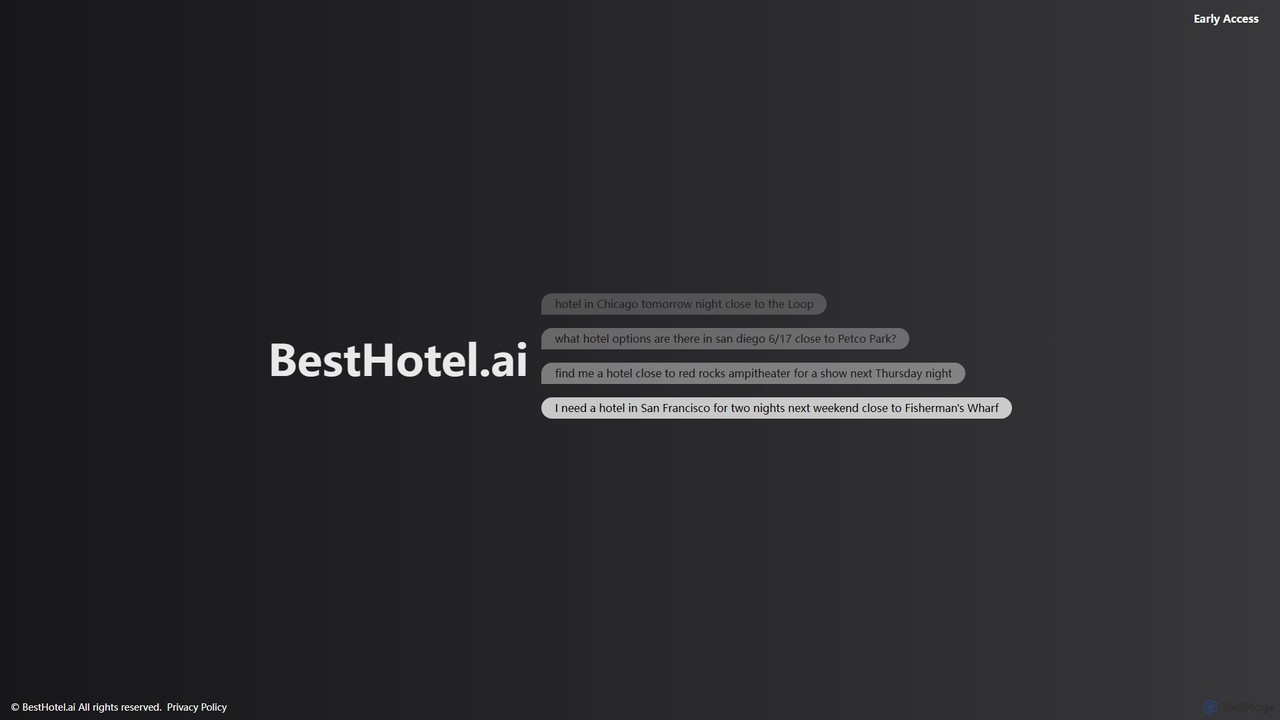
besthotel.ai is an AI-powered travel assistant that simplifies hotel booking. Using natural language, users can describe their travel needs—like location, dates, and proximity to landmarks—to receive personalized hotel recommendations. It streamlines the search process, eliminating complex forms and filters for a fast, conversational booking experience.

Trip Planning
Visits 5.1KFavorites 126Likes 139

About Trip Planning

Trip Planning AI tools are intelligent platforms that leverage artificial intelligence to streamline and personalize the entire travel planning process. These tools analyze user preferences, budget constraints, and real-time data to generate optimized itineraries, suggest destinations, and manage bookings. They aim to simplify complex travel logistics, saving users significant time and effort while enhancing the overall travel experience.

Core Features

  • Personalized Itinerary Generation: Automatically creates detailed travel plans based on user interests, budget, and desired pace.
  • Destination & Activity Recommendations: Suggests suitable locations, attractions, restaurants, and events tailored to individual profiles.
  • Budget Optimization & Tracking: Helps users manage travel expenses, find cost-effective options, and track spending in real-time.
  • Booking & Reservation Assistance: Integrates with booking platforms to facilitate flights, accommodation, and activity reservations.
  • Real-time Updates & Alerts: Provides timely information on flight changes, weather conditions, local events, and potential disruptions.

Use Cases

Individuals planning a complex multi-city vacation can use AI tools to generate a balanced itinerary, considering travel times, attractions, and dining options, all within a set budget. Business travelers can quickly create efficient schedules for trips involving multiple meetings in different locations, optimizing routes and minimizing downtime. Families looking for a child-friendly holiday can leverage these tools to find suitable destinations, activities, and accommodations that cater to all age groups and preferences.

How to Choose

When selecting a Trip Planning AI tool, consider its personalization capabilities – how well it understands and adapts to your unique preferences. Evaluate its integration with booking platforms for seamless reservations and its real-time data accuracy for up-to-date information. Also, assess the scope of its features, such as budget tracking, recommendation quality, and support for different travel types (e.g., solo, family, business).

Trip Planning use cases

1

Crafting a Personalized Multi-City Itinerary

A solo traveler wants to visit three European cities in two weeks with a specific budget and interest in history and local cuisine. An AI trip planning tool can analyze these inputs, suggest optimal routes, recommend historical sites and authentic restaurants in each city, and create a day-by-day schedule, including estimated travel times and costs, ensuring a cohesive and enjoyable journey.

2

Optimizing Business Travel Logistics

A sales professional needs to visit clients in five different cities across a continent within a tight schedule. An AI trip planning tool can take meeting locations and times, then generate the most efficient flight and ground transport routes, suggest suitable hotels near meeting points, and even factor in time zones and potential delays, significantly reducing planning time and stress.

3

Family Vacation Planning with Diverse Interests

A family with young children and teenagers wants a vacation that caters to everyone. The AI tool can process preferences like "theme parks for kids," "adventure sports for teens," and "relaxing evenings for adults." It then suggests destinations, activities, and accommodations that balance these diverse needs, creating an itinerary that keeps everyone engaged and happy, avoiding conflicts.

4

Budget-Conscious Adventure Trip Planning

A group of friends plans a backpacking trip through Southeast Asia on a limited budget. An AI trip planning tool can help them find affordable flights, budget-friendly accommodations (hostels, guesthouses), and free or low-cost activities. It can also track their spending against the budget in real-time, suggesting adjustments or alternative options to stay within financial limits.

5

Discovering Off-the-Beaten-Path Destinations

An experienced traveler seeks unique, less-touristy destinations for their next trip. By inputting preferences like "cultural immersion," "nature exploration," and "avoid crowds," an AI tool can analyze vast amounts of travel data, including lesser-known spots, local events, and unique accommodations, to recommend truly distinctive travel experiences that align with their adventurous spirit.

6

Event-Driven Travel Coordination

A group of friends wants to attend a specific music festival or sporting event in another country. An AI trip planning tool can not only secure tickets but also coordinate flights and accommodations for the entire group, considering individual departure points and budget preferences. It can also suggest pre- and post-event activities and local transport options, simplifying group logistics.

Trip Planning FAQ

What are Trip Planning AI tools?

Trip Planning AI tools are software applications that use artificial intelligence to automate and enhance the process of organizing travel. They leverage algorithms to analyze user data, preferences, and real-time information to generate personalized itineraries, recommend destinations, manage bookings, and optimize travel logistics. These tools aim to make travel planning more efficient, less stressful, and highly customized.

How do Trip Planning AI tools personalize recommendations?

Trip Planning AI tools personalize recommendations by analyzing various data points, including your past travel history, stated preferences (e.g., budget, interests, travel companions), browsing behavior, and real-time information like weather, local events, and flight prices. They use machine learning algorithms to identify patterns and suggest destinations, activities, and accommodations that align with your unique profile and current needs.

What are the main benefits of using AI for trip planning?

The main benefits of using AI for trip planning include significant time savings by automating research and booking, enhanced personalization through tailored recommendations, and budget optimization by finding cost-effective options. AI tools also provide real-time updates and alerts, help manage complex logistics for multi-stop trips, and can inspire discovery of new, relevant destinations or activities.

How do Trip Planning AI tools differ from traditional travel agencies?

Trip Planning AI tools differ from traditional travel agencies primarily in their automation and data-driven personalization. While agencies rely on human expertise and manual research, AI tools use algorithms to process vast amounts of data quickly, offering instant, highly customized itineraries and recommendations. AI tools often provide more flexibility for self-service adjustments and real-time updates, whereas agencies offer human interaction and bespoke service, often at a higher cost.

Can Trip Planning AI tools help with budget management?

Yes, Trip Planning AI tools are highly effective for budget management. They can help users set a total travel budget and then allocate funds across different categories like flights, accommodation, food, and activities. Many tools can find the most cost-effective options for each segment, track actual spending in real-time, and provide alerts if you're nearing your budget limit, suggesting alternatives to help you stay within your financial plan.