ToolMage
Sign in

Best 1 Wellness AI tools for Personal

Popular Wellness AI tools in Personal include Rash Detector, helping you work more efficiently.

Rash Detector
Paid

Rash Detector

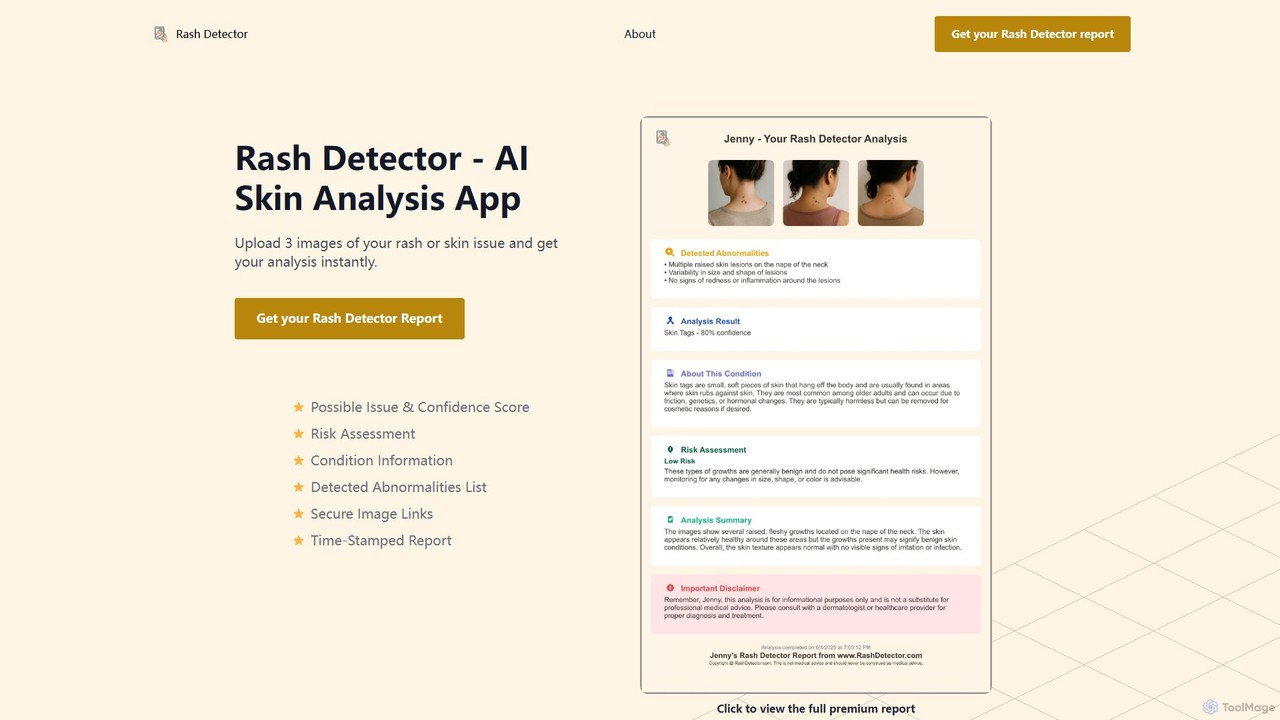
Rash Detector is an AI-powered skin analysis tool that provides instant insights into rashes and skin conditions. By uploading three photos, users receive a comprehensive report including possible issues with confidence scores, risk assessment, and detailed information. It's a fast, private, and simple way to get a preliminary understanding of a skin concern before consulting a doctor. Available on web and Android.

Symptom Analysis
Visits 4.6KFavorites 114Likes 135

About Wellness

Wellness AI tools are AI-powered applications designed to support and enhance personal health and well-being. Leveraging advanced algorithms and data analysis, they offer personalized insights and guidance across various aspects of physical and mental health. These tools empower individuals to proactively manage stress, improve sleep, optimize fitness, and foster overall personal growth within the broader 'Personal' AI category.

Core Features

  • Personalized Health Plans: Generate customized fitness, nutrition, or mindfulness plans based on individual data and goals.
  • Mood & Stress Tracking: Monitor emotional states, identify stress triggers, and suggest coping mechanisms or relaxation techniques.
  • Sleep Optimization: Analyze sleep patterns, provide insights into sleep quality, and offer guidance for improving rest.
  • Mindfulness & Meditation Guidance: Deliver guided meditation sessions, breathing exercises, and mindfulness practices tailored to user needs.
  • Fitness & Activity Coaching: Track physical activity, provide workout suggestions, and offer real-time feedback to optimize performance.

Use Cases

Wellness AI tools are utilized by individuals seeking holistic health management, professionals aiming to balance work-life demands, and anyone looking to proactively improve their physical and mental state. They provide accessible, personalized support for daily well-being challenges.

How to Choose

When selecting a Wellness AI tool, consider its data privacy and security measures, the scientific validation behind its methodologies, and its ability to integrate with existing wearables or health apps. Evaluate the personalization capabilities, user interface, and the specific aspects of wellness it focuses on, such as mental health, fitness, or sleep.

Wellness use cases

1

Generate Personalized Fitness Regimens

Fitness enthusiasts or beginners can utilize Wellness AI tools to create customized workout plans tailored to their goals, current fitness level, and available equipment. By analyzing user input and progress data, the AI suggests optimal exercises, sets, and repetitions, helping users achieve their fitness milestones more efficiently and safely than generic programs.

2

Track Mood and Manage Stress Levels

Individuals experiencing daily stress or seeking to improve mental well-being can use Wellness AI tools to log their mood, identify emotional patterns, and receive personalized stress management techniques. The AI can suggest mindfulness exercises, breathing practices, or even recommend professional support based on tracked data, fostering better emotional regulation.

3

Optimize Sleep Patterns for Better Rest

Users struggling with sleep quality can leverage Wellness AI tools to analyze their sleep cycles, duration, and disturbances through wearable device integration. The AI provides detailed reports and personalized recommendations, such as adjusting bedtime routines, suggesting calming sounds, or recommending environmental changes, leading to improved sleep hygiene and restorative rest.

4

Receive Guided Mindfulness and Meditation

Individuals seeking to cultivate mindfulness or reduce anxiety can access Wellness AI tools offering guided meditation sessions. These tools adapt to the user's experience level and preferences, providing audio guidance, ambient sounds, and progress tracking. This helps users establish a consistent meditation practice, leading to improved focus, emotional balance, and reduced stress over time.

5

Personalized Nutrition Planning and Dietary Advice

Individuals aiming for healthier eating habits or specific dietary goals can use Wellness AI tools to receive personalized nutrition plans. By inputting dietary preferences, allergies, and health objectives, the AI generates meal suggestions, tracks calorie intake, and provides nutritional insights, making it easier to adhere to a balanced diet and achieve health targets.

6

Support for Chronic Condition Management

Individuals managing chronic conditions like diabetes or hypertension can use Wellness AI tools for supplementary support. These tools can track vital signs, medication adherence, and lifestyle factors, providing reminders and insights to help users stay on track with their treatment plans. While not replacing medical advice, they offer valuable data and behavioral nudges for better self-management.

Wellness FAQ

What are Wellness AI tools?

Wellness AI tools are applications that use artificial intelligence to help individuals monitor, manage, and improve their physical and mental health. They leverage machine learning to analyze personal data, such as sleep patterns, activity levels, and mood entries, to provide tailored recommendations and interventions. These tools aim to empower users to take a proactive approach to their well-being, offering support for areas like stress reduction, fitness, nutrition, and mental clarity.

How do Wellness AI tools personalize recommendations?

Wellness AI tools personalize recommendations by collecting and analyzing various data points from the user. This includes self-reported information (goals, preferences, mood logs), data from integrated wearables (heart rate, sleep cycles, activity levels), and historical usage patterns. Using machine learning algorithms, the AI identifies trends, predicts needs, and generates tailored advice for fitness routines, dietary suggestions, mindfulness exercises, or stress management techniques, ensuring relevance to the individual's unique profile.

What's the difference between a general health app and a Wellness AI tool?

While general health apps often provide basic tracking for steps, calories, or water intake, Wellness AI tools go a step further by offering intelligent, personalized insights and proactive guidance. A general app might record your sleep, but a Wellness AI tool will analyze it, identify issues, and suggest specific interventions to improve sleep quality. The key distinction lies in the AI's ability to learn from data, adapt to individual needs, and provide actionable, context-aware recommendations rather than just presenting raw data.

Who can benefit most from using Wellness AI tools?

Wellness AI tools are highly beneficial for a wide range of individuals. This includes busy professionals seeking to manage stress and maintain work-life balance, fitness enthusiasts aiming for optimized training and nutrition, and anyone interested in proactive self-care and personal growth. They are also valuable for individuals with specific health goals, such as improving sleep, managing chronic conditions (with medical supervision), or cultivating mindfulness, by providing accessible and tailored support.

What should I consider when choosing a Wellness AI tool?

When choosing a Wellness AI tool, prioritize data privacy and security, as these tools often handle sensitive personal health information. Look for scientific validation or evidence-based methodologies to ensure effectiveness. Consider its compatibility with your existing devices (wearables, smartphones) and other health apps. Evaluate the level of personalization offered, the user interface's intuitiveness, and whether its core features align with your specific wellness goals, such as mental health, physical fitness, or sleep improvement.