SnowdayAICalculator
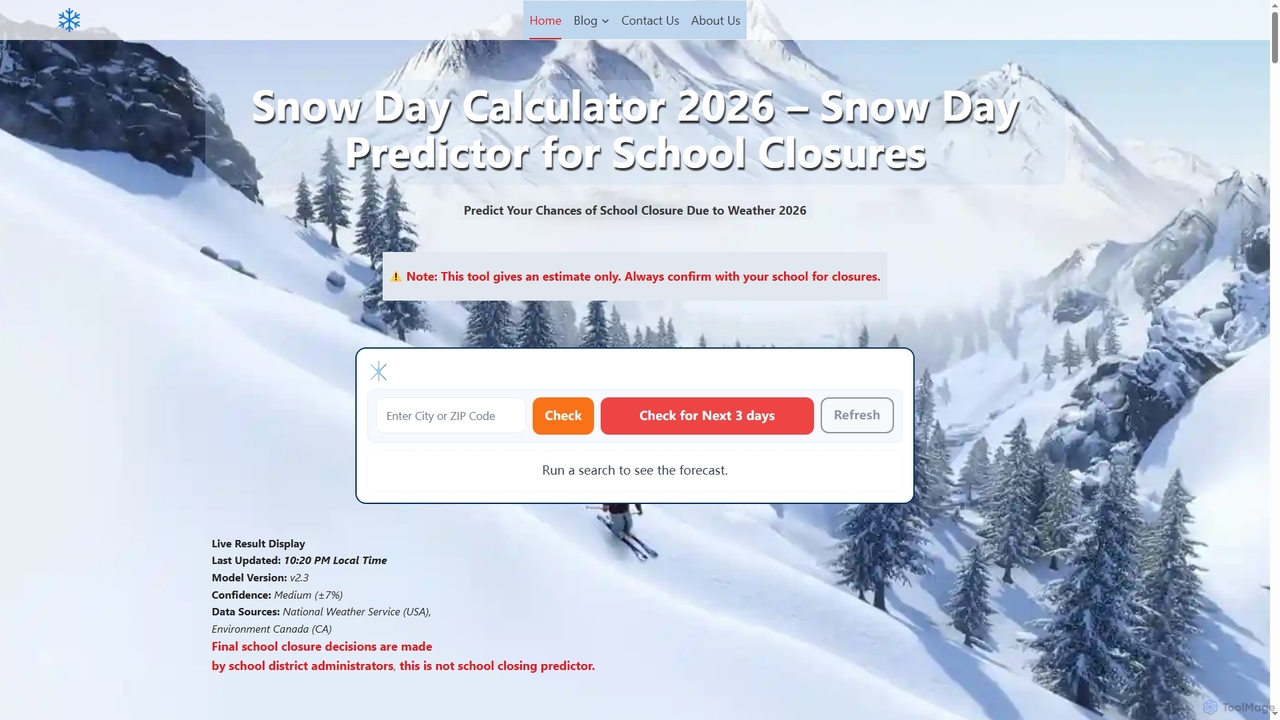
SnowdayAICalculator is an AI-powered online tool that predicts the probability of school closures due to winter weather. By …
SnowdayAICalculator is an AI-powered online tool that predicts the probability of school closures due to winter weather. By analyzing real-time weather data, historical closure patterns, and local school policies, it provides a percentage-based estimate for snow days, helping students, parents, and teachers plan ahead. It supports locations in the US, Canada, and worldwide.
Chart Aether
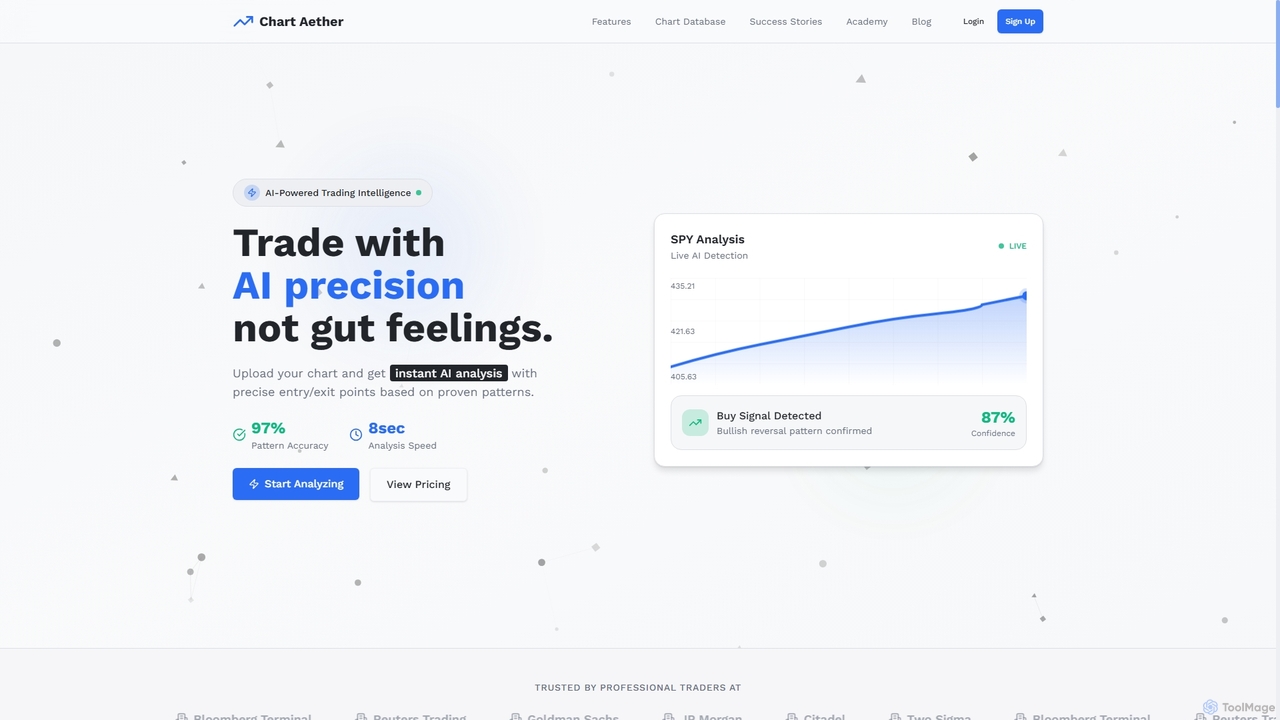
Chart Aether is an AI-powered trading intelligence platform that provides instant, precise analysis of trading charts. Upload any …
Chart Aether is an AI-powered trading intelligence platform that provides instant, precise analysis of trading charts. Upload any chart screenshot to receive AI-generated trade plans, including entry/exit points, stop-loss levels, and profit targets, based on over 50 proven chart patterns with up to 97% accuracy. It supports multiple assets and timeframes, empowering traders to make data-driven decisions.
EmolyTicks
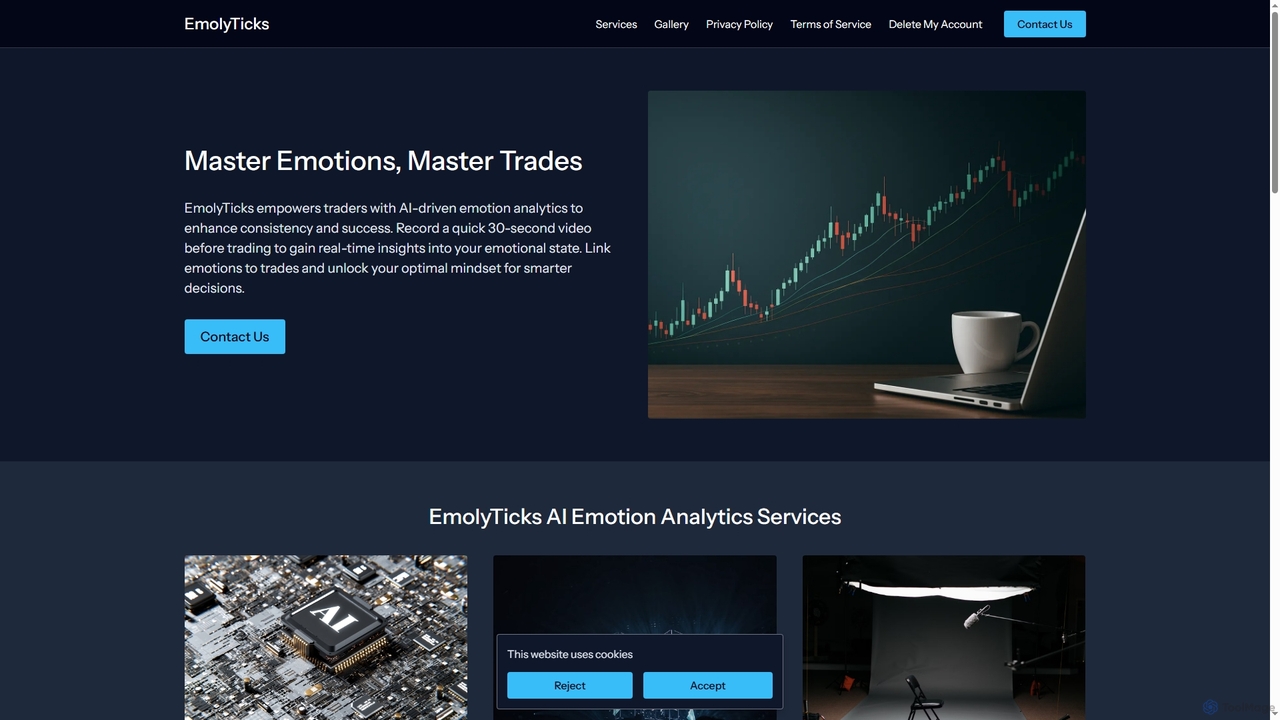
EmolyTicks is an AI-driven emotion analytics tool empowering traders to master their emotional states for enhanced consistency and …
EmolyTicks is an AI-driven emotion analytics tool empowering traders to master their emotional states for enhanced consistency and success in trading. It provides real-time insights into emotional well-being by analyzing short pre-trade videos, helping users link emotions to trades and cultivate an optimal mindset for smarter financial decisions.
TrendIQ
TrendIQ is an AI-powered technical analysis tool for traders across crypto, stocks, futures, and forex markets. It instantly …
TrendIQ is an AI-powered technical analysis tool for traders across crypto, stocks, futures, and forex markets. It instantly analyzes uploaded chart screenshots, providing professional insights, pattern recognition, and risk management to enhance trading decisions.
Medical Brain
Medical Brain is an AI-powered platform designed as a clinical assistant for healthcare providers and a personal health …
Medical Brain is an AI-powered platform designed as a clinical assistant for healthcare providers and a personal health assistant for patients. It aims to enhance diagnostic accuracy, streamline clinical workflows, and empower patients with personalized, evidence-based health information.
ibex_ai
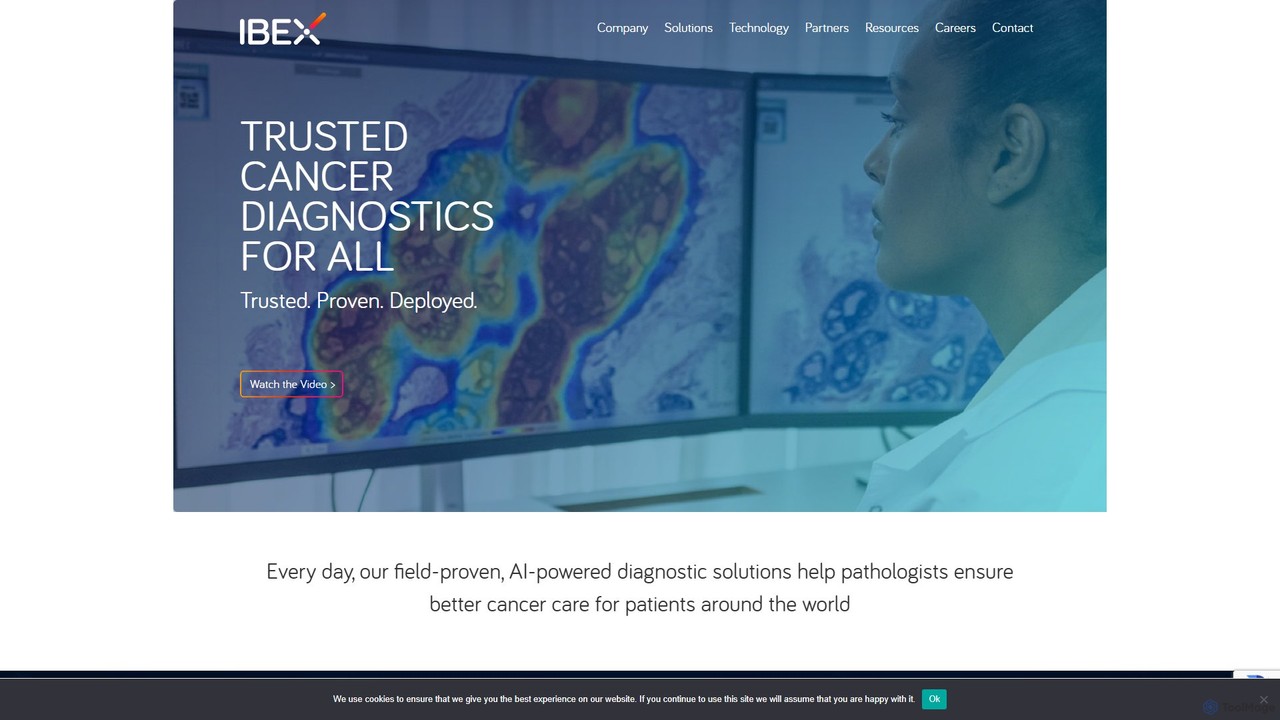
Ibex is a leading AI-powered cancer diagnostics platform for pathology. It assists pathologists by improving the accuracy and …
Ibex is a leading AI-powered cancer diagnostics platform for pathology. It assists pathologists by improving the accuracy and efficiency of breast, prostate, and gastric cancer detection. The platform uses advanced deep learning algorithms to analyze tissue slides, identify cancerous cells, and provide critical diagnostic insights, acting as a trusted digital assistant in the lab.
About Decision Support
Decision Support tools are a class of AI systems designed to help individuals and organizations make better, data-driven choices. They analyze large volumes of complex data, identify patterns, and model potential outcomes using predictive analytics and simulation. This enables users to evaluate various scenarios, understand risks, and select the optimal course of action with greater confidence. As a specialized area within Productivity, these tools focus on enhancing cognitive and strategic tasks rather than just automating routine workflows.
Core Features
- Predictive Analytics: Utilizes historical data and machine learning algorithms to forecast future trends, behaviors, and outcomes.
- Scenario Modeling (What-if Analysis): Allows users to adjust variables and simulate different situations to understand the potential impact of their decisions.
- Data Visualization: Transforms complex datasets into intuitive charts, graphs, and dashboards for easier interpretation and insight discovery.
- Optimization Engines: Recommends the best course of action from a set of alternatives based on predefined goals and constraints.
Applicable Scenarios
These tools are widely used in sectors like finance for portfolio management, supply chain for logistics optimization, and marketing for budget allocation. Business analysts, operations managers, and strategic planners rely on them to move from reactive reporting to proactive, forward-looking decision-making.
Selection Criteria
When choosing a Decision Support tool, consider its data integration capabilities (can it connect to your existing databases?), the sophistication of its analytical models, the intuitiveness of the user interface, and its scalability to handle growing data volumes and complexity.
Decision SupportUse Cases
Optimize Financial Investment Portfolios
A financial analyst for an investment firm needs to create a balanced portfolio for a client with a specific risk tolerance. Using a decision support tool, they input historical market data, economic forecasts, and the client's risk profile. The AI runs thousands of simulations to model potential returns and volatility for different asset allocations. The tool then presents a few optimized portfolios, each with a clear breakdown of risk vs. reward, enabling the analyst to confidently recommend a data-backed strategy that aligns perfectly with the client's goals.
Forecast Demand for Supply Chain Management
An operations manager for a retail company is responsible for inventory planning. To avoid stockouts or overstocking, they use a decision support system that integrates sales data, seasonality, and marketing promotions. The tool's predictive model forecasts demand for hundreds of products across different regions. It also runs 'what-if' scenarios, such as the impact of a new competitor or a delayed shipment. Based on these insights, the manager can make informed decisions on purchase orders and inventory distribution, reducing costs and improving customer satisfaction.
Allocate Marketing Budget for Maximum ROI
A marketing director needs to decide how to allocate a quarterly budget across various channels like social media ads, search engine marketing, and content creation. They use a decision support tool to input past campaign performance data, channel costs, and conversion rates. The system's optimization engine analyzes this data to recommend a budget allocation that is projected to maximize return on investment (ROI). It also allows the director to simulate the effect of increasing or decreasing the budget for a specific channel, providing a clear, data-driven basis for their strategic plan.
Aid Clinical Diagnosis in Healthcare
A physician is treating a patient with complex and unusual symptoms. To broaden their diagnostic possibilities, they use a clinical decision support system. The doctor inputs the patient's symptoms, lab results, and medical history into the secure platform. The AI cross-references this information against a vast database of medical literature, clinical trials, and anonymized patient records. It then provides a list of potential diagnoses ranked by probability, along with supporting evidence and recommended next steps or tests. This tool acts as a powerful second opinion, augmenting the doctor's expertise and helping ensure a more accurate and timely diagnosis.
Model Strategic Business Expansion Scenarios
A leadership team at a growing tech company is considering expanding into a new international market. Before committing significant resources, they use a strategic decision support tool. They input data on market size, competitor presence, regulatory hurdles, and operational costs. The tool models several scenarios, such as an aggressive market entry versus a phased rollout, forecasting potential revenue, market share, and profitability over five years for each option. The visualized outputs allow the team to compare the risks and rewards of each strategy, leading to a more calculated and confident final decision.
Identify At-Risk Students in Education
An academic advisor at a university wants to proactively support students who might be struggling. They use a decision support system that analyzes data from various sources, including attendance records, assignment grades, and engagement with online learning platforms. The system identifies students whose patterns indicate a high risk of falling behind or dropping out. It provides the advisor with a prioritized list and specific insights, such as 'declining engagement in course X'. This allows the advisor to intervene early with personalized support, such as tutoring or counseling, improving student retention and success rates.