Healthcare Best in category 2 results Medical Diagnostics AI Tool

Popular AI tools in the Medical Diagnostics field of Healthcare include HEALWELL AI、ibex_ai, etc., helping you quickly improve efficiency.

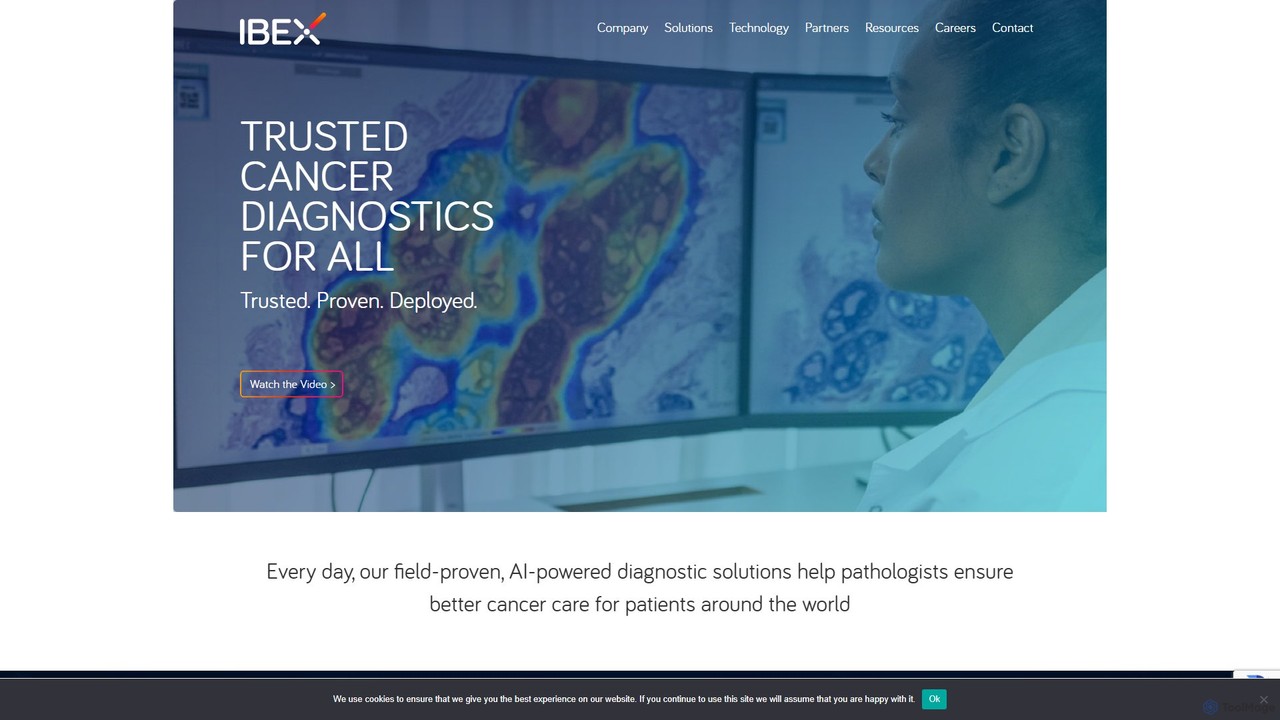
ibex_ai

ibex_ai

Ibex is a leading AI-powered cancer diagnostics platform for pathology. It assists pathologists by improving the accuracy and …

14.0K
HEALWELL AI

HEALWELL AI

HEALWELL AI is a healthcare technology company specializing in AI and data science for preventative care. Its platform …

17.0K

About Medical Diagnostics

Medical Diagnostics AI tools are a class of artificial intelligence applications designed to assist healthcare professionals in identifying diseases and conditions. These tools leverage advanced machine learning algorithms to analyze complex medical data, such as imaging scans, laboratory results, and patient records. Their primary value lies in enhancing diagnostic accuracy, speeding up the diagnostic process, and providing crucial insights for early intervention and personalized treatment plans. They represent a significant advancement within the broader field of healthcare technology.

Core Features

  • Medical Image Analysis: Automatically detects anomalies, lesions, or patterns in X-rays, CT, MRI, and ultrasound scans.
  • Pathology Slide Interpretation: Assists pathologists by analyzing digital microscope slides for cancer cells or other abnormalities.
  • Predictive Analytics for Disease Risk: Identifies patients at higher risk for certain conditions based on historical data and genetic markers.
  • Clinical Decision Support: Provides evidence-based recommendations and differential diagnoses to clinicians.
  • Lab Result Anomaly Detection: Flags unusual patterns or critical values in blood tests and other lab reports.

Applicable Scenarios

Medical Diagnostics AI tools are indispensable across various healthcare settings. Radiologists use them to prioritize urgent cases and detect subtle findings in imaging. Pathologists leverage AI for faster and more consistent analysis of tissue samples. General practitioners can utilize these tools for early disease risk assessment, while specialists in oncology or cardiology benefit from AI-driven insights for complex case diagnosis and treatment planning.

How to Choose

When selecting Medical Diagnostics AI tools, consider the specific clinical application and data type it supports (e.g., radiology, pathology, genomics). Evaluate its integration capabilities with existing hospital information systems (HIS) and electronic health records (EHR). Assess the tool's regulatory approvals (e.g., FDA, CE Mark), validation studies, and the transparency of its AI models. Finally, review the vendor's support, training, and data privacy policies to ensure compliance and effective implementation.

Medical DiagnosticsUse Cases

1

Early Detection of Lung Nodules in CT Scans

Radiologists use AI to automatically highlight suspicious lung nodules in low-dose CT scans, improving the detection rate of early-stage lung cancer and reducing false negatives. This leads to timely patient intervention and significantly better prognosis, streamlining the diagnostic workflow and allowing clinicians to focus on complex cases.

2

Automated Retinal Disease Screening

Ophthalmologists deploy AI systems to analyze fundus images for signs of diabetic retinopathy or glaucoma, enabling rapid, large-scale screening in primary care settings. This identifies patients needing specialist referral much faster than manual review, preventing vision loss and improving public health outcomes.

3

Assisted Diagnosis of Skin Lesions

Dermatologists utilize AI tools that analyze dermoscopic images of moles and skin lesions, providing a probability score for malignancy and assisting in the differentiation between benign and cancerous growths. This enhances diagnostic confidence and helps prioritize cases for biopsy, leading to earlier detection of skin cancer.

4

Faster Pathology Review for Cancer

Pathologists employ AI to scan and analyze whole slide images of biopsy samples, automatically identifying and quantifying cancer cells. This significantly reduces manual review time, enhances diagnostic consistency across different pathologists, and helps in grading tumors more accurately, accelerating critical cancer diagnoses.

5

Predictive Risk Assessment for Cardiovascular Disease

Clinicians use AI models that integrate patient demographics, lab results, and lifestyle data to predict an individual's risk of developing cardiovascular disease within a specific timeframe. This enables proactive intervention, personalized preventive strategies, and better patient education, ultimately reducing the incidence of heart-related conditions.

6

Real-time Sepsis Detection in ICU Patients

Intensive Care Unit (ICU) teams implement AI algorithms that continuously monitor patient vital signs and lab data, alerting staff to early indicators of sepsis. This allows for immediate treatment initiation, significantly improving patient outcomes and reducing mortality rates in critical care settings by enabling rapid response.

Medical DiagnosticsFrequently Asked Questions