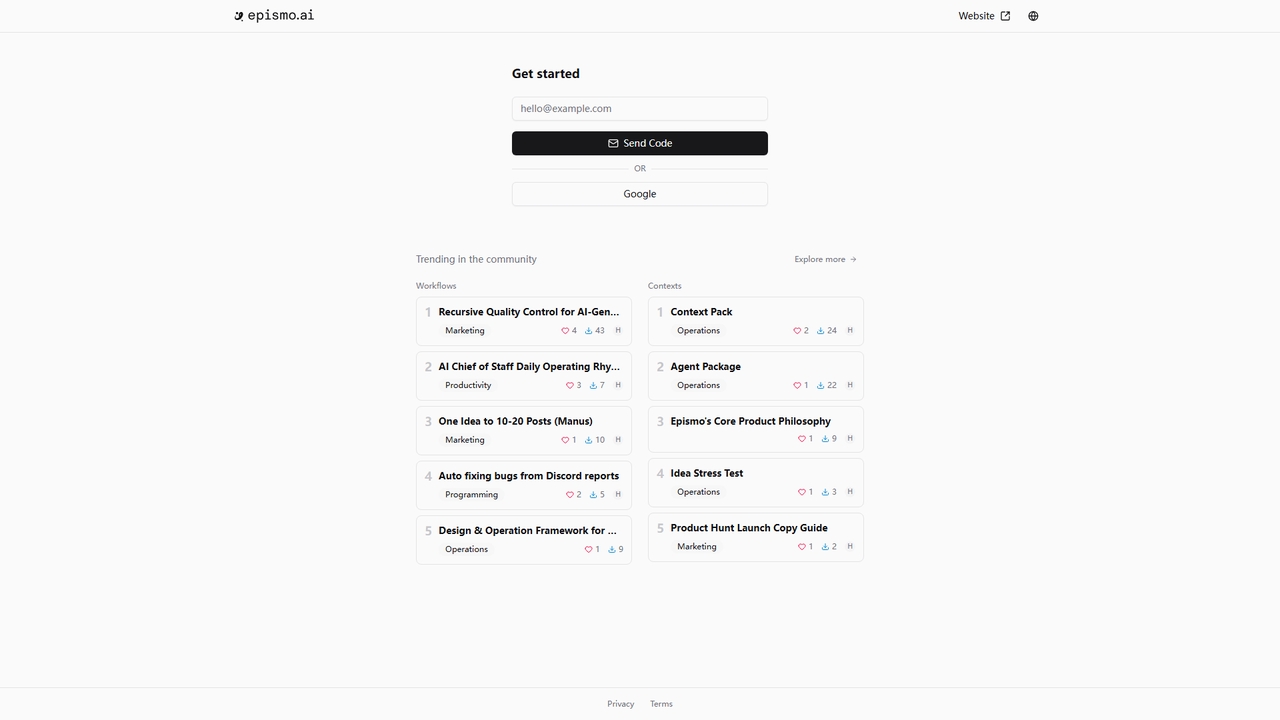
Epismo
A workflow platform for AI agents, offering ready-to-use templates for marketing, productivity, programming, and operations.
A workflow platform for AI agents, offering ready-to-use templates for marketing, productivity, programming, and operations.
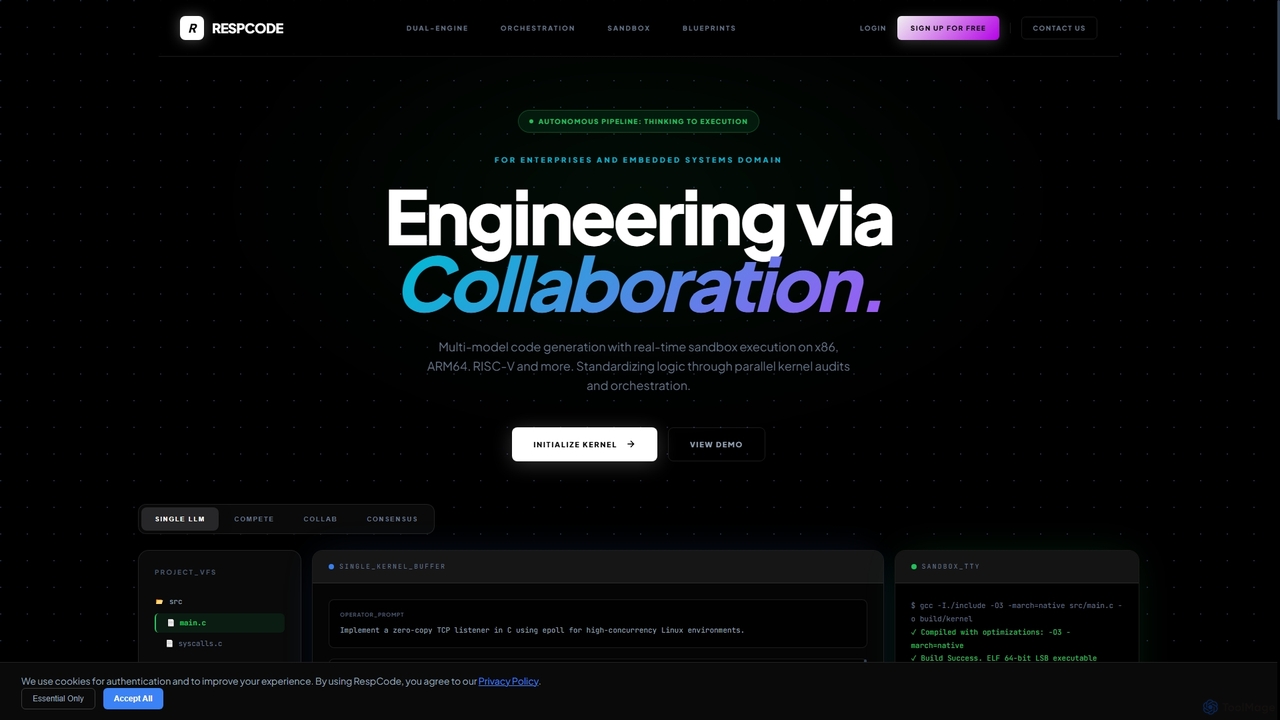
RespCode
RespCode is a multi-model IDE kernel that revolutionizes AI-assisted code generation by orchestrating multiple large language models. It …
RespCode is a multi-model IDE kernel that revolutionizes AI-assisted code generation by orchestrating multiple large language models. It enables developers to compare, refine, and validate code across various architectures in real sandbox environments, ensuring high-quality, secure, and performant solutions for complex development challenges.

IgnitionStack
IgnitionStack is a production-ready SaaS boilerplate built with Next.js 15, Supabase, and Stripe, designed to help developers and …
IgnitionStack is a production-ready SaaS boilerplate built with Next.js 15, Supabase, and Stripe, designed to help developers and entrepreneurs launch their SaaS products in days, not months. It saves over 200 hours of development time with pre-configured authentication, payments, internationalization, and a robust architecture.

Peargent
Peargent is a modern, powerful Python framework designed for building intelligent, production-grade AI agents. It offers an intuitive …
Peargent is a modern, powerful Python framework designed for building intelligent, production-grade AI agents. It offers an intuitive API, flexible LLM support, multi-agent orchestration, and persistent memory, enabling developers to create scalable and robust AI solutions for real-world use.
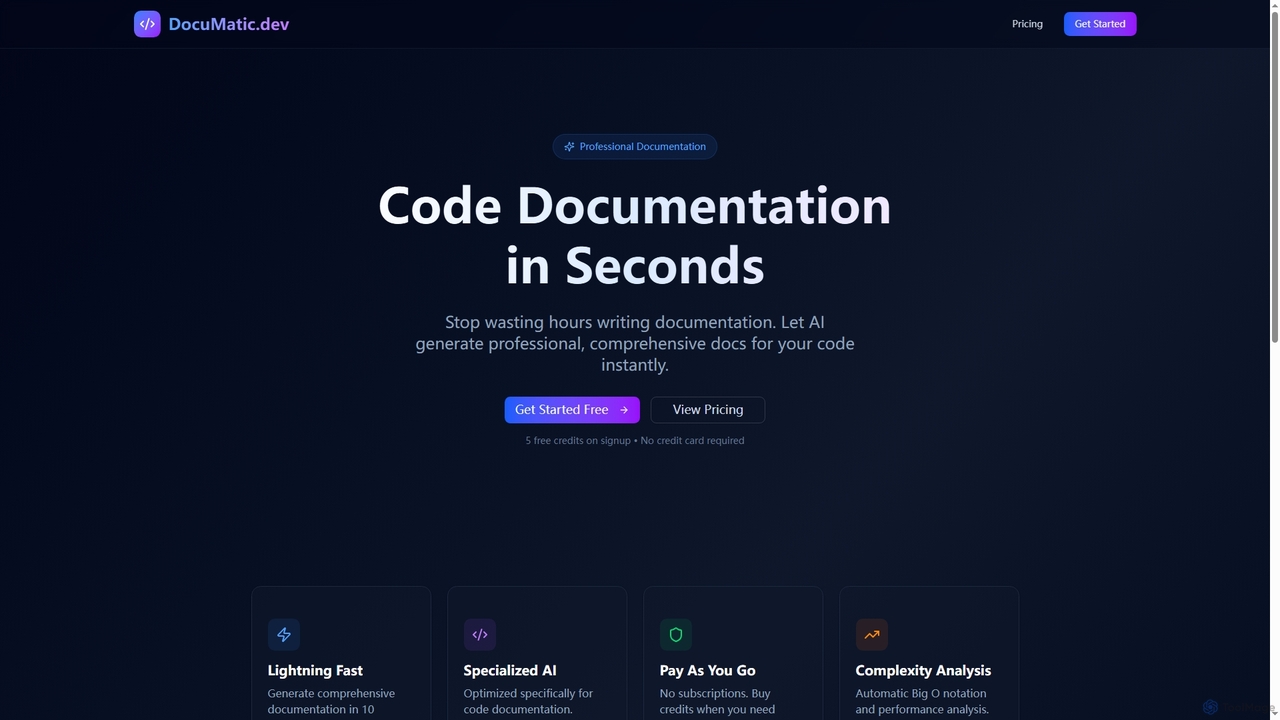
Documatic
Documatic is an AI-powered tool that generates professional, comprehensive code documentation in seconds. Designed specifically for developers, it …
Documatic is an AI-powered tool that generates professional, comprehensive code documentation in seconds. Designed specifically for developers, it eliminates hours of manual writing by providing instant, high-quality documentation, including complexity analysis, for any programming language. It operates on a flexible pay-as-you-go credit system.

Metatable
Metatable is an AI-first development platform that enables rapid creation and deployment of web and mobile applications. It …
Metatable is an AI-first development platform that enables rapid creation and deployment of web and mobile applications. It streamlines the entire software development lifecycle, from idea to launch, by leveraging AI to generate code, manage infrastructure, and automate complex tasks, allowing users to build MVPs in minutes.
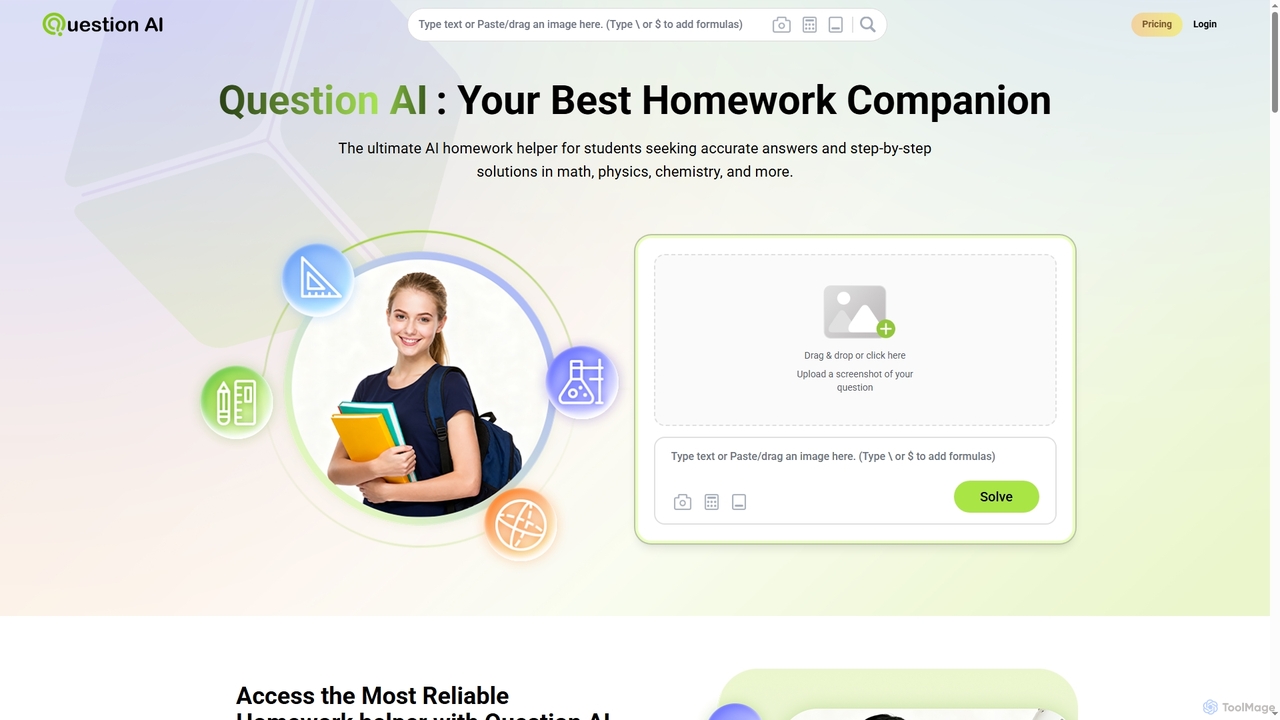
Question AI
Question AI is an advanced AI homework helper designed for students to get accurate, step-by-step solutions across a …
Question AI is an advanced AI homework helper designed for students to get accurate, step-by-step solutions across a wide range of subjects. It covers math, physics, chemistry, literature, history, and programming, offering flexible input options and multilingual support. With reported accuracy up to 98%, it aims to simplify academic challenges and enhance understanding for learners worldwide.
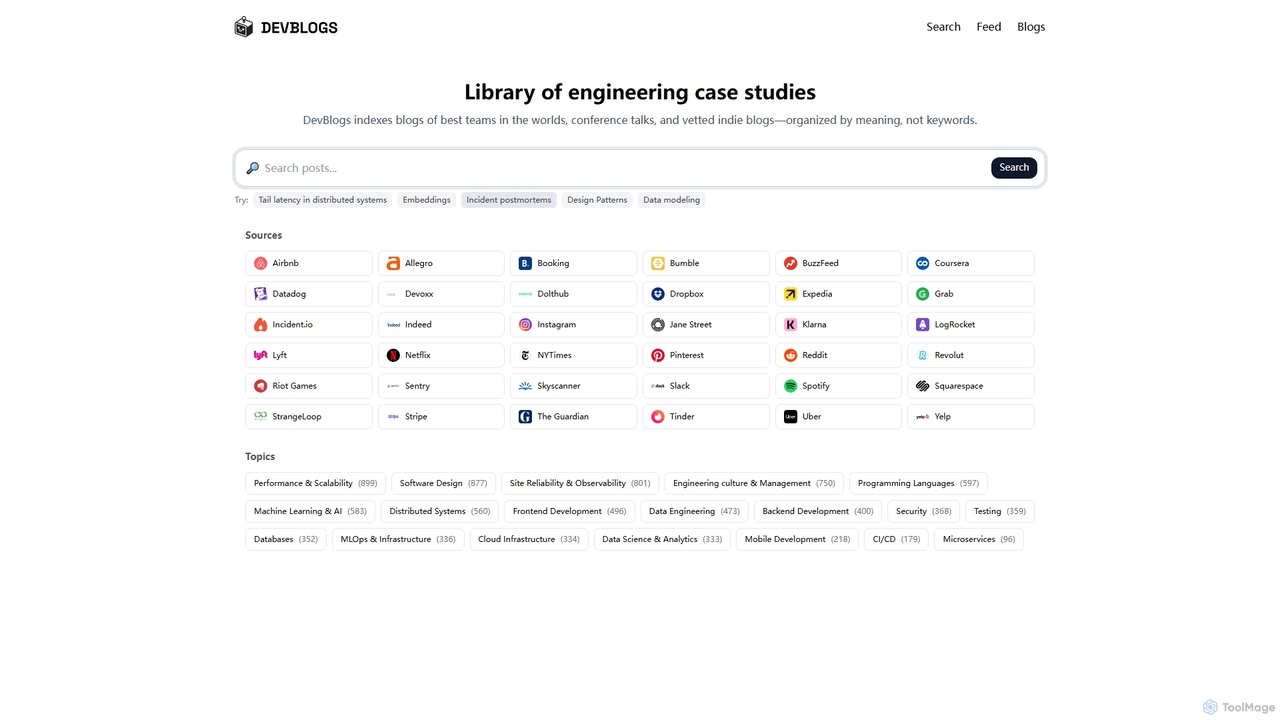
DevBlogs
DevBlogs is a curated library indexing engineering case studies, tech blogs, and conference talks from leading global teams. …
DevBlogs is a curated library indexing engineering case studies, tech blogs, and conference talks from leading global teams. It organizes content by meaning and specific technical topics, providing a valuable resource for developers and engineers to discover insights and best practices.
About Programming
AI Programming tools are intelligent assistants designed to augment the software development lifecycle, from code generation to deployment. Leveraging large language models (LLMs) and machine learning, these tools can understand natural language prompts, suggest code completions, identify bugs, and even write entire functions. They significantly boost developer productivity, improve code quality, and help teams manage complex projects more efficiently. Unlike traditional IDE extensions, AI programming assistants offer contextual awareness, enabling them to provide more relevant and sophisticated support.
Core Features
- AI Code Completion: Suggests lines or blocks of code in real-time based on the current context and coding patterns.
- Code Generation from Natural Language: Creates code snippets, functions, or classes from plain text descriptions or comments.
- Automated Debugging & Error Detection: Proactively identifies potential bugs, security vulnerabilities, and performance bottlenecks in the code.
- Code Refactoring & Optimization: Recommends improvements to make code more efficient, readable, and maintainable without changing its external behavior.
- Automated Test Generation: Creates unit tests or integration tests based on the existing codebase to improve test coverage.
Use Cases
AI programming tools are utilized by individual developers, software development teams, and large enterprises across various domains. They are applicable in web development for scaffolding APIs, in data science for generating analysis scripts, and in game development for creating complex logic. For instance, a mobile developer can use an AI assistant to quickly implement a new feature's UI logic based on a design description.
How to Choose
When selecting an AI programming tool, consider its language and framework support to ensure it aligns with your tech stack. Evaluate its integration capabilities with your preferred Integrated Development Environment (IDE), such as VS Code or JetBrains. Assess the scope of its features—whether you need simple code completion or advanced capabilities like automated debugging. For commercial projects, carefully review the tool's security and data privacy policies, especially regarding the handling of proprietary code.
ProgrammingUse Cases
Accelerating Feature Development with AI Code Generation
A backend developer is tasked with building a new REST API endpoint for user authentication. Instead of writing boilerplate code from scratch, the developer writes a comment like "// create a POST endpoint for user login with email and password validation". The AI tool generates the complete function, including request handling, validation logic, and database interaction stubs. This process reduces the development time for a standard feature from over an hour to just a few minutes, ensuring consistency with industry best practices and freeing up the developer to focus on more complex business logic.
Automating Unit Test Creation for Codebases
A Quality Assurance (QA) engineer needs to increase test coverage for a complex module before a new release. Manually writing tests is time-consuming. The engineer selects a function or class and instructs the AI programming tool to generate corresponding unit tests. The tool analyzes the code's logic, identifies edge cases, and produces a comprehensive set of tests using a specified framework like Jest or PyTest. This helps achieve over 80% test coverage in a fraction of the time, significantly improving code reliability and reducing the risk of regressions in production.
Debugging Complex Code and Identifying Bugs
A junior developer encounters a cryptic error message in a legacy codebase they are unfamiliar with. Instead of spending hours tracing the code, they paste the code block and the error message into the AI tool's chat interface. The AI analyzes the code flow, explains the likely cause of the error (e.g., a null pointer exception or an off-by-one error), and suggests a specific fix. This not only shortens the debugging cycle but also serves as a powerful learning aid, helping the developer understand complex code patterns and avoid similar mistakes in the future.
Refactoring and Optimizing Legacy Code
A tech lead is tasked with modernizing an old, inefficient part of an application to improve performance. The lead highlights a large, complex function and asks the AI tool to refactor it for readability and efficiency. The tool analyzes the code and suggests breaking it down into smaller, single-responsibility functions, replacing outdated loops with more modern constructs, and adding clarifying comments. This automates a significant portion of the technical debt cleanup, improving code maintainability and application performance without requiring days of manual analysis and rewriting.
Translating Code Between Programming Languages
A software architect is planning to migrate a service from an old language like Python 2 to a modern one like Go for better performance. Manually porting the code is error-prone and slow. The architect provides the Python code to an AI tool and requests a Go equivalent. The tool performs a syntactic and semantic translation, converting language-specific idioms and library calls while preserving the original logic. While the output requires human review and testing, it automates up to 70% of the migration process, saving weeks of manual effort and reducing the risk of introducing new bugs.
Learning a New Programming Language or Framework
A developer experienced in one language is learning a new framework like React. When stuck, they can ask the AI tool questions in natural language, such as "How do I fetch data from an API in React and display it in a list?". The tool provides a complete, commented code example and explains the core concepts involved (e.g., state management with hooks). This acts as an interactive, on-demand tutor, accelerating the learning curve by providing immediate, context-aware answers and practical examples, making it easier to overcome initial hurdles without searching through extensive documentation.