Flowmingo
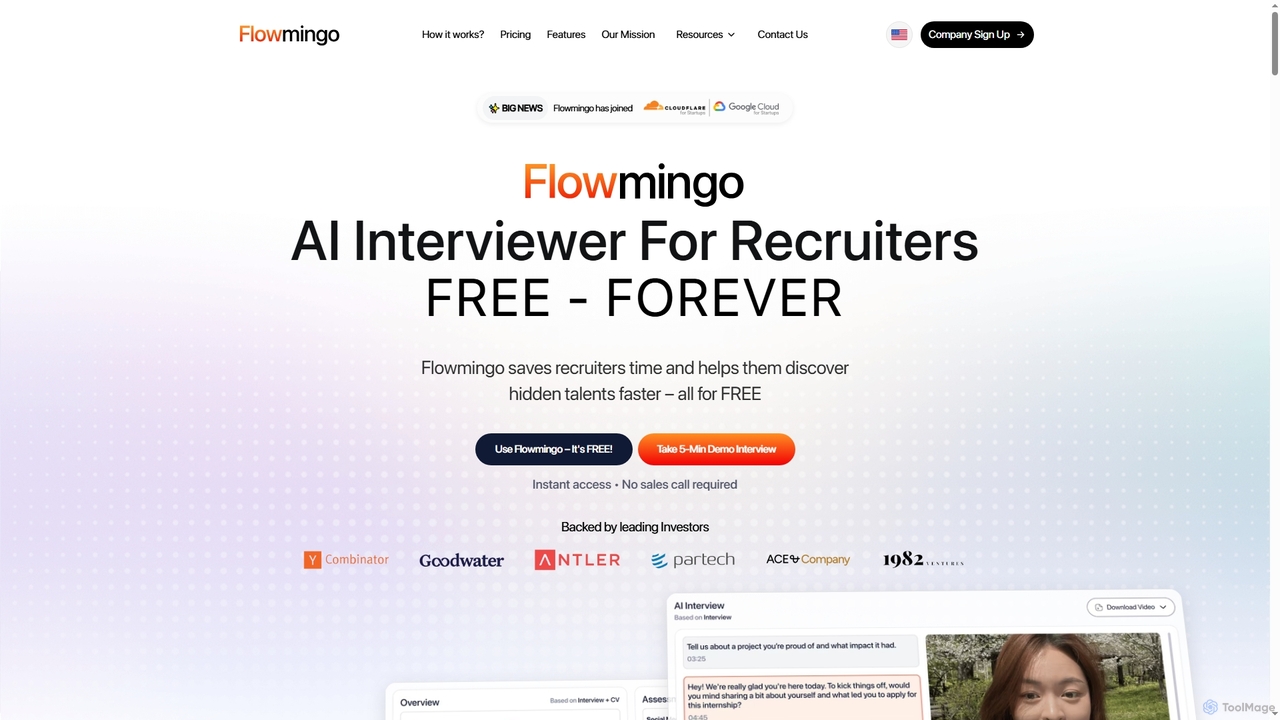
Flowmingo is a leading AI-powered interview platform designed to help recruiters identify top talent faster and more fairly. …
Flowmingo is a leading AI-powered interview platform designed to help recruiters identify top talent faster and more fairly. It offers free, unlimited asynchronous AI interviews, comprehensive candidate evaluations, and advanced proctoring, streamlining the hiring process for teams worldwide.
GitCruiter
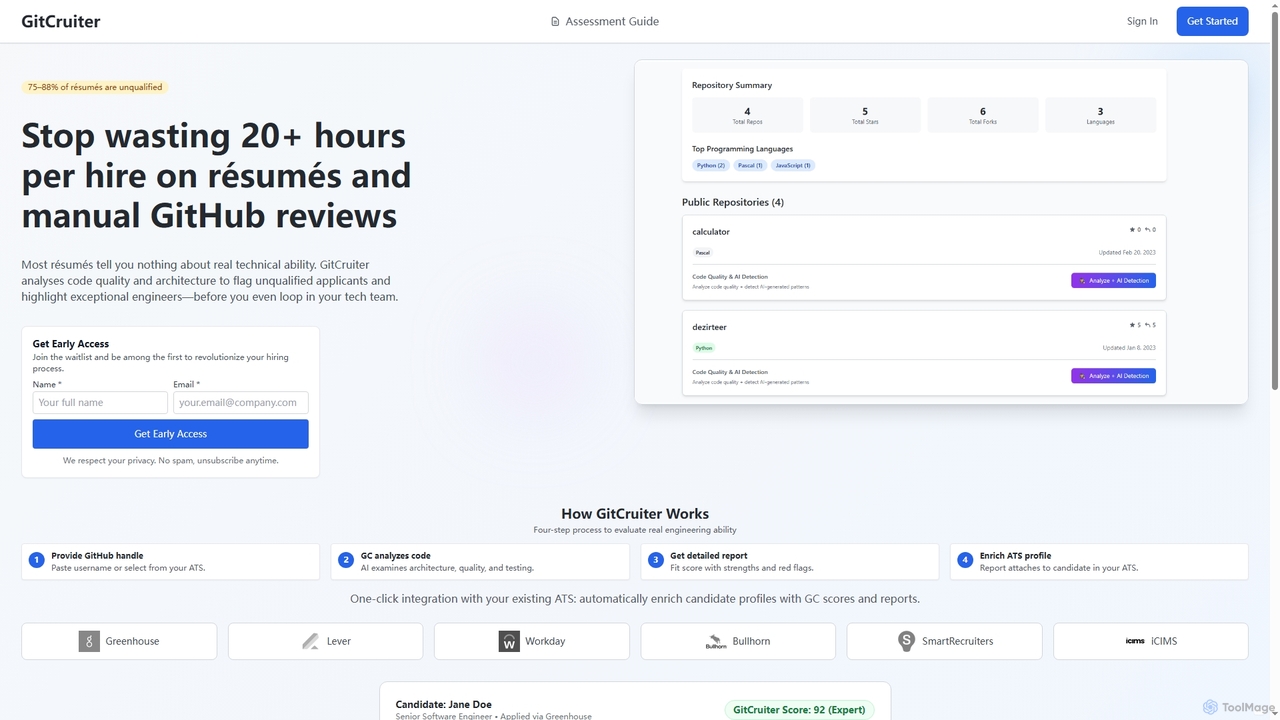
GitCruiter is an AI-powered platform that revolutionizes technical hiring by analyzing candidates' public GitHub repositories. It provides objective …
GitCruiter is an AI-powered platform that revolutionizes technical hiring by analyzing candidates' public GitHub repositories. It provides objective scores and detailed reports on code quality, architecture, testing, and problem-solving, helping recruiters and hiring managers identify top engineering talent and reduce time spent on unqualified resumes.
Tombot
Tombot is an AI-powered Chrome extension designed to automate and personalize engagement on LinkedIn, X, and Instagram. It …
Tombot is an AI-powered Chrome extension designed to automate and personalize engagement on LinkedIn, X, and Instagram. It helps salespeople, recruiters, and consultants attract high-value opportunities by generating authentic comments and messages, turning your social media presence into a powerful lead generation engine.
MyEmailExtractor
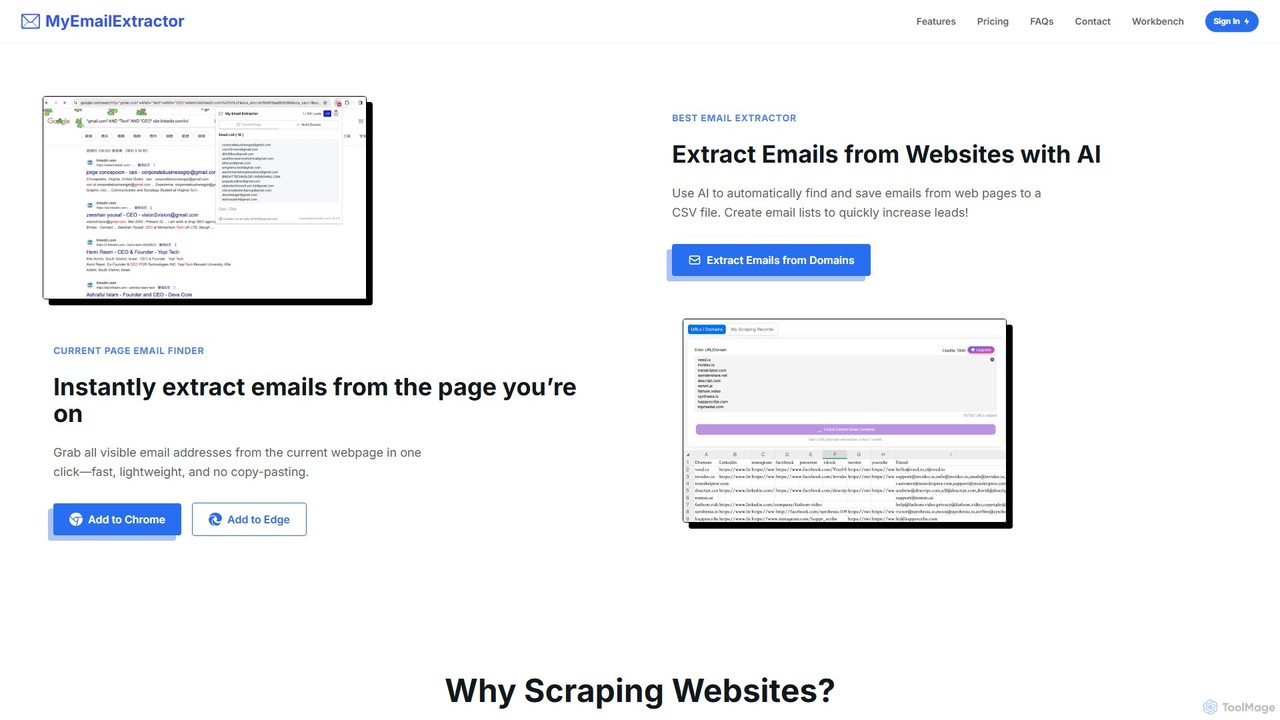
MyEmailExtractor is an AI-powered tool designed for efficient lead generation. It automatically extracts email addresses, phone numbers, and …
MyEmailExtractor is an AI-powered tool designed for efficient lead generation. It automatically extracts email addresses, phone numbers, and social media profiles from websites, domains, and search engine results. Ideal for sales, marketing, and recruitment teams to quickly build comprehensive contact lists and streamline outreach efforts.
InProfiler
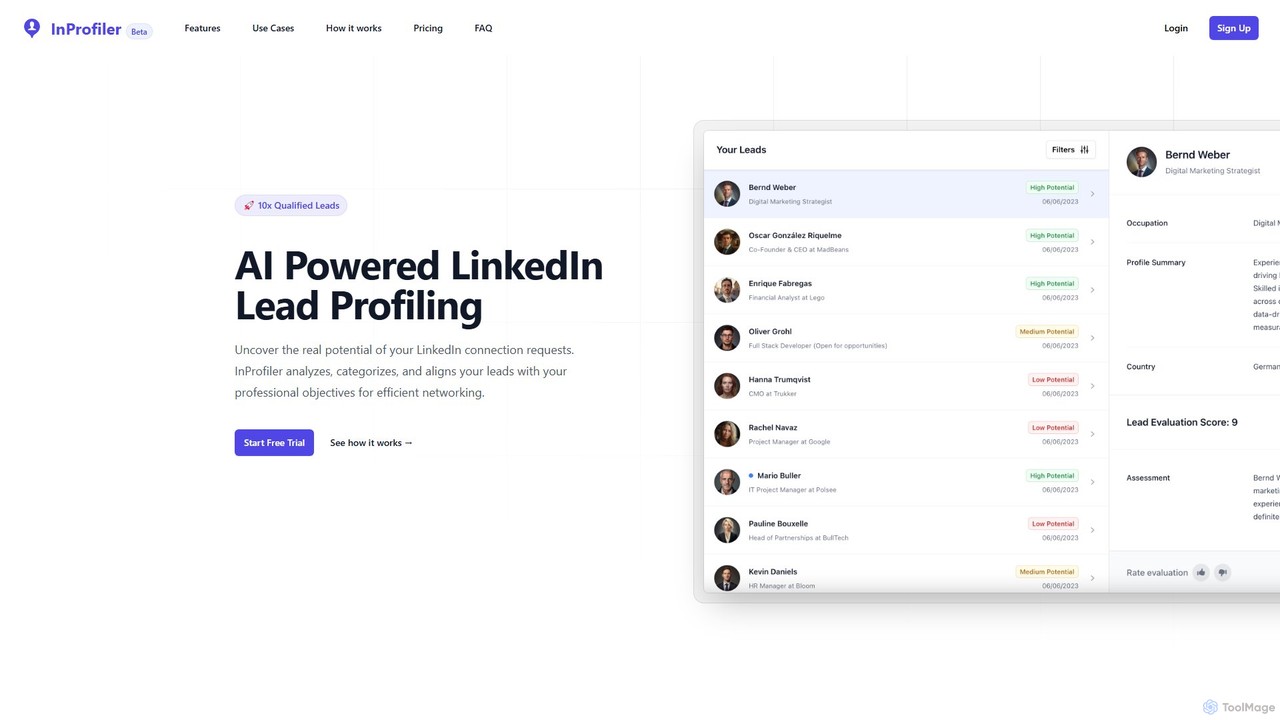
InProfiler is an AI-powered tool designed to streamline LinkedIn networking and lead management. It automatically analyzes, categorizes, and …
InProfiler is an AI-powered tool designed to streamline LinkedIn networking and lead management. It automatically analyzes, categorizes, and evaluates your LinkedIn connection requests based on your professional objectives. This helps professionals in sales, recruiting, and venture capital to save time, focus on high-potential leads, and collaborate effectively with their teams through features like lead sharing and CRM integration.
crustdata
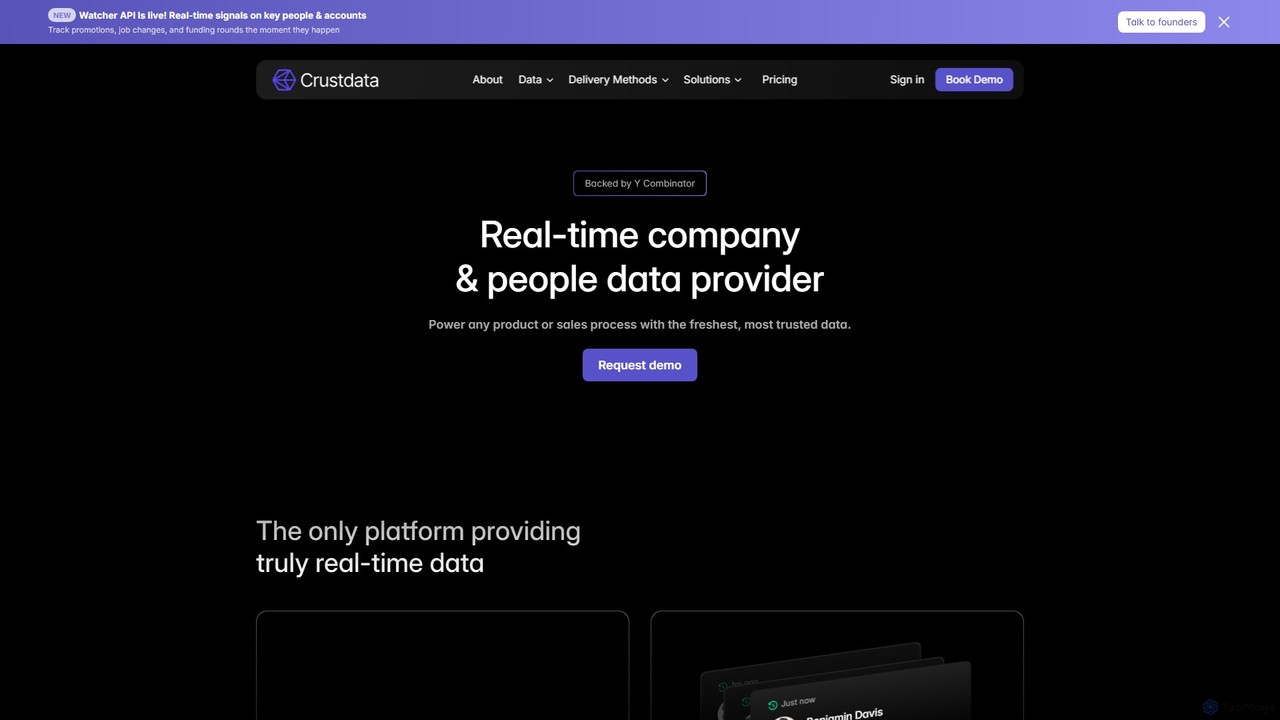
Crustdata is a real-time B2B data provider, offering fresh and accurate company and people data through a flexible …
Crustdata is a real-time B2B data provider, offering fresh and accurate company and people data through a flexible REST API and bulk data feeds. Backed by Y Combinator, it's designed to power AI applications, sales platforms, recruiting systems, and investment analysis by delivering live signals on job changes, funding rounds, new hires, and more.
Tomba
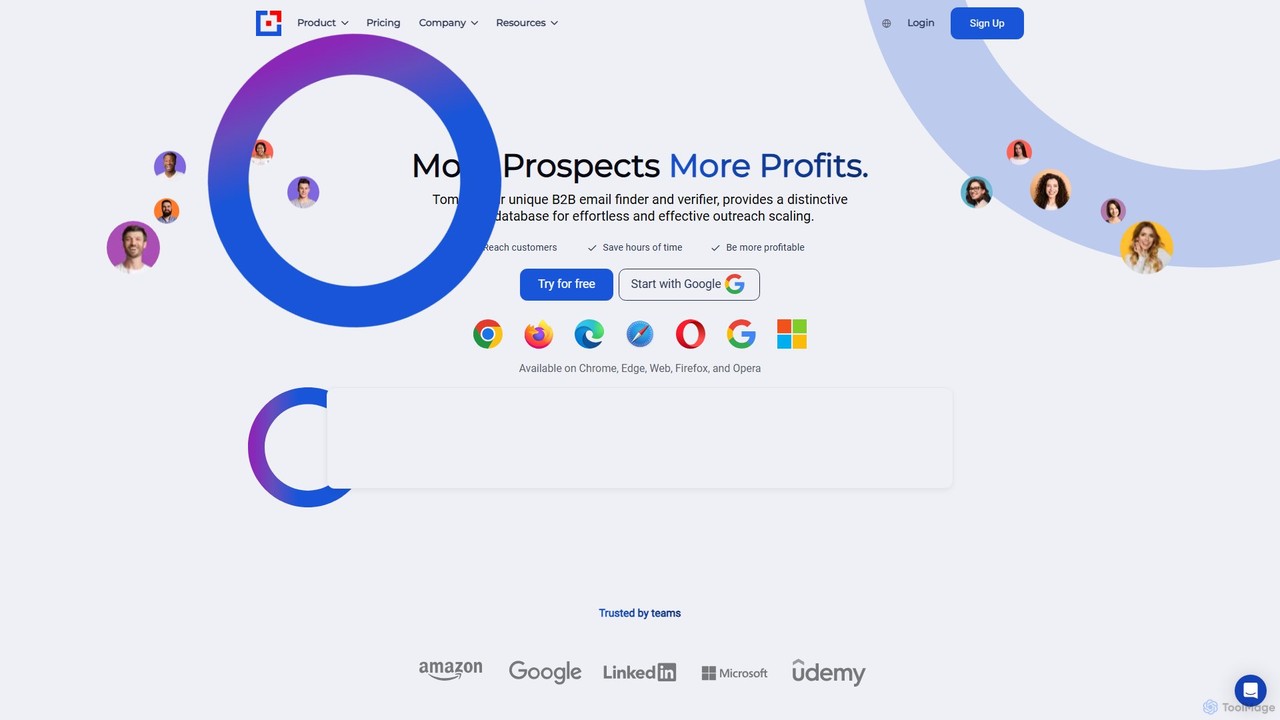
Tomba is a powerful B2B email finder and verifier designed for sales, marketing, and recruitment professionals. It helps …
Tomba is a powerful B2B email finder and verifier designed for sales, marketing, and recruitment professionals. It helps users discover and validate professional email addresses from any company or domain in seconds. With a massive database of over 430 million contacts, advanced search filters, and real-time verification, Tomba streamlines lead generation and outreach efforts, making it a comprehensive solution for scaling business connections.
CherryPick
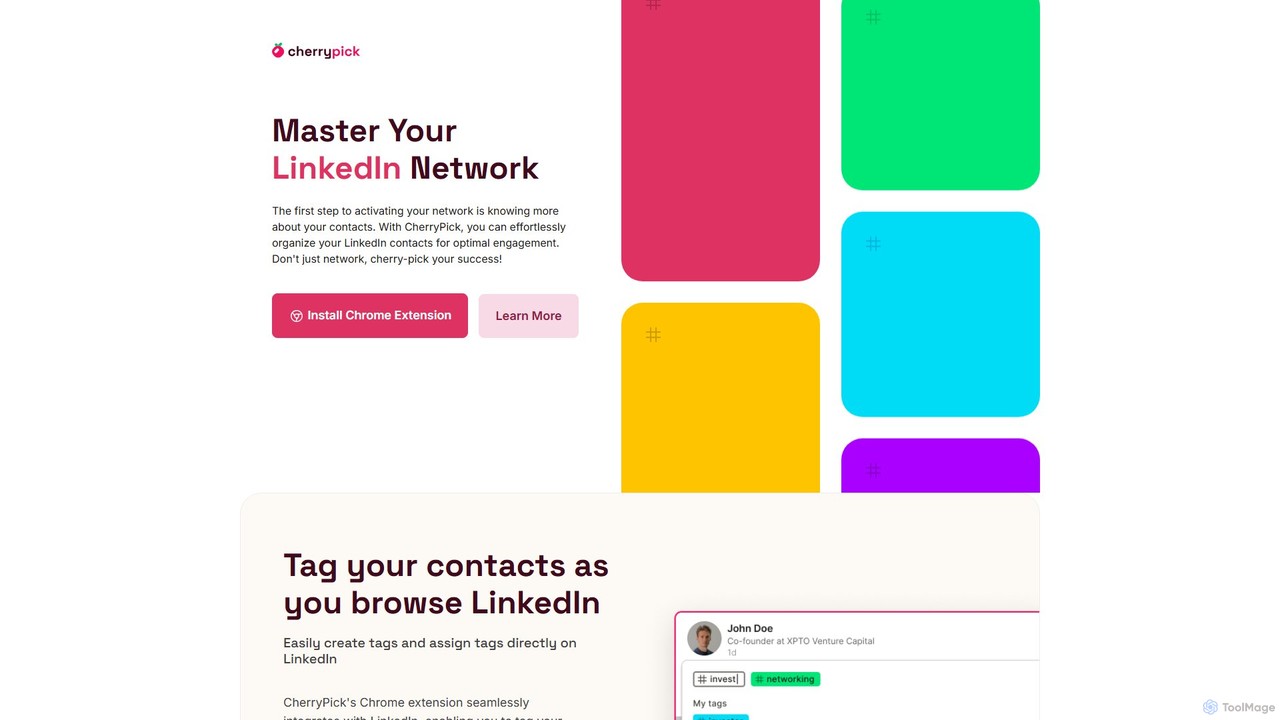
CherryPick is a Chrome extension designed to organize your LinkedIn network. It allows you to add custom tags …
CherryPick is a Chrome extension designed to organize your LinkedIn network. It allows you to add custom tags to your contacts directly within LinkedIn, turning your network into a searchable and manageable database. Ideal for recruiters, sales professionals, and marketers, it simplifies tracking candidates, leads, and prospects. You can manage all tagged contacts in a central dashboard and easily export them for use in CRMs or other systems, significantly boosting your networking productivity.
BoringLead
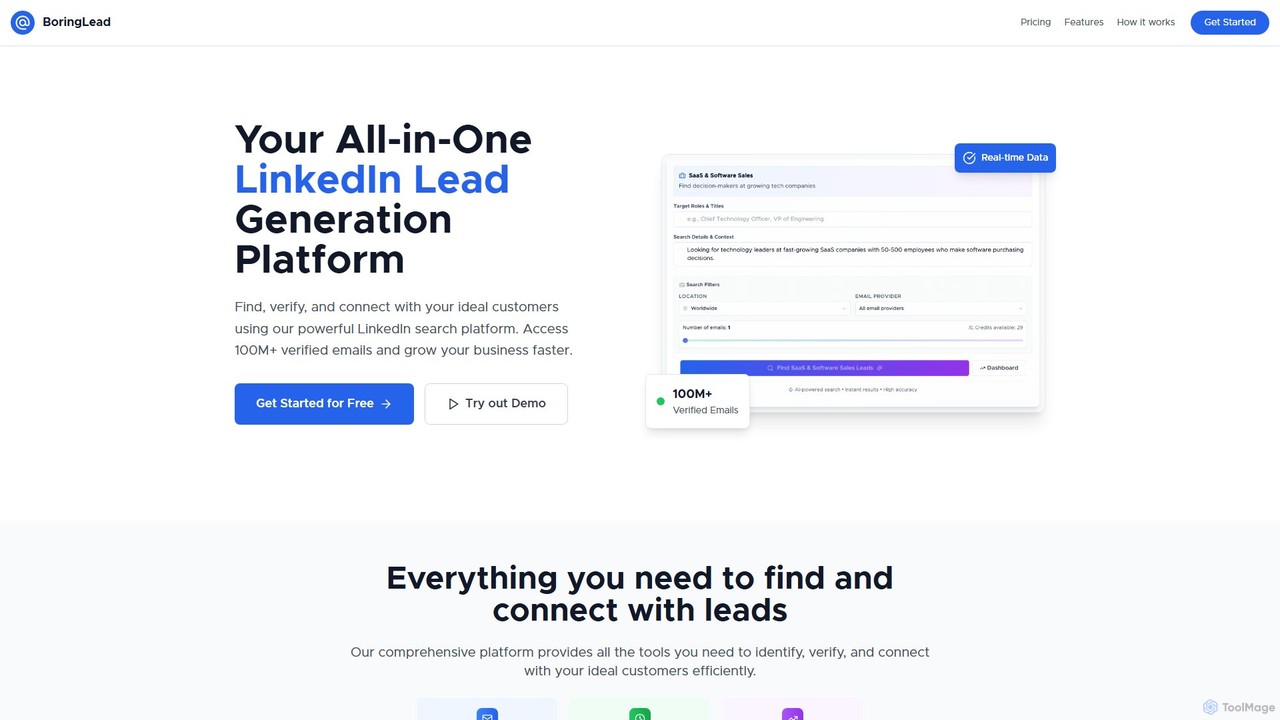
BoringLead is an AI-powered lead generation platform designed to find, verify, and connect with ideal customers from LinkedIn. …
BoringLead is an AI-powered lead generation platform designed to find, verify, and connect with ideal customers from LinkedIn. It offers access to a database of over 100 million verified emails, extracts rich LinkedIn profile data, and uses advanced filters for precise targeting. The platform also includes a free tool to extract emails from website URLs, streamlining outreach and research.
About Recruiting
AI Recruiting tools are a class of software that leverages artificial intelligence to automate and optimize the hiring process. These platforms use machine learning and natural language processing (NLP) to source candidates, screen resumes, and engage applicants automatically. They are designed to help organizations identify qualified talent more quickly, reduce unconscious bias, and improve the overall candidate experience. By analyzing vast amounts of data, these tools can predict candidate success and streamline administrative tasks for recruiters.
Core Features
- Candidate Sourcing & Matching: Automatically identifies and ranks potential candidates from various databases based on job requirements and success profiles.
- Resume Screening & Parsing: Extracts and analyzes key information from resumes and CVs to quickly shortlist the most qualified applicants.
- AI-Powered Interviews: Utilizes chatbots or asynchronous video interviews to conduct initial screenings and assess candidates' skills and cultural fit.
- Predictive Analytics: Employs data models to forecast a candidate's potential job performance and likelihood of retention.
- Automated Communication: Manages candidate engagement through automated emails, scheduling assistants, and 24/7 chatbots for inquiries.
Applicable Scenarios
These tools are widely used by corporate HR departments, talent acquisition teams, and recruitment agencies, especially in medium to large enterprises. They are particularly effective for high-volume hiring in sectors like retail and technology, as well as for sourcing specialized roles where talent is scarce. Recruiters use them to build talent pipelines and reduce time-to-fill for open positions.
Selection Criteria
When choosing an AI recruiting tool, consider its integration capabilities with your existing Applicant Tracking System (ATS). Evaluate the sophistication of its matching algorithms and its features for bias reduction. Also, assess its compliance with data privacy regulations like GDPR and the quality of its analytics for measuring recruitment effectiveness.
RecruitingUse Cases
Automate High-Volume Resume Screening
A talent acquisition manager at a large retail company needs to hire hundreds of seasonal employees. Manually reviewing thousands of resumes is time-consuming and prone to error. By using an AI recruiting tool, they can automatically screen all incoming applications against predefined criteria. The AI parses each resume, scores candidates based on experience and skills, and presents a ranked shortlist of the top 10% of applicants. This reduces the screening time from weeks to just a few hours, allowing recruiters to focus on interviewing the most qualified candidates.
Source Passive Candidates for Tech Roles
A technical recruiter is struggling to find qualified software engineers for a niche role. The best candidates are often 'passive'—not actively looking for jobs. The recruiter uses an AI sourcing tool that scans professional networks, open-source project contributions, and technical forums. The AI identifies individuals with the required coding skills and experience, even if their profiles don't explicitly state they are job hunting. It then helps draft personalized outreach messages, significantly increasing the response rate and building a strong pipeline of hard-to-find talent.
Improve Candidate Engagement with AI Chatbots
A healthcare organization's career page receives numerous repetitive questions from nursing applicants about shifts, benefits, and application status. The HR team is overwhelmed. They implement an AI recruiting chatbot on their website. The chatbot operates 24/7, instantly answering common questions, collecting basic applicant information, and even helping candidates schedule initial screening calls. This provides a positive, immediate experience for applicants and frees up the HR team to handle more complex candidate interactions and strategic tasks.
Reduce Unconscious Bias in the Hiring Process
An HR director is committed to improving diversity and inclusion. They notice that hiring patterns tend to favor candidates from specific backgrounds. To counteract this, they adopt an AI tool that anonymizes resumes by removing names, photos, and other identifying information. The tool presents recruiters with profiles based solely on skills, qualifications, and experience. This forces a more objective evaluation, helping to level the playing field for all applicants and ensuring that hiring decisions are based on merit, which ultimately leads to a more diverse and qualified workforce.
Conduct Asynchronous Video Interviews at Scale
A multinational corporation needs to screen thousands of university graduates across different time zones for its global management program. Coordinating live interviews is a logistical nightmare. They use an AI recruiting platform for asynchronous video interviews. Candidates record their answers to a standardized set of questions on their own time. The AI then analyzes their responses for key competencies, communication skills, and relevant keywords. This allows the hiring team to efficiently review a large volume of interviews and identify top candidates for the final, in-person rounds, saving hundreds of administrative hours.
Predict Candidate Success with Data Analytics
A fast-growing tech startup experiences high employee turnover in its sales department. The Head of Sales wants to hire candidates who are more likely to succeed and stay long-term. They use an AI recruiting tool with predictive analytics. The tool analyzes the profiles of their current top-performing salespeople to identify common traits, skills, and experiences. It then builds a 'success profile' and uses it to score new applicants. This data-driven approach helps them prioritize candidates who share characteristics with successful employees, improving hiring quality and reducing costly turnover.