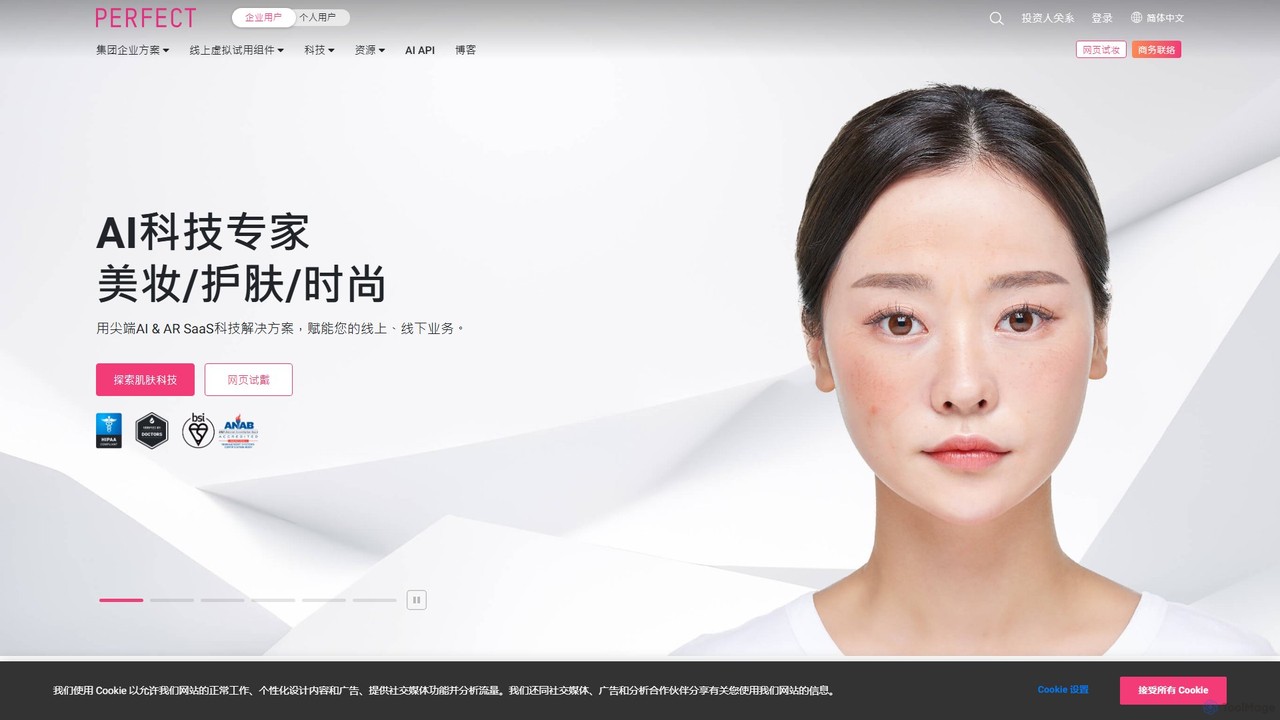
Perfect Corp
Perfect Corp is a leading SaaS provider offering AI and AR solutions for the beauty and fashion industries. …
Perfect Corp is a leading SaaS provider offering AI and AR solutions for the beauty and fashion industries. Its technology enables hyper-realistic virtual try-on for makeup, hair, and accessories, alongside advanced AI skin analysis. By integrating these tools, brands can enhance their e-commerce and in-store experiences, driving sales, increasing customer engagement, and delivering personalized shopping journeys at scale.
About Customer Experience
AI Customer Experience tools are a class of software that uses artificial intelligence to personalize, automate, and enhance every customer interaction within the retail sector. These tools leverage machine learning and natural language processing (NLP) to analyze customer data, predict behavior, and understand intent in real time. Their primary purpose is to create seamless, proactive, and highly relevant shopping journeys that increase customer satisfaction, loyalty, and sales. Unlike traditional analytics, these AI-driven solutions can anticipate needs and dynamically adapt the user experience across all touchpoints.
Core Features
- Personalized Recommendations: Analyzes user behavior to provide highly relevant product suggestions on websites, apps, and in emails.
- AI-Powered Chatbots: Offers 24/7 automated support, answers customer queries, and guides users through their purchase.
- Sentiment Analysis: Automatically processes customer reviews and feedback to gauge satisfaction and identify areas for improvement.
- Predictive Analytics: Forecasts customer churn, lifetime value, and future purchasing habits to enable proactive engagement.
- Dynamic Journey Orchestration: Adapts website content, offers, and communication channels in real time based on individual customer actions.
Use Cases
These tools are essential for e-commerce managers, marketing teams, and customer support leaders in the retail industry. They are used to power personalized product carousels on online stores, automate responses to common support inquiries like order status, and analyze thousands of customer reviews to inform product development. They are also applied in physical retail to optimize store layouts based on foot traffic analysis.
How to Choose
When selecting an AI Customer Experience tool, consider its integration capabilities with your existing e-commerce platform (e.g., Shopify, Magento) and CRM. Evaluate the sophistication of its AI models—does it offer true personalization or just basic segmentation? Also, assess its scalability to handle your data volume and the user-friendliness of its dashboard for non-technical teams. Finally, review its data privacy and compliance policies.

Customer ExperienceUse Cases
Personalizing the E-commerce Shopping Journey
An e-commerce manager uses an AI customer experience platform to create unique journeys for each visitor. The tool analyzes a user's real-time behavior, such as clicks, viewed products, and cart additions. Based on this data, it dynamically alters the homepage layout, sorts product categories, and displays personalized recommendation carousels. For a returning customer interested in running shoes, the AI prioritizes new arrivals in that category, resulting in a more relevant experience that can significantly increase conversion rates and average order value.
Automating 24/7 Customer Support with AI Chatbots
A customer support lead implements an AI chatbot on their retail website to handle high volumes of inquiries. The chatbot is trained on historical support data and product information. It can instantly answer common questions like "What is your return policy?" or "Track my order." For more complex issues, it intelligently collects initial information from the customer before seamlessly transferring the conversation to a human agent. This reduces agent workload by over 40%, lowers response times, and ensures customers receive immediate help anytime.
Analyzing Customer Feedback at Scale
A product marketing manager uses an AI tool to analyze thousands of customer reviews from their website, app store, and social media. The tool's sentiment analysis feature automatically categorizes feedback as positive, negative, or neutral and identifies key themes. For example, it might reveal that while customers love a new jacket's design (positive), many complain about its zipper quality (negative). This provides actionable, data-driven insights to the product development team, helping them prioritize improvements for future versions without manually reading every single comment.
Proactively Retaining At-Risk Customers
A customer retention specialist uses a predictive analytics tool to identify customers who are likely to churn. The AI model analyzes signals like decreased purchase frequency, negative support interactions, and reduced email engagement. When the system flags a customer as 'at-risk,' it can automatically trigger a personalized retention campaign. This might involve sending a targeted discount offer, a survey to gather feedback, or a helpful email from customer success. This proactive approach helps reduce churn by addressing issues before the customer decides to leave.
Optimizing In-Store Experience with Smart Analytics
A retail operations manager for a chain of physical stores uses AI-powered analytics to improve the in-store experience. By connecting to in-store cameras and sensors, the tool analyzes foot traffic patterns, identifies high-traffic 'hot zones' and low-traffic 'cold zones,' and measures checkout queue lengths in real time. This data provides insights to optimize store layout, strategically place promotional displays in hot zones, and adjust staffing levels during peak hours to minimize wait times, creating a smoother and more enjoyable shopping environment.
Implementing Dynamic Pricing for Competitive Advantage
A pricing strategist for an online electronics retailer uses an AI tool to automate pricing decisions. The system continuously monitors competitor prices, inventory levels, market demand, and even customer browsing behavior. For a popular smartphone, if a competitor lowers their price, the AI can automatically adjust the retailer's price to remain competitive. Conversely, if inventory is low and demand is high, it might slightly increase the price to maximize profit margins. This allows the business to react to market changes in minutes rather than days, securing a significant competitive edge.