Xolver
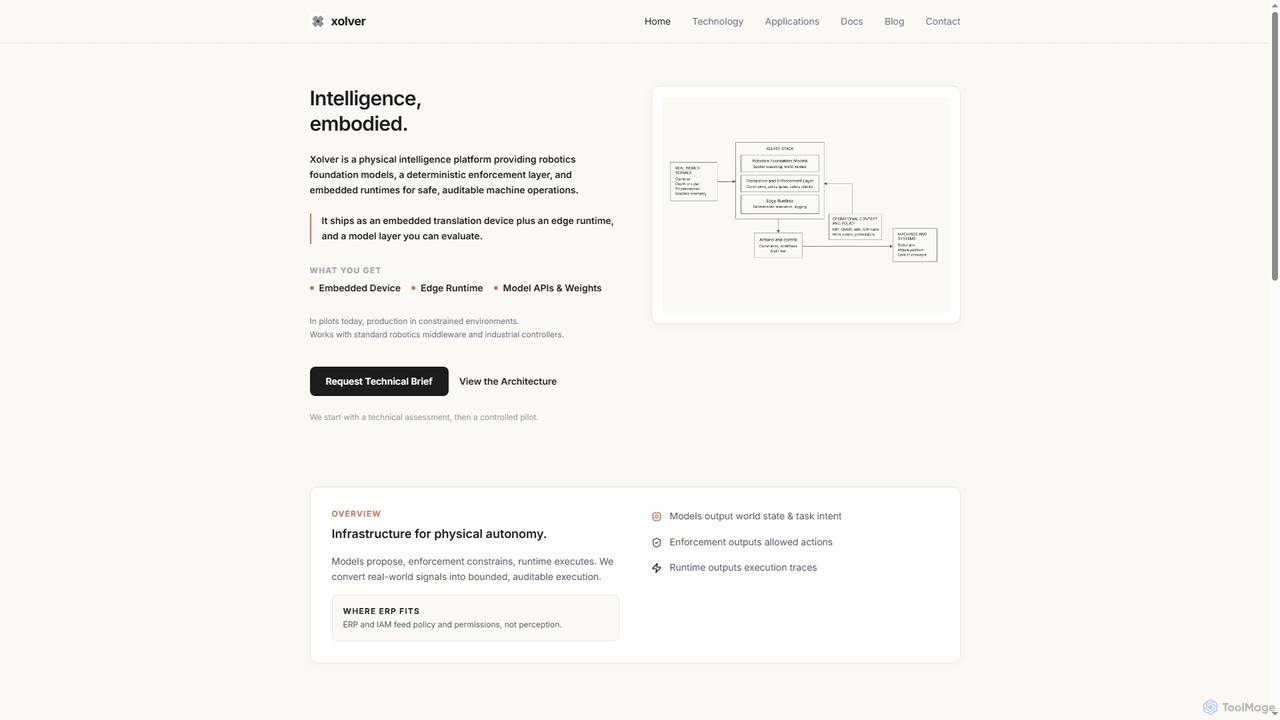
Xolver is a physical intelligence platform designed for robotics, providing foundation models, a deterministic enforcement layer, and embedded …
Xolver is a physical intelligence platform designed for robotics, providing foundation models, a deterministic enforcement layer, and embedded runtimes. It enables safe, auditable, and adaptive machine operations by converting real-world signals into bounded execution, ensuring reliability in complex industrial environments.
FamilyGPT
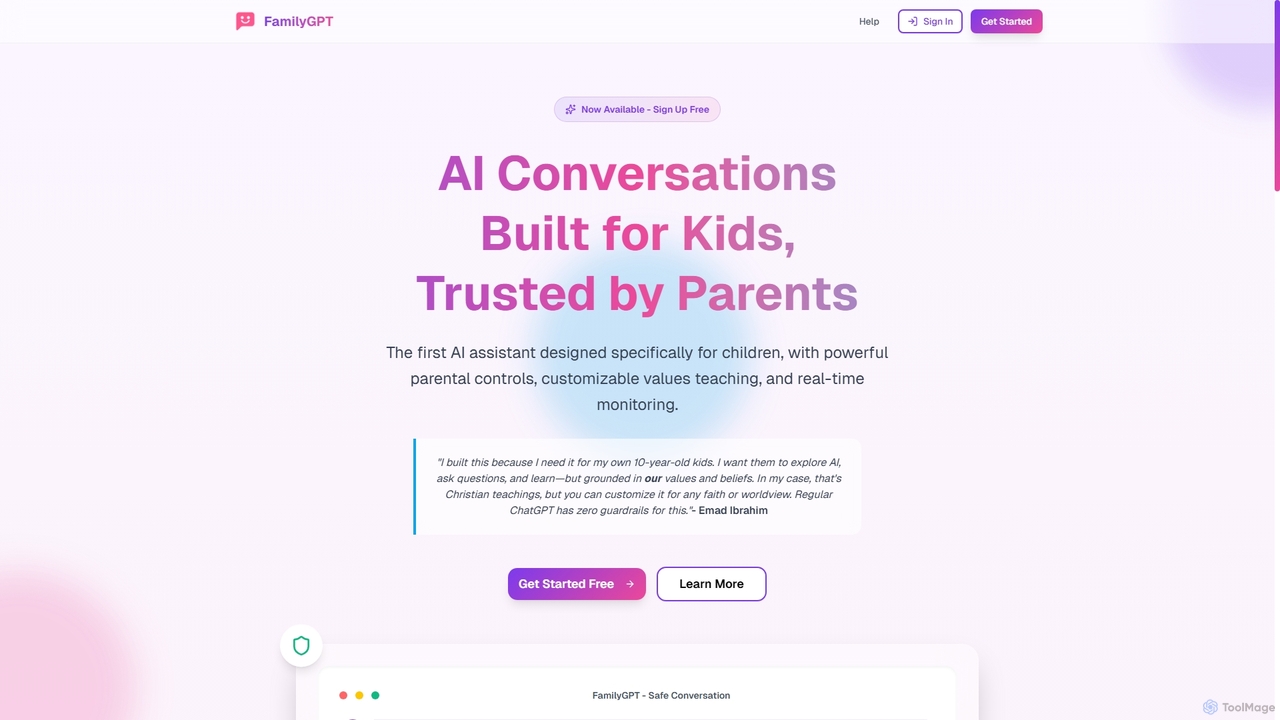
FamilyGPT is a safe AI chat assistant designed for children, featuring robust parental controls, customizable values teaching, and …
FamilyGPT is a safe AI chat assistant designed for children, featuring robust parental controls, customizable values teaching, and real-time activity monitoring. It allows kids to explore AI technology in a secure, age-appropriate environment aligned with family beliefs.
Strom Synergy
Strom Synergy is a Singapore-based specialist provider of lightning protection systems (LPS). They offer comprehensive services including audits, …
Strom Synergy is a Singapore-based specialist provider of lightning protection systems (LPS). They offer comprehensive services including audits, maintenance, design, and installation for residential, commercial, and industrial properties, ensuring safety and compliance with regulatory standards.
thecatseye
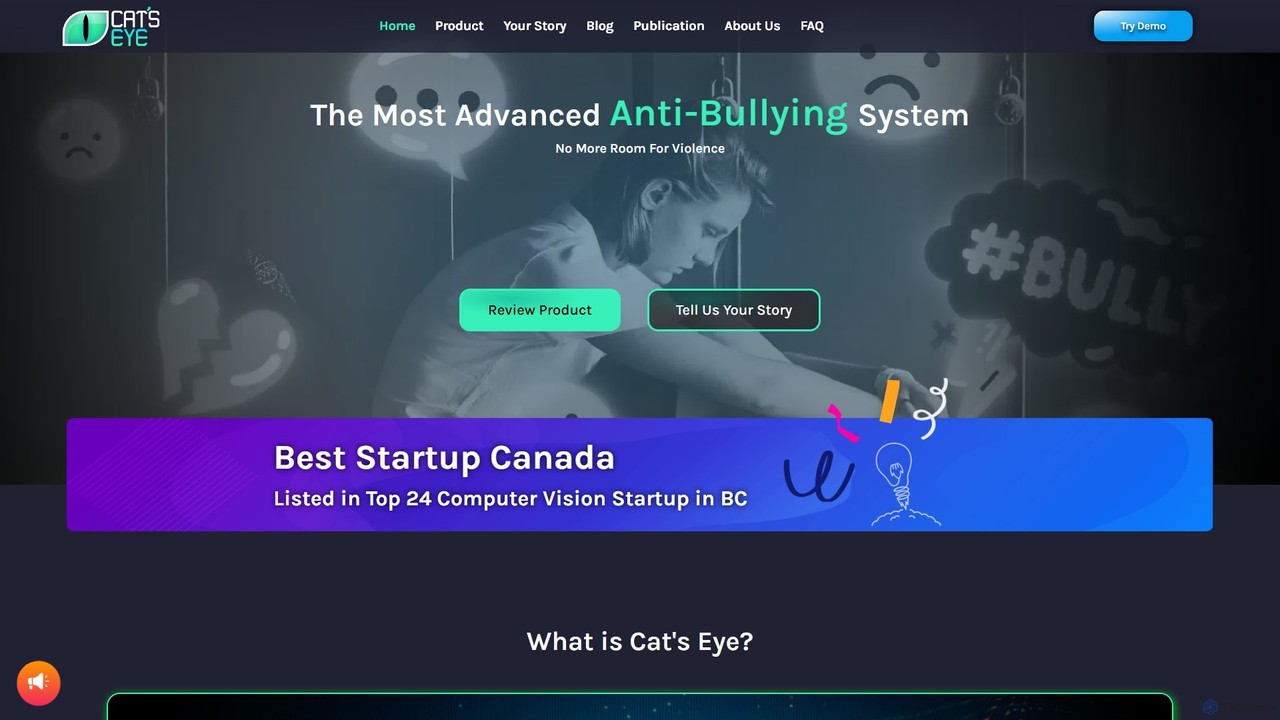
The Cat's Eye is an advanced AI-powered anti-bullying system designed for schools. It utilizes computer vision and audio …
The Cat's Eye is an advanced AI-powered anti-bullying system designed for schools. It utilizes computer vision and audio analysis to detect verbal and physical violence in real-time from existing surveillance systems, sending immediate alerts to staff to enable prompt intervention and create a safer educational environment.
Water-Jel Blanket
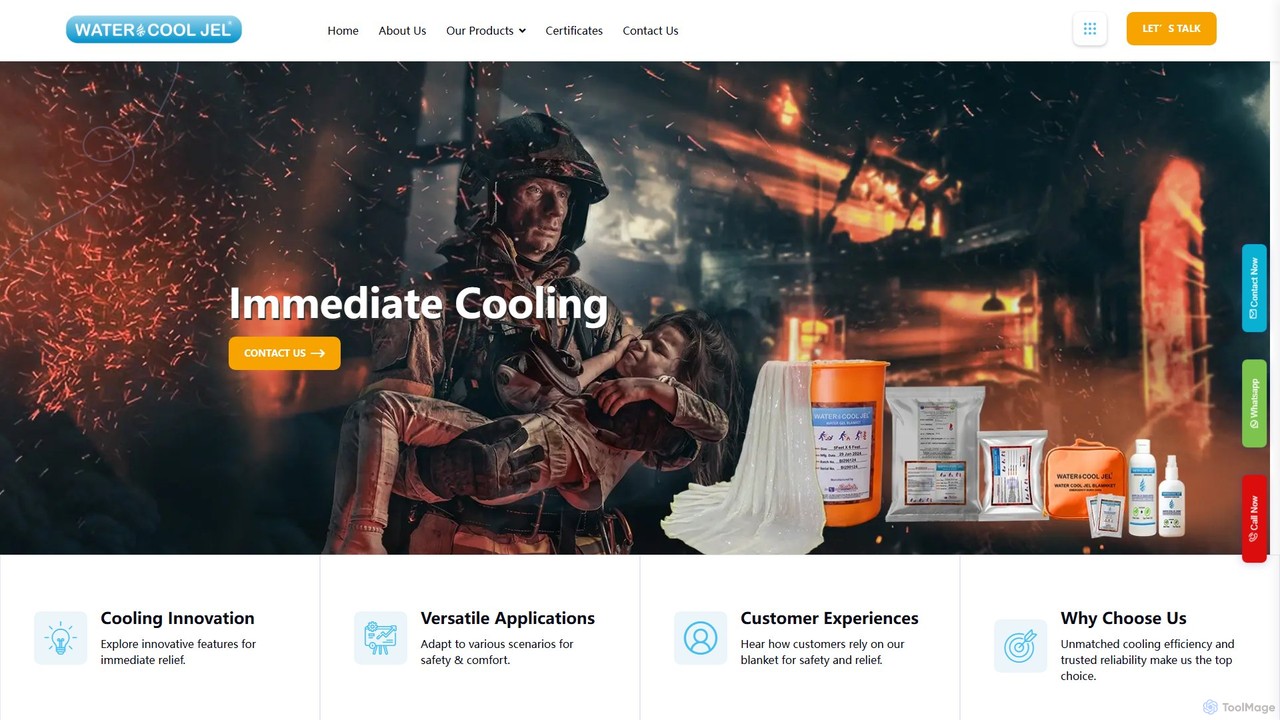
Water-Jel Blanket by Balaji Industries is a professional-grade emergency burn care product. This water-based gel-soaked blanket provides immediate …
Water-Jel Blanket by Balaji Industries is a professional-grade emergency burn care product. This water-based gel-soaked blanket provides immediate cooling and pain relief for thermal burns. Designed to be non-adherent, it stops the burning process, protects against contamination, and is essential for first responders, industrial safety, and home first aid kits. Available in various sizes for versatile application.
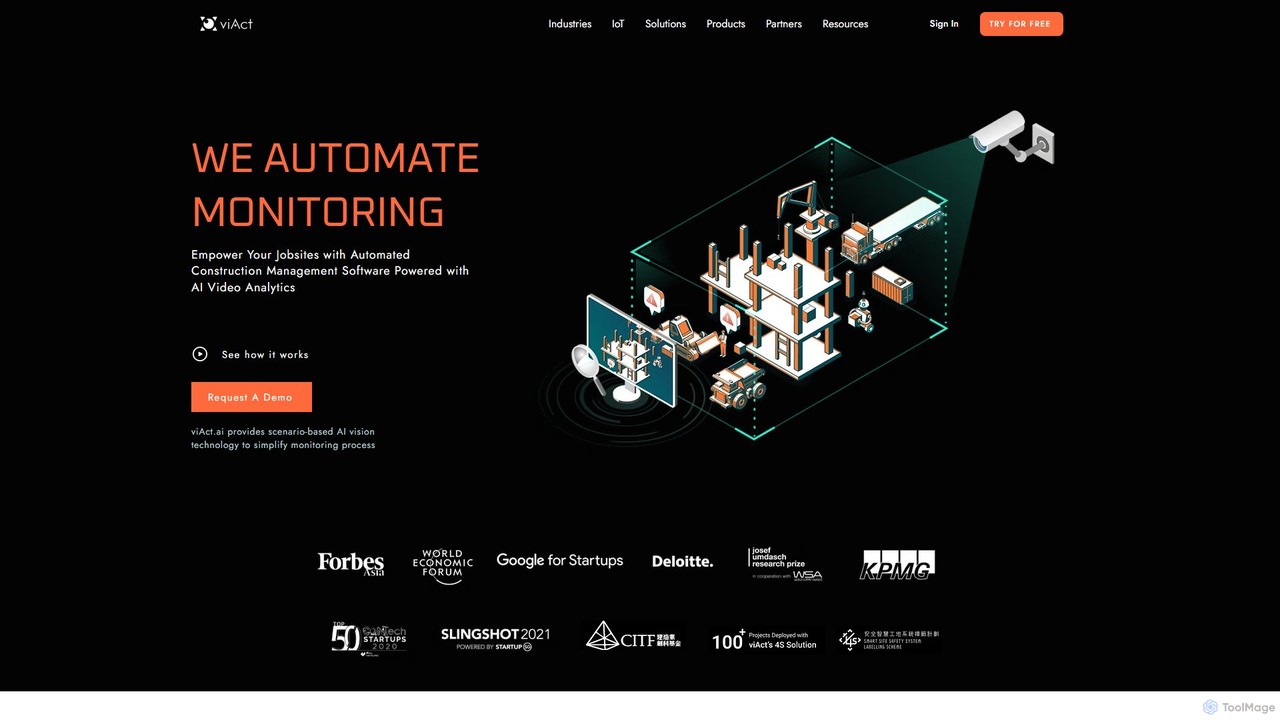
viact
viAct is an AI-powered video analytics platform designed for the construction industry. It automates worksite monitoring to enhance …
viAct is an AI-powered video analytics platform designed for the construction industry. It automates worksite monitoring to enhance safety, productivity, and compliance. By leveraging existing CCTV cameras, viAct's computer vision technology detects safety hazards like PPE non-compliance and danger zone intrusions, providing real-time alerts and data-driven insights through a smart dashboard.
About Safety
AI Safety tools are a class of software designed to ensure artificial intelligence systems operate reliably, ethically, and securely. They employ advanced algorithms to identify, monitor, and mitigate potential risks such as model bias, toxic content generation, data leakage, and adversarial attacks. These tools are essential for developers, businesses, and compliance teams to build trustworthy AI, maintain regulatory adherence, and prevent unintended harm from AI applications. By providing a layer of protection, they enable the responsible deployment of powerful AI technologies.
Core Features
- Bias and Fairness Auditing: Analyzes models and datasets to detect and measure demographic or social biases.
- Content Moderation: Scans and filters harmful, toxic, or inappropriate content in AI-generated text and images.
- Adversarial Attack Defense: Identifies and protects models from malicious inputs designed to cause failures or reveal data.
- Data Privacy and Anonymization: Detects and redacts personally identifiable information (PII) from training data to ensure compliance.
- Explainability (XAI): Provides insights into how AI models arrive at their decisions, increasing transparency and accountability.
Applicable Scenarios
AI Safety tools are critical across various sectors. In social media, they power content moderation systems to create safer online environments. Financial institutions use them to audit lending models for fairness and prevent discriminatory outcomes. In healthcare, these tools help ensure the reliability and privacy of AI-powered diagnostic systems. They are also fundamental for securing large language models (LLMs) used in customer service from manipulation and misuse.
Selection Criteria
When choosing an AI Safety tool, first assess the specific risks associated with your AI application (e.g., content toxicity vs. model bias). Evaluate its integration capabilities with your existing MLOps pipeline and development workflow. Verify its compatibility with the types of models you use (e.g., LLMs, diffusion models, classifiers). Finally, consider its alignment with relevant regulatory standards, such as the EU AI Act or GDPR, to ensure compliance.

SafetyUse Cases
Moderating Online Community Content
A social media platform's trust and safety team integrates an AI Safety tool to automatically scan user-generated posts, comments, and images in real-time. The tool identifies and flags content related to hate speech, harassment, and graphic violence, significantly reducing the volume of harmful material that human moderators must review. This allows for faster response times to policy violations and helps create a safer environment for users, protecting the platform's brand reputation.
Auditing a Hiring Algorithm for Bias
An HR department uses a fairness auditing tool to analyze their new AI-powered resume screening model. The tool runs tests on the model using a diverse set of synthetic profiles to identify if it unfairly penalizes candidates based on gender, ethnicity, or age-coded language. The resulting report provides actionable insights and visualizations, allowing the development team to mitigate the identified biases and ensure the hiring process is more equitable and compliant with anti-discrimination laws.
Securing LLMs from Prompt Injection Attacks
A company developing a customer service chatbot integrates a safety tool that acts as a firewall for their Large Language Model (LLM). This tool inspects all incoming user prompts to detect and block prompt injection and jailbreaking attempts. By preventing malicious users from bypassing safety filters, it ensures the chatbot does not generate harmful responses, leak sensitive system information, or perform unauthorized actions, thereby maintaining the integrity and security of the AI service.
Filtering Inappropriate AI-Generated Images
An AI art generation platform implements a safety filter to prevent the creation of Not Safe For Work (NSFW), violent, or hateful imagery. The tool works in two stages: it first scans user prompts for prohibited keywords and concepts, and then analyzes the generated image for visual policy violations before it is shown to the user. This proactive filtering helps enforce community guidelines automatically, reduces legal and reputational risks, and maintains a positive user experience on the platform.
Anonymizing Datasets for Medical AI Training
A research institution preparing a large dataset of patient records for training a diagnostic AI uses a safety tool to ensure data privacy. The tool automatically scans all documents and structured data to detect and redact over 15 types of personally identifiable information (PII), including names, addresses, and medical record numbers. This process anonymizes the data, enabling researchers to build powerful models while remaining fully compliant with strict privacy regulations like HIPAA and GDPR.
Validating AI Model Robustness in Finance
A bank's MLOps team uses an AI safety tool to perform robustness testing on its AI-based fraud detection system. The tool simulates sophisticated adversarial attacks by making subtle, malicious changes to transaction data to see if the model can be tricked into making incorrect predictions (e.g., classifying a fraudulent transaction as legitimate). The test results highlight vulnerabilities, allowing the team to harden the model's defenses and improve its reliability against real-world fraud attempts.