ToolMage
Sign in

Best 9 Customer Relationship Management AI tools for Sales

Popular Customer Relationship Management AI tools in Sales include Granola, Customers.ai, Humanic, churnpilot, Autoreviews AI, infomail.ai, Review Tailor, SolidChat, and ai-crew, helping you work more efficiently.

Review Tailor
Freemium

Review Tailor

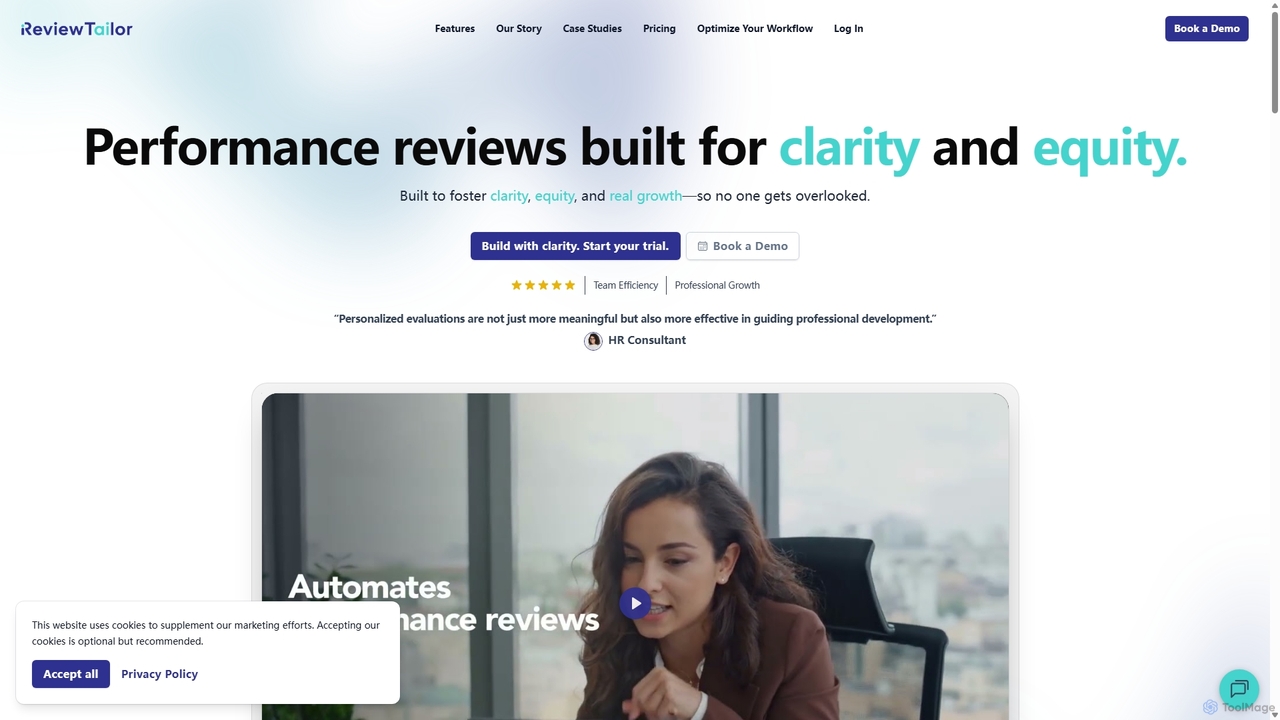
Review Tailor is an AI-powered tool designed to help businesses manage their online reputation by generating personalized and professional responses to customer reviews. It analyzes review sentiment and content to craft tailored replies, saving time and ensuring brand consistency across multiple platforms.

Review Management
Visits 5.7KFavorites 138Likes 129
Granola
Freemium

Granola

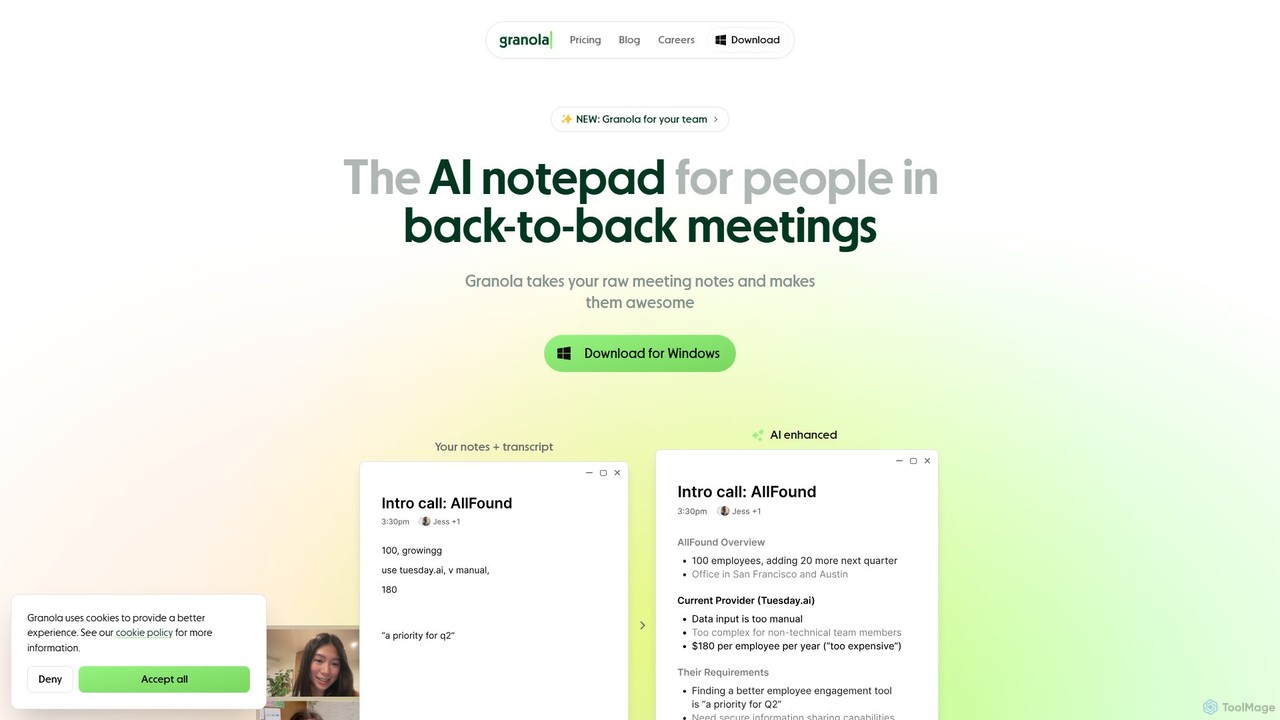
Granola is an AI-powered notepad designed for professionals in back-to-back meetings. It operates locally on your computer to transcribe meeting audio without bots, enhances your notes with AI-generated insights, and helps create summaries, action items, and follow-up content, boosting meeting productivity.

Meetings
Visits 1.9MFavorites 156Likes 166
infomail.ai
Freemium

infomail.ai

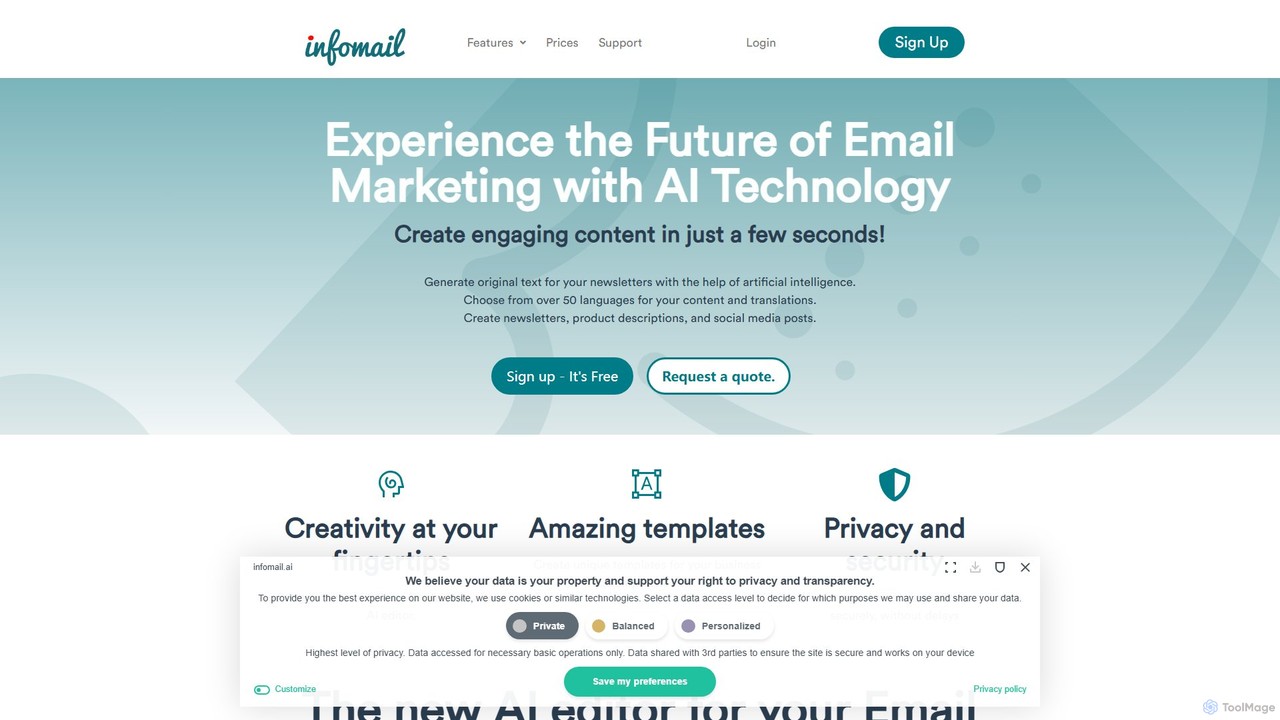
infomail.ai is an intelligent email marketing platform that combines over two decades of industry experience with advanced AI. It empowers businesses to create personalized, automated email campaigns that enhance customer communication, boost engagement, and drive growth, all while prioritizing data privacy.

Email Marketing
Visits 6KFavorites 127Likes 130
Autoreviews AI
Freemium

Autoreviews AI

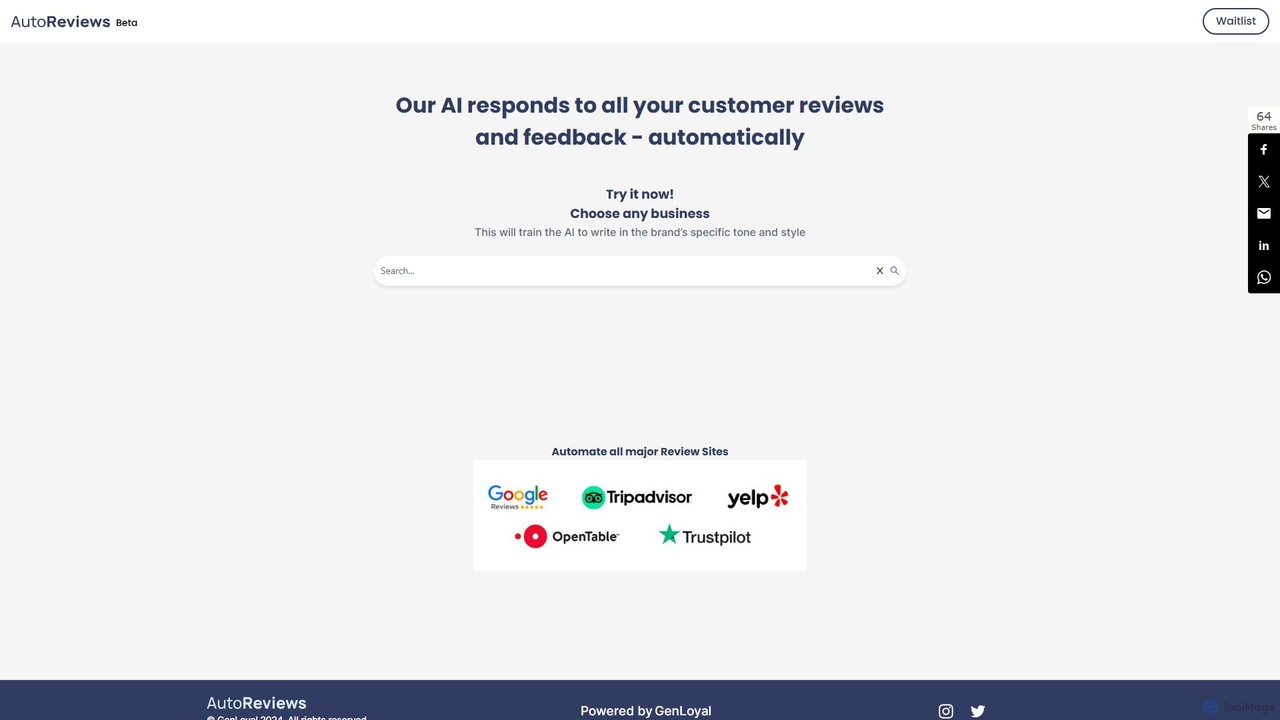
Autoreviews AI is an automated tool that uses artificial intelligence to generate personalized, on-brand responses to customer reviews across all major platforms. It learns your specific brand voice to ensure consistent and authentic communication, saving you time while enhancing your online reputation.

Review Management
Visits 6.2KFavorites 155Likes 145
Humanic
Freemium

Humanic

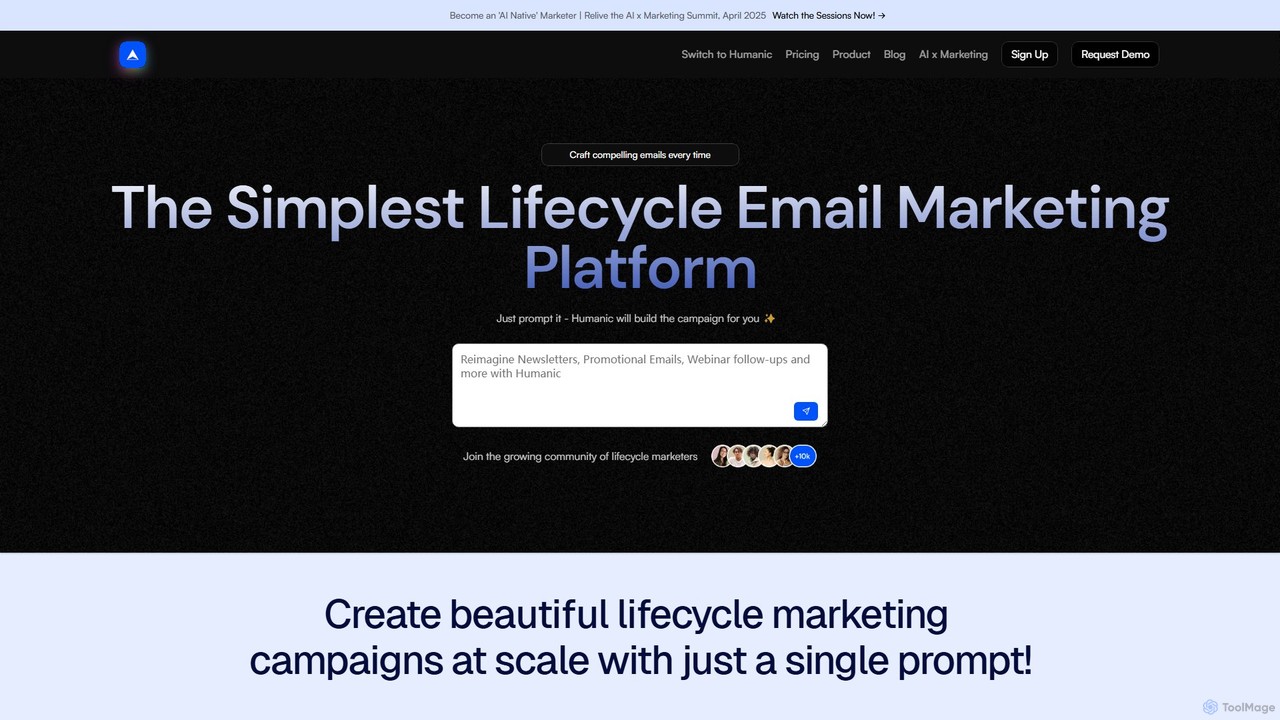
Humanic is an AI-powered lifecycle email marketing platform designed for modern marketers. It simplifies campaign creation by allowing users to generate entire, hyper-personalized email sequences from a single prompt, leveraging user data and product usage to drive engagement and conversions.

Automation
Visits 16KFavorites 157Likes 153
ai-crew
Paid

ai-crew

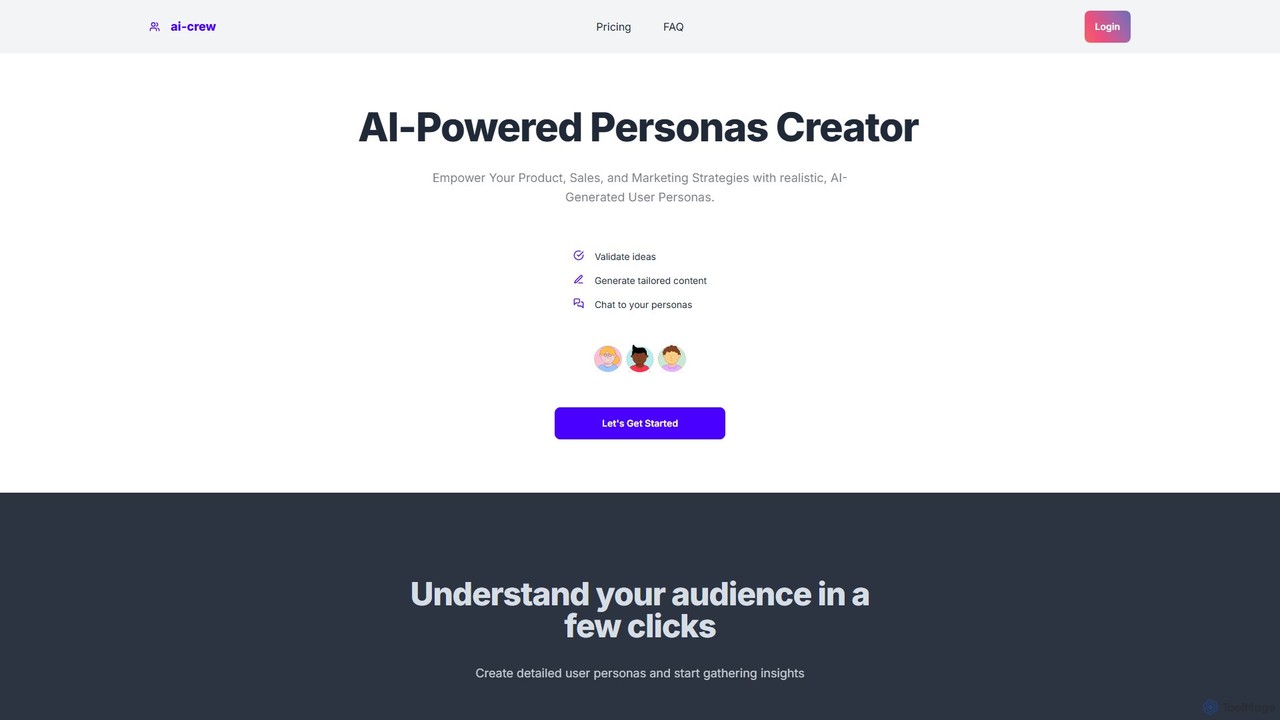
ai-crew is an AI-powered tool that generates realistic user personas from a simple product description. It empowers product, marketing, and sales teams to deeply understand their audience, validate ideas, and tailor strategies by interacting with these AI-generated personas through a unique chat interface.

Market Research
Visits 5.6KFavorites 114Likes 104
churnpilot
Freemium

churnpilot

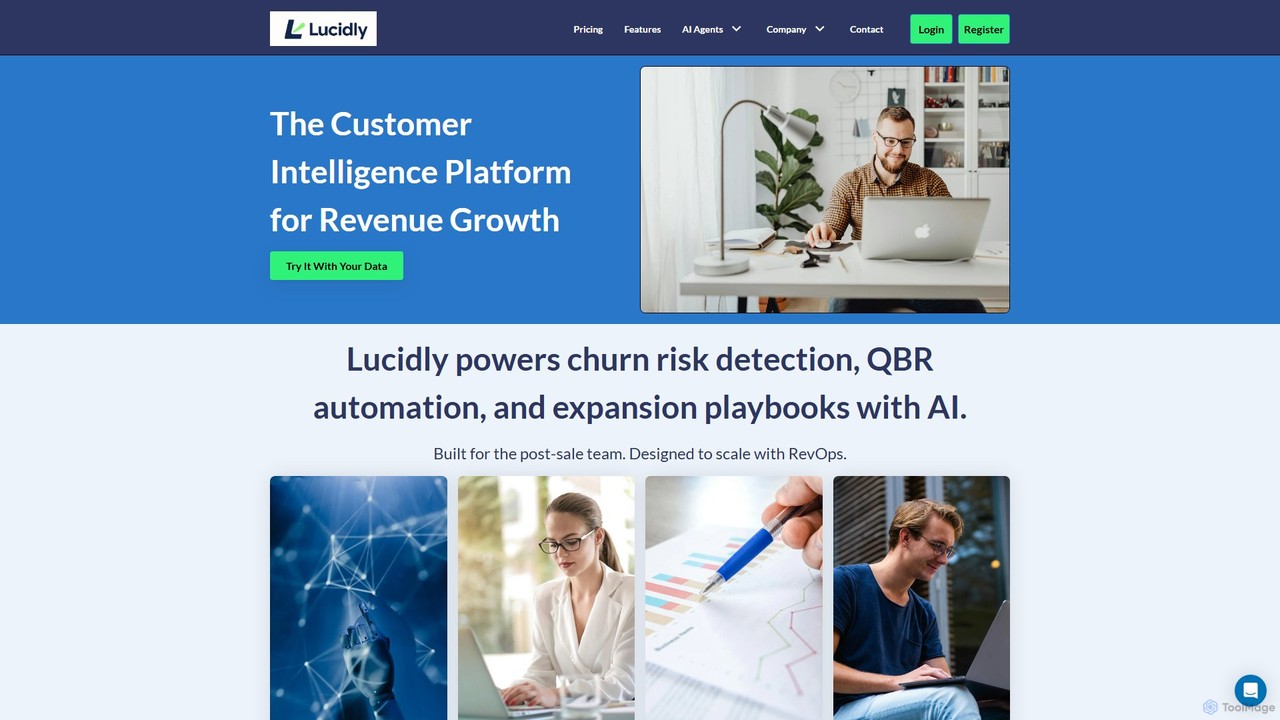
churnpilot is an AI-powered customer intelligence platform for revenue teams. It proactively detects churn risks, identifies expansion opportunities, and automates strategic reporting like QBRs. By analyzing data from your warehouse, CRM, and product, it helps SaaS businesses increase retention and customer lifetime value.

Business Intelligence
Visits 9.4KFavorites 135Likes 140
SolidChat
Freemium

SolidChat

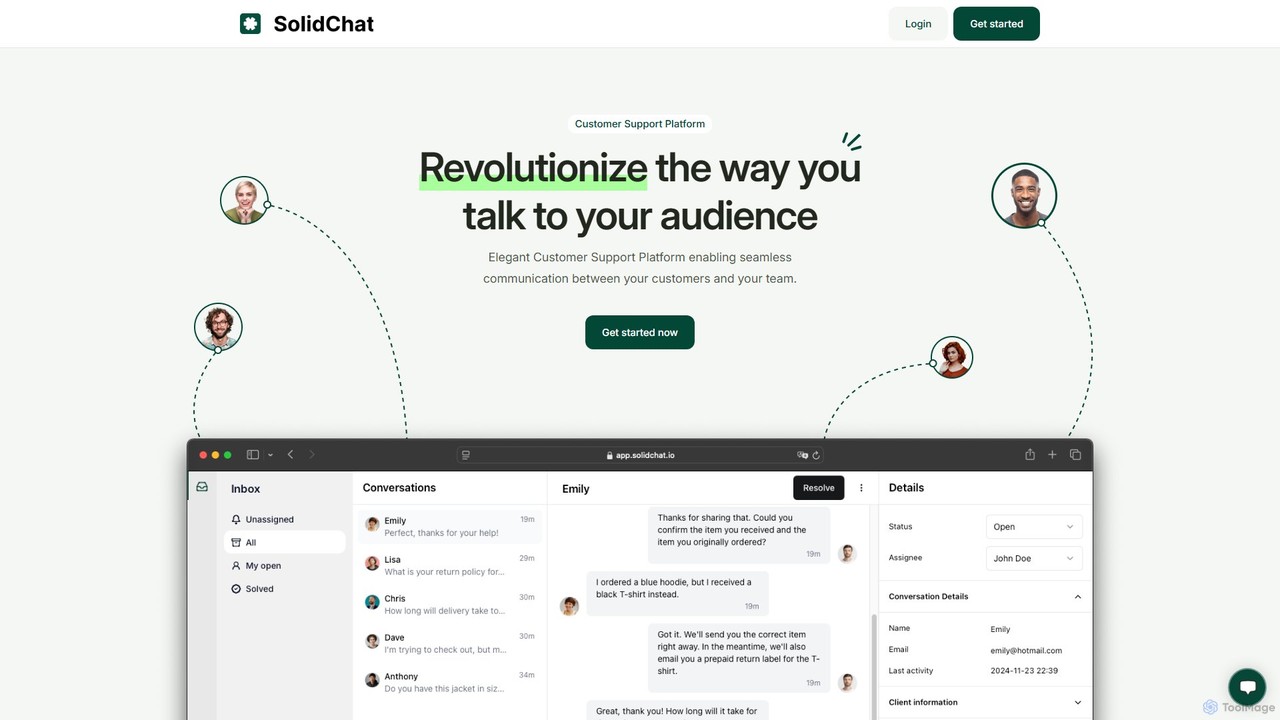
SolidChat is an AI-powered customer support platform designed to enhance customer engagement and streamline communication. It offers a live chat widget, intelligent chatbots for 24/7 support, and a collaborative team inbox. By enabling instant responses and proactive engagement, SolidChat helps businesses convert more visitors, improve customer satisfaction, and boost operational efficiency.

Live Chat
Visits 5.6KFavorites 156Likes 150
Customers.ai
Freemium

Customers.ai

Customers.ai is a high-accuracy website visitor identification platform designed to de-anonymize your traffic. It helps businesses convert anonymous visitors into customers through precise email marketing, ad retargeting, and data enrichment. As an official Meta Business Partner, it restores ad audiences lost to cookie deprecation, boosting marketing ROI and revenue.

Analytics
Visits 64.6KFavorites 131Likes 112

About Customer Relationship Management

AI Customer Relationship Management (CRM) tools are platforms that use artificial intelligence to automate and enhance the management of customer interactions throughout their lifecycle. They leverage machine learning and data analysis to predict customer behavior, personalize communication, and streamline sales and service processes. This enables businesses to build stronger relationships, improve customer retention, and drive revenue growth by making data-driven decisions. AI-powered features like predictive lead scoring and sentiment analysis provide insights that traditional CRMs cannot.

Core Features

  • Predictive Lead Scoring: Automatically analyzes and ranks leads based on their likelihood to convert, helping sales teams prioritize efforts.
  • AI-Powered Communication: Deploys chatbots and virtual assistants to handle routine customer inquiries and schedule meetings 24/7.
  • Sentiment Analysis: Analyzes customer emails, calls, and social media comments to gauge satisfaction and identify at-risk accounts.
  • Automated Data Entry & Enrichment: Captures and organizes customer information from various channels automatically, reducing manual work.
  • Sales Forecasting: Uses historical data and AI models to generate accurate predictions of future sales performance and revenue.

Use Cases

AI CRM tools are essential for sales, marketing, and customer service teams across various industries, including SaaS, e-commerce, real estate, and finance. A sales team can use it to focus on high-value leads identified by AI, while a service team can use sentiment analysis to proactively address customer issues before they escalate. Marketing teams leverage it for hyper-personalization of campaigns.

How to Choose

When selecting an AI CRM, consider the scale of your business and its specific needs. Evaluate its integration capabilities with your existing tools, such as email marketing platforms and ERP systems. Assess the specific AI features offered—do you need advanced forecasting or customer service chatbots? Finally, consider the platform's ease of use and the level of training required for your team to adopt it effectively.

Customer Relationship Management use cases

1

Automating Lead Qualification and Scoring

A sales development representative (SDR) at a SaaS company uses an AI CRM to manage a high volume of inbound leads. The AI automatically analyzes each lead from web forms and trial sign-ups, scoring them based on firmographics, engagement level, and behavioral data. High-scoring leads are instantly routed to senior account executives, while lower-scoring ones are placed into an automated nurturing sequence. This process reduces manual sorting time by over 80% and ensures that sales reps focus only on the most promising opportunities, increasing the overall conversion rate.

2

Personalizing Customer Communication at Scale

An e-commerce marketing manager uses their AI CRM to enhance customer retention. The system segments customers based on purchase history, browsing behavior, and predicted lifetime value. It then automates the delivery of hyper-personalized email campaigns with product recommendations and special offers tailored to each segment. The AI also identifies customers at risk of churn and triggers a targeted re-engagement campaign, resulting in a 15% reduction in customer churn rate within one quarter.

3

Proactive Customer Service with Sentiment Analysis

A customer support manager for a telecommunications company implements an AI CRM to monitor customer interactions. The system's sentiment analysis feature scans all incoming support tickets, emails, and social media mentions in real-time. When it detects strong negative sentiment, it automatically flags the conversation, escalates it to a senior support agent, and provides a summary of the issue. This proactive approach allows the team to address frustrated customers before they churn, improving overall customer satisfaction scores by 20%.

4

Improving Sales Forecast Accuracy

A sales director uses the AI CRM's predictive analytics to generate more reliable sales forecasts. The AI model analyzes historical deal data, sales rep activity levels, deal progression speed, and seasonality. It provides a probability-based forecast for the quarter, highlighting deals that are at risk of slipping. This data-driven forecast is consistently more accurate than manual forecasts based on reps' intuition, improving resource allocation and helping the company meet its financial targets more predictably.

5

Streamlining Meeting Scheduling with AI Assistants

A financial advisor uses an AI-powered CRM assistant to manage their calendar. Instead of manually coordinating times with clients, the advisor simply CCs the AI assistant on an email. The AI then communicates directly with the client to find a mutually available time, books the meeting in both calendars, and sends confirmation and reminder emails. This automation frees up several hours of administrative work each week, allowing the advisor to focus on client consultations and strategic planning.

6

Enhancing Post-Sale Customer Onboarding

An account manager at a B2B software company uses the AI CRM to automate and personalize the new customer onboarding process. Once a deal is closed, the CRM automatically triggers a welcome email sequence, assigns onboarding tasks to the support team, and schedules a kick-off call. The AI also monitors early product usage and flags accounts that show low engagement, allowing the account manager to intervene with additional training or support, thereby improving long-term adoption and reducing early-stage churn.

Customer Relationship Management FAQ

What is an AI Customer Relationship Management (CRM) tool?

An AI Customer Relationship Management (CRM) tool is a software platform that uses artificial intelligence to enhance traditional CRM functions. It goes beyond simple data storage by automating tasks, analyzing customer data to provide predictive insights, and personalizing interactions. Key AI features often include predictive lead scoring, sales forecasting, sentiment analysis of customer communications, and AI-powered chatbots for instant support. The goal is to make sales, marketing, and service processes more efficient and intelligent.

How to choose the right AI CRM for my business?

Choosing the right AI CRM involves evaluating several key factors:

  • Business Needs: Identify your primary goals. Do you need to improve lead scoring, automate customer service, or get better sales forecasts? Match the tool's features to your specific pain points.
  • Integrations: Ensure the CRM can connect seamlessly with your existing software stack, such as email marketing tools, communication platforms, and ERP systems.
  • Scalability: Select a platform that can grow with your business, from a small team to a large enterprise, without requiring a costly migration.
  • Ease of Use: A powerful tool is useless if your team can't use it. Look for an intuitive interface and check for available training and support resources.
What's the difference between a standard CRM and an AI CRM?

The primary difference lies in intelligence and automation. A standard CRM is a passive database for storing customer information; it relies on manual data entry and user-driven analysis. An AI CRM is an active system. It automates data entry, enriches contact profiles, analyzes data to provide predictive insights (like which deals are most likely to close), and can even automate communication. In essence, a standard CRM records what happened, while an AI CRM helps predict what will happen and suggests the next best action.

Who can benefit from using an AI CRM?

Virtually any customer-facing team can benefit. Sales teams use it to prioritize leads and forecast revenue more accurately. Marketing teams leverage it for advanced customer segmentation and campaign personalization. Customer service teams use AI chatbots and sentiment analysis to resolve issues faster and more proactively. Even business leaders benefit from the high-level, data-driven insights into customer health and business performance that an AI CRM provides.

Can AI CRMs integrate with other sales and marketing tools?

Yes, integration is a fundamental strength of modern AI CRM platforms. They are designed to act as a central hub for customer data. Most leading AI CRMs offer robust APIs and pre-built integrations for a wide range of tools, including:

  • Email marketing platforms (e.g., Mailchimp, Constant Contact)
  • Communication tools (e.g., Slack, Microsoft Teams)
  • ERP and accounting software (e.g., NetSuite, QuickBooks)
  • Customer support platforms (e.g., Zendesk, Intercom)

This connectivity ensures a single, unified view of the customer across all departments.