ToolMage
Sign in

Best 1 Data Enrichment AI tools for Sales

Popular Data Enrichment AI tools in Sales include Floqer, helping you work more efficiently.

Floqer

Floqer

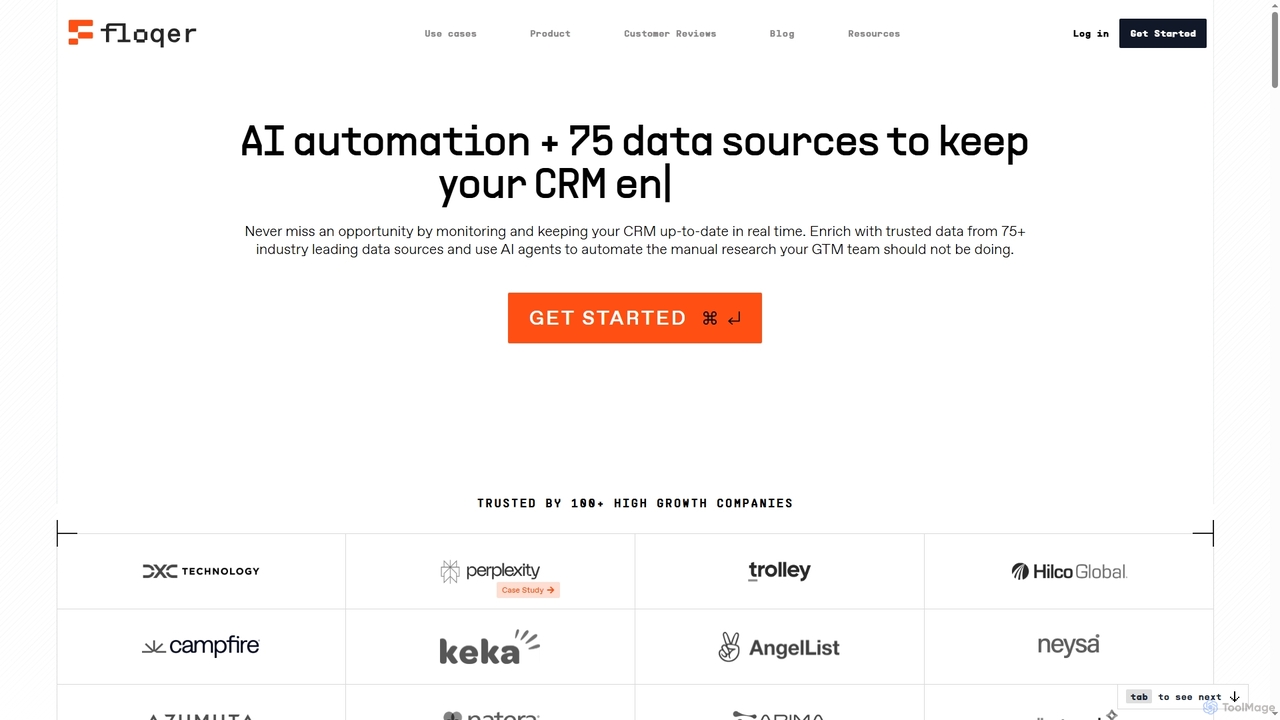
Floqer is an advanced AI-powered CRM data enrichment tool that automates real-time data updates from over 75 sources. It helps sales and marketing teams keep their CRM clean, enriched, and up-to-date, identifying high-intent buyers and automating manual research. Floqer ensures no missed opportunities by providing accurate contact details, intent signals, and buyer context for hyper-targeted outreach.

Automation
Visits 18.2KFavorites 140Likes 138

About Data Enrichment

Data Enrichment tools are AI-powered solutions that enhance existing customer and prospect data with additional, valuable information from various internal and external sources. These tools leverage advanced algorithms to append missing details, validate existing records, and integrate external insights, providing a more comprehensive and accurate view of your audience. In the sales context, Data Enrichment empowers teams to understand their leads and customers deeply, enabling highly targeted outreach, personalized communication, and improved conversion rates across the entire sales funnel.

By transforming raw or incomplete data into rich, actionable profiles, Data Enrichment significantly boosts the effectiveness of sales and marketing efforts. It moves beyond basic contact information, adding layers of demographic, firmographic, behavioral, and social data that reveal deeper insights into potential buyers' needs, preferences, and buying intent. This strategic enhancement of data is crucial for competitive advantage in modern sales environments.

Core Features

  • Contact Data Appending: Automatically adds missing contact details like email addresses, phone numbers, job titles, and social media profiles to existing records, ensuring complete and up-to-date contact information.
  • Demographic & Firmographic Enrichment: Augments data with personal attributes (e.g., age, income, education) for B2C or company details (e.g., industry, size, revenue, technology stack) for B2B, enabling precise segmentation.
  • Behavioral & Intent Data Integration: Incorporates insights on website activity, content consumption, product usage, or expressed interests, helping to gauge a prospect's buying intent and stage in the sales cycle.
  • Social Media & Public Data Integration: Gathers publicly available information from social media profiles and other online sources to build a more holistic view of individuals and companies.
  • Data Validation & Cleansing: Verifies the accuracy and freshness of enriched data, identifying and correcting outdated, incorrect, or duplicate information to maintain high data quality.

Applicable Scenarios

Sales and marketing professionals utilize Data Enrichment for various strategic initiatives. It is crucial for refining lead scoring models, allowing sales teams to prioritize prospects with the highest potential and focus their efforts effectively. Businesses also apply it to personalize marketing campaigns, tailoring messages and offers based on enriched customer profiles for maximum impact. Furthermore, Data Enrichment supports strategic account planning by providing comprehensive insights into target companies, key decision-makers, and their organizational structures, facilitating more effective account-based strategies.

How to Choose

When selecting a Data Enrichment tool, evaluate the quality, breadth, and freshness of its data sources, ensuring they align with your specific target market and data needs. Consider its integration capabilities with your existing CRM, marketing automation, and sales engagement platforms for seamless data flow and operational efficiency. Data privacy compliance (e.g., GDPR, CCPA) is paramount, so verify the vendor's adherence to relevant regulations. Assess the tool's scalability to handle your current and future data volumes, and compare pricing models to find a solution that offers the best value for accurate and reliable insights.

Data Enrichment use cases

1

Enhance Lead Qualification and Prioritization

Sales development representatives (SDRs) and sales managers use Data Enrichment to transform raw inbound leads into qualified opportunities. By automatically appending firmographic data (industry, company size, revenue) and behavioral insights (website visits, content downloads), teams can accurately score leads. This allows SDRs to prioritize outreach to prospects who best fit the ideal customer profile and show high buying intent, significantly improving conversion rates and sales efficiency.

2

Power Personalized Marketing Campaigns

Marketing teams leverage Data Enrichment to create highly personalized and effective campaigns. By enriching customer and prospect profiles with demographic, psychographic, and social media data, marketers can segment their audience with greater precision. This enables the creation of tailored email sequences, ad creatives, and content recommendations that resonate deeply with specific segments, leading to higher engagement rates, improved click-throughs, and ultimately, better campaign ROI.

3

Optimize Account-Based Marketing (ABM) Strategies

ABM teams utilize Data Enrichment to build comprehensive profiles of target accounts. By enriching company data with details like technology stack, organizational structure, key decision-makers' roles, and recent news, ABM specialists gain deep insights. This allows them to craft hyper-personalized messaging for each stakeholder within an account, identify potential pain points, and align sales efforts with account-specific needs, driving stronger relationships and larger deal sizes.

4

Improve Customer Segmentation for Upsell/Cross-sell

Customer success and sales teams use Data Enrichment to better understand their existing customer base. By appending data on product usage, feature adoption, support interactions, and company growth, businesses can identify patterns and segment customers more effectively. This enables proactive identification of upsell or cross-sell opportunities, allowing sales to offer relevant additional products or services that genuinely meet evolving customer needs, thereby increasing customer lifetime value.

5

Maintain CRM Data Hygiene and Accuracy

Operations and sales teams rely on Data Enrichment tools to automatically update and validate contact and company information within their CRM systems. As contacts change jobs or companies evolve, these tools ensure that phone numbers, email addresses, job titles, and company details remain current and accurate. This continuous data cleansing reduces bounce rates, prevents misdirected communications, and ensures sales teams are always working with reliable information, improving overall data quality.

6

Enhance Market Research and Competitive Intelligence

Business intelligence and strategy teams employ Data Enrichment to gain deeper insights into market trends and competitive landscapes. By enriching publicly available company data with financial performance, technology adoption, hiring trends, and news mentions, organizations can identify emerging opportunities, assess competitor strengths and weaknesses, and make more informed strategic decisions. This provides a comprehensive view for market positioning and product development.

Data Enrichment FAQ

What is Data Enrichment in the context of sales?

Data Enrichment in sales refers to the process of enhancing existing customer and prospect data with additional, relevant information from various sources. This includes appending missing contact details, adding demographic or firmographic attributes, and integrating behavioral insights. Its core purpose is to provide sales teams with a more complete and accurate understanding of their audience, enabling more effective lead qualification, personalized outreach, and ultimately, higher conversion rates.

How does Data Enrichment benefit sales teams specifically?

Data Enrichment significantly benefits sales teams by providing deeper insights into their leads and accounts. It allows for more precise lead scoring and prioritization, ensuring sales efforts are focused on the most promising prospects. Teams can craft highly personalized messages based on enriched profiles, leading to increased engagement and response rates. Furthermore, it helps maintain accurate CRM data, reduces time spent on manual research, and supports strategic account planning, all contributing to improved sales efficiency and revenue growth.

What types of data can be enriched by these tools?

Data Enrichment tools can append a wide variety of data types. Common examples include:

  • Contact Information: Email addresses, phone numbers, job titles, social media links.
  • Demographic Data: Age, gender, income, education level (for B2C).
  • Firmographic Data: Industry, company size, revenue, location, technology stack (for B2B).
  • Behavioral Data: Website activity, content downloads, product usage, purchase history.
  • Intent Data: Signals indicating a prospect's likelihood to buy, often derived from online research or engagement.

What is the difference between Data Enrichment and Data Cleansing?

While often used together, Data Enrichment and Data Cleansing serve distinct purposes. Data Enrichment focuses on adding new, valuable information to existing records to make them more comprehensive. For example, adding a prospect's job title or company industry. Data Cleansing, on the other hand, is about identifying and correcting errors, removing duplicates, and standardizing existing data to improve its accuracy and consistency. An example would be fixing typos in an email address or merging duplicate contact entries. Both are crucial for maintaining high data quality.

What key factors should I consider when choosing a Data Enrichment tool?

When selecting a Data Enrichment tool, consider several key factors:

  • Data Quality & Coverage: Evaluate the accuracy, freshness, and breadth of the data sources provided, ensuring they cover your target audience.
  • Integration Capabilities: Check for seamless integration with your existing CRM, marketing automation, and sales engagement platforms.
  • Compliance & Security: Verify adherence to data privacy regulations (e.g., GDPR, CCPA) and robust security measures.
  • Scalability & Performance: Ensure the tool can handle your current data volume and scale with your future growth without performance issues.
  • Pricing Model: Understand the cost structure (e.g., per record, subscription) and compare it against the value and accuracy offered.