ToolMage
Sign in

Best 3 Lead Scoring AI tools for Sales

Popular Lead Scoring AI tools in Sales include Breadcrumbs, Almeta ML, and Infer, helping you work more efficiently.

Breadcrumbs
Freemium

Breadcrumbs

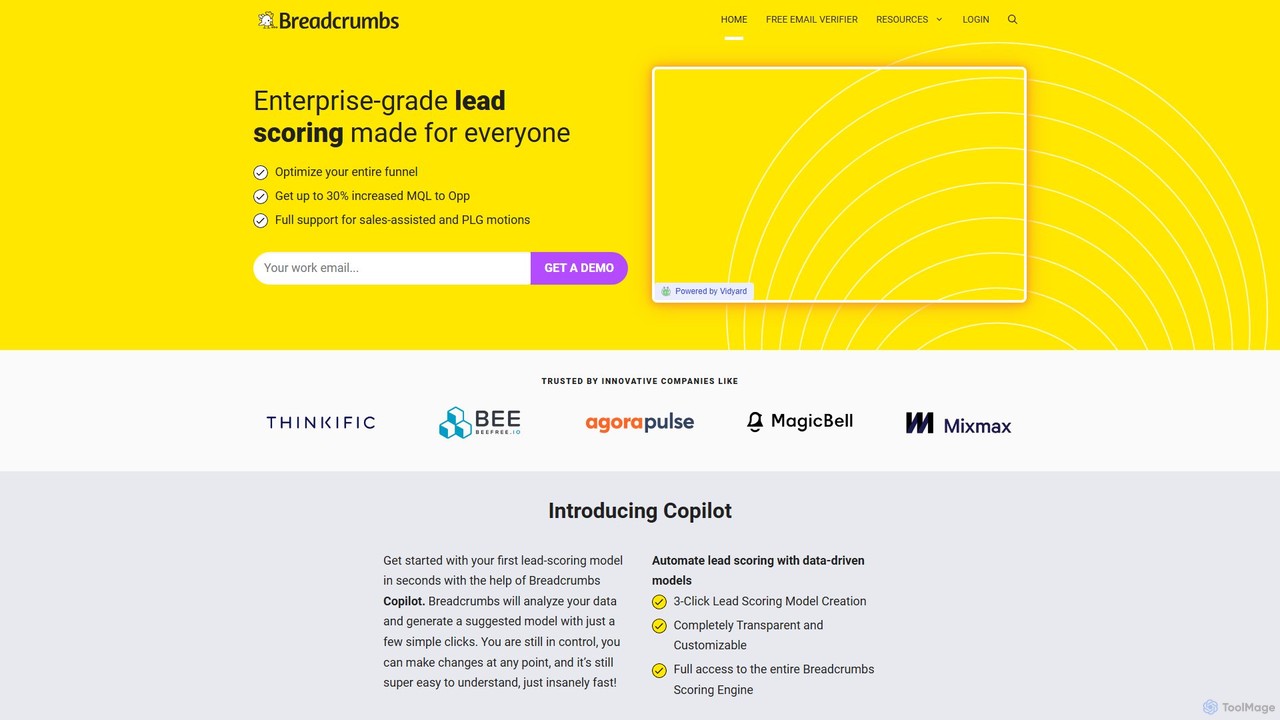
Breadcrumbs is an AI-powered revenue acceleration platform that provides enterprise-grade lead scoring. It connects to your entire tech stack to analyze customer data, helping you identify high-value leads, predict customer behavior, and align sales and marketing teams around objective, data-driven insights for any GTM strategy.

Predictive Analytics
Visits 13.6KFavorites 146Likes 142
Infer
Paid

Infer

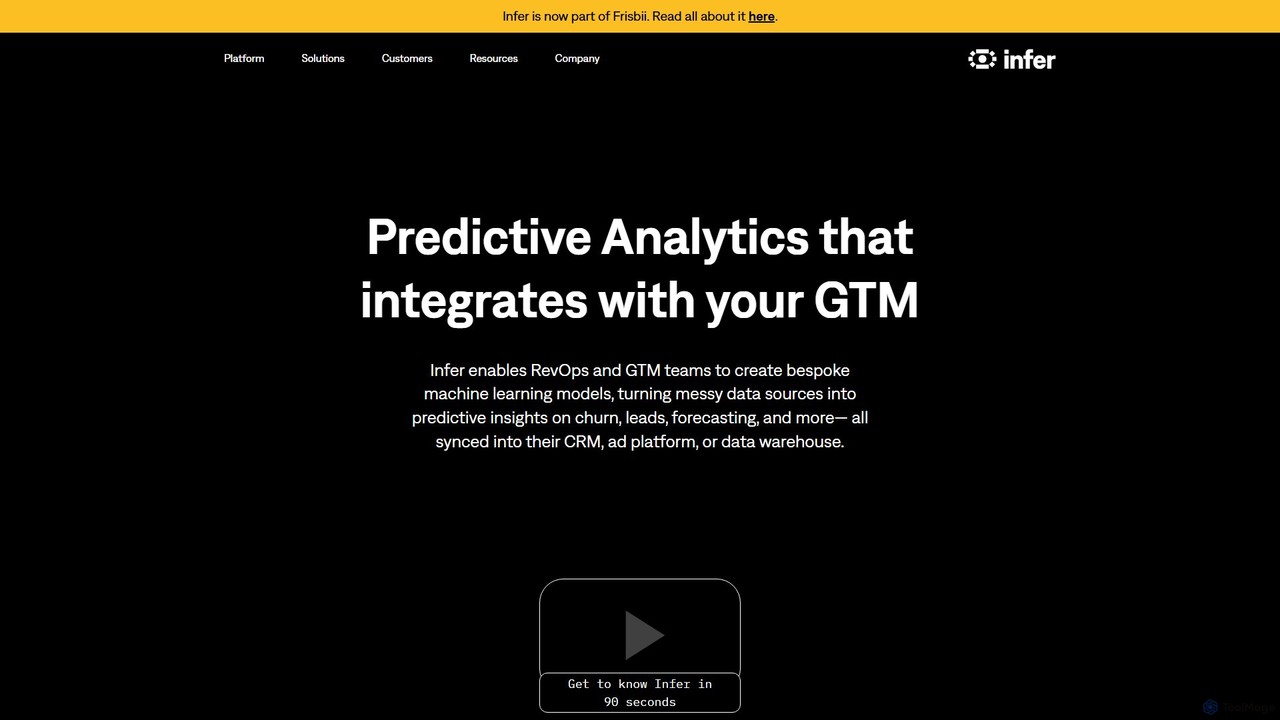
Infer is a predictive analytics platform designed for RevOps and GTM teams. It creates custom machine learning models to transform complex data into actionable insights on churn, lead scoring, and forecasting, seamlessly integrating with your existing CRM, ad platforms, and data warehouses.

Predictive Analytics
Visits 6.3KFavorites 157Likes 130
Almeta ML
Freemium

Almeta ML

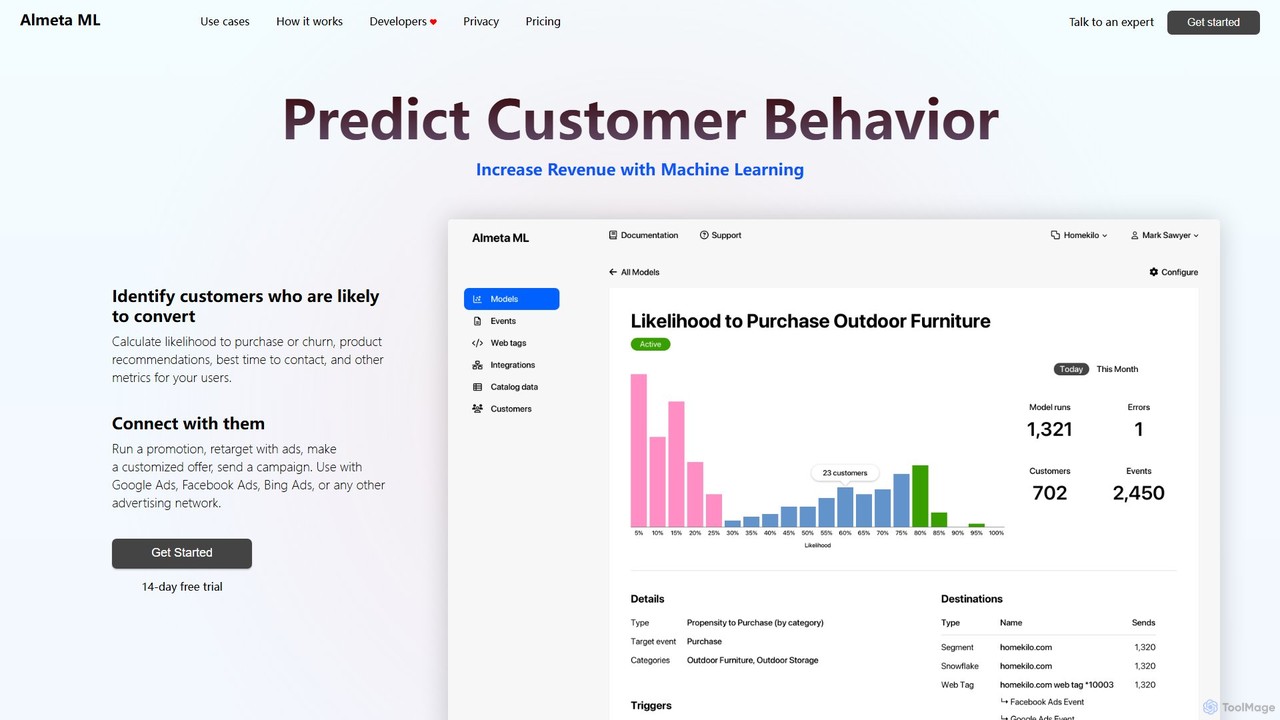
Almeta ML is a machine learning platform that predicts customer behavior on your website in real-time. It helps businesses increase revenue and ROAS by identifying users likely to convert, purchase, or churn. The tool provides actionable metrics like propensity scores, product recommendations, and optimal contact times, integrating seamlessly with advertising and marketing platforms like Google Ads, Facebook Ads, and Shopify.

Customer Behavior Analysis
Visits 7.5KFavorites 120Likes 131

About Lead Scoring

AI Lead Scoring tools are a specialized category of sales software that automatically qualifies and ranks leads based on their likelihood to convert. These platforms use machine learning models to analyze a wide range of data, including demographic information, firmographics, and real-time behavioral signals like website visits and email engagement. By assigning a numerical score to each lead, these tools enable sales and marketing teams to prioritize their efforts on the most promising prospects, significantly improving conversion rates and sales efficiency. This data-driven approach replaces manual, rule-based scoring with dynamic, predictive insights.

Core Features

  • Predictive Scoring Models: Use machine learning to analyze historical data and predict which leads are most likely to become customers.
  • Behavioral Tracking: Monitor prospect activities across websites, emails, and social media to gauge interest and intent.
  • Data Enrichment: Automatically append lead profiles with additional demographic and firmographic data from third-party sources.
  • CRM & MAP Integration: Seamlessly sync lead scores with Customer Relationship Management (CRM) and Marketing Automation Platforms (MAP).
  • Score Decay: Automatically reduce the score of inactive leads over time to maintain a fresh and relevant pipeline.

Use Cases

AI Lead Scoring is crucial for B2B companies with high lead volume, particularly in sectors like SaaS, technology, and financial services. Sales development representatives (SDRs) use it to prioritize their daily outreach, while marketing teams leverage scores to segment audiences for targeted nurturing campaigns. It's also valuable for sales operations to analyze funnel health and optimize the lead handoff process between marketing and sales.

How to Choose

When selecting an AI Lead Scoring tool, first evaluate its integration capabilities with your existing CRM and marketing automation systems. Consider the sophistication of its machine learning model—does it offer transparency into scoring factors? Also, assess the platform's ability to incorporate both behavioral and firmographic data. Finally, review the pricing model, which is often based on the number of leads processed or contacts in your database, and ensure it aligns with your business scale.

Lead Scoring use cases

1

Prioritizing High-Value Sales Leads

A sales development representative (SDR) at a B2B SaaS company starts their day with hundreds of new leads. Instead of contacting them randomly, they use an AI Lead Scoring tool integrated with their CRM. The tool automatically assigns a score from 1-100 to each lead based on their job title, company size, and recent website activity, such as viewing the pricing page. The SDR can then filter their list to focus only on leads with a score above 80, ensuring they spend their time on prospects who have shown clear buying intent, leading to a higher rate of qualified meeting bookings.

2

Personalizing Marketing Nurture Campaigns

A marketing manager wants to run a targeted email nurture campaign. Using an AI Lead Scoring tool, they segment their audience into three groups: 'hot' (score 75+), 'warm' (score 40-74), and 'cold' (score

3

Identifying Product-Qualified Leads (PQLs)

For a company with a freemium product, identifying users who are ready to upgrade is a key challenge. An AI Lead Scoring tool can be configured to track in-app user behavior. It assigns positive points for actions indicating high engagement, such as using advanced features, inviting team members, or approaching usage limits. When a user's score crosses a predefined threshold, they are flagged as a Product-Qualified Lead (PQL) and routed to a sales specialist for a proactive outreach about upgrading to a paid plan, increasing the free-to-paid conversion rate.

4

Automating the Marketing-to-Sales Handoff

A common friction point in business is determining when a lead is ready to move from marketing nurturing to direct sales engagement. An AI Lead Scoring system automates this process. By setting a score threshold (e.g., 70 points), the system can automatically create a task in the CRM for a sales rep to follow up as soon as a lead hits that score. This eliminates manual review and delays, ensuring that sales engages with hot leads at the peak of their interest. This automation creates a seamless bridge between marketing and sales, improving response times and conversion rates.

5

Optimizing the Sales Funnel

A sales operations manager notices that many leads with high scores are not converting into opportunities. By analyzing the data within the AI Lead Scoring platform, they can identify patterns. For instance, they might discover that high-scoring leads from a specific industry are dropping off after the initial call. This insight allows them to work with the sales team to tailor the initial pitch for that industry or provide more relevant materials. Using lead scoring data for analysis helps businesses pinpoint and fix weaknesses in their sales process, thereby improving the overall funnel conversion rate.

6

Enhancing Account-Based Marketing (ABM)

In an Account-Based Marketing (ABM) strategy, the focus is on high-value accounts, not just individual leads. An AI Lead Scoring tool can be adapted for ABM by aggregating scores from multiple contacts within a target company. If several individuals from one account (e.g., a VP of Engineering, a Product Manager, and a developer) are all showing high engagement, the overall account score increases significantly. This signals to the ABM team that the account is 'hot' and ready for a coordinated, multi-threaded sales approach, making the ABM strategy more precise and effective.

Lead Scoring FAQ

What is AI Lead Scoring?

AI Lead Scoring is a process that uses machine learning algorithms to automatically determine the value of a lead to a business. Unlike traditional rule-based scoring, which relies on manually assigned points, AI models analyze vast amounts of historical sales data to identify the characteristics and behaviors that most strongly correlate with conversion. This includes demographic data, firmographic data (like company size and industry), and behavioral data (like website pages visited or emails opened). The result is a more accurate, dynamic, and predictive score that helps sales teams prioritize their efforts effectively.

How to choose the right AI Lead Scoring tool?

Choosing the right tool involves evaluating several key factors. First, ensure it integrates seamlessly with your existing CRM and marketing automation platform to allow for smooth data flow. Second, examine the model's transparency; a good tool should provide insights into why a lead received a certain score. Third, consider the data sources it uses—it should be able to process a mix of demographic, firmographic, and behavioral data. Finally, assess its ease of use and the level of customization it offers to align with your specific sales process and business goals.

What's the difference between manual and AI lead scoring?

The primary difference lies in how scores are determined and maintained. Manual lead scoring relies on a set of explicit rules created by a marketing or sales team (e.g., 'Job Title = Manager, +10 points'). It's static and requires constant human intervention to update the rules as market conditions change. AI lead scoring, on the other hand, is dynamic and predictive. It uses machine learning to analyze historical data and automatically identifies the most predictive attributes. The model learns and adapts over time without manual rule changes, resulting in a more accurate and less biased scoring system that requires significantly less maintenance.

What key data points do AI Lead Scoring tools analyze?

AI Lead Scoring tools analyze a diverse range of data points to build a comprehensive profile of a lead. These typically fall into three main categories:

  • Demographic/Firmographic Data: This includes job title, seniority level, industry, company size, revenue, and geographic location.
  • Behavioral Data: This tracks engagement and intent, such as website pages visited (e.g., pricing page), content downloaded, emails opened and clicked, webinar attendance, and social media interactions.
  • Historical Data: The AI model analyzes your past successful and unsuccessful leads from your CRM to find patterns and identify which combinations of the above data points are most indicative of a future conversion.
Who benefits most from using AI Lead Scoring tools?

While many roles can benefit, the primary beneficiaries are typically B2B companies with a high volume of inbound leads. Key roles include:

  • Sales Development Representatives (SDRs): They can prioritize their outreach efforts on the highest-scoring leads, increasing their efficiency and the number of qualified meetings they book.
  • Marketing Managers: They can use scores to create highly targeted segments for nurturing campaigns, personalizing content, and improving marketing ROI.
  • Sales and Marketing Leaders: They gain a data-driven view of lead quality and sales funnel health, enabling better forecasting and strategic decision-making.

Companies in industries like SaaS, technology, and financial services often see the most significant impact due to their complex sales cycles and large lead databases.