Faraday
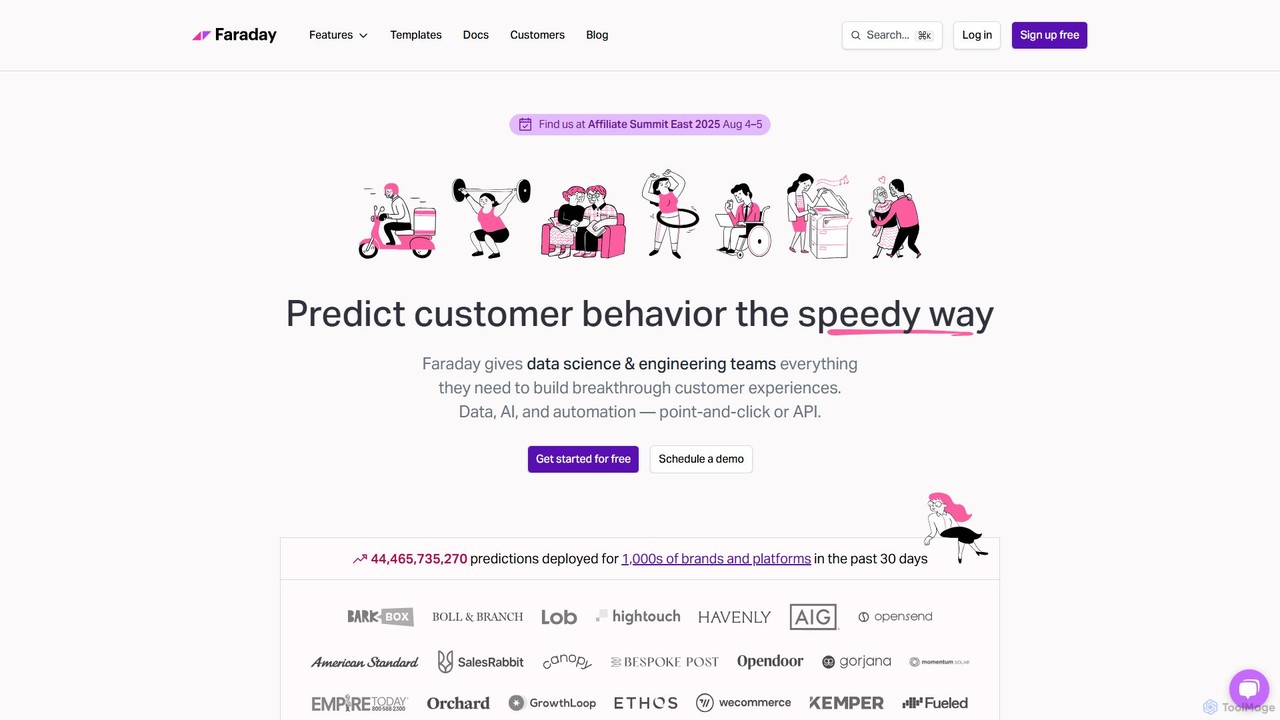
Faraday is an AI platform that predicts customer behavior, enabling brands to forecast actions like purchases, churn, and …
Faraday is an AI platform that predicts customer behavior, enabling brands to forecast actions like purchases, churn, and lead conversion. It uses a vast consumer data graph and machine learning via a simple API to deliver actionable scores for personalized marketing and optimized operations.
Ojamu
Ojamu is an AI-powered MarTech platform designed for the Web3, blockchain, and metaverse ecosystems. It utilizes AI and …
Ojamu is an AI-powered MarTech platform designed for the Web3, blockchain, and metaverse ecosystems. It utilizes AI and blockchain data to analyze vast datasets, predict optimal marketing strategies, and provide brands with actionable intelligence to succeed in the new digital economy.
Almeta ML
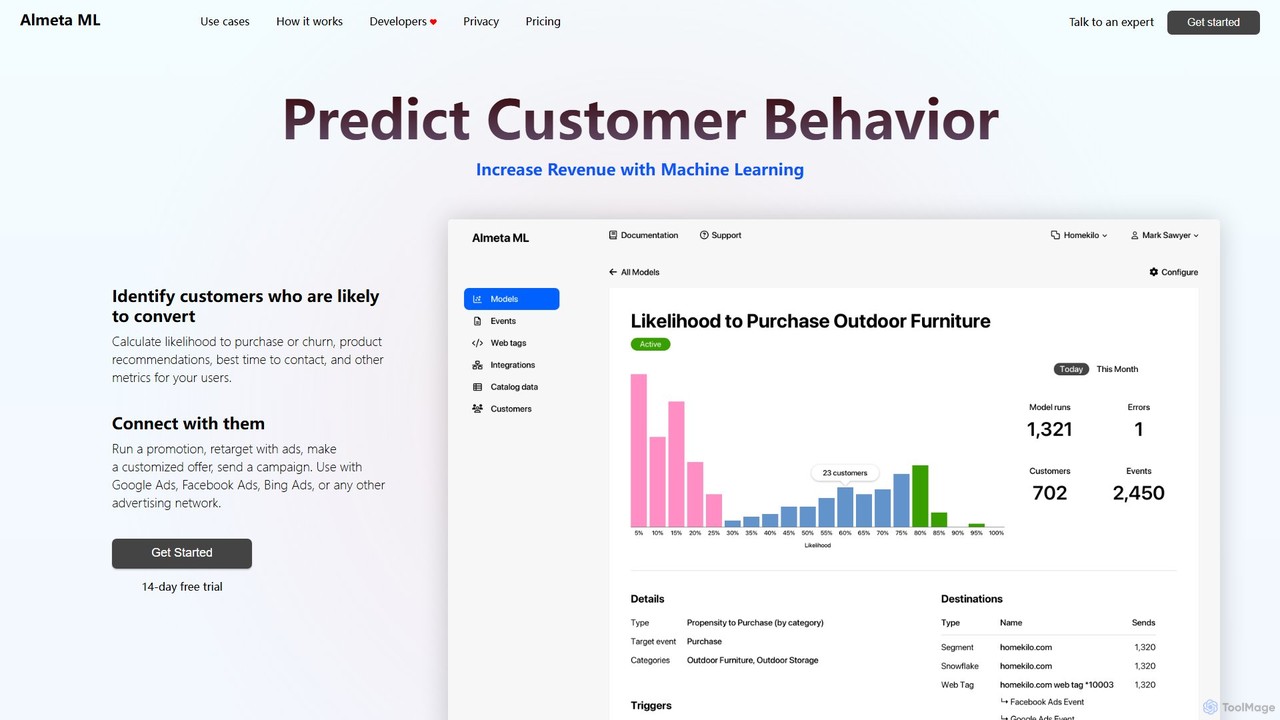
Almeta ML is a machine learning platform that predicts customer behavior on your website in real-time. It helps …
Almeta ML is a machine learning platform that predicts customer behavior on your website in real-time. It helps businesses increase revenue and ROAS by identifying users likely to convert, purchase, or churn. The tool provides actionable metrics like propensity scores, product recommendations, and optimal contact times, integrating seamlessly with advertising and marketing platforms like Google Ads, Facebook Ads, and Shopify.
About Predictive Analytics
Predictive Analytics tools are a class of AI-powered software that analyze historical and real-time marketing data to forecast future outcomes. They leverage machine learning algorithms and statistical modeling to identify patterns and predict customer behavior, campaign performance, and market trends. This enables marketers to make proactive, data-driven decisions, moving from reactive analysis to forward-looking strategy. These tools are essential for optimizing marketing spend and personalizing customer experiences at scale.
Core Features
- Lead Scoring: Automatically ranks leads based on their likelihood to convert, helping sales teams prioritize efforts.
- Customer Churn Prediction: Identifies customers at high risk of leaving, allowing for proactive retention campaigns.
- Lifetime Value (LTV) Forecasting: Estimates the total revenue a customer will generate over their entire relationship with a business.
- Campaign Performance Prediction: Forecasts the potential ROI and key metrics of marketing campaigns before they are launched.
- Demand Forecasting: Predicts future product or service demand to inform inventory management and marketing strategy.
Use Cases
These tools are primarily used by marketing analysts, digital marketing managers, and CRM specialists in data-intensive sectors like e-commerce, SaaS, and B2B services. They are applied to optimize advertising budgets, personalize email marketing flows, and develop effective customer retention strategies by anticipating future needs and behaviors.
How to Choose
When selecting a Predictive Analytics tool, consider its data integration capabilities with your existing CRM and marketing platforms. Evaluate the level of model customization available and whether it requires data science expertise or offers a no-code interface for marketers. Also, assess the tool's scalability to handle growing data volumes and the clarity of its reporting features.
Predictive AnalyticsUse Cases
Proactive Customer Churn Reduction
A marketing retention team at a SaaS company uses a predictive analytics tool to analyze user activity, support ticket history, and subscription data. The AI model identifies subtle patterns that precede customer cancellations. Each day, the system generates a prioritized list of at-risk accounts, allowing the team to proactively engage them with targeted support, special offers, or educational content, effectively reducing the monthly churn rate.
Intelligent Lead Scoring for Sales Teams
A B2B company's marketing department integrates a predictive analytics tool with their CRM. The tool analyzes dozens of signals, including website behavior, email engagement, job title, and company size, to assign a conversion probability score to each new lead. This score is synced back to the CRM, enabling the sales team to focus their time on the highest-potential leads, which increases conversion rates and shortens the sales cycle.
Optimizing Ad Spend with ROI Forecasting
An e-commerce marketing manager uses a predictive tool to forecast the performance of upcoming ad campaigns. By inputting variables like budget, target audience, ad creative type, and channel (e.g., Google Ads, Facebook), the tool predicts key metrics such as clicks, conversions, and return on ad spend (ROAS). This allows the manager to run simulations and allocate their budget to the channels and strategies most likely to yield the highest return.
Forecasting Customer Lifetime Value (LTV)
A direct-to-consumer brand's marketing team uses a predictive tool to estimate the future LTV of new customers based on their initial purchase behavior, acquisition channel, and demographic data. This insight allows them to segment customers into high, medium, and low-value tiers. They can then justify higher customer acquisition costs for channels that bring in high-LTV customers and create exclusive loyalty programs for their most valuable segment.
Personalizing Email Marketing Content
An online retailer's marketing automation specialist uses a predictive engine to determine the optimal content for each subscriber in an email campaign. By analyzing past purchase history and browsing behavior, the system predicts which product categories or offers are most likely to resonate with an individual. This allows for the dynamic insertion of personalized product recommendations and subject lines, significantly increasing open rates and click-through rates.
Predicting Market Trends for Content Strategy
A content marketing team at a tech company uses a predictive analytics platform to identify emerging topics and keywords in their industry. The tool analyzes data from social media, news sites, and search engine trends to forecast which topics will gain traction in the coming months. This allows the team to create timely and relevant content, such as blog posts and whitepapers, positioning their brand as a thought leader and capturing organic search traffic ahead of competitors.