Tsquare AI
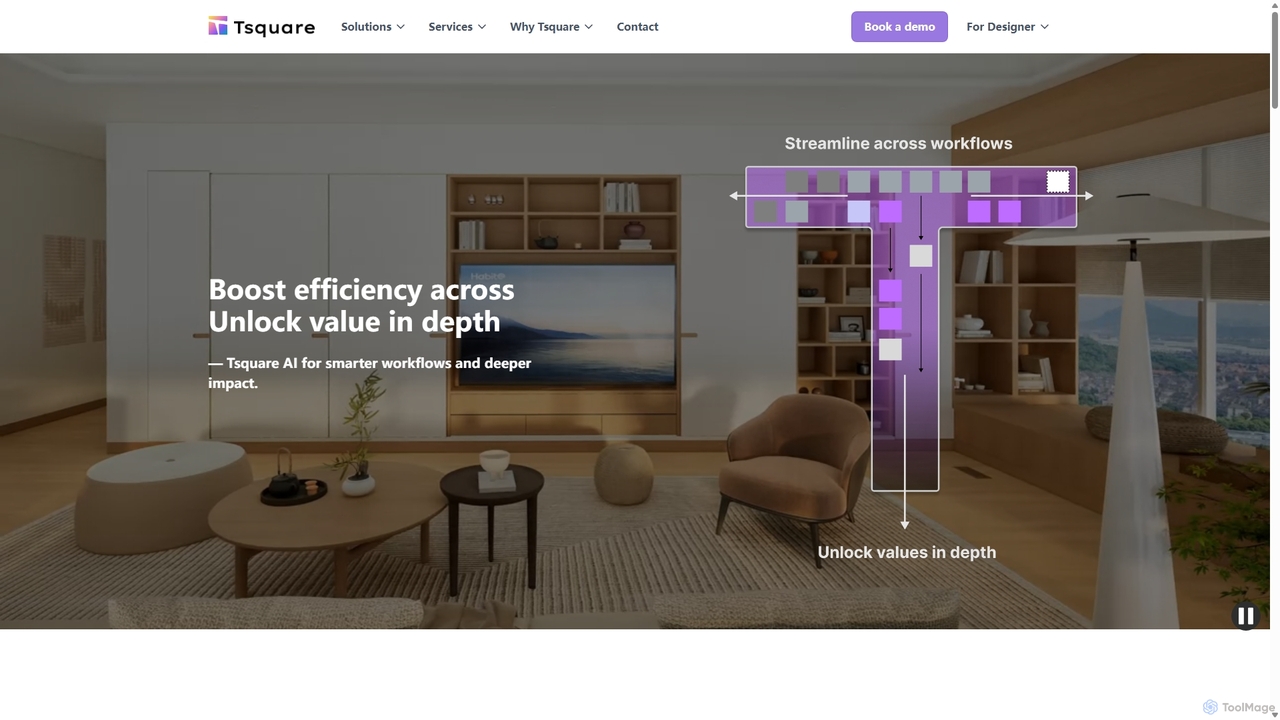
Tsquare AI is an AI-powered platform that transforms the sales journey for home improvement and design industries. It …
Tsquare AI is an AI-powered platform that transforms the sales journey for home improvement and design industries. It instantly converts 2D floor plans into fully furnished, interactive 3D spaces, enabling real-time product configuration, visualization, and automated quoting. This streamlines the design-to-sale process, enhances customer engagement, and boosts efficiency for sales teams and designers.
About Product Configurator
Product Configurator tools are AI-powered solutions that enable customers or sales teams to design and customize complex products in real-time. Leveraging artificial intelligence, these platforms provide interactive visual interfaces, dynamic pricing, and automated compatibility checks. They streamline the sales process by offering personalized product options, enhancing customer engagement, and reducing configuration errors.
Core Features
- Interactive 3D Visualization: Allows users to see product changes in real-time 3D models, enhancing the customization experience.
- Dynamic Pricing & Quoting: Automatically updates prices based on selected options and generates accurate quotes instantly.
- Compatibility & Rule Engine: Ensures all selected components are compatible, preventing invalid configurations and errors.
- Guided Selling: AI assists users through the customization process, suggesting optimal choices based on needs and preferences.
- Automated Bill of Materials (BOM): Generates a precise list of components required for manufacturing the configured product.
Applicable Scenarios
Manufacturers of complex goods, such as automobiles, furniture, or industrial machinery, utilize product configurators to empower customers to design their ideal product. E-commerce businesses selling customizable items benefit from offering an intuitive configuration experience directly on their website. Sales teams leverage these tools during client consultations to quickly demonstrate options and generate accurate proposals.
How to Choose
When selecting an AI product configurator, evaluate its visualization capabilities (2D/3D), the robustness of its rule engine for complex product logic, and its integration with existing CRM or ERP systems. Consider the ease of use for both customers and internal teams, the scalability to handle future product lines, and the vendor's support for implementation and maintenance.
Product ConfiguratorUse Cases
Designing Custom Furniture for Homeowners
Interior designers or individual homeowners can use an AI product configurator to visually design custom furniture pieces like sofas, cabinets, or shelving units. Users select materials, colors, dimensions, and modular components, seeing real-time 3D previews and instant price updates. This simplifies the design process, ensures aesthetic compatibility, and provides immediate cost transparency.
Configuring Industrial Machinery for B2B Clients
Sales engineers in manufacturing companies utilize product configurators to build complex industrial machinery tailored to specific client requirements. They input operational parameters, select modules, and verify technical specifications, with the AI ensuring all components are compatible and meet performance standards. This accelerates the quotation process and minimizes technical errors in custom orders.
Personalizing Software Packages for Enterprises
Software vendors employ configurators to allow enterprise clients to customize their software subscriptions or modules. Clients can select features, user licenses, integration options, and support tiers, receiving immediate pricing and a clear overview of their tailored solution. This streamlines the sales cycle for complex SaaS offerings and improves client satisfaction.
Building Custom PCs for Gaming Enthusiasts
Gaming PC retailers offer AI product configurators that guide enthusiasts through selecting compatible components like CPUs, GPUs, RAM, and cooling systems. The configurator checks for power supply requirements, physical fit, and performance bottlenecks, providing real-time cost and performance estimates. This empowers users to build their dream PC without worrying about compatibility issues.
Customizing Promotional Merchandise for Brands
Marketing agencies or promotional product suppliers use configurators to help brands design custom merchandise such as apparel, mugs, or stationery. Clients upload logos, choose colors, materials, and quantities, visualizing the final product before ordering. This ensures brand consistency, reduces design iterations, and speeds up the production approval process.
Tailoring Insurance Policies for Individual Needs
Insurance providers can use AI configurators to help customers build personalized insurance policies. Users input their personal details, risk preferences, and coverage needs, and the configurator suggests relevant policy components, deductibles, and add-ons, providing instant premium calculations. This makes complex insurance products more accessible and transparent for consumers.