Sales Best in category 1 results Revenue Management AI Tool

Popular AI tools in the Revenue Management field of Sales include PriceGPT, etc., helping you quickly improve efficiency.

Free
PriceGPT

PriceGPT

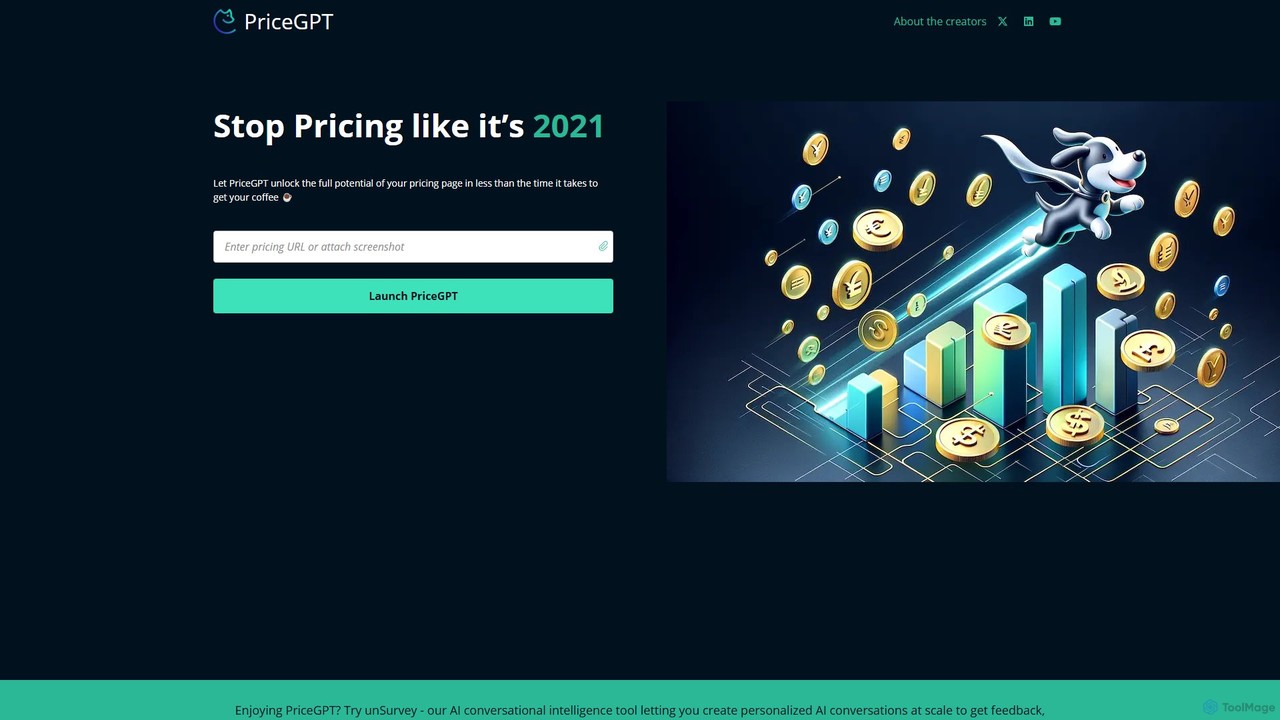
PriceGPT is an AI-powered tool that analyzes your pricing page to provide actionable insights and intelligence for revenue …

3.2K

About Revenue Management

Revenue Management tools are AI-powered platforms designed to maximize profitability by optimizing pricing, inventory, and demand. These systems analyze vast datasets, including historical sales, market trends, competitor pricing, and customer behavior, to make strategic decisions. Their primary value lies in enabling businesses to sell the right product to the right customer at the right time for the right price. This approach is particularly effective for industries with perishable inventory or fluctuating demand, helping them increase yield and operational efficiency.

Core Features

  • Dynamic Pricing: Automatically adjusts prices in real-time based on demand, seasonality, and competitive landscape.
  • Demand Forecasting: Uses machine learning to predict future sales patterns and customer demand with high accuracy.
  • Inventory Optimization: Recommends ideal stock levels and distribution to prevent stockouts and minimize carrying costs.
  • Customer Segmentation: Groups customers by purchasing behavior to enable targeted promotions and pricing strategies.
  • Performance Analytics: Offers dashboards and reports on key metrics like yield, RevPAR, and profitability for data-driven insights.

Applicable Scenarios

These tools are essential for industries where capacity is fixed and demand varies, such as hospitality (hotels, resorts), travel (airlines, cruises), and car rentals. They are also increasingly adopted in e-commerce for promotional planning and in the event management sector for optimizing ticket sales. Roles like revenue managers, pricing analysts, and e-commerce directors rely on these platforms for daily strategic decisions.

Selection Criteria

When choosing a Revenue Management tool, consider its industry specialization and the sophistication of its forecasting algorithms. Evaluate its integration capabilities with your existing systems like Property Management Systems (PMS) or CRM. Assess the balance between automation and manual control, ensuring it aligns with your team's strategy. Finally, analyze the pricing model and the quality of customer support provided.

Revenue ManagementUse Cases

1

Hotel Room Rate Optimization

A revenue manager for a city hotel uses an AI tool to prepare for an upcoming major conference. The tool analyzes historical booking data from previous years, flight booking trends into the city, and real-time competitor pricing. Based on its forecast, it recommends a dynamic pricing strategy: gradually increasing rates as the event date approaches and booking pace accelerates. It also identifies shoulder nights where promotions could fill rooms, maximizing overall RevPAR (Revenue Per Available Room) for the entire week, not just the peak nights.

2

E-commerce Promotional Campaign Planning

An e-commerce manager for a fashion brand needs to clear out last season's inventory. Instead of applying a blanket discount, they use a revenue management tool. The AI analyzes customer segmentation data and purchase history to identify price-sensitive shoppers who are likely to buy discounted items. It then suggests a targeted email campaign with personalized discount codes for this segment. For less price-sensitive, loyal customers, it avoids deep discounts, preserving brand value and maximizing margin on the remaining stock.

3

Airline Fare Class Management

An airline's revenue analyst uses an AI platform to manage fare classes for a popular route. The system forecasts demand not just for the flight overall, but for different booking windows (e.g., 90+ days out, 30-60 days, last minute). It then recommends how many seats to allocate to each fare bucket (e.g., deep discount, standard economy, flexible). As bookings come in, the system automatically adjusts this allocation, closing lower fare buckets faster if demand is strong, ensuring the airline maximizes its yield from every flight.

4

Car Rental Fleet Distribution

A national car rental company faces the challenge of vehicle distribution. Their AI revenue management system analyzes booking patterns, airport arrival data, and local event schedules. It predicts that the downtown location will have a surge in demand for SUVs next weekend, while the airport location will have a surplus. The system generates an alert and a cost-benefit analysis for transferring vehicles between locations. This proactive fleet management prevents lost revenue from stockouts in high-demand areas and reduces holding costs for idle cars.

5

SaaS Subscription Tier Optimization

A B2B SaaS company wants to optimize its pricing tiers. A revenue management platform is used to analyze product usage data, customer firmographics, and churn rates. The AI identifies a specific feature that is highly valued by enterprise clients but underutilized by smaller businesses. It recommends creating a new, premium tier that includes this feature along with dedicated support, priced significantly higher. This allows the company to better capture value from large customers without alienating its core SMB user base, increasing overall Average Revenue Per User (ARPU).

6

Event Ticket Pricing Strategy

An organizer for a multi-day music festival uses a revenue management tool to set ticket prices. The system analyzes historical sales data, the popularity of announced artists, and social media sentiment. It recommends a tiered pricing structure: a limited number of 'super early bird' tickets at a low price to create initial buzz, followed by several price increases as key dates approach or sales velocity hits certain thresholds. It also suggests premium pricing for VIP packages based on predicted demand, ensuring revenue is maximized across all ticket types.

Revenue ManagementFrequently Asked Questions