Sales Best in category 2 results Sales Analytics AI Tool

Popular AI tools in the Sales Analytics field of Sales include TigerEye、Atrium, etc., helping you quickly improve efficiency.

TigerEye

TigerEye

TigerEye is an AI-powered Go-To-Market (GTM) Business Intelligence platform designed to unify sales, marketing, and finance teams. It …

6.8K
Atrium

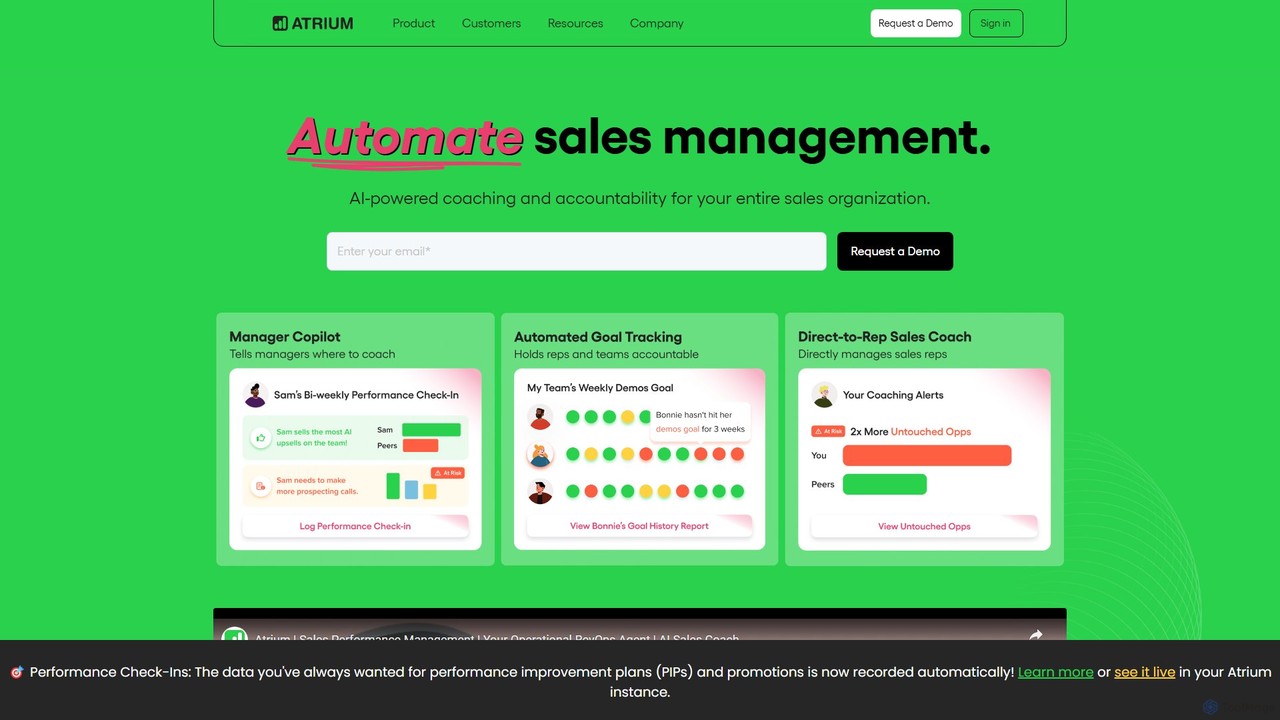
Atrium

Atrium is an AI-powered sales management platform that automates performance monitoring and provides data-driven coaching insights. It helps …

4.5K

About Sales Analytics

Sales Analytics AI tools are specialized platforms that leverage artificial intelligence and machine learning to process vast amounts of sales data. These tools analyze historical performance, identify patterns, and predict future sales trends, providing actionable insights. They empower sales teams and leaders to optimize strategies, improve forecasting accuracy, and enhance overall sales efficiency by transforming raw data into strategic intelligence.

Core Features

  • Predictive Forecasting: Accurately predicts future sales volumes, revenue, and market trends based on historical data and external factors.
  • Performance Tracking & Reporting: Monitors individual and team sales performance, identifies top performers, and generates customizable reports.
  • Customer Segmentation: Divides customers into distinct groups based on purchasing behavior, demographics, and engagement for targeted strategies.
  • Deal Intelligence: Analyzes sales pipeline health, identifies at-risk deals, and recommends next best actions to close opportunities.
  • Market Trend Analysis: Detects emerging market opportunities and shifts in customer demand to inform product development and sales strategies.

Applicable Scenarios

Sales Analytics AI tools are crucial for sales managers seeking to optimize team performance, marketing professionals aiming to align campaigns with sales goals, and business leaders making strategic growth decisions. They are used in diverse industries, from e-commerce and SaaS to manufacturing, to gain a competitive edge through data-driven insights.

How to Choose

When selecting a Sales Analytics AI tool, consider its data integration capabilities with existing CRM and ERP systems, the accuracy and transparency of its predictive models, and the customization options for dashboards and reports. Evaluate its scalability to grow with your business and ensure it offers intuitive user interfaces for easy adoption by your sales team.

Sales AnalyticsUse Cases

1

Predicting Quarterly Sales Performance

Sales leaders utilize AI sales analytics to forecast upcoming quarterly sales figures with high accuracy. By analyzing historical sales data, market trends, and external economic indicators, the tool provides predictive models that help set realistic targets, allocate resources effectively, and proactively identify potential shortfalls or opportunities for growth.

2

Identifying High-Value Customer Segments

Marketing and sales teams employ these tools to segment customers based on purchasing behavior, engagement levels, and demographic data. This allows for the identification of high-value segments, enabling personalized outreach strategies, tailored product recommendations, and more effective allocation of marketing spend to maximize ROI and customer lifetime value.

3

Optimizing Sales Pipeline Management

Sales managers leverage AI analytics to gain deep insights into their sales pipeline. The tools analyze deal progression, identify bottlenecks, predict deal closure probabilities, and flag at-risk opportunities. This enables proactive intervention, better resource allocation, and improved conversion rates by focusing efforts on the most promising leads.

4

Evaluating Sales Representative Performance

Team leads use AI sales analytics to track and evaluate individual sales representative performance beyond simple quotas. The tools analyze metrics like conversion rates, average deal size, activity levels, and customer satisfaction, providing insights into strengths and areas for improvement, facilitating targeted coaching and training programs.

5

Analyzing Customer Churn Risk

Customer success and sales teams utilize AI to predict which customers are at risk of churning. By analyzing usage patterns, support interactions, and historical data, the tools identify early warning signs. This allows for proactive engagement, personalized retention strategies, and timely interventions to reduce churn and protect recurring revenue.

6

Assessing Marketing Campaign Impact on Sales

Marketing and sales departments collaborate using AI sales analytics to measure the direct impact of specific marketing campaigns on sales outcomes. The tools correlate campaign data with sales conversions, revenue generated, and customer acquisition costs, providing clear ROI insights to optimize future marketing strategies and budget allocation.

Sales AnalyticsFrequently Asked Questions