Quark
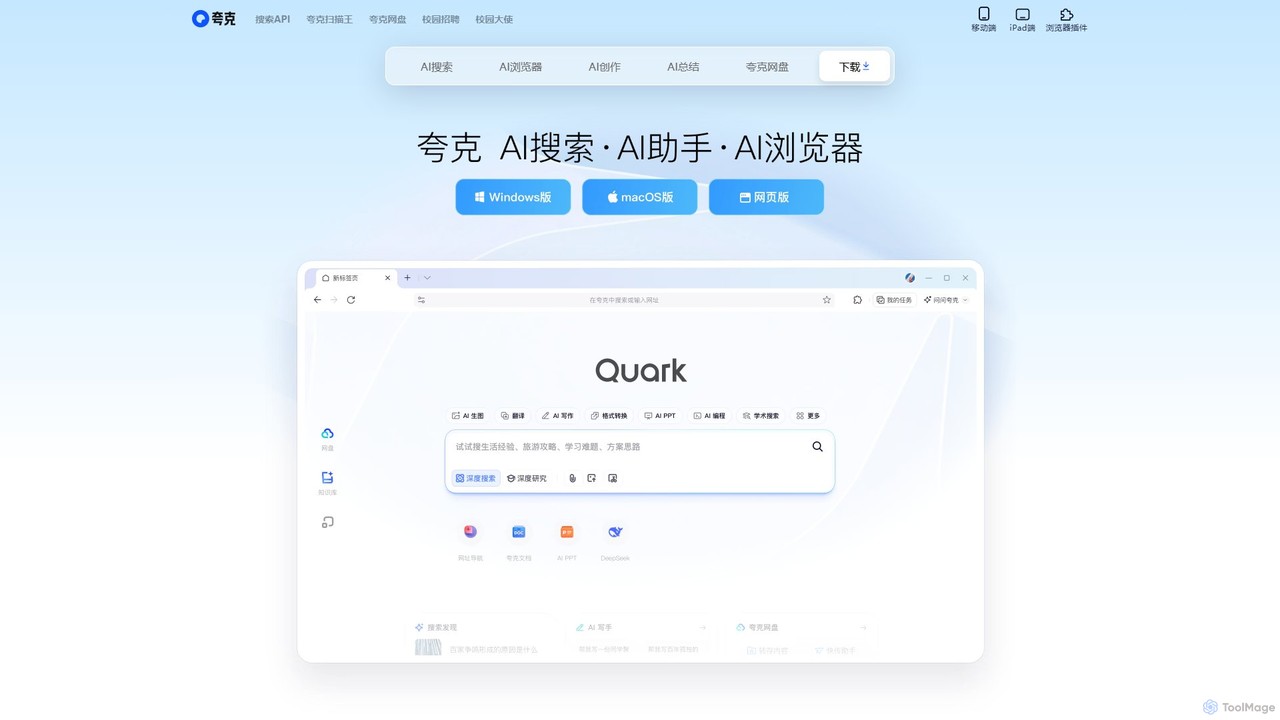
Quark is an all-in-one AI-powered suite from Alibaba, integrating a smart search engine, a fast browser, a massive …
Quark is an all-in-one AI-powered suite from Alibaba, integrating a smart search engine, a fast browser, a massive cloud drive, and a suite of creative tools. It's designed to boost productivity for students and professionals with features like AI summarization, content generation, and seamless multi-device synchronization.
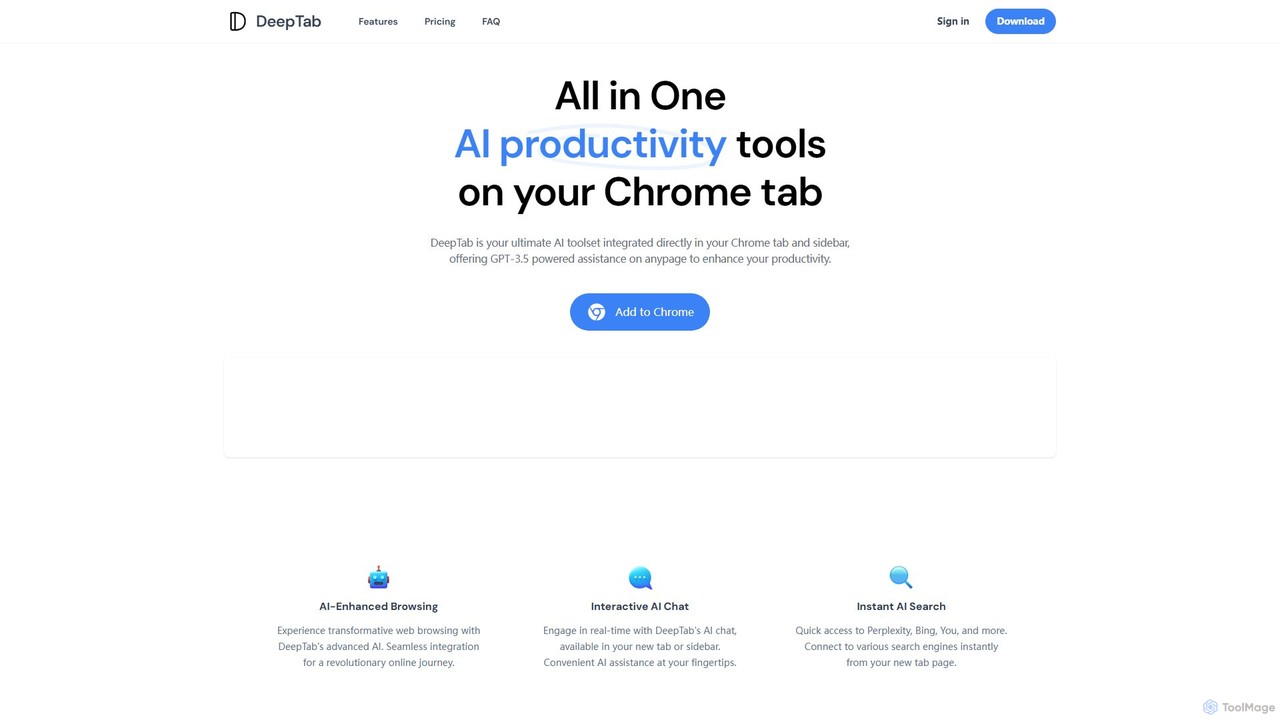
DeepTab
DeepTab is an all-in-one AI productivity toolkit integrated into your Chrome new tab and sidebar. It offers GPT-3.5/GPT-4 …
DeepTab is an all-in-one AI productivity toolkit integrated into your Chrome new tab and sidebar. It offers GPT-3.5/GPT-4 powered assistance, an interactive AI chat, instant access to multiple AI search engines, and a directory of AI websites to supercharge your browsing experience.
Xdash AI
Xdash AI is an intelligent answer engine designed to optimize productivity and research. It provides direct, synthesized answers …
Xdash AI is an intelligent answer engine designed to optimize productivity and research. It provides direct, synthesized answers to complex questions, complete with source citations, helping users save time, verify information, and gain deep insights quickly.
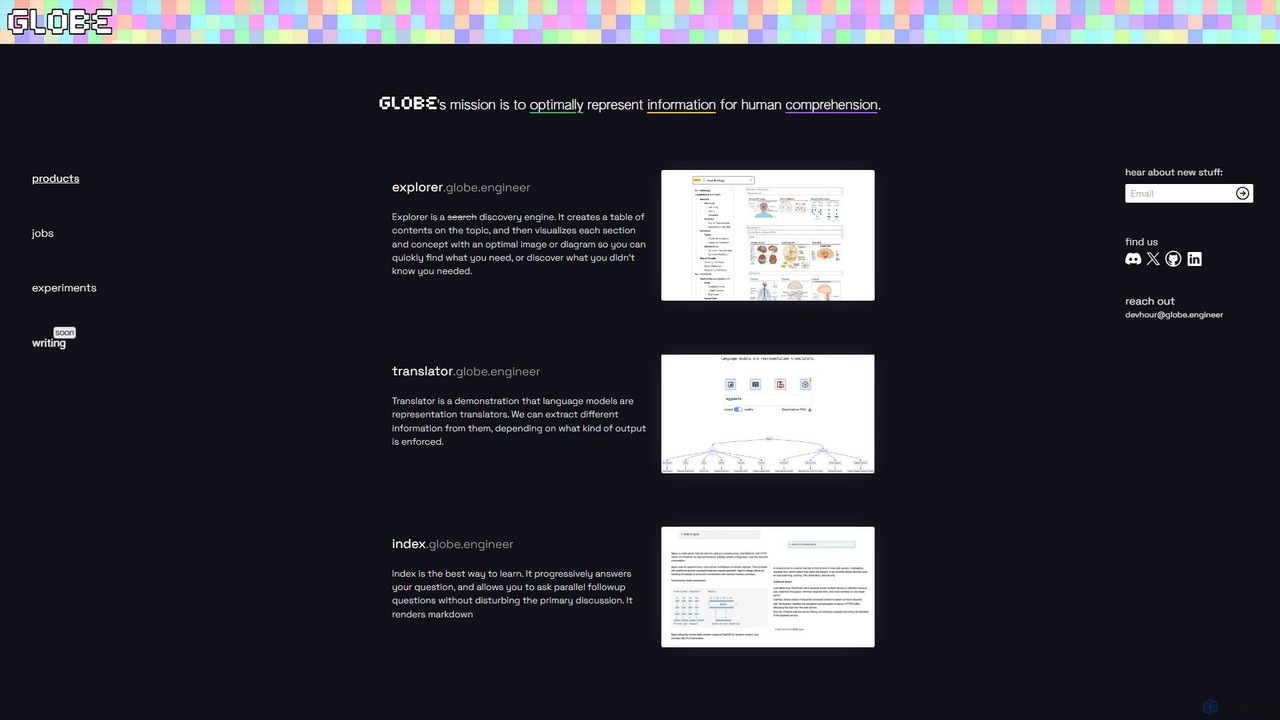
Globe.
Globe. is an AI-powered ecosystem designed to revolutionize information comprehension. It features a suite of tools including a …
Globe. is an AI-powered ecosystem designed to revolutionize information comprehension. It features a suite of tools including a visual search engine (Explorer), an interactive learning tool (Index), and a representation translator. Globe. aims to optimally represent complex information, making it easier for users to discover, learn, and understand any topic.
Glimpse
Glimpse is an intelligent AI browser extension designed to make web browsing smarter. It offers contextual chat with …
Glimpse is an intelligent AI browser extension designed to make web browsing smarter. It offers contextual chat with any website and an aggregated search engine for direct answers. Note: Glimpse has now evolved into Atlas, a free AI assistant specifically for students.
CamoCopy
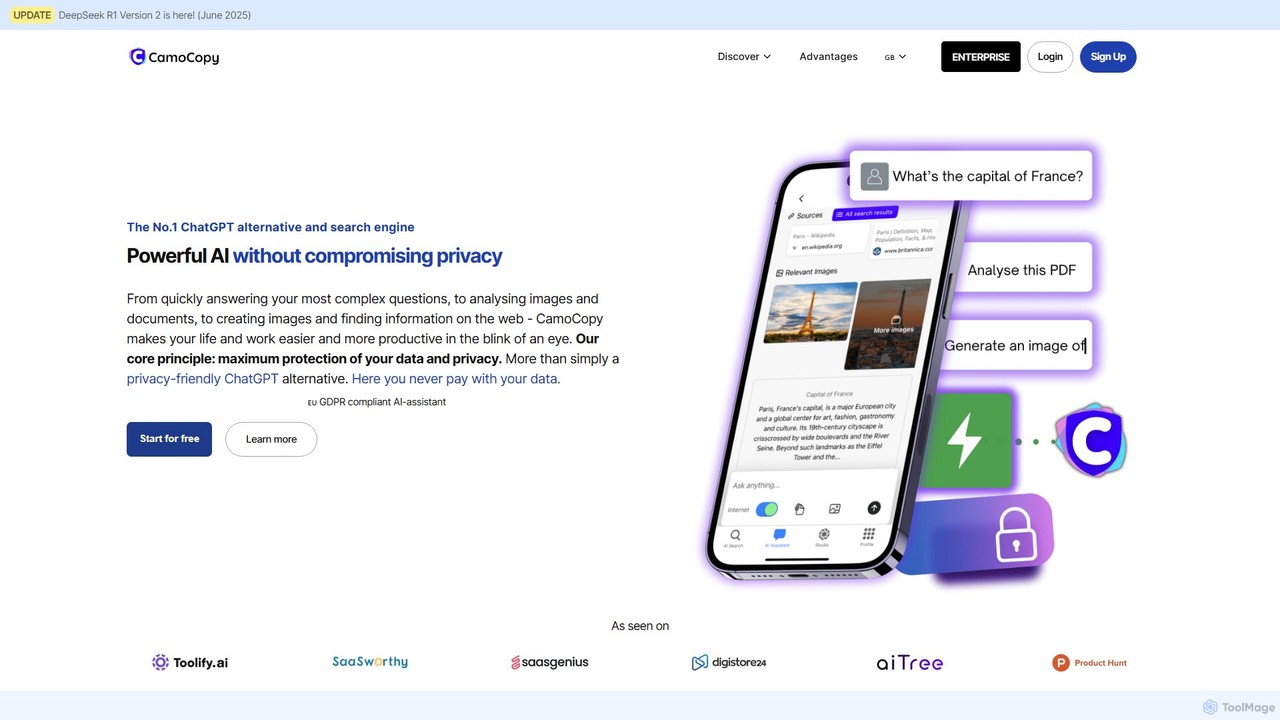
CamoCopy is the privacy-first AI assistant, offering a powerful alternative to ChatGPT. It combines AI chat, an anonymous …
CamoCopy is the privacy-first AI assistant, offering a powerful alternative to ChatGPT. It combines AI chat, an anonymous search engine, image recognition, and a text-to-image generator. Built in the EU and fully GDPR-compliant, it ensures your data is encrypted and never used for training. Ideal for individuals and businesses seeking productivity without compromising privacy.
Zhida
Zhida is an AI-powered knowledge engine by Zhihu, China's largest Q&A platform. It provides deep, structured answers by …
Zhida is an AI-powered knowledge engine by Zhihu, China's largest Q&A platform. It provides deep, structured answers by leveraging a vast network of expert-curated Knowledge Repositories, moving beyond generic search to deliver reliable, in-depth insights on a wide range of topics.
About Search Engines
AI Search Engines are a new generation of information discovery tools that provide direct, synthesized answers to user queries. Instead of a simple list of links, they use large language models (LLMs) to understand natural language, process information from multiple sources, and generate a coherent summary. This transforms the search experience into a conversational knowledge exploration, making complex research faster and more intuitive. Key features often include direct source citations, follow-up question suggestions, and multi-modal search capabilities.
Core Features
- Synthesized Answers: Delivers direct, summarized answers compiled from multiple web sources, not just a list of links.
- Source Citation: Provides clear links to the original sources used to generate the answer, ensuring transparency and verifiability.
- Conversational Follow-ups: Suggests relevant subsequent questions to help users delve deeper into a topic interactively.
- Natural Language Understanding: Processes complex, conversational queries and understands user intent beyond simple keywords.
- Multi-modal Search: Allows users to input queries using text, images, or even voice for a more flexible search experience.
Use Cases
These tools are particularly valuable for students, researchers, developers, and content creators. They excel in scenarios requiring in-depth understanding, such as academic literature reviews, technical problem-solving, market analysis, and fact-checking complex topics. They act as powerful research assistants, accelerating the process of gathering and synthesizing information.
How to Choose
When selecting an AI Search Engine, consider the accuracy and relevance of its answers. Evaluate the quality and transparency of its source citations. Assess the user interface—whether you prefer a conversational chat format or a more integrated search results page. Also, look for specialized features, such as a focus on academic papers, coding assistance, or real-time information access.
Search EnginesUse Cases
Accelerating Academic Literature Reviews
A graduate student preparing a thesis needs to review dozens of academic papers on a niche topic. Instead of manually reading each abstract and paper, they use an AI Search Engine to ask, 'Summarize the key findings on quantum machine learning for drug discovery.' The tool processes numerous research papers, synthesizes the main arguments, identifies key researchers, and provides a concise summary with direct citations. This reduces the initial research time from days to a few hours, allowing the student to focus on analysis and writing.
Solving Complex Coding Problems
A software developer is stuck on a complex bug involving asynchronous operations in JavaScript. Instead of sifting through outdated forum posts, they ask an AI Search Engine: 'What is the best way to handle race conditions in a Node.js application using async/await with multiple database calls?' The engine provides a synthesized answer explaining the concept, offers several code pattern examples with pros and cons, and links to official documentation and authoritative blog posts. This provides a direct, actionable solution, saving significant debugging time.
Conducting Rapid Market Research
A business analyst needs to quickly understand the competitive landscape for a new product. They query an AI Search Engine with, 'Analyze the main competitors for enterprise CRM software, focusing on pricing models and key integrations.' The AI synthesizes information from company websites, tech news, and market reports to generate a comparative table and a summary of each competitor's strategy. This initial analysis, which would typically take a full day of manual research, is completed in under 30 minutes, enabling faster strategic decision-making.
Fact-Checking for Content Creation
A journalist is writing an article on the environmental impact of electric vehicle batteries. To ensure accuracy, they use an AI Search Engine to cross-reference facts. They ask, 'What are the latest statistics on lithium-ion battery recycling rates globally?' The tool pulls data from multiple reputable sources like government reports, scientific journals, and industry analyses, providing a synthesized answer with clear citations. This allows the journalist to quickly verify information and include precise, well-sourced data in their article, enhancing its credibility.
Planning a Complex Trip
A traveler is planning a multi-city trip through Europe and wants an efficient itinerary. They ask an AI Search Engine, 'Create a 10-day itinerary for Italy, focusing on historical sites in Rome and art in Florence, with efficient train travel between cities.' The engine synthesizes information from travel blogs, train schedules, and museum websites to propose a day-by-day plan. It includes suggestions for must-see attractions, travel times, and even restaurant recommendations, providing a comprehensive starting point that saves hours of manual planning.
Learning a New Technical Skill
An aspiring data scientist wants to learn about 'gradient boosting algorithms'. Instead of watching long video tutorials, they ask an AI Search Engine for a structured explanation. The query is: 'Explain gradient boosting for a beginner, including a simple Python code example.' The tool provides a step-by-step explanation of the theory, clarifies key terms like 'weak learners', and presents a commented code snippet using a popular library like Scikit-learn. This interactive learning method allows the user to ask follow-up questions and get immediate, contextual answers, accelerating their learning curve.