Security Best in category 1 results Blockchain Security AI Tool

Popular AI tools in the Blockchain Security field of Security include Sapiens, etc., helping you quickly improve efficiency.

Sapiens

Sapiens

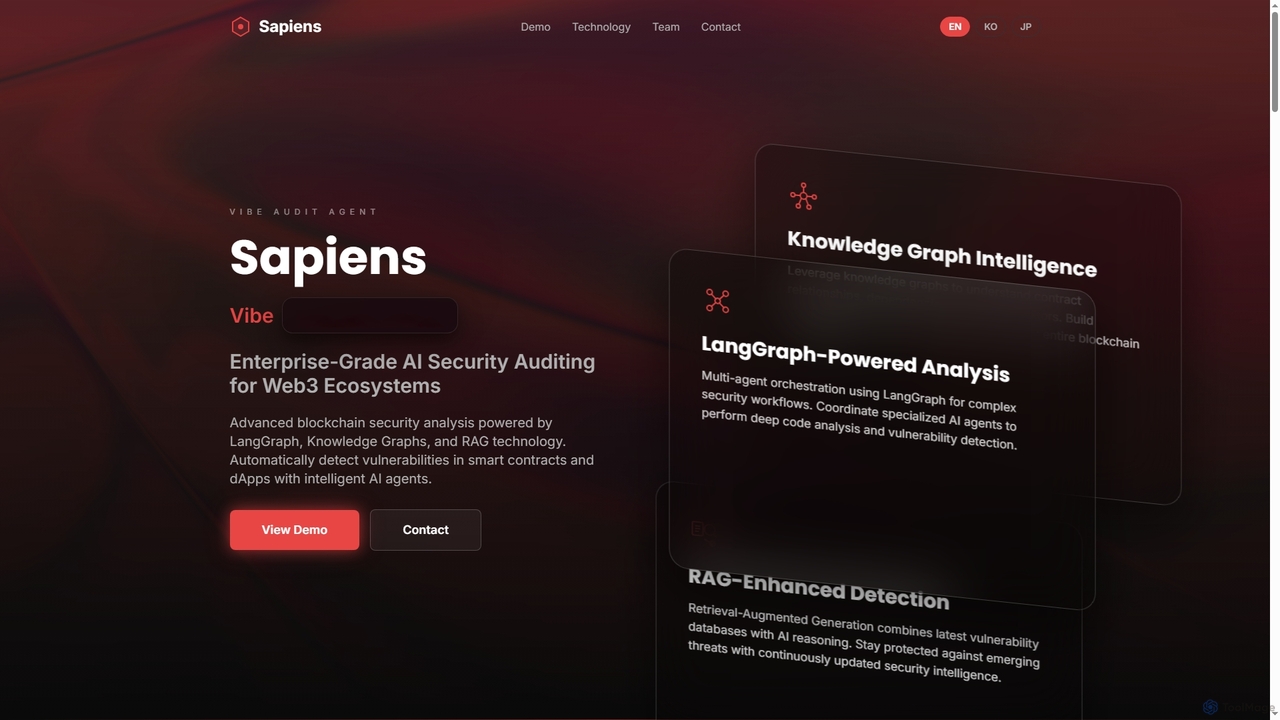
Sapiens is an enterprise-grade AI security auditing platform for Web3 ecosystems. It leverages advanced technologies like LangGraph, Knowledge …

2.5K

About Blockchain Security

Blockchain Security tools are specialized solutions designed to protect decentralized networks, applications, and digital assets from various cyber threats. These tools leverage advanced cryptographic techniques, AI-driven analytics, and formal verification methods to identify vulnerabilities and prevent exploits. They are crucial for maintaining the integrity, confidentiality, and availability of blockchain systems, ensuring trust and stability in the Web3 ecosystem.

Core Features

  • Smart Contract Auditing: Automatically scans smart contract code for common vulnerabilities, logic errors, and security best practice violations.
  • Vulnerability Scanning: Identifies security weaknesses in blockchain protocols, nodes, and decentralized applications (dApps).
  • Real-time Threat Monitoring: Continuously monitors on-chain transactions and network activity for suspicious patterns and potential attacks.
  • Identity and Access Management: Manages and secures access to blockchain resources and digital assets, often integrating with decentralized identity solutions.
  • Incident Response & Forensics: Provides tools and frameworks for detecting, responding to, and analyzing security incidents on blockchain networks.

Applicable Scenarios

Blockchain Security tools are essential for blockchain developers, DeFi project teams, NFT marketplace operators, and enterprises building on distributed ledger technology. They are used to secure new smart contract deployments, protect user funds in decentralized finance protocols, and ensure the integrity of digital asset transactions. These tools are vital throughout the development lifecycle and for ongoing operational security.

How to Choose

When selecting Blockchain Security tools, consider the specific blockchain platforms supported (e.g., Ethereum, Solana, Polkadot), the depth of smart contract analysis (static vs. dynamic), and real-time monitoring capabilities. Evaluate the tool's integration with existing development workflows, its ability to detect emerging threats, and the expertise of the security team behind the solution. Scalability and compliance features are also critical for enterprise adoption.

Blockchain SecurityUse Cases

1

Auditing New Smart Contract Deployments

Blockchain developers use these tools to automatically scan and identify critical vulnerabilities in their smart contract code (e.g., for a new DeFi protocol or NFT project) before deployment, preventing costly exploits and ensuring user trust. This proactive approach helps secure digital assets and maintain the integrity of decentralized applications from the outset.

2

Auditing DeFi Smart Contracts Before Deployment

DeFi project teams use Blockchain Security tools to conduct comprehensive audits of their smart contract code before launching on mainnet. This involves automated static analysis to detect reentrancy, integer overflow, access control issues, and other common vulnerabilities, ensuring the protocol is robust against potential exploits and protecting user funds.

3

Real-time Monitoring of DeFi Protocol Transactions

Decentralized finance (DeFi) platforms employ blockchain security tools to continuously monitor all transactions and liquidity pool movements. This allows them to detect unusual patterns or flash loan attacks in real-time, triggering immediate protective measures to safeguard user funds and protocol stability.

4

Protecting NFT Marketplaces from Exploits

Operators of NFT marketplaces deploy Blockchain Security solutions to safeguard digital assets and user transactions. These tools monitor for suspicious activities like flash loan attacks, front-running, or unauthorized minting, providing real-time alerts and helping to prevent the theft or manipulation of valuable NFTs.

5

Securing Cryptocurrency Exchange Operations

Cryptocurrency exchanges utilize these solutions to protect user assets by monitoring wallet activities, identifying suspicious withdrawal requests, and preventing unauthorized access or manipulation of trading systems. This comprehensive security layer is vital for maintaining trust and preventing large-scale financial losses.

6

Monitoring On-Chain Transactions for Anomalies

Blockchain analytics firms and compliance officers utilize security tools to continuously monitor public blockchain ledgers. They identify unusual transaction patterns, large fund movements to blacklisted addresses, or potential money laundering activities, aiding in fraud detection and regulatory compliance.

7

Vulnerability Assessment for Enterprise Blockchain Solutions

Enterprises adopting blockchain for supply chain or data management use these tools to conduct comprehensive security assessments of their private or consortium blockchain networks. This ensures data integrity, compliance with industry regulations, and robust protection against internal and external threats, critical for enterprise-grade adoption.

8

Securing Enterprise Blockchain Networks

Enterprises building private or consortium blockchains use these tools to ensure the integrity and confidentiality of their data and operations. This includes securing node communications, managing access permissions, and performing regular vulnerability assessments to protect sensitive business processes and supply chain data.

9

Detecting Malicious DApp Code

Users or DApp marketplaces leverage security tools to analyze decentralized application code for hidden backdoors, malicious functions, or phishing vulnerabilities that could compromise user funds or data. This helps in vetting DApps and providing a safer ecosystem for users to interact with decentralized applications.

10

Conducting Penetration Testing for dApps

Security researchers and dApp developers employ specialized Blockchain Security tools to perform penetration testing on decentralized applications. They simulate various attack vectors, such as denial-of-service or oracle manipulation, to uncover hidden vulnerabilities and strengthen the dApp's resilience against real-world threats.

11

Proactive Threat Intelligence for Web3 Projects

Web3 project teams subscribe to blockchain security platforms for up-to-date threat intelligence, understanding emerging attack vectors and vulnerabilities across the ecosystem. This enables them to proactively strengthen their own security posture, implement preventative measures, and stay ahead of potential exploits in a rapidly evolving landscape.

12

Ensuring Regulatory Compliance for Crypto Exchanges

Crypto exchanges leverage Blockchain Security tools to meet stringent regulatory requirements for anti-money laundering (AML) and know-your-customer (KYC). These tools help track the origin and destination of funds, identify high-risk transactions, and generate audit trails, ensuring the exchange operates within legal frameworks.

Blockchain SecurityFrequently Asked Questions