
ToolMage
Sign in

Best 1 Compliance Management AI tools for Security

Popular Compliance Management AI tools in Security include TeamGrid, helping you work more efficiently.

TeamGrid
Paid

TeamGrid

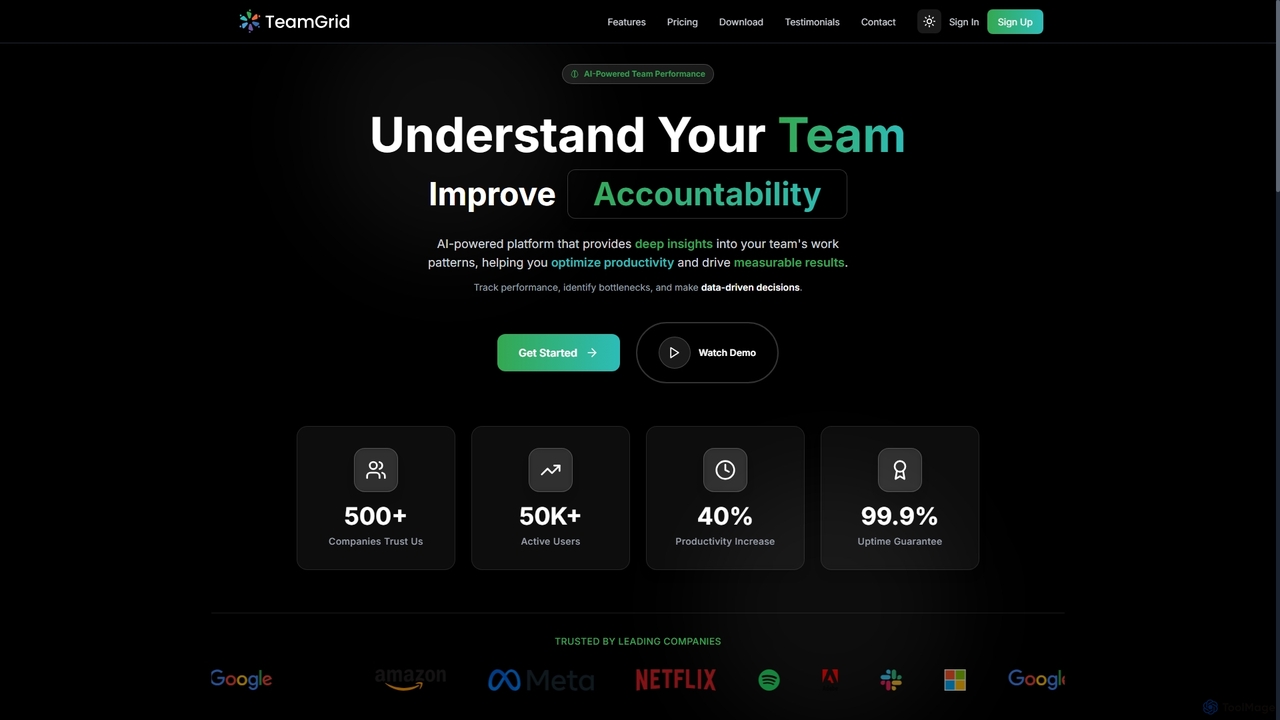
TeamGrid is an AI-powered platform designed to enhance team performance by providing deep insights into work patterns. It helps organizations optimize productivity, improve accountability, and drive measurable results through real-time monitoring, goal tracking, and advanced analytics.

Performance Monitoring
Visits 7.7KFavorites 133Likes 127

About Compliance Management

Compliance Management tools are AI-powered solutions designed to help organizations navigate and adhere to complex regulatory landscapes, internal policies, and industry standards. These tools leverage artificial intelligence to automate the monitoring of compliance obligations, assess risks, and streamline reporting processes. They provide a proactive approach to maintaining legal and ethical integrity, significantly reducing the burden of manual compliance tasks within the broader context of organizational security.

Core Features

  • Automated Policy Monitoring: Continuously scans systems and data for adherence to defined policies and regulations.
  • Risk Assessment & Prioritization: Identifies potential compliance gaps and vulnerabilities, prioritizing them based on impact and likelihood.
  • Regulatory Change Tracking: Monitors updates in laws and standards, automatically flagging relevant changes for review.
  • Audit Trail & Reporting: Generates comprehensive documentation and reports for internal and external audits, demonstrating compliance.
  • Policy Enforcement & Remediation: Suggests or automates actions to correct non-compliant activities or configurations.

Use Cases

Organizations across various sectors utilize these tools to ensure their operations meet legal and ethical requirements. This includes financial institutions adhering to GDPR or CCPA, healthcare providers managing HIPAA compliance, and tech companies maintaining ISO 27001 certification. They are crucial for maintaining data privacy, preventing fraud, and ensuring ethical business practices.

How to Choose

When selecting a Compliance Management tool, consider its scope of regulatory coverage, integration capabilities with existing security and IT systems, and the level of automation offered. Evaluate its reporting features, ease of customization for specific internal policies, and scalability to grow with your organization's needs. User interface and support are also important for effective adoption.

Compliance Management use cases

1

Automating GDPR Data Privacy Compliance

Data privacy officers in multinational corporations use AI compliance tools to automatically identify, classify, and monitor personal data across various systems. The tool helps ensure data processing activities align with GDPR requirements, manages consent records, and generates reports for data subject access requests, significantly reducing manual effort and risk of non-compliance fines.

2

Streamlining Financial Regulatory Reporting

Financial institutions leverage AI compliance platforms to continuously monitor transactions and financial data against regulations like AML (Anti-Money Laundering) and KYC (Know Your Customer). The tools flag suspicious activities, automate the generation of regulatory reports (e.g., SARs), and maintain an auditable trail, enhancing accuracy and speed in meeting strict deadlines.

3

Ensuring Healthcare HIPAA Adherence

Healthcare organizations deploy AI compliance solutions to protect patient health information (PHI) by monitoring access logs, data transfers, and system configurations for HIPAA violations. The tools provide real-time alerts on potential breaches, automate risk assessments, and assist in developing remediation plans, ensuring the confidentiality and integrity of sensitive patient data.

4

Managing Industry Standard Certifications (e.g., ISO 27001)

IT and security managers in technology companies use AI compliance tools to manage their journey towards certifications like ISO 27001. The tools help map internal controls to standard requirements, track implementation progress, identify gaps, and prepare comprehensive documentation for external audits, simplifying the complex certification process.

5

Proactive Policy Enforcement in Enterprise IT

Enterprise IT departments utilize AI compliance tools to enforce internal security policies across their infrastructure. The tools automatically detect non-compliant software installations, misconfigured systems, or unauthorized access attempts, providing immediate alerts and, in some cases, automating remediation actions to maintain a consistent security posture.

6

Vendor Risk and Third-Party Compliance Monitoring

Procurement and risk management teams employ AI compliance solutions to assess and continuously monitor the compliance posture of third-party vendors. The tools analyze vendor security questionnaires, audit reports, and public data to identify potential risks, ensuring that supply chain partners adhere to necessary security and regulatory standards, thereby protecting the organization from extended liabilities.

Compliance Management FAQ

What are AI Compliance Management tools?

AI Compliance Management tools are software solutions that use artificial intelligence to help organizations meet regulatory requirements, internal policies, and industry standards. They automate tasks like monitoring, risk assessment, policy enforcement, and reporting, significantly reducing manual effort and improving accuracy in maintaining legal and ethical adherence.

How do AI Compliance Management tools differ from traditional compliance software?

Traditional compliance software often relies on manual input and rule-based systems, requiring significant human oversight. AI Compliance Management tools, however, leverage machine learning and natural language processing to proactively identify patterns, predict risks, and adapt to changing regulations with minimal human intervention, offering greater automation and predictive capabilities.

What are the key benefits of using AI for compliance management?

The primary benefits include enhanced accuracy in identifying compliance gaps, significant time and cost savings through automation, improved risk mitigation by proactively detecting vulnerabilities, and better audit readiness with comprehensive, automatically generated documentation. AI tools also offer scalability and adaptability to evolving regulatory landscapes.

Which industries benefit most from AI Compliance Management?

Industries with complex and frequently changing regulatory environments benefit most, such as finance (AML, KYC, GDPR), healthcare (HIPAA, HITECH), legal, and technology (data privacy, cybersecurity standards like ISO 27001). Any organization handling sensitive data or operating under strict governance can gain substantial value.

How do I choose the right AI Compliance Management tool for my organization?

When selecting a tool, consider its specific regulatory coverage, integration capabilities with your existing IT infrastructure, and the level of automation it provides. Evaluate its reporting and auditing features, customization options for internal policies, and scalability. Also, assess the vendor's support, security protocols, and reputation.