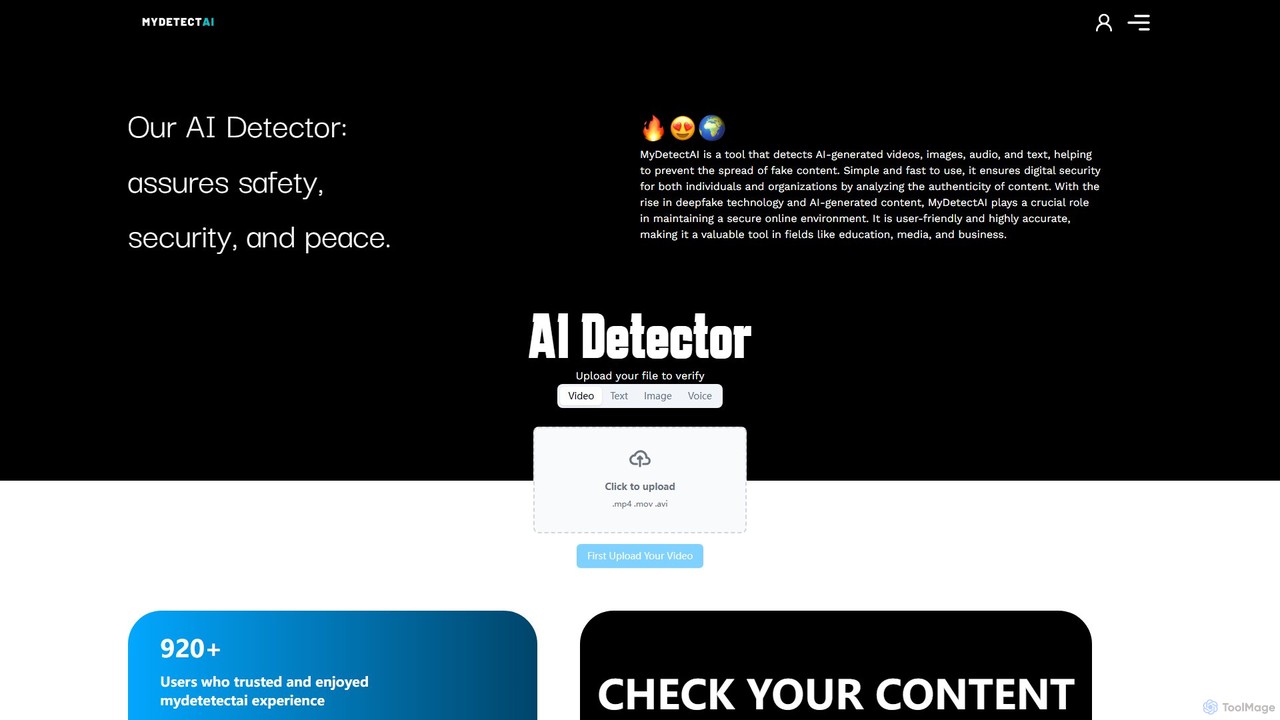
Content Detection tools are a specialized category of AI software designed to analyze digital content and identify its origin or specific attributes. As a key component of digital security, these tools utilize machine learning models to detect patterns indicative of AI-generated text, plagiarism, deepfakes, or harmful material. Their primary value lies in ensuring content authenticity, upholding academic and creative integrity, and maintaining safe online environments. This technology is crucial for platforms and organizations that need to verify the originality and appropriateness of large volumes of content.
Core Features
- AI-Generated Content Detection: Identifies text, images, or audio created by generative AI models.
- Plagiarism Checking: Scans content against a vast database of web pages and academic papers to find unoriginal text.
- Harmful Content Moderation: Automatically flags NSFW, violent, or hate speech content for review.
- Deepfake & Media Forensics: Analyzes video and audio files for signs of manipulation or synthetic generation.
Use Cases
These tools are essential for academic institutions, publishing houses, social media platforms, and news organizations. For example, a university uses them to check student essays for AI writing, while a social network employs them to automatically filter out inappropriate user-generated content before it goes live.
How to Choose
When selecting a Content Detection tool, consider the types of content you need to analyze (text, image, video), the required accuracy and detection thresholds, integration capabilities with your existing workflows (e.g., LMS or CMS), and the pricing model, which is often based on volume or API calls.