Wrapsody
Wrapsody is an enterprise-grade document centralization platform designed for the AI era. It virtualizes and centralizes all company …
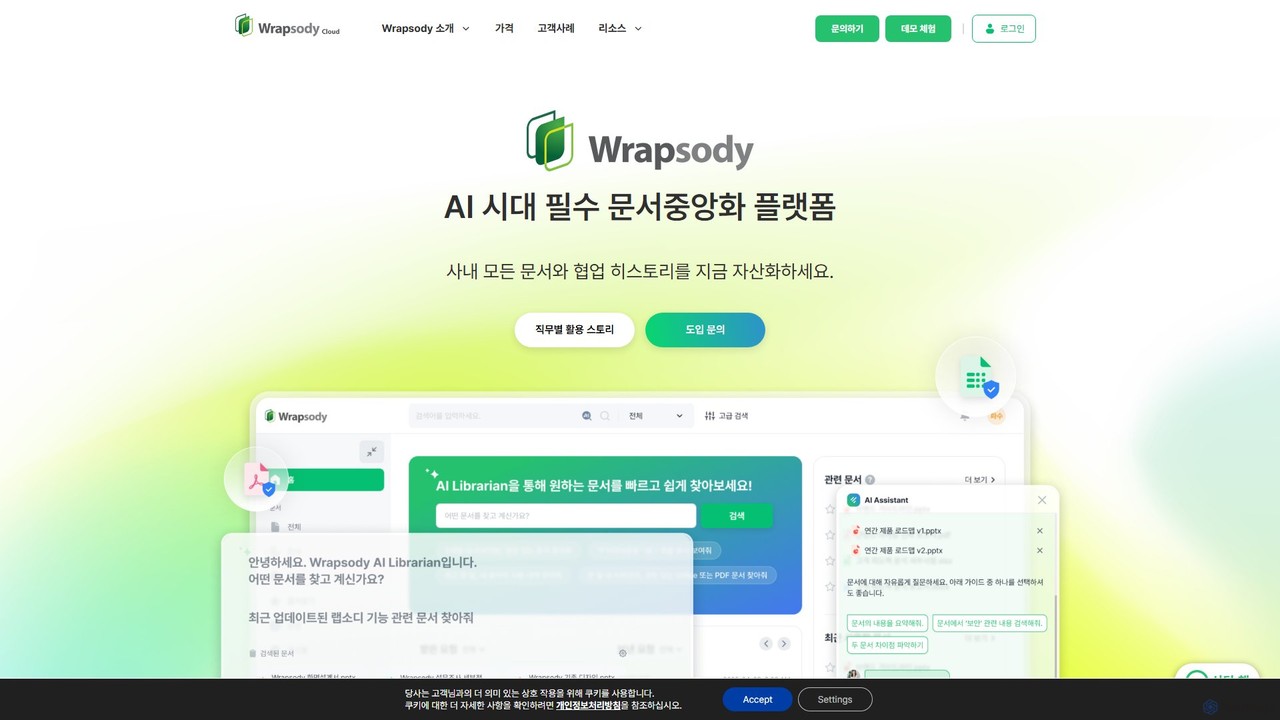
Wrapsody is an enterprise-grade document centralization platform designed for the AI era. It virtualizes and centralizes all company documents, regardless of their location, preventing data silos and ensuring everyone works with the latest version. With file-level security, comprehensive audit trails, and integrated collaboration tools, Wrapsody transforms scattered documents and communication history into valuable, secure corporate assets, essential for building reliable private AI models and boosting overall productivity.
About Data Governance
Data Governance tools are AI-powered platforms for establishing and enforcing policies to manage an organization's data assets. These tools leverage machine learning to automate data discovery, classification, quality monitoring, and access control across complex systems. By implementing a robust data governance framework, organizations can ensure their data is accurate, secure, and compliant, which is critical for reliable analytics, business intelligence, and building trustworthy AI models. They provide a proactive approach to managing the entire data lifecycle, from creation to archival.
Core Features
- Automated Data Discovery & Classification: Uses AI to automatically scan data sources, identify sensitive information (like PII), and apply appropriate tags.
- Data Quality Management: Continuously monitors data for anomalies, duplicates, and inconsistencies, providing workflows for remediation.
- Policy Enforcement & Access Control: Manages and enforces rules about who can view, edit, and use specific datasets based on roles and context.
- Data Lineage & Cataloging: Creates a searchable catalog of all data assets, tracking data's origin, transformations, and usage history.
- Compliance & Auditing: Generates automated reports to demonstrate adherence to regulations such as GDPR, CCPA, and HIPAA.
Use Cases
Data Governance tools are essential in data-intensive industries like finance, healthcare, and e-commerce. They are primarily used by Chief Data Officers, data stewards, compliance teams, and data engineers to maintain a single source of truth, manage regulatory risk, and improve the overall quality and trustworthiness of enterprise data.
How to Choose
When selecting a Data Governance tool, consider its integration capabilities with your existing data sources (databases, data lakes, cloud services). Evaluate the sophistication of its AI-driven automation for classification and quality checks. Also, assess its scalability to handle growing data volumes and its support for specific industry regulations relevant to your business.

Data GovernanceUse Cases
Automating GDPR/CCPA Compliance Reporting
A compliance officer at a multinational e-commerce company uses a data governance tool to automate adherence to data privacy regulations. The tool continuously scans all customer databases and cloud storage, automatically identifying and classifying Personal Identifiable Information (PII) like names, addresses, and credit card details. When a data subject access request (DSAR) is received, the officer can generate a complete report of that individual's data within minutes instead of days. This process significantly reduces manual effort, minimizes the risk of human error, and ensures timely responses for regulatory audits.
Building a Trusted Central Data Catalog
A data analytics team at a financial institution needs to ensure their reports are built on accurate and reliable data. They use a data governance tool to create a central data catalog. The tool automatically scans data warehouses and lakes, documenting metadata, business definitions, and data lineage for each dataset. Analysts can now search this catalog to find relevant data, understand its origin and transformations, and see its quality score before using it. This builds trust in the data and accelerates the development of business intelligence dashboards and financial reports.
Improving Data Quality for AI Model Training
A data science team is developing a machine learning model for fraud detection. The model's accuracy is highly dependent on the quality of the training data. They use a data governance tool to profile their historical transaction data, which automatically identifies and flags issues like missing values, inconsistent formatting, and duplicate records. The tool provides a workflow for data stewards to review and correct these issues. By feeding the model a cleaner, more reliable dataset, the team significantly improves its predictive accuracy and reduces false positives, leading to better fraud prevention.
Enforcing Access Control for Sensitive Health Data
A hospital's IT administrator is tasked with ensuring HIPAA compliance by controlling access to electronic health records (EHR). Using a data governance platform, the administrator defines role-based access policies, such as 'only attending physicians can view patient lab results'. The tool integrates with the hospital's data systems and actively monitors all data access requests in real-time. If a user without proper authorization attempts to access protected health information (PHI), the request is blocked, and an alert is sent to the security team. This automated enforcement provides a robust audit trail and prevents data breaches.
Streamlining Data Stewardship for Financial Reporting
In a large bank, a data steward is responsible for the accuracy of critical financial datasets used for quarterly reporting. They use a data governance tool that provides a centralized dashboard to monitor data quality metrics. When the tool's AI detects an anomaly, like a sudden spike in transaction values, it automatically creates a ticket and assigns it to the steward. The steward can then use the tool's data lineage feature to trace the anomaly back to its source, collaborate with data owners to resolve it, and document the fix, all within the same platform. This streamlines the entire data stewardship process and ensures reporting accuracy.
Securing Data During Cloud Migration
A company is migrating its on-premise data infrastructure to a cloud data warehouse. Before the migration, the IT team uses a data governance tool to perform a comprehensive data discovery and classification audit. The tool scans all source systems, identifies sensitive data such as trade secrets and customer PII, and applies security tags. During the migration process, these tags are used to enforce specific encryption and access control policies in the new cloud environment. This ensures that no sensitive data is exposed during or after the migration, securing the transition and maintaining compliance.