ToolMage
Sign in

Best 3 Investigation AI tools for Security

Popular Investigation AI tools in Security include GeoSpy, CoverTracker, and Traxintel, helping you work more efficiently.

Traxintel
Paid

Traxintel

Traxintel is a private OSINT search engine for finding people online. It conducts deep scans of the internet to uncover public activities, posts, photos, and usernames. The service emphasizes privacy with encrypted, anonymous searches and ensures accuracy through a 24-hour search process verified by human analysts.

Analytics
Visits 6.5KFavorites 83Likes 91
CoverTracker
Freemium

CoverTracker

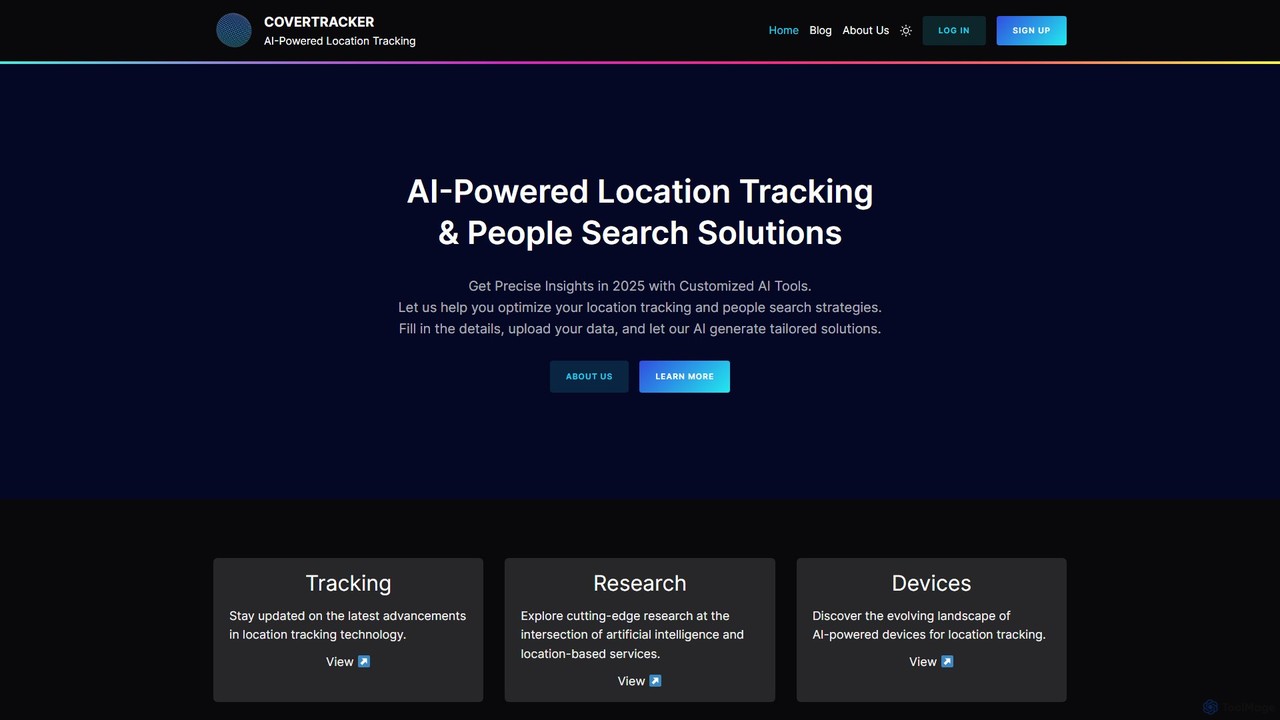
CoverTracker is an advanced AI-powered platform designed for precise location tracking and people search. It leverages sophisticated algorithms to analyze data and provide instant, accurate, and secure insights. Ideal for professionals in security, logistics, and data analysis, it streamlines complex search processes, delivering reliable reports in seconds while ensuring top-tier data privacy with end-to-end encryption.

Logistics
Visits 7KFavorites 94Likes 104
GeoSpy
Paid

GeoSpy

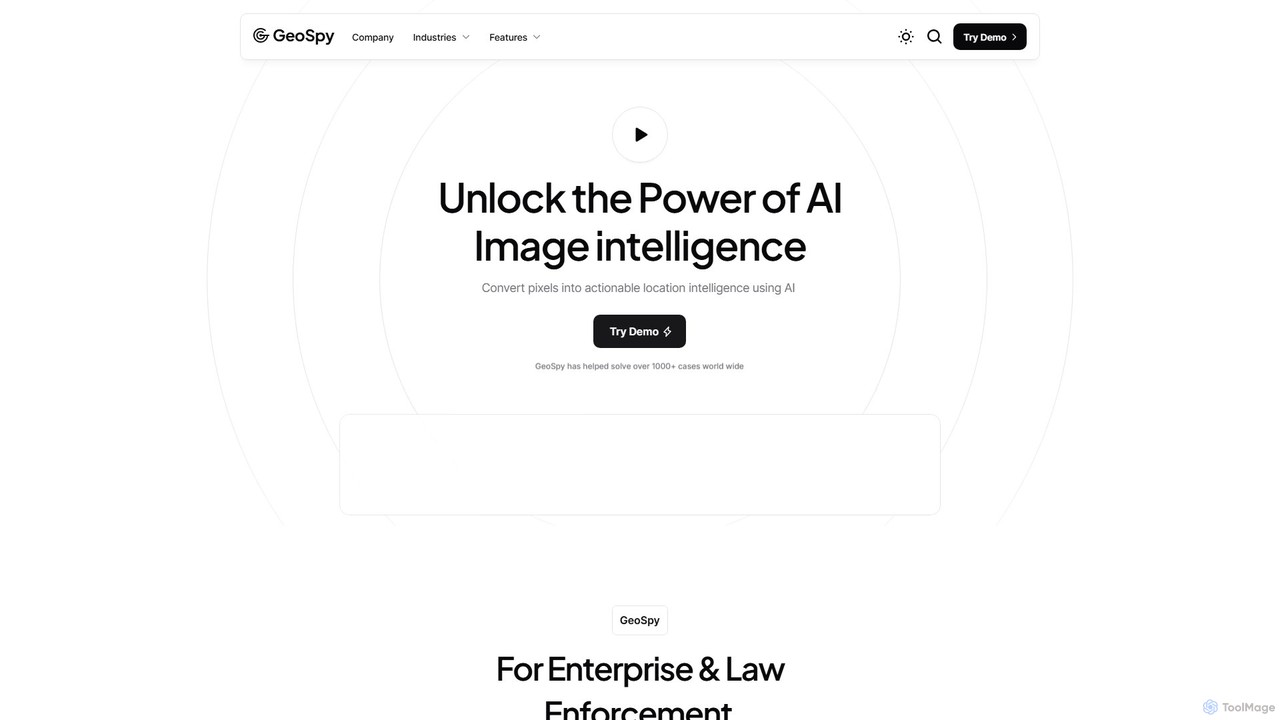
GeoSpy is an advanced AI platform that transforms images into precise, actionable location intelligence. Designed for law enforcement, government agencies, and enterprise organizations, it utilizes state-of-the-art computer vision models to determine geographic locations from images with meter-level accuracy, helping solve cases and gather critical intelligence in seconds.

Geolocation
Visits 511.5KFavorites 164Likes 166

About Investigation

AI Investigation tools are specialized platforms designed to collect, analyze, and interpret data to uncover patterns, anomalies, and evidence related to security incidents or complex digital activities. Leveraging advanced machine learning and natural language processing, these tools automate the laborious process of sifting through vast datasets, significantly accelerating digital forensics, fraud detection, and threat intelligence gathering within the broader field of cybersecurity. They provide critical insights for decision-making in security operations and compliance, enhancing an organization's overall security posture.

Core Features

  • Automated Data Collection: Gathers information from diverse sources like network logs, endpoints, cloud environments, and open-source intelligence (OSINT).
  • Pattern Recognition & Anomaly Detection: Identifies unusual activities, suspicious connections, or deviations from normal behavior using AI algorithms.
  • Evidence Correlation & Link Analysis: Connects disparate pieces of information to build comprehensive case narratives and visualize relationships between entities.
  • Natural Language Processing (NLP): Extracts key information and sentiment from unstructured text data, such as emails, chat logs, and documents.
  • Threat Intelligence Integration: Enriches investigation data with real-time threat feeds and vulnerability databases to contextualize findings.

Applicable Scenarios

Organizations utilize AI investigation tools for rapid incident response, where they need to quickly understand the scope and impact of a breach. Legal and compliance teams employ them for e-discovery and regulatory audits, efficiently sifting through communications for relevant information. Financial institutions leverage these tools for advanced fraud detection, identifying complex schemes that human analysts might miss, thereby strengthening their security defenses.

How to Choose

When selecting an AI investigation tool, consider its data source compatibility (logs, network, cloud, OSINT), the sophistication of its AI algorithms for anomaly detection and correlation, and its integration capabilities with existing security information and event management (SIEM) or security orchestration, automation, and response (SOAR) platforms. Evaluate the user interface for ease of use, reporting features for clarity, and scalability to handle growing data volumes, ensuring it meets your specific investigative needs.


Investigation use cases

1

Rapid Cyber Incident Response

A cybersecurity analyst uses an AI investigation tool to quickly analyze network traffic, endpoint logs, and threat intelligence feeds after a suspected breach. The tool automatically correlates indicators of compromise (IOCs), identifies the attack vector, and maps the lateral movement of the threat actor, reducing investigation time from days to hours and enabling faster containment and remediation of the security incident.

2

Automated Fraud Detection in Finance

A financial institution deploys AI investigation tools to monitor millions of transactions daily. The AI identifies subtle, complex patterns indicative of new fraud schemes, such as money laundering or account takeover, by analyzing transaction history, user behavior, and geographic data, flagging high-risk activities for human review before significant losses occur, thereby protecting assets and customer trust.

3

E-Discovery for Legal Compliance

A legal team facing a lawsuit needs to review terabytes of corporate emails and documents for relevant evidence. An AI investigation platform uses NLP to quickly identify key terms, concepts, and communication patterns, categorizing documents by relevance and privilege, drastically reducing the manual review burden and ensuring compliance with discovery requests within strict deadlines.

4

Insider Threat Detection

An enterprise security team utilizes AI investigation tools to monitor employee activity logs, data access patterns, and communication metadata. The AI establishes baselines of normal behavior and flags unusual deviations, such as unauthorized data transfers or access attempts to sensitive systems by internal users, helping to proactively identify potential insider threats before they escalate into major security incidents.

5

Open-Source Intelligence (OSINT) Gathering

A threat intelligence analyst employs an AI investigation tool to scour public web sources, social media, and dark web forums. The AI automatically collects, filters, and analyzes vast amounts of unstructured data to identify emerging threats, brand mentions, or leaked credentials, providing actionable intelligence to protect the organization from external risks and enhance its proactive security posture.

6

Supply Chain Risk Assessment

A procurement department uses AI investigation tools to assess the security posture and potential risks associated with third-party vendors in their supply chain. The AI analyzes public records, news articles, security reports, and dark web mentions related to vendors, providing a comprehensive risk score and highlighting vulnerabilities that could impact the organization's security and operational continuity, enabling informed vendor selection.

Investigation FAQ

What are AI Investigation tools?

AI Investigation tools are software solutions that leverage artificial intelligence, including machine learning and natural language processing, to automate and enhance the process of collecting, analyzing, and interpreting data for security, fraud, and compliance purposes. They are designed to uncover hidden patterns, detect anomalies, and correlate disparate pieces of information to provide actionable insights, significantly accelerating complex investigative workflows within the broader cybersecurity domain.

How do AI Investigation tools differ from traditional security analytics?

While traditional security analytics often rely on predefined rules and signatures to identify known threats, AI Investigation tools go further by using machine learning to detect unknown threats and complex patterns. They can learn from data, adapt to new attack techniques, and perform advanced correlation across diverse data sources without explicit programming, offering a more proactive and comprehensive approach to uncovering sophisticated threats and anomalies that traditional methods might miss.

What types of data can AI Investigation tools analyze?

AI Investigation tools are highly versatile and can analyze a wide array of data types. This includes structured data like network logs, endpoint telemetry, user activity records, and transaction data, as well as unstructured data such as emails, chat communications, documents, social media posts, and open-source intelligence (OSINT). Their ability to process both structured and unstructured information is crucial for comprehensive and effective investigations across various digital environments.

Who benefits most from using AI Investigation tools?

Organizations with large volumes of data, complex security environments, or high-stakes compliance requirements benefit most. This includes cybersecurity teams for incident response and threat hunting, financial institutions for advanced fraud detection, legal departments for e-discovery, and compliance officers for regulatory audits. These tools empower analysts to handle more data, identify subtle threats, and make faster, more informed decisions, enhancing overall operational efficiency and risk management.

What are the key challenges when implementing AI Investigation tools?

Key challenges include ensuring high-quality and sufficient data for AI training, integrating the tool with existing security infrastructure (SIEM, SOAR), managing false positives, and requiring skilled personnel to interpret AI-generated insights and fine-tune the models. Overcoming these challenges is crucial for maximizing the effectiveness and return on investment of AI investigation solutions, ensuring they deliver accurate and actionable intelligence without overwhelming security teams.