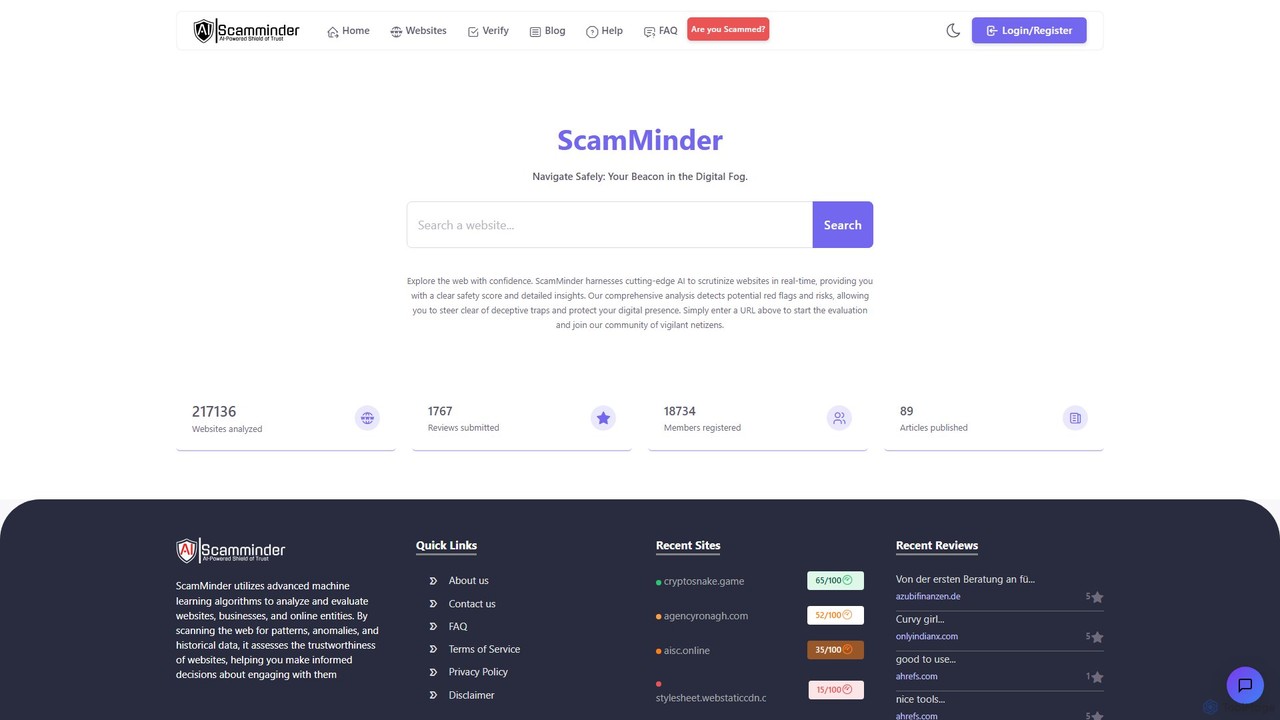
ScamMinder
ScamMinder is an AI-powered cybersecurity tool that provides real-time analysis of websites to protect users from online scams. …
ScamMinder is an AI-powered cybersecurity tool that provides real-time analysis of websites to protect users from online scams. Simply enter a URL to receive an instant safety score and a detailed report, helping you identify phishing sites, fraudulent stores, and other digital threats before you engage with them.
About Scam Detection
Scam Detection tools are a specialized category of security software that uses artificial intelligence to identify and block fraudulent activities in digital communications. These tools analyze text, links, images, and sender behavior in emails, messages, and websites using machine learning and natural language processing (NLP). Their primary value lies in proactively protecting individuals and organizations from financial loss, data theft, and identity fraud by flagging phishing attempts, social engineering tactics, and other deceptive schemes in real-time. This advanced analysis goes beyond traditional spam filters by understanding the context and intent behind a message.
Core Features
- Phishing & Link Analysis: Scans URLs and website content to detect malicious scripts, domain impersonation, and fraudulent login pages.
- Content & Language Analysis: Employs NLP to identify suspicious language patterns, such as manufactured urgency, threats, grammatical errors, and unusual requests.
- Behavioral & Sender Profiling: Analyzes sender reputation, email headers, and communication patterns to spot anomalies that indicate an impersonation or compromised account.
- Real-time Threat Intelligence: Utilizes constantly updated databases of known scams, malicious domains, and fraudulent patterns to identify emerging threats.
- Multi-channel Monitoring: Provides protection across various platforms, including email, SMS (smishing), social media, and messaging apps.
Applicable Scenarios
These tools are essential for both individual and corporate use. Individuals use them to secure personal inboxes and mobile messages from phishing and identity theft. In a business context, they are deployed to protect corporate email systems, collaboration platforms like Slack or Teams, and customer support channels from business email compromise (BEC) and targeted spear-phishing attacks that could lead to significant financial or data breaches.
Selection Criteria
When choosing a Scam Detection tool, consider its detection scope—does it cover all the channels you use (email, SMS, social media)? Evaluate its integration capabilities with your existing software, such as email clients or browsers. Assess its accuracy and the rate of false positives to ensure it doesn't disrupt legitimate communication. Finally, review its privacy policy to understand how it handles and protects your data during analysis.
Scam DetectionUse Cases
Protecting Personal Email from Phishing Attacks
An individual user concerned about online security installs a scam detection browser extension or connects their email account to a detection service. The AI continuously scans incoming emails in real-time. When an email arrives impersonating a bank and asking for login credentials via a suspicious link, the tool analyzes the sender's address, the link's destination, and the urgent language used. It immediately flags the email as a high-risk phishing attempt, moving it to a quarantine folder and displaying a clear warning to the user, thus preventing potential account compromise and financial theft.
Securing Corporate Collaboration Channels
An IT administrator integrates a scam detection tool with the company's Microsoft Teams or Slack environment. The tool actively monitors all public channels and direct messages for malicious links and social engineering attempts. For instance, if an employee's account is compromised and starts sending messages with a link to a fake invoice, the AI detects this anomalous behavior and the malicious URL. It automatically quarantines the message, blocks the link, and sends an alert to the security team. This prevents the attack from spreading within the organization and protects sensitive company data.
Screening Marketplace Messages for Fraud
An online marketplace platform uses a scam detection API to analyze messages between buyers and sellers. When a seller attempts to lure a buyer off the platform to complete a transaction via an insecure payment method ('Please WhatsApp me at... to pay via gift cards'), the AI's NLP model flags this behavior. It identifies keywords related to off-platform communication and risky payment types. The system can then automatically block the message and send a warning to both users about the platform's safety policies, significantly reducing transaction fraud and improving user trust.
Verifying SMS and Messaging App Links (Smishing)
A mobile user receives an SMS message that appears to be from their postal service, claiming a package delivery has failed and instructing them to click a link to reschedule. Before clicking, the user forwards the message to a scam detection service or uses an app that automatically scans incoming messages. The AI analyzes the URL and finds that it leads to a convincing but fake website designed to harvest personal information and credit card details. The app immediately alerts the user that the message is a 'smishing' attack, preventing them from visiting the malicious site and protecting their sensitive data.
Protecting Elderly Family Members from Tech Support Scams
A family member installs a scam detection tool on their elderly parent's computer. This tool is configured for high sensitivity and simplified alerts. One day, a pop-up appears on the screen claiming a virus has been detected and instructing the parent to call a 'Microsoft support' number. The scam detection tool recognizes the fraudulent pop-up's script and the fake toll-free number as hallmarks of a tech support scam. It blocks the pop-up and displays a simple, large-font message: 'Warning: This is a scam. Do not call this number. Close this window.' It also sends a notification to the family member's phone, allowing them to intervene immediately.
Analyzing Cryptocurrency Transactions for Scams
A cryptocurrency investor is about to send funds to a new decentralized finance (DeFi) project. Before confirming the transaction in their wallet, they use a specialized scam detection tool to analyze the destination smart contract address. The AI tool cross-references the address with a database of known scams, checks the contract code for malicious functions (like a 'rug pull' function), and analyzes on-chain transaction patterns for suspicious activity. The tool returns a high-risk score, warning the investor that the project has characteristics of a common investment scam. This prevents the investor from losing their funds to a fraudulent project.