Chatbot UI
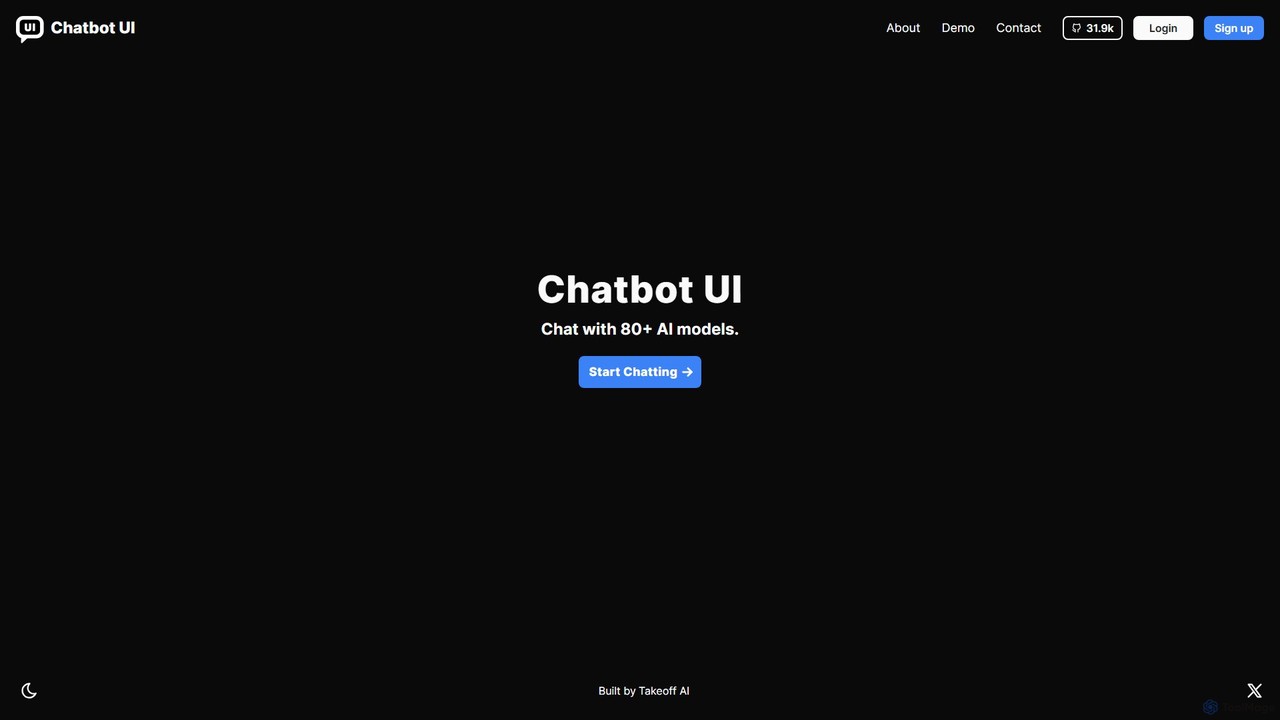
Chatbot UI is an open-source chatbot interface that allows you to connect with over 80 AI models, including …
Chatbot UI is an open-source chatbot interface that allows you to connect with over 80 AI models, including those from OpenAI, Google, and Anthropic. It offers a self-hostable, customizable alternative to proprietary chat platforms, giving users full control over their data and conversations. Organize chats, create prompts, and seamlessly switch between models in a single, unified workspace.
About Productivity
Self-hosted Productivity AI tools are intelligent software solutions deployed directly on a user's private servers or infrastructure, specifically designed to automate tasks, enhance operational efficiency, and boost overall output. These powerful tools leverage advanced AI algorithms to process data locally, offering robust performance while ensuring maximum data privacy, security, and complete control over sensitive information. They empower organizations to streamline complex workflows, significantly reduce manual effort, and make more informed, data-driven decisions without the inherent risks or dependencies associated with third-party cloud services.
Core Features
- Automated Task Management: AI-driven systems for intelligent scheduling, dynamic prioritization, and efficient delegation of tasks, optimizing project timelines and resource allocation.
- Intelligent Data Processing & Analysis: Local analysis of large, proprietary datasets to extract actionable insights, generate comprehensive reports, and perform predictive modeling, all while maintaining strict data sovereignty.
- Content Generation & Summarization: AI assistance in rapidly drafting various forms of content, including emails, reports, and internal communications, alongside summarizing lengthy documents for quick and efficient comprehension.
- Enhanced Collaboration & Communication Tools: AI-powered features that facilitate seamless team interaction, such as automated meeting transcription, intelligent extraction of action items, and secure, smart document sharing within private network environments.
- Custom Workflow Automation: The ability to tailor and train AI models to specific internal business processes, from human resources and finance to customer support, enabling bespoke efficiency gains and process optimization.
Applicable Scenarios
These self-hosted productivity AI tools are particularly well-suited for enterprises operating in highly regulated industries, such as financial institutions, government agencies, or healthcare providers, where stringent data governance and compliance requirements mandate that sensitive information must remain strictly within their own servers. They also provide immense value to development teams requiring deep, custom integration with existing on-premise legacy systems and organizations that demand complete autonomy and control over their AI models, data processing environments, and intellectual property.
How to Choose
When selecting self-hosted productivity AI solutions, it is crucial to prioritize those offering robust data encryption, comprehensive access controls, and audit trails to ensure full compliance with internal security policies and regulatory standards. Carefully evaluate their integration capabilities with your current IT infrastructure, existing enterprise software, and proprietary databases. Additionally, consider the solution's scalability to efficiently handle growing data volumes and an expanding user base, and thoroughly assess the level of customization available to tailor AI models and functionalities to your organization's unique operational needs and business objectives.

ProductivityUse Cases
Automated Internal Compliance Audits
For large corporations or financial institutions, self-hosted AI can autonomously scan internal documents, communications, and transaction logs against predefined regulatory frameworks. It identifies potential compliance breaches, flags anomalies, and generates detailed audit reports, significantly reducing manual review time and ensuring adherence to strict data governance policies without exposing sensitive information to external clouds.
Secure Financial Report Generation
Financial analysts in banks or investment firms utilize self-hosted AI to process vast amounts of proprietary financial data, including market trends, company performance, and internal forecasts. The AI generates complex financial reports, risk assessments, and predictive models, all within the organization's secure network, ensuring the confidentiality and integrity of highly sensitive financial information.
Personalized Employee Onboarding Workflows
HR departments in large enterprises deploy self-hosted AI to automate and personalize the onboarding process for new hires. The AI can dynamically assign training modules, generate customized welcome packets based on role and department, and manage access provisioning, all while keeping employee personal data securely on-premise and integrating seamlessly with existing HRIS.
Proprietary Code Analysis & Optimization
Software development teams, especially those working on sensitive intellectual property or critical infrastructure, use self-hosted AI to analyze their codebase for vulnerabilities, performance bottlenecks, and adherence to coding standards. The AI provides real-time suggestions for optimization and bug fixes, ensuring code quality and security without uploading proprietary source code to external AI services.
Intelligent Healthcare Record Summarization
Healthcare providers leverage self-hosted AI to securely process and summarize extensive patient medical records. The AI can extract key diagnoses, treatment histories, medication lists, and allergies, presenting a concise overview for clinicians. This ensures patient data privacy (HIPAA compliance) while significantly improving the efficiency of patient consultations and record management.
Supply Chain Anomaly Detection
Manufacturing or logistics companies use self-hosted AI to monitor complex supply chain data, including inventory levels, shipping routes, and supplier performance. The AI identifies unusual patterns, predicts potential disruptions, and flags anomalies like unexpected delays or quality issues, enabling proactive intervention and optimizing operational resilience, all within a secure, private data environment.