ToolMage
Sign in

Best 1 Communication Analysis AI tools for Social

Popular Communication Analysis AI tools in Social include textsfrommyex, helping you work more efficiently.

textsfrommyex
Free

textsfrommyex

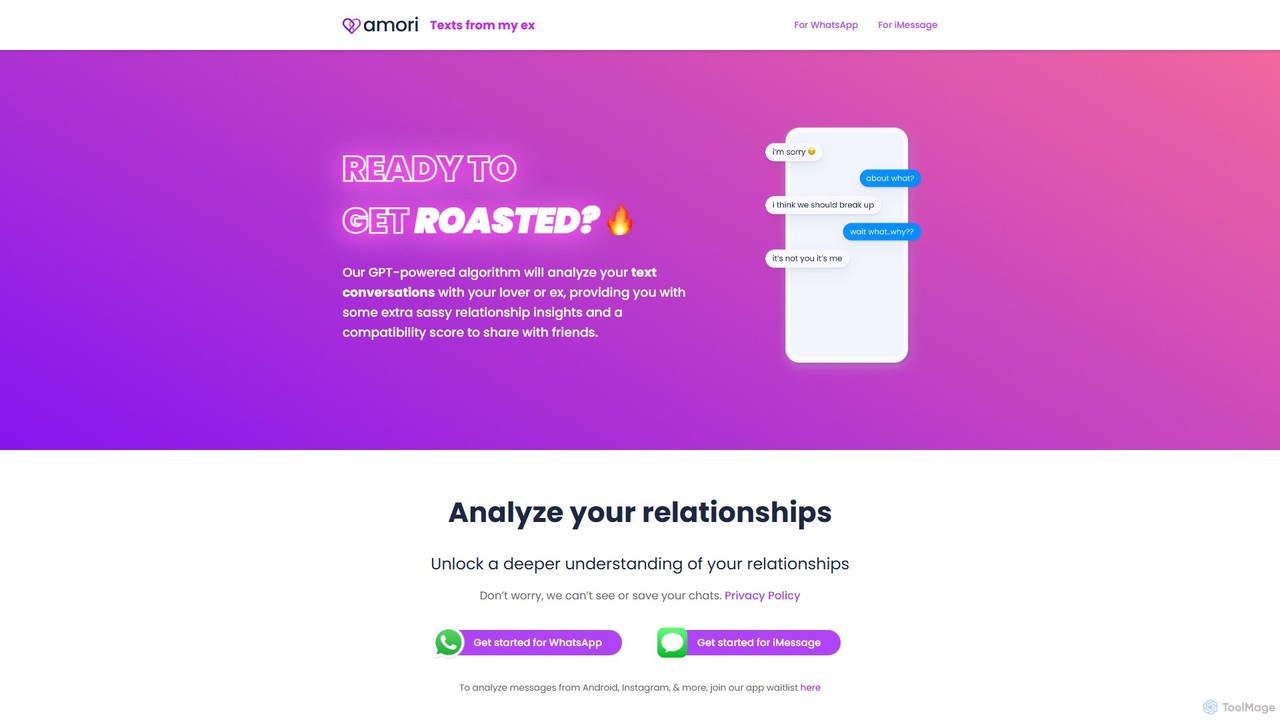
An AI tool by Amori that analyzes your text conversations with an ex or partner. It uses a GPT-powered algorithm to provide sassy, humorous insights, a detailed relationship report, and a compatibility score. Upload your WhatsApp or iMessage chats to get "roasted" and gain a deeper understanding of your relationship dynamics.

Entertainment
Visits 5.8KFavorites 125Likes 131

About Communication Analysis

Communication Analysis tools are AI-powered platforms designed to extract, interpret, and visualize insights from various forms of human interaction. Leveraging advanced natural language processing (NLP) and machine learning, these tools can analyze spoken, written, and digital communications to identify patterns, sentiments, and key topics. They provide invaluable data for improving customer service, enhancing team collaboration, and refining marketing strategies by transforming raw conversational data into actionable intelligence.

Core Features

  • Sentiment Analysis: Automatically detects and quantifies the emotional tone (positive, negative, neutral) in text or speech.
  • Topic Extraction: Identifies and categorizes the main subjects and themes discussed across large volumes of communication.
  • Speaker Diarization: Distinguishes and labels different speakers in audio recordings, attributing specific utterances to individuals.
  • Emotion Detection: Analyzes vocal cues and linguistic patterns to infer underlying emotions beyond simple sentiment.
  • Interaction Pattern Recognition: Uncovers recurring conversational structures, turn-taking dynamics, and engagement levels.

Applicable Scenarios

Businesses utilize communication analysis for quality assurance in call centers, where tools monitor agent-customer interactions to ensure compliance and identify training needs. Marketing teams analyze social media conversations and customer reviews to gauge brand perception and refine messaging. HR departments can use these tools to understand employee feedback and improve internal communication strategies.

How to Choose

When selecting a communication analysis tool, consider its accuracy in language processing, especially for specific dialects or industry jargon. Evaluate its integration capabilities with existing CRM, call center, or collaboration platforms. Assess data privacy and security features, as sensitive information may be processed. Finally, look for customizable dashboards and reporting features that align with your specific analytical needs.

Communication Analysis use cases

1

Optimizing Call Center Performance

Customer service managers can deploy communication analysis tools to automatically transcribe and analyze thousands of customer support calls. By identifying common customer complaints, agent response patterns, and sentiment shifts during calls, they can pinpoint areas for agent training, refine call scripts, and improve overall service quality. This leads to reduced call handling times and increased customer satisfaction scores.

2

Gauging Brand Perception on Social Media

Marketing analysts use communication analysis to monitor social media mentions, comments, and reviews related to their brand or products. By analyzing sentiment, identifying trending topics, and understanding the emotional tone of public discourse, they can quickly detect emerging crises, measure the impact of campaigns, and tailor their messaging to resonate more effectively with their target audience, enhancing brand reputation.

3

Enhancing Team Collaboration and Productivity

Team leaders and project managers can leverage communication analysis tools to review meeting transcripts, chat logs, and email exchanges. These tools can identify key discussion points, action items, and potential communication bottlenecks or misunderstandings. By understanding how teams interact, leaders can foster more effective communication strategies, improve decision-making processes, and ultimately boost overall team productivity and cohesion.

4

Analyzing Sales Conversations for Insights

Sales managers can use communication analysis tools to review recorded sales calls and demos. These tools can highlight successful sales techniques, common customer objections, and areas where sales representatives might need additional coaching. By analyzing the language used by top performers versus others, organizations can develop more effective sales training programs and improve conversion rates across the sales team.

5

Understanding Customer Feedback and Reviews

Product managers and customer experience teams can utilize communication analysis to process vast amounts of customer feedback from surveys, online reviews, and support tickets. These tools can automatically categorize feedback by topic, identify recurring issues, and gauge overall customer sentiment towards specific features or products. This enables data-driven product development, prioritization of improvements, and a deeper understanding of customer needs and pain points.

6

Conducting Market Research and Competitor Analysis

Market researchers can employ communication analysis tools to analyze public discussions, news articles, and industry reports. By tracking sentiment around competitors, identifying emerging market trends, and understanding consumer language, businesses can gain a competitive edge. This allows for informed strategic planning, product positioning, and the identification of untapped market opportunities based on real-time conversational data.

Communication Analysis FAQ

What are Communication Analysis tools?

Communication Analysis tools are AI-powered platforms that analyze human interactions across various channels. They leverage natural language processing (NLP) and machine learning to extract insights from spoken, written, and digital communications. Key characteristics include identifying sentiment, topics, emotions, and interaction patterns, transforming raw data into actionable intelligence for businesses to improve customer service, team collaboration, and marketing strategies.

How do AI Communication Analysis tools differ from traditional analytics?

AI Communication Analysis tools go beyond traditional keyword-based analytics by understanding context, sentiment, and nuances in human language. While traditional tools might count keyword occurrences, AI tools can interpret the emotional tone of a conversation, identify sarcasm, or summarize complex discussions. This allows for deeper, more qualitative insights into communication dynamics, rather than just quantitative metrics.

What are the key benefits of using Communication Analysis in business?

Businesses gain several key benefits from communication analysis. Firstly, it enhances customer understanding by revealing true sentiment and pain points, leading to improved service and product development. Secondly, it optimizes internal operations by identifying communication inefficiencies and fostering better team collaboration. Thirdly, it provides actionable market intelligence, helping refine marketing strategies and manage brand reputation more effectively. Ultimately, it drives data-driven decision-making across various departments.

What features should I look for in a Communication Analysis platform?

When evaluating communication analysis platforms, prioritize robust natural language processing (NLP) capabilities for accurate text and speech analysis. Look for comprehensive sentiment analysis, topic modeling, and entity recognition features. Integration with your existing communication channels (CRM, call center software, social media) is crucial. Consider scalability, data privacy compliance, and customizable reporting dashboards to ensure the tool meets your specific business needs and can grow with your organization.

Can Communication Analysis tools be used for real-time monitoring?

Yes, many advanced Communication Analysis tools offer real-time monitoring capabilities. This is particularly valuable in scenarios like live customer support chats, social media crisis management, or monitoring ongoing team discussions. Real-time analysis allows businesses to detect critical issues, negative sentiment spikes, or urgent requests as they happen, enabling immediate intervention and proactive responses to maintain service quality and manage reputation effectively.