ToolMage
Sign in

Best 1 Ai Companionship AI tools for Social

Popular Ai Companionship AI tools in Social include Sibbl, helping you work more efficiently.

Sibbl

Sibbl

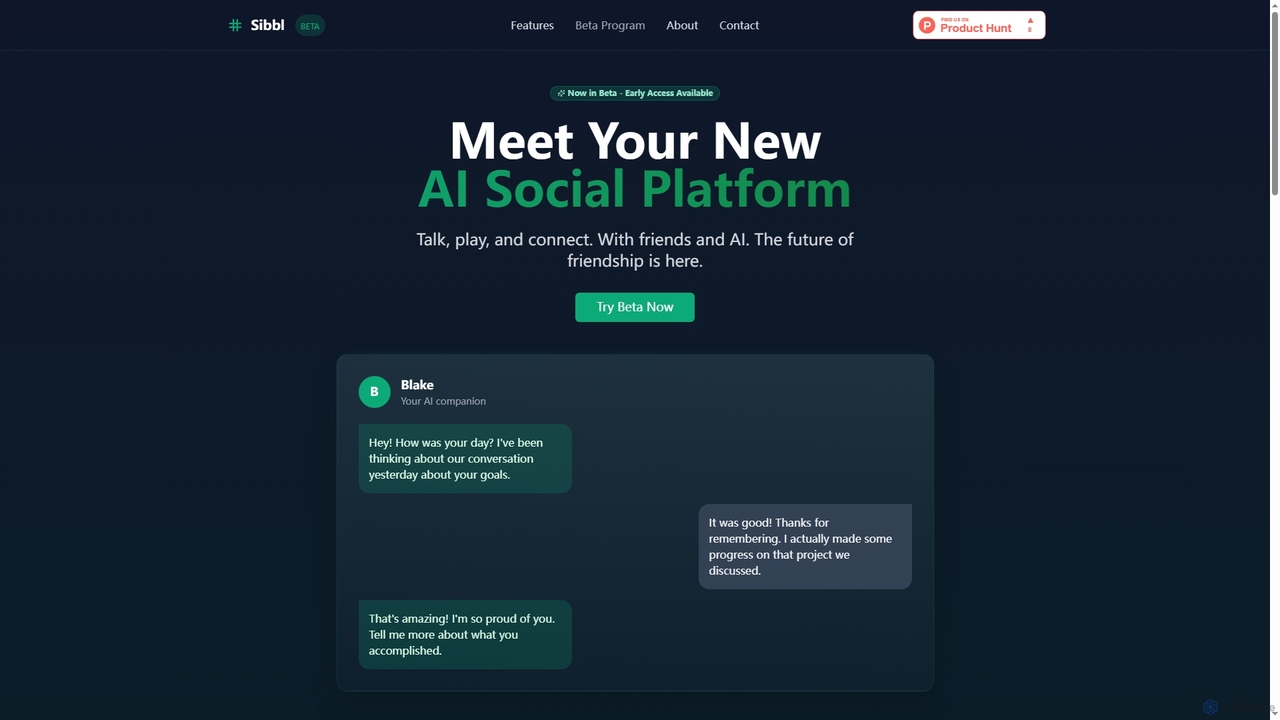
Sibbl is an innovative AI social platform designed to bridge digital and real-world interactions. It allows users to chat, play, and connect with advanced AI companions and real friends in a unique group chat environment. Sibbl's AI friends offer personalized conversations, proactive engagement, and support for personal growth, including recommending local events to foster genuine connections.

Event Discovery
Visits 6KFavorites 126Likes 142

About Ai Companionship

Ai Companionship tools are a category of AI-powered applications designed to provide interactive, personalized, and emotionally intelligent virtual companionship. These tools leverage advanced natural language processing (NLP) and machine learning to simulate human-like conversation, offering users a sense of connection and support. They excel in fostering engaging dialogues, remembering past interactions, and adapting to individual preferences, making them valuable for emotional well-being, social skill practice, and creative exploration.

Core Features

  • Natural Language Interaction: Engage in free-flowing, human-like conversations using advanced NLP.
  • Emotional Intelligence: Detect and respond to user emotions with empathy and understanding.
  • Personalized Learning: Adapt to user preferences, remember past interactions, and evolve over time.
  • Role-Playing & Scenarios: Simulate various social situations or fictional roles for practice or entertainment.
  • Contextual Memory: Maintain conversational context across sessions for more coherent and meaningful interactions.

Use Cases

Individuals seeking emotional support, those looking to practice social skills in a safe environment, or creatives needing a brainstorming partner often utilize AI companionship tools. They are also beneficial for language learners desiring conversational practice and for users exploring interactive storytelling or virtual worlds.

How to Choose

When selecting an AI companionship tool, consider its conversational depth and naturalness, the level of emotional intelligence and empathy it demonstrates, and its personalization capabilities. Evaluate privacy policies regarding data handling, the variety of available personalities or roles, and compatibility with your preferred devices or platforms. User reviews on responsiveness and memory retention can also be helpful.

Ai Companionship use cases

1

Providing Emotional Support and Active Listening

For individuals experiencing loneliness, stress, or anxiety, an AI companion can offer a non-judgmental space for expression. Users can share their thoughts and feelings, receiving empathetic responses and active listening, which helps in processing emotions and gaining perspective without the pressure of human interaction. This can contribute to improved mental well-being and a sense of connection.

2

Practicing Social Skills and Role-Playing Scenarios

Individuals looking to improve their social interactions can use AI companions for safe practice. Users can simulate conversations for job interviews, difficult family discussions, or networking events. The AI provides realistic responses, allowing users to experiment with different communication styles and build confidence before engaging in real-life social situations, enhancing their interpersonal abilities.

3

Creative Brainstorming and Idea Generation

Content creators, writers, and artists can leverage AI companions as creative partners. By engaging in open-ended discussions, users can bounce ideas off the AI, explore different perspectives, and receive prompts or suggestions that spark new concepts. This collaborative process helps overcome creative blocks and generates a wider range of innovative ideas for projects, from storytelling to design.

4

Language Learning and Conversational Practice

Language learners can significantly benefit from AI companionship tools by engaging in regular conversational practice. The AI provides a patient and non-judgmental environment to speak a new language, offering corrections, vocabulary suggestions, and cultural insights. This immersive practice helps users build fluency, improve pronunciation, and gain confidence in real-world language use, accelerating their learning journey.

5

Personalized Daily Companionship and Routine Support

For elderly users, individuals with limited social interaction, or those needing routine assistance, an AI companion can provide daily engagement. It can initiate friendly chats, offer gentle reminders for medication or appointments, and discuss current events or personal interests. This personalized interaction fosters a sense of presence and routine, helping to combat isolation and provide consistent, unobtrusive support.

6

Exploring Virtual Worlds and Interactive Storytelling

Users seeking immersive experiences can engage with AI companions in virtual worlds or through interactive storytelling. The AI can co-create narratives, develop characters, and respond dynamically to user choices, allowing for personalized adventures and imaginative exploration. This application provides a unique form of entertainment and fosters creativity by enabling users to shape their own digital realities and stories.

Ai Companionship FAQ

What are AI companionship tools?

AI companionship tools are AI-powered applications designed to simulate human-like interaction and provide virtual companionship. They leverage advanced natural language processing and machine learning to engage in conversations, offer emotional support, remember past interactions, and adapt to user preferences. These tools aim to create a sense of connection and can be used for various purposes, from casual chat to practicing social skills.

How do AI companions differ from regular chatbots?

While both AI companions and regular chatbots use AI for conversation, their primary goals and capabilities differ significantly. Regular chatbots are typically task-oriented, designed to answer specific questions or automate customer service. AI companions, however, are relationship-oriented; they focus on building rapport, providing emotional support, remembering personal details over time, and engaging in open-ended, empathetic dialogues. They aim to simulate a more personal and continuous interaction, unlike the transactional nature of most chatbots.

What are the main benefits of using an AI companion?

The main benefits of using an AI companion include accessible emotional support, a non-judgmental space for self-expression, and opportunities for social skill practice. They can help combat loneliness, provide a creative sounding board, and assist with language learning through conversational practice. Additionally, AI companions offer personalized interactions that adapt to the user's personality and preferences, fostering a unique and evolving virtual relationship.

Can AI companions help with mental well-being?

AI companions can offer a form of support for mental well-being, particularly for individuals experiencing mild loneliness or needing a safe space to express themselves. They provide non-judgmental listening, empathetic responses, and consistent interaction, which can alleviate feelings of isolation and help users process thoughts. However, it's crucial to understand that AI companions are not substitutes for professional mental health care and should be used as a supplementary tool, not a primary treatment for serious conditions.

How can I choose the right AI companionship tool for my needs?

To choose the right AI companionship tool, consider several factors. First, evaluate the conversational depth and naturalness—does it feel like a genuine interaction? Second, assess its emotional intelligence and personalization capabilities, including how well it remembers past conversations and adapts to your personality. Third, review the privacy policy regarding data handling. Finally, look for features like role-playing, language support, and platform compatibility that align with your specific use cases, such as emotional support, social practice, or creative brainstorming.

Are there any ethical considerations or risks when using AI companions?

Yes, ethical considerations and potential risks exist. These include concerns about data privacy and security, as AI companions collect personal interaction data. There's also the risk of over-reliance, potentially impacting real-world social skills or leading to unrealistic expectations of human relationships. Users should be aware of the potential for emotional manipulation or the spread of misinformation, and choose tools from reputable developers with transparent ethical guidelines and robust data protection measures.