Social & Fun Best in category 1 results Games AI Tool

Popular AI tools in the Games field of Social & Fun include Banter, etc., helping you quickly improve efficiency.

Banter

Banter

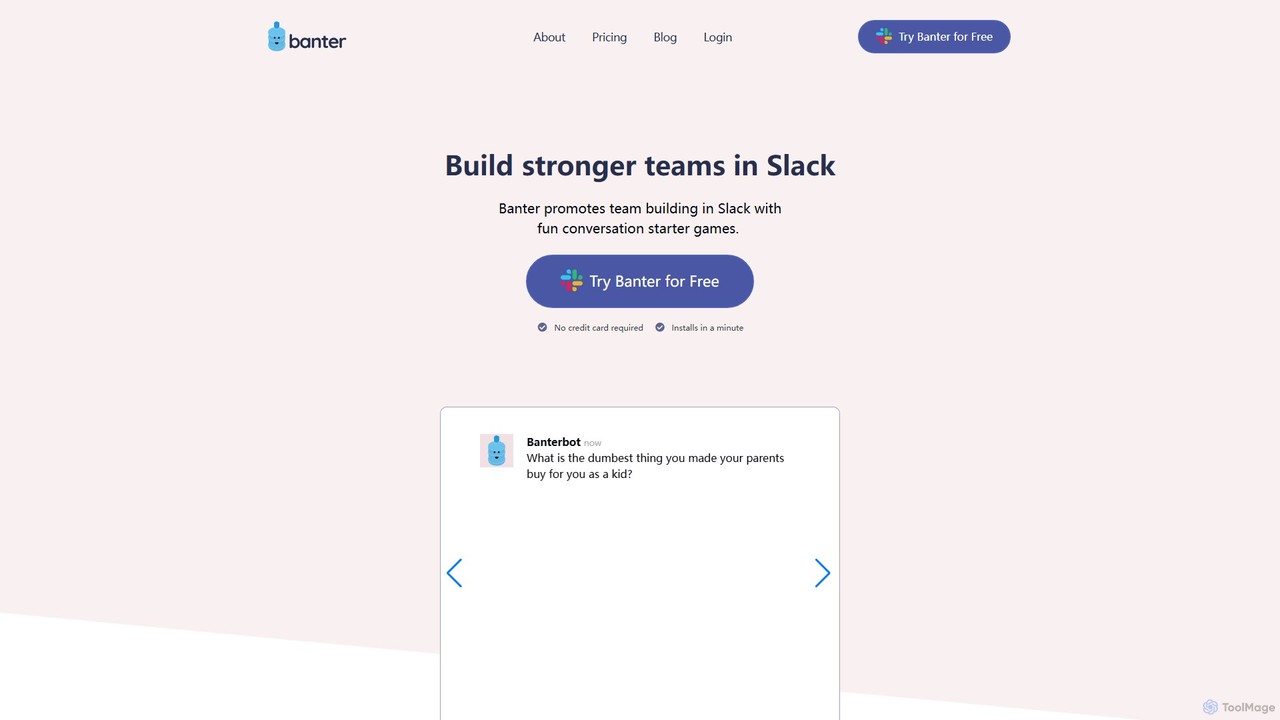
Banter is a Slack bot designed to strengthen remote team bonds through fun, automated icebreakers and conversation starters. …

6.9K

About Games

AI Games are a category of tools leveraging artificial intelligence to enhance, create, or analyze interactive digital entertainment. These advanced platforms utilize machine learning, natural language processing, and procedural generation to build more dynamic, personalized, and intelligent gaming experiences. From crafting sophisticated non-player characters (NPCs) with realistic behaviors to generating vast, unique game worlds, AI in games empowers developers to push creative boundaries and offers players unprecedented levels of immersion and challenge, moving beyond static, pre-scripted interactions.

Core Features

  • Intelligent NPC Behavior: AI-driven characters with realistic decision-making, complex pathfinding, and adaptive responses to player actions, making interactions feel more organic and less predictable.
  • Procedural Content Generation (PCG): Algorithms that automatically create diverse game levels, intricate quests, unique items, or expansive environmental assets, significantly reducing manual design effort and enabling infinite replayability.
  • Adaptive Difficulty & Personalization: AI systems that dynamically adjust game challenge, tailor narrative elements, or provide personalized recommendations based on individual player skill, playstyle, and preferences, ensuring an optimal experience for everyone.
  • AI-Powered Game Testing & Balancing: Automated agents that playtest games rigorously to identify bugs, uncover balance issues, and optimize gameplay mechanics, accelerating the quality assurance process.
  • Generative AI for Game Assets: Tools that create high-quality game art, textures, 3D models, sound effects, or even dialogue and voiceovers based on textual prompts or existing data, speeding up asset production.

Use Cases

Game developers across all scales utilize AI game tools to streamline production, enhance player engagement, and innovate gameplay. This includes indie studios rapidly prototyping new levels and game mechanics, large enterprises automating extensive quality assurance processes, and designers creating deeply personalized player journeys that adapt to individual choices. AI also proves invaluable in balancing complex game economies, simulating player behavior for design insights, and fostering more believable, reactive virtual worlds.

How to Choose

When selecting AI game tools, it's crucial to consider the specific AI functionality required for your project, such as advanced NPC AI, robust procedural content generation, or sophisticated adaptive systems. Evaluate its compatibility and ease of integration with your existing game engine (e.g., Unity, Unreal Engine, Godot) and development pipeline. Assess the scalability of the solution to handle your game's scope and complexity, the learning curve for your development team, and the overall cost model, including licensing fees or royalty structures, to ensure it aligns with your budget and project timeline.

GamesUse Cases

1

Designing Intelligent & Reactive NPCs

Game designers and developers can leverage AI tools to create non-player characters (NPCs) that exhibit complex, believable behaviors. Instead of rigid scripts, AI allows NPCs to learn from player actions, adapt their strategies, and engage in dynamic conversations. This enhances immersion in RPGs, strategy games, and open-world titles, making interactions feel more organic and challenging, ultimately leading to a richer player experience.

2

Automating Game Level & World Generation

Indie game developers and large studios alike can use AI-powered procedural content generation (PCG) to rapidly create vast and varied game environments, levels, or even entire planets. By defining parameters and rules, AI algorithms can generate unique layouts, terrain, and asset placements, significantly reducing manual design time. This is particularly useful for roguelikes, open-world exploration games, and titles requiring endless replayability, offering fresh content with every playthrough.

3

Personalizing Player Experiences & Difficulty

Game designers can implement AI systems to dynamically adapt the game's difficulty, narrative branches, or content recommendations based on individual player performance and preferences. For instance, a challenging boss fight might become slightly easier after multiple failures, or the game might suggest quests aligned with a player's preferred playstyle. This ensures an optimized and engaging experience for a diverse player base, preventing frustration for novices and boredom for veterans.

4

Streamlining Game Asset Creation

Game artists and 3D modelers can utilize generative AI tools to accelerate the creation of various game assets. This includes generating textures, concept art, 3D models, sound effects, or even character animations from simple text prompts or existing data. AI can quickly produce multiple variations, allowing artists to iterate faster and focus on refinement, drastically cutting down production time for environmental details, props, or character designs.

5

Enhancing Game Testing & Quality Assurance

Quality assurance (QA) teams and game testers can deploy AI agents to autonomously play through games, identifying bugs, glitches, and balance issues far more efficiently than manual testing. These AI players can simulate thousands of play sessions, stress-test game mechanics, and uncover edge cases that human testers might miss. This leads to more stable, polished game releases and frees up human testers for more nuanced, subjective feedback.

6

Crafting Dynamic Game Narratives & Dialogue

Storytellers and narrative designers can employ AI to generate dynamic dialogue, branching storylines, or even entire quest lines that adapt to player choices and in-game events. AI can ensure character voices remain consistent, create contextually relevant conversations, and offer unique narrative paths for each playthrough. This is invaluable for RPGs and adventure games, providing a deeper sense of agency and replay value by making every story feel personal.

GamesFrequently Asked Questions