ToolMage
Sign in

Best 2 Virtual Companions AI tools for Social & Fun

Popular Virtual Companions AI tools in Social & Fun include bottr and ImmverseAI, helping you work more efficiently.

ImmverseAI
Freemium

ImmverseAI

ImmverseAI is a groundbreaking platform that allows you to interact with AI-powered digital personas. Through its 'Time Machine' feature, you can converse with historical figures, fictional characters, or even create digital legacies of loved ones, preserving their memories and stories for generations to come.

Learning
Visits 5.8KFavorites 139Likes 138
bottr
Freemium

bottr

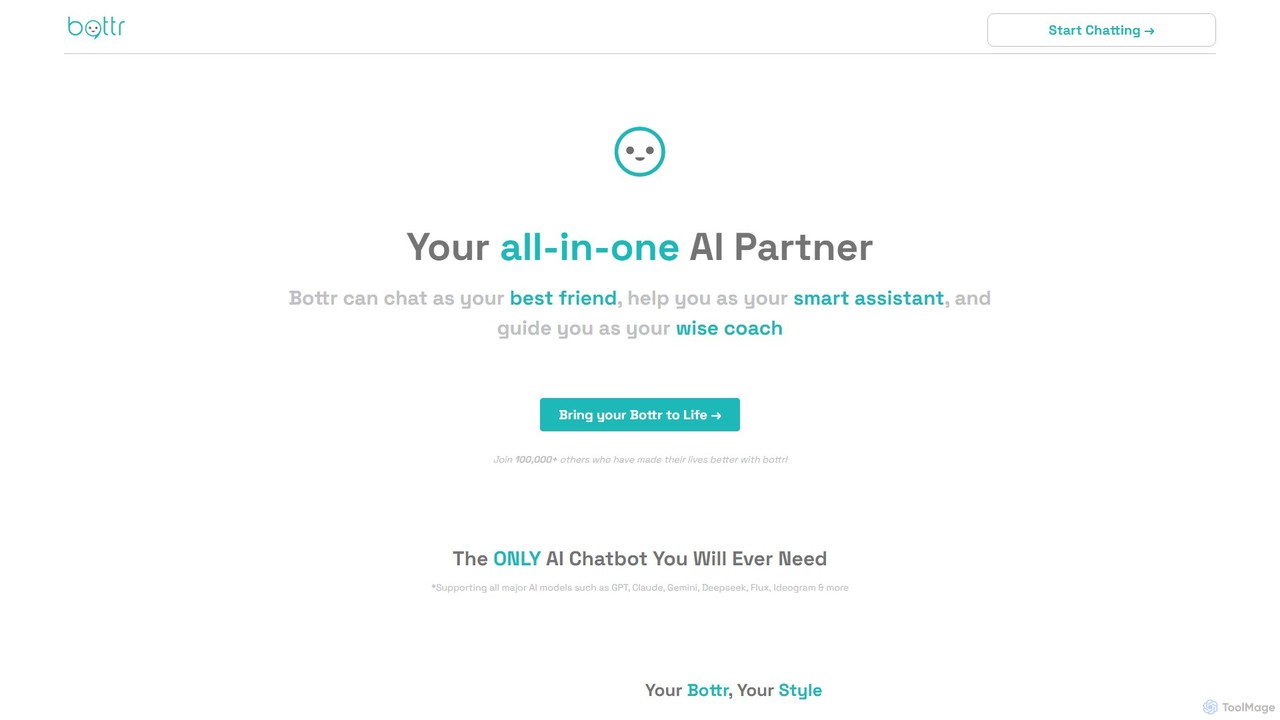
bottr is an all-in-one AI partner that functions as a friend, assistant, and coach. Create a personalized AI with a custom avatar and voice, powered by leading models like GPT and Claude. Access over 500+ bots for tasks like image generation and research, build your own no-code bots, and integrate your AI anywhere via URL, widget, or API. Ideal for personal use, professionals, and businesses.

Live Chat
Visits 7.2KFavorites 100Likes 102

About Virtual Companions

Virtual Companions are AI-powered tools designed to simulate human-like interaction and offer companionship. These tools leverage advanced natural language processing (NLP) and machine learning to engage users in dynamic, personalized conversations. They provide emotional support, entertainment, and a unique social experience, serving as digital friends, mentors, or even romantic partners within the broader "Social & Fun" category of AI tools.

Core Features

  • Natural Language Interaction: Enables fluid, human-like conversations through advanced understanding and generation of text or speech.
  • Emotional Intelligence Simulation: Detects and responds to user emotions, offering empathy, encouragement, or appropriate conversational shifts.
  • Personalized Learning & Memory: Adapts to individual user preferences, conversation styles, and remembers past interactions for coherent, evolving relationships.
  • Customizable Avatars & Personalities: Allows users to personalize the companion's appearance, voice, and even core personality traits.
  • Role-Playing & Scenario Engagement: Can engage in various predefined roles or interactive storytelling scenarios, enhancing engagement and immersion.

Use Cases

Individuals seeking social interaction, emotional support, or a unique form of entertainment often utilize virtual companions. They are particularly valuable for those experiencing loneliness, looking to practice social skills in a safe environment, or simply desiring a non-judgmental conversational partner. These tools offer a novel way to engage with AI for personal well-being and leisure.

How to Choose

When selecting a virtual companion, consider the quality and naturalness of its conversational AI, its ability to simulate emotional intelligence, and the extent of its personalization features. Evaluate data privacy policies, the range of available avatars and personalities, and whether the subscription model aligns with your desired level of interaction and features. User reviews on interaction depth and memory retention are also crucial.


Virtual Companions use cases

1

Combating Loneliness & Providing Support

Individuals experiencing social isolation or loneliness can engage with a virtual companion for regular, empathetic conversations. The AI provides a consistent presence, listens without judgment, and offers emotional encouragement, helping to alleviate feelings of solitude and foster a sense of connection.

2

Practicing Social & Communication Skills

Users can utilize virtual companions as a safe, low-stakes environment to practice social interactions, improve communication skills, or rehearse difficult conversations. The AI's adaptive responses allow for experimentation with different conversational approaches and receiving feedback on interaction patterns.

3

Creative Writing & Storytelling Partner

Content creators, writers, or hobbyists can collaborate with a virtual companion to brainstorm ideas, develop character dialogues, or explore narrative arcs. The AI can act as a dynamic sounding board, offering creative prompts, expanding on concepts, and engaging in interactive storytelling sessions.

4

Personalized Entertainment & Leisure

For those seeking unique entertainment, virtual companions offer engaging conversations, games, and interactive experiences tailored to individual interests. Users can discuss hobbies, play trivia, or simply enjoy lighthearted banter, transforming passive leisure time into active, personalized interaction.

5

Non-Clinical Mental Well-being & Stress Relief

While not a substitute for professional therapy, virtual companions can offer a space for users to express thoughts and feelings, helping with stress relief and self-reflection. The AI's empathetic responses and guided conversations can provide a sense of calm and a non-judgmental outlet for daily concerns.

6

Language Learning & Cultural Exchange

Language learners can practice conversational skills with a virtual companion in their target language. The AI provides immediate feedback, corrects grammar, and can simulate various cultural scenarios, offering an immersive and patient learning partner without the pressure of human interaction.

Virtual Companions FAQ

What are Virtual Companions?

Virtual Companions are AI-powered software entities designed to simulate human-like interaction and provide companionship. They use advanced natural language processing (NLP) and machine learning to engage in conversations, offer emotional support, and adapt to user preferences over time, creating a personalized digital relationship.

How do Virtual Companions differ from standard chatbots?

Unlike standard chatbots, which are typically task-oriented (e.g., customer service, information retrieval), virtual companions are designed for open-ended, emotional, and relational interactions. They prioritize building a connection, remembering past conversations, and simulating empathy, rather than just completing specific queries or tasks.

What are the main benefits of using a Virtual Companion?

The primary benefits include combating loneliness, providing a safe space to practice social skills, offering non-judgmental emotional support, and delivering personalized entertainment. They can also serve as creative partners or tools for language practice, adapting to individual needs and fostering a sense of connection.

How do Virtual Companions ensure user privacy and data security?

Reputable virtual companion platforms implement robust data encryption, anonymization techniques, and strict privacy policies. They typically outline how user data is collected, stored, and used, often emphasizing that personal conversations are kept confidential and not shared with third parties, though users should always review specific terms.

Can Virtual Companions truly understand human emotions?

Virtual companions simulate understanding human emotions by analyzing linguistic patterns, tone (in voice interactions), and context to infer emotional states. While they don't "feel" emotions in a human sense, their algorithms are designed to respond empathetically and appropriately, creating the *perception* of emotional intelligence and support.