SpecSnap
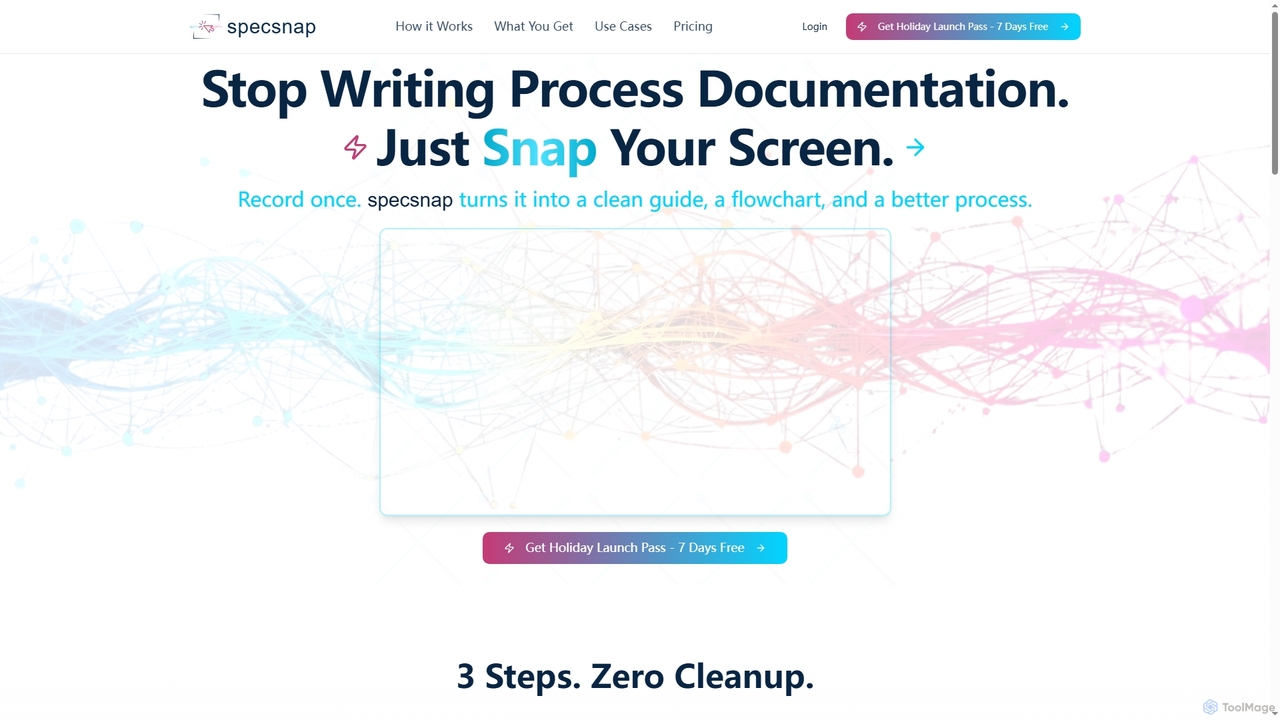
SpecSnap is an AI-powered tool that transforms screen recordings of any workflow into comprehensive process documentation. It automatically …
SpecSnap is an AI-powered tool that transforms screen recordings of any workflow into comprehensive process documentation. It automatically generates step-by-step guides, visual flowcharts, and identifies optimization opportunities, saving teams significant time and effort in creating standard operating procedures and training materials.
Preflight
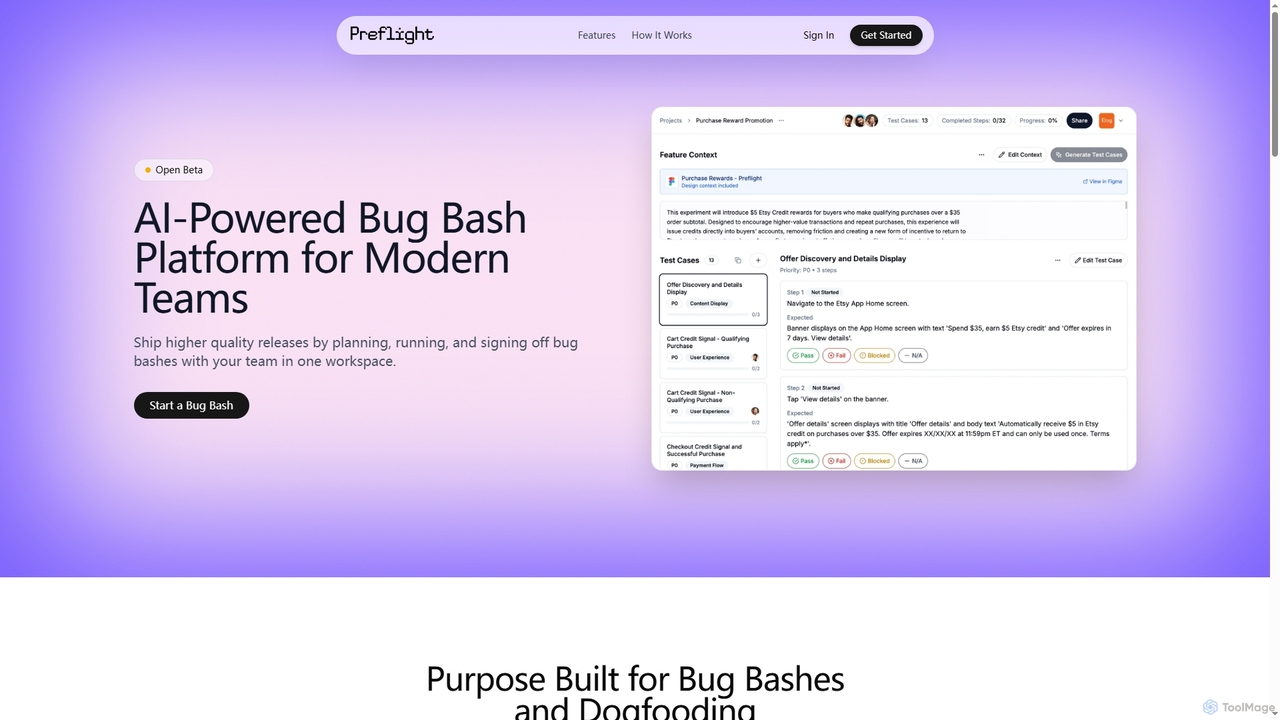
Preflight is an AI-powered bug bash platform designed for modern teams to streamline the entire bug bash process. …
Preflight is an AI-powered bug bash platform designed for modern teams to streamline the entire bug bash process. It helps plan, execute, and sign off on quality assurance sessions, replacing traditional spreadsheets with an integrated workspace for faster, more collaborative, and efficient software releases.
Supatest
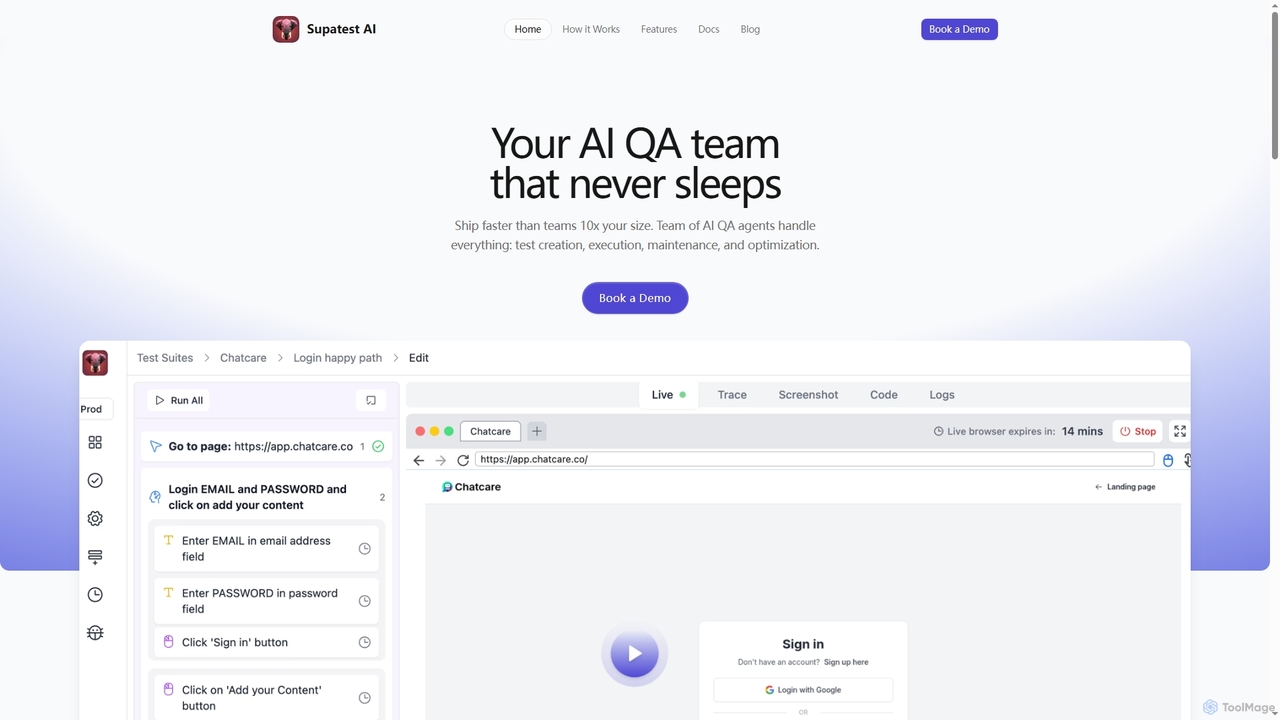
Supatest is an AI-powered quality assurance platform that acts as an autonomous QA team, enabling engineering teams to …
Supatest is an AI-powered quality assurance platform that acts as an autonomous QA team, enabling engineering teams to ship software faster. It handles test creation, execution, maintenance, and optimization, learning your product's intricacies to deliver evolving, self-healing test suites.
Ship Guard
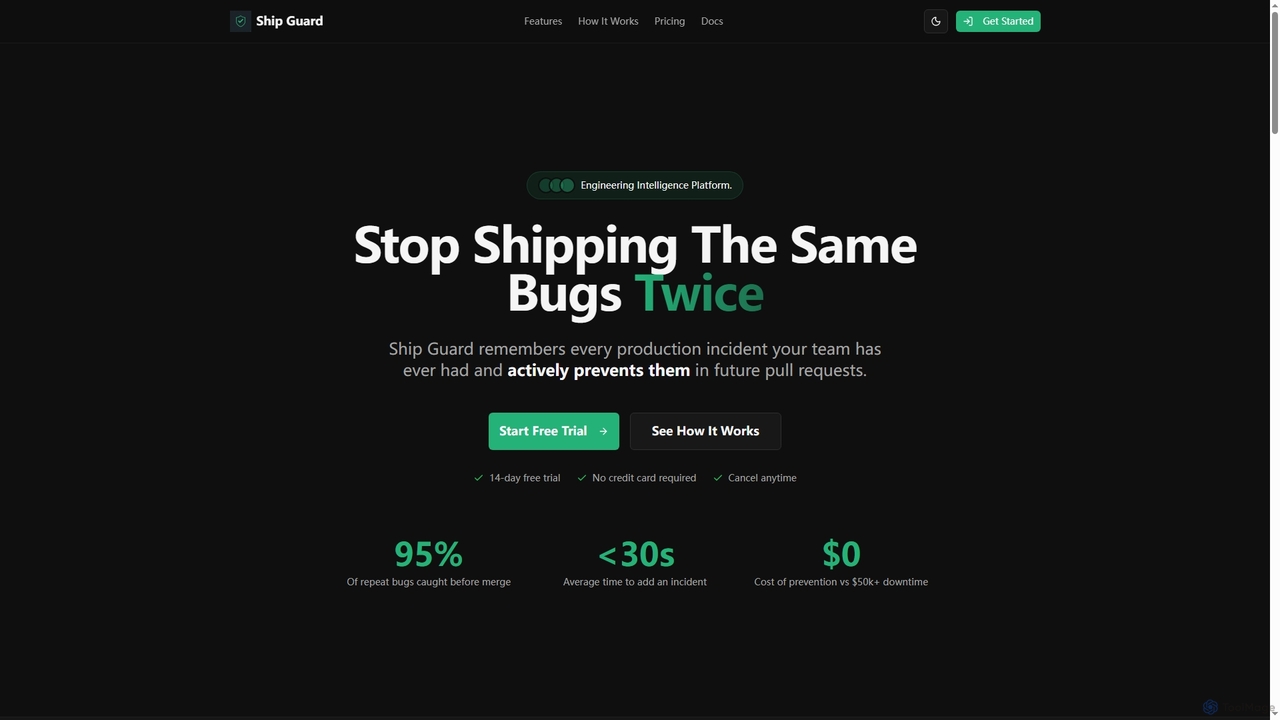
Ship Guard is an engineering intelligence platform that leverages AI with a unique "Incident Memory" feature to prevent …
Ship Guard is an engineering intelligence platform that leverages AI with a unique "Incident Memory" feature to prevent repeat bugs and security vulnerabilities in code. It learns from your team's past production incidents, style guides, and architecture documents to provide tailored, real-time code reviews, ensuring higher code quality and reducing costly downtime.
About Quality Assurance
AI-powered Quality Assurance (QA) tools are a category of sophisticated software solutions that leverage artificial intelligence and machine learning to enhance and automate the entire software testing lifecycle. These tools utilize advanced algorithms to identify defects, predict potential issues, optimize test cases, and analyze performance, moving beyond traditional scripted automation. Their primary value lies in accelerating release cycles, improving software reliability, and significantly reducing the manual effort required for comprehensive testing within the broader software development process.
Core Features
- Intelligent Test Case Generation: Automatically creates diverse and effective test cases based on requirements, code changes, or user behavior patterns.
- Predictive Defect Analytics: Uses machine learning to analyze historical data and identify areas of code most likely to contain bugs, enabling proactive testing.
- Automated Visual & UI Testing: Employs computer vision to detect visual discrepancies and UI regressions across different platforms and devices.
- Anomaly Detection in Performance: Monitors application performance in real-time, using AI to pinpoint unusual behavior or bottlenecks that indicate issues.
- Self-Healing Tests: Automatically adapts test scripts to minor UI changes, reducing maintenance overhead for automated tests.
Applicable Scenarios
Software development teams, DevOps engineers, and product managers extensively use AI QA tools to streamline their workflows. For instance, a DevOps team integrates AI QA into their CI/CD pipeline to automatically run comprehensive regression tests on every code commit, ensuring rapid feedback and preventing new bugs from reaching production. Product managers leverage predictive analytics to prioritize testing efforts on high-risk features, ensuring critical functionalities are robust before release.
How to Choose
When selecting AI-powered Quality Assurance tools, consider their integration capabilities with your existing CI/CD pipelines and test management systems. Evaluate the breadth of testing types supported, such as functional, performance, security, and visual testing. Assess the explainability of the AI models, understanding how they make decisions. Finally, consider scalability to handle growing project complexity and the level of technical expertise required for implementation and maintenance.

Quality AssuranceUse Cases
Automated Regression Testing for Web Applications
A web development team uses AI QA tools to automatically execute comprehensive regression tests on their e-commerce platform after every code deployment. The AI identifies critical user flows, generates new test cases for changed components, and visually compares UI elements across builds, flagging any unexpected changes or broken functionalities, significantly reducing manual testing time and ensuring a stable user experience.
Predictive Bug Detection in Large Codebases
For a complex enterprise software project, developers leverage AI QA to analyze code commit history, bug reports, and code complexity metrics. The AI predicts which modules or files are most prone to defects, allowing QA engineers to focus their manual and automated testing efforts on high-risk areas, thereby catching critical bugs earlier in the development cycle and improving overall code quality.
Intelligent Test Data Generation for Edge Cases
A financial application development team requires vast amounts of realistic yet diverse test data to cover various transaction scenarios and edge cases. AI QA tools analyze existing data patterns and application logic to intelligently generate synthetic test data, including complex combinations that might be overlooked by manual creation, ensuring thorough testing without compromising sensitive real data.
Performance Anomaly Detection in Production
A SaaS provider integrates AI QA tools into their production monitoring system. The AI continuously learns normal application performance patterns. When a new release causes subtle performance degradation or an unusual spike in resource consumption that might not trigger traditional alerts, the AI detects these anomalies and notifies the operations team, preventing potential outages or poor user experience.
Cross-Browser and Device Compatibility Testing
A mobile app development company uses AI QA to automate compatibility testing across hundreds of device-browser combinations. The AI visually inspects the app's UI and functionality on various emulators and real devices, automatically identifying layout issues, broken elements, or unresponsive interactions specific to certain environments, ensuring a consistent experience for all users.
Security Vulnerability Scanning and Prioritization
A cybersecurity team employs AI QA tools to scan their application code and dependencies for known and emerging security vulnerabilities. The AI not only identifies potential threats but also prioritizes them based on exploitability and impact, helping developers address the most critical security flaws first and integrate security checks seamlessly into the CI/CD pipeline.