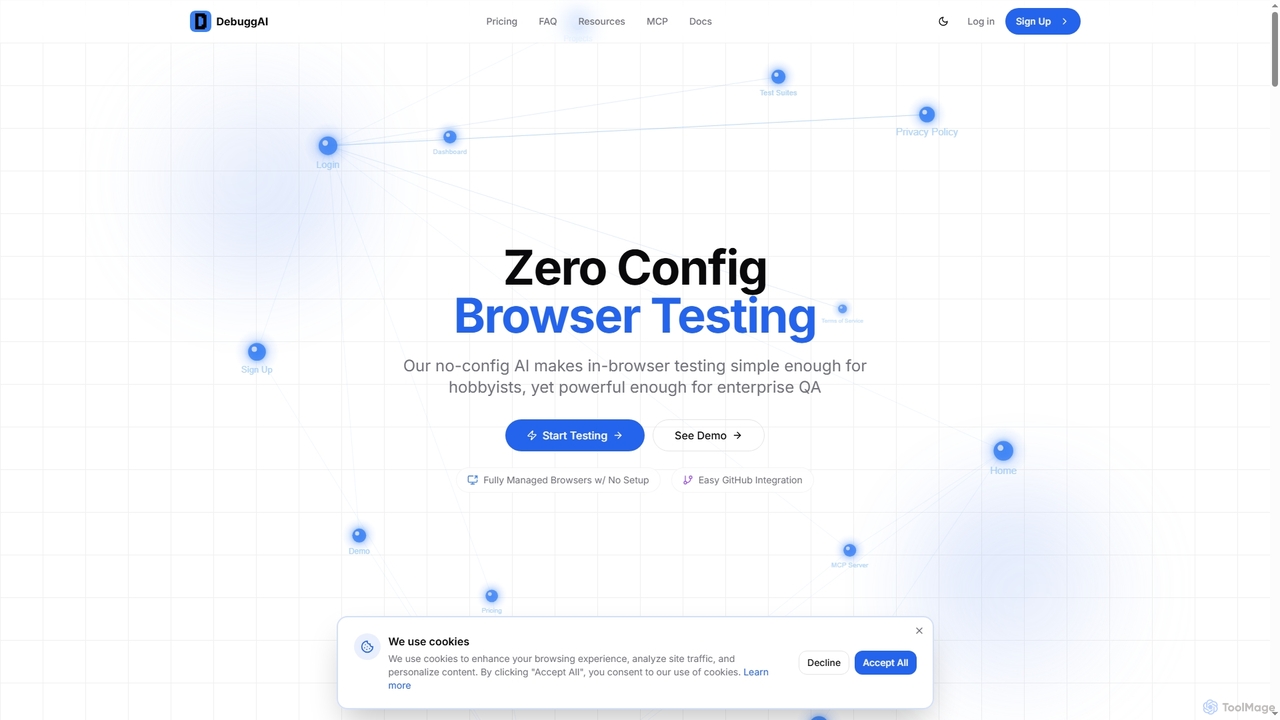
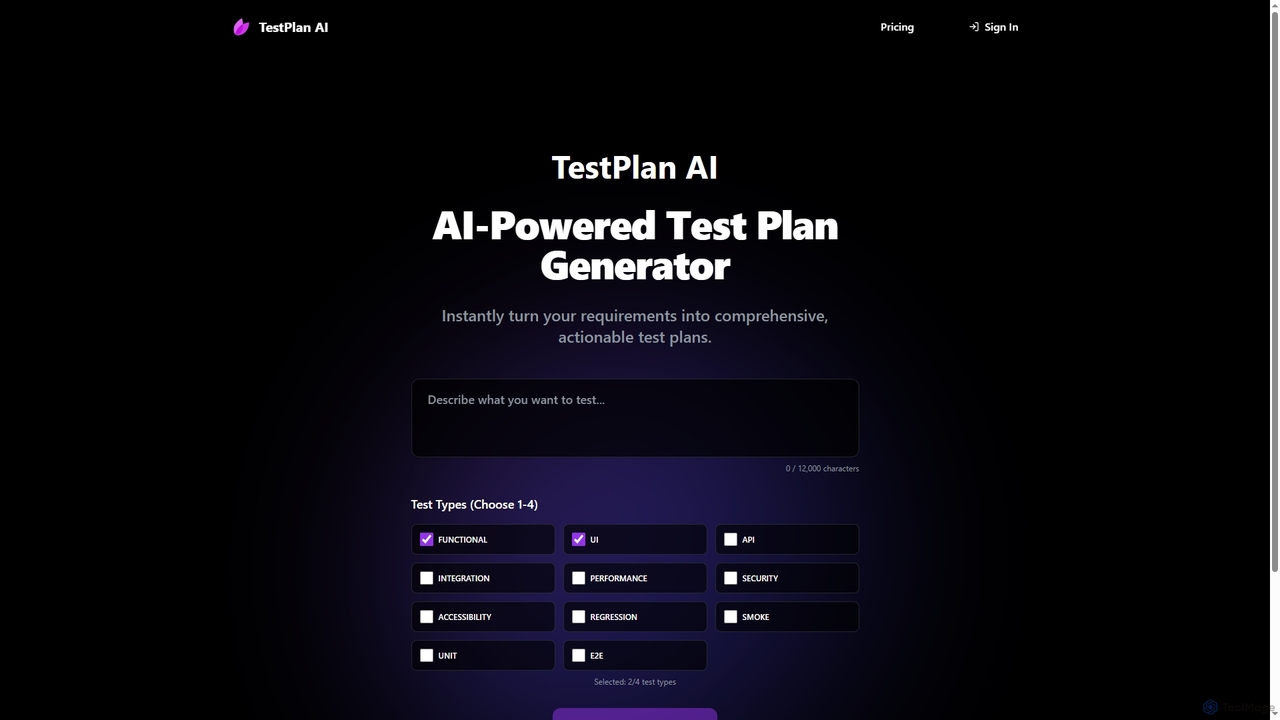
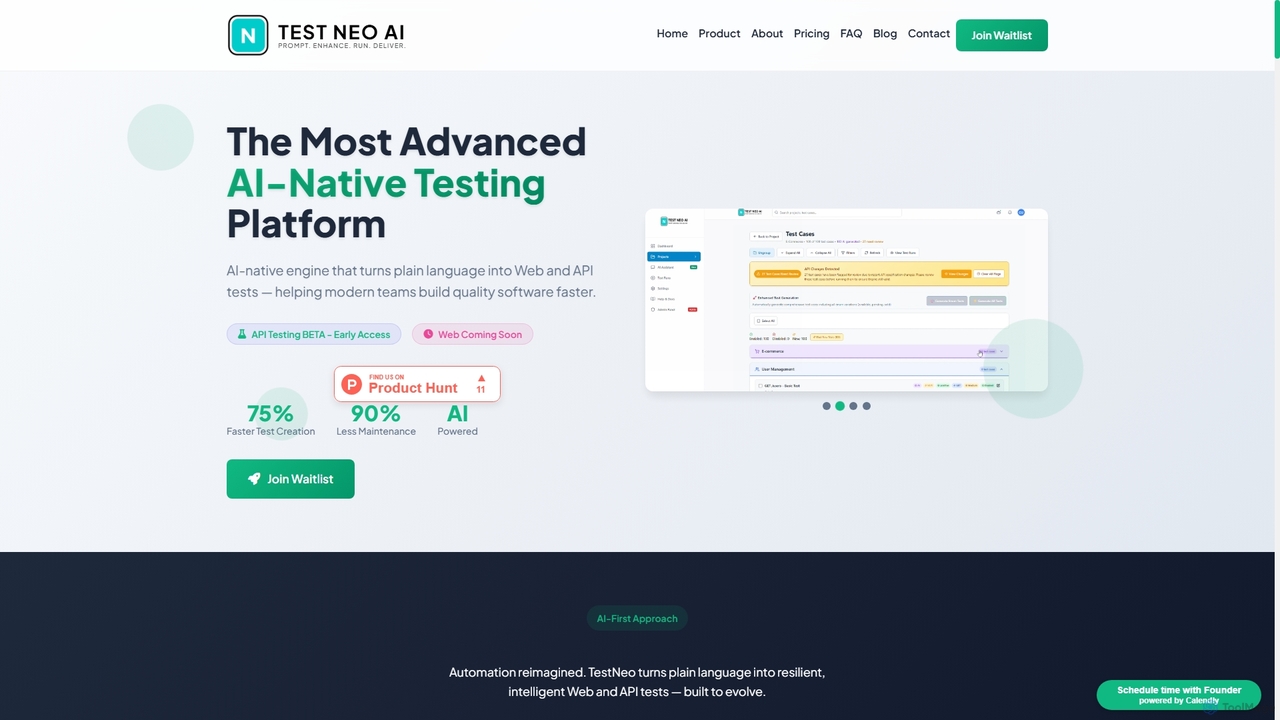
AI Testing tools are a specialized category within software development that leverage artificial intelligence to automate and enhance the software testing process. These tools utilize machine learning, natural language processing, and computer vision to generate test cases, execute tests, identify defects, and analyze results with greater efficiency and accuracy than traditional methods. Their primary value lies in accelerating quality assurance cycles, reducing manual effort, and improving overall software reliability across various stages of the development lifecycle.
Core Features
- Intelligent Test Case Generation: Automatically creates comprehensive test scenarios and data based on requirements, code changes, or user behavior patterns.
- Autonomous Test Execution: Executes tests across different platforms and environments without constant human intervention, adapting to UI changes.
- Predictive Defect Detection: Uses AI to analyze historical data and identify potential bugs or vulnerabilities early in the development process.
- Smart Regression Testing: Optimizes regression test suites by prioritizing tests most relevant to recent code changes, saving time and resources.
- Performance Anomaly Detection: Monitors application performance and uses AI to detect unusual patterns or bottlenecks that indicate potential issues.
Applicable Scenarios
AI testing tools are crucial for development teams practicing Agile and DevOps, where rapid iteration and continuous delivery are standard. They are widely adopted by QA engineers for automating repetitive tests, by developers for integrating testing into CI/CD pipelines, and by product managers to ensure high-quality releases. Specific applications include validating complex web applications, mobile apps, APIs, and microservices, especially in environments with frequent updates.
How to Choose
When selecting an AI testing tool, consider its compatibility with your existing tech stack and CI/CD pipeline, the breadth of its testing capabilities (e.g., functional, performance, security), and its ability to learn and adapt to application changes. Evaluate the ease of test creation and maintenance, the clarity of its reporting and analytics, and the vendor's support for AI model training and customization. Scalability, pricing models, and community support are also vital factors for long-term adoption.