Sports Best in category 2 results Predictions AI Tool

Popular AI tools in the Predictions field of Sports include copascore、GameFocus AI, etc., helping you quickly improve efficiency.

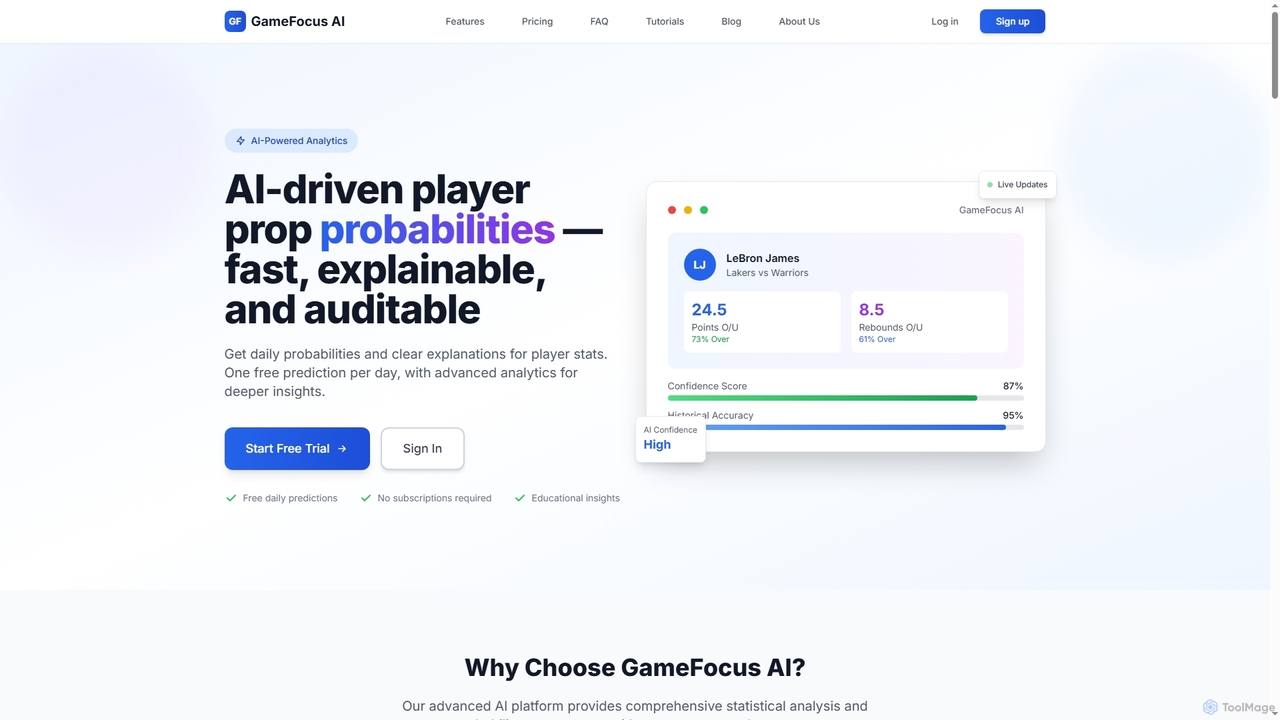
GameFocus AI

GameFocus AI

GameFocus AI is an AI-powered analytics platform specializing in NBA player prop predictions. It provides daily, data-driven probability …

3.4K
copascore

copascore

copascore is an AI-powered football prediction app that provides data-driven insights for matches worldwide. It offers detailed predictions …

9.1K

About Predictions

AI Sports Predictions tools are a class of software that use machine learning algorithms to forecast the outcomes of sporting events. These tools analyze vast amounts of historical data, including team performance, player statistics, weather conditions, and even betting market trends. Their primary value is providing users with data-driven insights that go beyond human intuition, helping to identify potential upsets or undervalued opportunities. Unlike traditional punditry, AI prediction models can uncover complex, non-obvious patterns to generate more objective probabilities for game results, point spreads, and player performance.

Core Features

  • Outcome Forecasting: Predicts match winners, final scores, and point spreads based on statistical models.
  • Player Performance Projection: Generates forecasts for individual player statistics like goals, points, or yards.
  • Real-time Probability Updates: Adjusts win probabilities and predictions live as a game unfolds based on in-game events.
  • Betting Value Identification: Compares model-generated odds against bookmaker odds to highlight potential value bets.
  • Data Visualization: Presents complex statistical data and prediction confidence levels through intuitive charts and graphs.

Use Cases

These tools are widely used in the sports betting community by individuals seeking an analytical edge. Fantasy sports managers also rely on them for draft preparation and weekly lineup decisions. Additionally, sports media analysts and content creators use these platforms to generate data-rich narratives and pre-game reports.

How to Choose

When selecting an AI Sports Prediction tool, evaluate its historical accuracy and documented track record. Consider the breadth of sports and leagues it covers to ensure it aligns with your interests. Also, assess the freshness of the data used for modeling, the clarity of the user interface, and whether the pricing model (e.g., subscription, per-prediction) fits your usage frequency.

PredictionsUse Cases

1

Enhancing Sports Betting Strategies

A sports bettor uses an AI prediction tool to analyze upcoming football matches. The tool processes historical data, team form, and player availability to generate win probabilities and expected scorelines. The bettor compares the AI's calculated odds with the odds offered by bookmakers. When the AI identifies a higher probability of an outcome than the bookmaker's odds suggest, it signals a 'value bet'. This data-driven approach allows the bettor to move beyond gut feelings and make more informed, systematic wagers, potentially increasing their long-term profitability.

2

Optimizing Fantasy Sports Drafts

A fantasy basketball league manager prepares for their annual draft. Instead of relying solely on expert rankings, they use an AI prediction tool that projects player statistics for the upcoming season. The tool analyzes factors like age, past performance, team changes, and injury history. It generates detailed projections for points, rebounds, assists, etc., and assigns a composite fantasy value to each player. This allows the manager to identify undervalued players who might be overlooked by others and avoid overpaying for players whose performance is projected to decline, leading to a more robust and competitive fantasy roster.

3

Creating Data-Driven Sports Media Content

A sports journalist is writing a preview article for a major tennis tournament. To add a unique analytical angle, they use an AI prediction tool. The tool simulates the entire tournament thousands of times, generating probabilities for each player to win individual matches and the tournament overall. The journalist incorporates these insights into their article, highlighting dark horse candidates identified by the AI and presenting matchup-specific win probabilities. This enriches their content, moving beyond standard commentary to offer readers a quantitative, evidence-based perspective on the tournament.

4

In-Game Win Probability Analysis

A dedicated basketball fan is watching a close playoff game. They use a mobile AI prediction app that provides real-time win probability updates. As the game progresses, the AI model continuously recalculates each team's chance of winning based on the current score, time remaining, possession, and other in-game events. When a key player makes a crucial three-pointer, the fan sees their team's win probability jump from 40% to 65%. This provides a deeper, analytical layer to the viewing experience, helping the fan understand the statistical significance of each play and the shifting momentum of the game.

5

Simulating Season Outcomes for Strategic Planning

A front-office analyst for a professional soccer club uses an advanced AI prediction platform to simulate the remainder of the league season. By inputting variables like current standings, remaining schedule, and player injury statuses, the tool runs thousands of simulations to forecast the most likely final league table. The analyst uses this data to identify the team's probability of qualifying for a continental competition or facing relegation. These insights inform strategic decisions, such as whether to pursue a high-risk transfer in the mid-season window or prioritize certain matches over others to maximize their chances of achieving season goals.

6

Generating Tournament Bracket Predictions

A group of friends participates in an annual college basketball tournament bracket challenge. To gain an edge, one participant uses an AI prediction tool. The tool has a dedicated 'bracketology' feature that analyzes team strengths, historical tournament performance, and potential matchups. It generates an optimized bracket based on the highest probabilities of advancement for each team in each round. The user can also adjust for potential upsets they personally believe in, and the AI will recalculate the rest of the bracket accordingly. This provides a statistically sound foundation for their entry, blending advanced analytics with personal intuition.

PredictionsFrequently Asked Questions