
ToolMage
Sign in

Best 1 Employee Benefits AI tools for Startups

Popular Employee Benefits AI tools in Startups include Equitybee, helping you work more efficiently.

Equitybee
Freemium

Equitybee

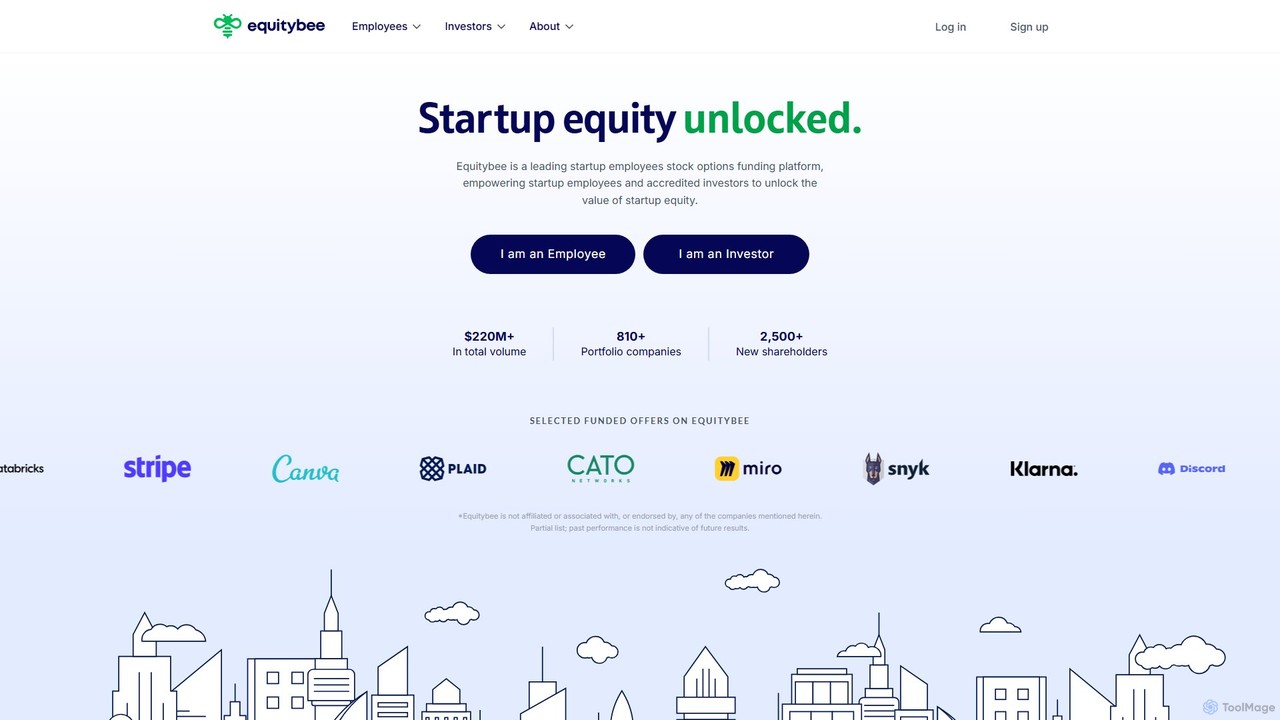
Equitybee is a fintech platform that connects startup employees with accredited investors. It provides employees with the capital needed to exercise their stock options, while offering investors access to high-growth, pre-IPO companies. This empowers employees to own their hard-earned equity without upfront costs.

Investment
Visits 47.9KFavorites 105Likes 130

About Employee Benefits

AI Employee Benefits platforms are specialized tools that automate and personalize the management of company perks and insurance plans. Leveraging machine learning, these platforms streamline everything from enrollment to claims support. For startups, they offer a scalable way to provide competitive benefits packages, enhance employee experience, and reduce administrative overhead without a large HR team. This allows growing companies to attract and retain top talent effectively.

Core Features

  • Personalized Recommendations: Suggests optimal benefit plans based on individual employee data and preferences.
  • AI-Powered Chatbot Support: Provides instant, 24/7 answers to employee questions about coverage, policies, and providers.
  • Automated Administration: Simplifies enrollment, life event updates, and compliance reporting processes.
  • Benefits Usage Analytics: Delivers insights on perk utilization to help companies optimize their benefits spending.
  • Integrated Wellness Platforms: Connects employees with AI-driven resources for mental, physical, and financial well-being.

Use Cases

These tools are crucial for fast-growing startups, tech companies, and businesses with distributed or remote teams. They are used by HR managers to design competitive benefits packages, by finance teams to control costs through data analysis, and directly by employees to self-serve their benefits needs anytime, anywhere.

How to Choose

When selecting a tool, consider its integration capabilities with your existing HRIS and payroll systems. Evaluate the sophistication of its AI chatbot and its ability to handle complex queries. Also, assess the platform's analytics features for cost optimization and its scalability to grow with your company.

Employee Benefits use cases

1

Automate Benefits Onboarding for New Hires

For a rapidly scaling startup, the HR team needs to onboard dozens of new employees each month. An AI Employee Benefits platform automates this process. New hires interact with an AI assistant that explains plan options, answers questions in real-time, and guides them through enrollment based on their profile. This eliminates manual paperwork, reduces the HR team's workload, and ensures every new employee receives a consistent, high-quality onboarding experience from day one.

2

Provide 24/7 Support for a Global Remote Team

A company with employees across different time zones faces challenges in providing timely HR support. An AI benefits chatbot acts as a virtual HR assistant, available 24/7. An engineer in Asia can ask about their dental coverage at midnight US time and get an immediate, accurate answer. This improves employee satisfaction and removes communication bottlenecks, making benefits accessible and understandable for everyone, regardless of their location or work schedule.

3

Design Personalized & Flexible Perk Programs

To compete for top talent, a modern startup wants to offer flexible benefits beyond traditional health insurance, such as lifestyle spending accounts (LSAs). AI platforms allow companies to set up and manage these custom perk programs. The AI can track spending, categorize expenses automatically, and provide employees with a simple interface to use their allowances for things like gym memberships, home office setups, or continued education, enhancing the overall employee value proposition.

4

Optimize Benefits Budget with Usage Analytics

The finance and HR departments need to ensure their significant investment in employee benefits yields a high return on engagement. An AI platform analyzes anonymized usage data to reveal which benefits are most popular and which are underutilized. It might show that a subscription to a mental health app has higher engagement than a little-used gym partnership. These insights enable the company to reallocate its budget to perks that employees truly value, maximizing impact and controlling costs.

5

Streamline the Annual Open Enrollment Process

Open enrollment is often a chaotic period for HR teams, filled with repetitive questions and manual tracking. An AI Employee Benefits tool transforms this experience. It proactively communicates deadlines, uses an AI assistant to guide employees through their plan comparisons and selections, and automates the submission process. This reduces errors, saves the HR team hundreds of hours, and empowers employees to make more informed decisions about their coverage for the upcoming year.

6

Ensure Benefits Compliance and Reporting

Startups must navigate complex benefits regulations (e.g., ACA, COBRA) which can be daunting for small teams. AI tools help automate compliance by maintaining accurate records of eligibility, enrollment, and qualifying life events. The system can generate necessary reports for regulatory filings with the click of a button, flagging potential issues before they become problems. This minimizes legal risk and frees up the administrative team to focus on more strategic initiatives.

Employee Benefits FAQ

What are AI Employee Benefits platforms?

AI Employee Benefits platforms are software solutions that use artificial intelligence to manage and personalize a company's benefits offerings. They automate administrative tasks, provide instant support to employees via chatbots, and offer data-driven insights to help companies optimize their benefits strategy. They are particularly useful for startups aiming to offer competitive perks efficiently.

How do AI tools improve benefits management for startups?

For startups, AI tools solve key challenges like limited HR resources and the need to scale quickly. They automate routine tasks like enrollment and answering FAQs, freeing up the HR team. They also enable personalization at scale, helping startups attract and retain talent with flexible, data-informed benefit packages that rival those of larger corporations, all while controlling costs.

What is the difference between a standard HRIS and an AI Employee Benefits platform?

A standard Human Resource Information System (HRIS) is primarily a system of record for employee data, payroll, and basic benefits administration. An AI Employee Benefits platform is more specialized and intelligent. It focuses on the employee experience, using AI to provide personalized recommendations, 24/7 chatbot support, and deep analytics on benefits usage, features typically not found in a general-purpose HRIS.

How should a startup choose the right AI Employee Benefits tool?

When choosing a tool, startups should prioritize several factors. First, check for seamless integration with existing payroll and HRIS software. Second, evaluate the user experience for both administrators and employees. Third, assess the platform's scalability and pricing model to ensure it can grow with the company. Finally, review its analytics and reporting capabilities to ensure you can measure the ROI of your benefits program.

What key features are essential in an AI Employee Benefits tool?

Essential features include an AI-powered chatbot for instant employee support, automated enrollment and life-event management, and a centralized dashboard for administrators. Look for robust analytics to track benefits utilization and costs. Additionally, capabilities for managing flexible spending accounts (FSAs), health savings accounts (HSAs), and lifestyle spending accounts (LSAs) are crucial for modern, competitive benefits packages.