Startups Best in category 7 results Idea Validation AI Tool

Popular AI tools in the Idea Validation field of Startups include UserCue、GummySearch、Artificial Societies、365mvps、yayornay、Axwise、walksoflife.ai, etc., helping you quickly improve efficiency.

Axwise

Axwise

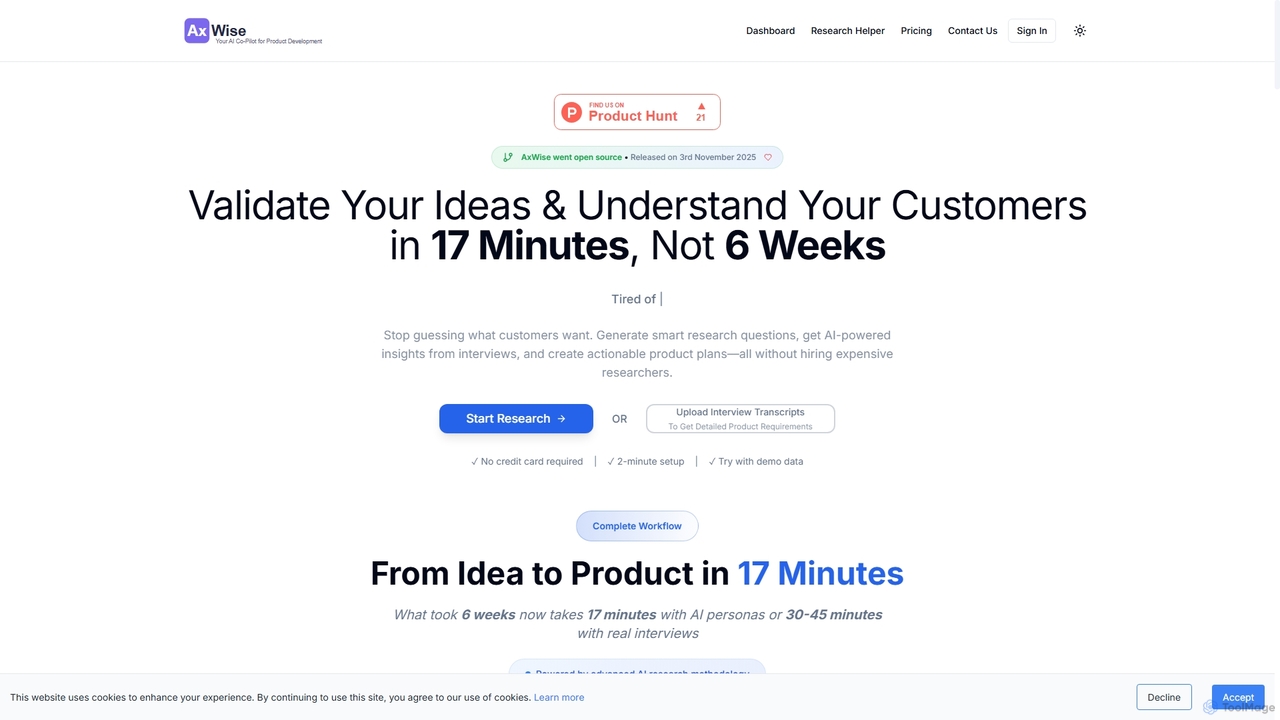
Axwise is an AI co-pilot for product development that transforms user research. It automates the generation of research …

2.1K
UserCue

UserCue

UserCue is an AI-powered platform that revolutionizes market research by deploying intelligent agents to conduct dynamic, human-like interviews …

125.6K
Artificial Societies

Artificial Societies

Artificial Societies is an AI-powered platform that creates realistic audience simulations to test content, messages, and ideas. It …

53.9K
yayornay

yayornay

An AI-powered platform for instant feedback and idea validation. Submit designs, concepts, or questions to get rapid "yay …

2.2K
Free
walksoflife.ai

walksoflife.ai

An AI-powered tool that measures the potential of your business or project ideas. Simply enter a concept or …

2.1K
365mvps

365mvps

365mvps is an AI-powered platform designed for rapid Minimum Viable Product (MVP) development. It enables entrepreneurs and developers …

4.3K
GummySearch

GummySearch

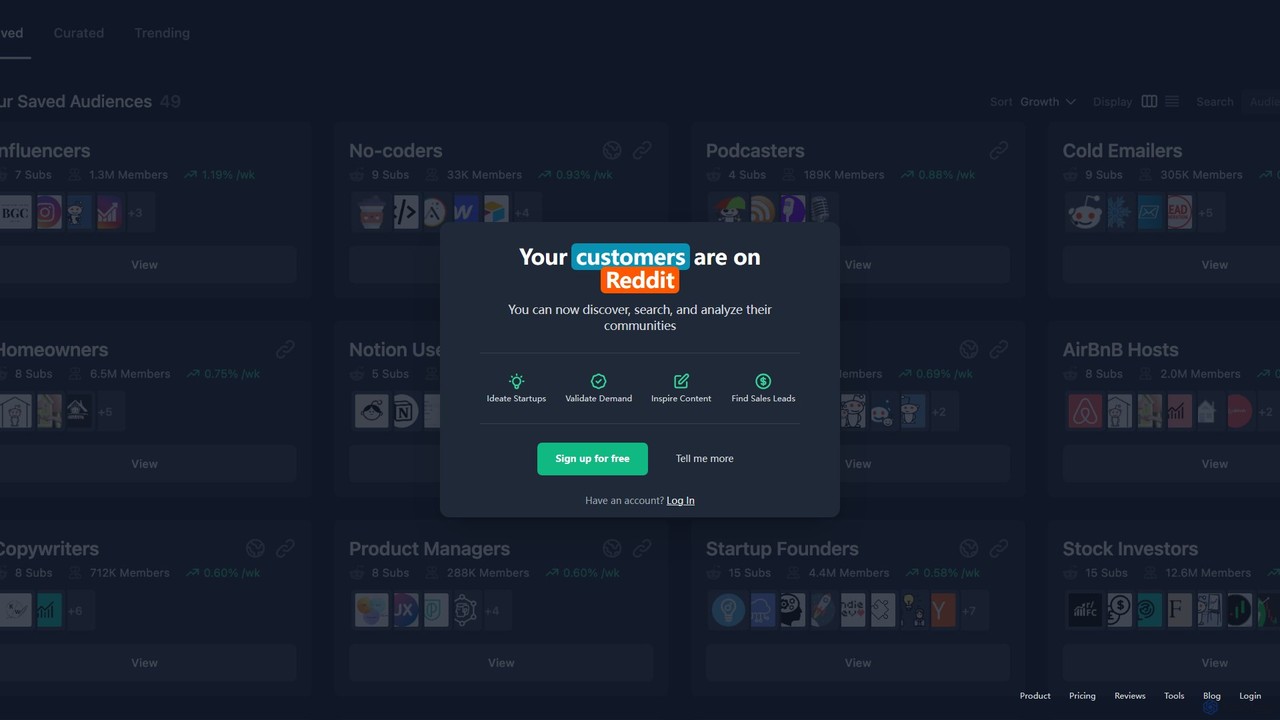
GummySearch is an AI-powered audience research tool designed for Reddit. It helps entrepreneurs, marketers, and content creators discover …

124.8K

About Idea Validation

Idea Validation tools are AI-powered platforms designed to assess the market viability and potential success of a new business or product concept. They leverage machine learning to analyze vast datasets, including market trends, competitor landscapes, social media sentiment, and potential customer feedback. This provides founders and product managers with data-driven insights to make informed decisions, significantly reducing the risks and costs associated with launching new ventures. As a key component of the startup toolkit, these tools transform abstract ideas into quantifiable opportunities.

Core Features

  • Market Opportunity Analysis: Automatically researches and quantifies market size, growth potential, and target audience demographics.
  • Competitor Intelligence: Identifies and analyzes existing competitors, their market share, strengths, weaknesses, and customer reviews.
  • Audience Feedback Simulation: Uses AI personas to simulate initial reactions and feedback from target user groups, identifying potential pain points.
  • Viability Scoring: Generates a data-backed score or report that summarizes an idea's potential for success based on multiple factors.
  • Landing Page Testing: Quickly creates and tests simple landing pages to measure real-world customer interest and capture early leads.

Use Cases

These tools are primarily used by early-stage entrepreneurs, startup founders, product managers, and corporate innovation teams. They are essential during the initial phases of product development, before significant capital or engineering resources are committed. Common applications include validating a new SaaS platform, testing a niche e-commerce concept, or prioritizing features for an existing product based on market demand.

How to Choose

When selecting an Idea Validation tool, consider the depth and quality of its data sources. Evaluate the scope of its analysis—does it only provide market size, or does it offer detailed competitor and sentiment analysis? Assess its specific features, such as integrated survey tools or landing page builders. Finally, consider the clarity of the reports and the ease of interpreting the data to make actionable decisions.

Idea ValidationUse Cases

1

Validating a SaaS Product Before Writing Code

An entrepreneur has an idea for a new project management tool targeting freelance designers. Before investing in development, they use an AI Idea Validation tool. The platform analyzes the competitive landscape, identifying key players like Asana and Trello, but also highlights a gap for tools with deep integration into Adobe Creative Cloud. It simulates feedback from designer personas, revealing a high demand for visual proofing features. Based on this data, the tool helps generate a landing page emphasizing this unique integration, allowing the founder to collect email sign-ups and confirm real-world interest, thus validating the core value proposition without building the full product.

2

Assessing a Niche E-commerce Opportunity

An e-commerce entrepreneur wants to launch a store for sustainable, zero-waste home goods. The market seems broad, so they use an AI tool to narrow down the focus. The tool analyzes search trends, social media conversations, and competitor product catalogs. It reveals that while categories like reusable bags are saturated, there is a growing, underserved demand for compostable cleaning supplies. The AI also identifies the target audience as environmentally-conscious millennials in urban areas. This allows the entrepreneur to confidently focus their initial product line, marketing messages, and ad targeting on this specific niche, increasing the chances of a successful launch.

3

Prioritizing Features for a Corporate Product

A product manager at a large software company is planning the next year's roadmap. The team has dozens of potential feature ideas sourced from sales, support, and internal brainstorming. Using an AI Idea Validation tool, the PM inputs these ideas. The tool cross-references them with data from customer support tickets, online reviews of their product and competitors, and tech news trends. It generates a prioritized list, scoring each feature on potential customer impact, alignment with market trends, and competitive differentiation. For example, it might rank 'AI-powered reporting' higher than 'UI theme customization' because competitor reviews frequently mention a lack of advanced analytics.

4

Testing a Mobile App Concept with Target Users

A developer duo wants to create a mobile app that helps users learn financial literacy through gamification. Before building a prototype, they use an AI validation tool to define their target audience more precisely. The tool identifies young professionals aged 22-30 as the primary demographic. It then helps create a short, engaging survey about their financial habits and app preferences. The tool distributes this survey to the identified demographic via social media panels. Within days, it collects and analyzes hundreds of responses, confirming a strong interest in features like 'investment simulations' and 'debt-reduction challenges', guiding the developers' initial feature set.

5

Gauging Audience Interest for a Digital Course

A content creator specializing in data science wants to launch an online course. They are undecided between a beginner's course on 'Python for Data Analysis' and an advanced course on 'Deep Learning for Computer Vision'. They use an AI validation tool to analyze search volume for both topics, review discussions on platforms like Reddit and Stack Overflow, and assess competitor course offerings on Udemy and Coursera. The analysis shows that while the advanced topic has a passionate niche, the search volume and general interest for the beginner's course are ten times higher. This data helps the creator confidently decide to produce the Python course first, maximizing their potential reach and revenue.

6

Evaluating a Hardware Product's Market Fit

A startup team has designed a new smart home device that monitors indoor air quality and automatically adjusts ventilation. Before seeking funding for manufacturing, they use an AI validation tool to assess market fit. The tool analyzes consumer tech reviews for existing air purifiers, patent databases for similar technologies, and social media discussions about health and home wellness. The report highlights a strong consumer desire for devices that specifically target allergens and pollutants from pets, a feature their device excels at. It also provides an estimated price sensitivity for their target demographic, helping them create a more realistic business plan and a compelling pitch for investors.

Idea ValidationFrequently Asked Questions