
ToolMage
Sign in

Best 1 Launch Kits AI tools for Startups

Popular Launch Kits AI tools in Startups include anotherwrapper, helping you work more efficiently.

anotherwrapper
Paid

anotherwrapper

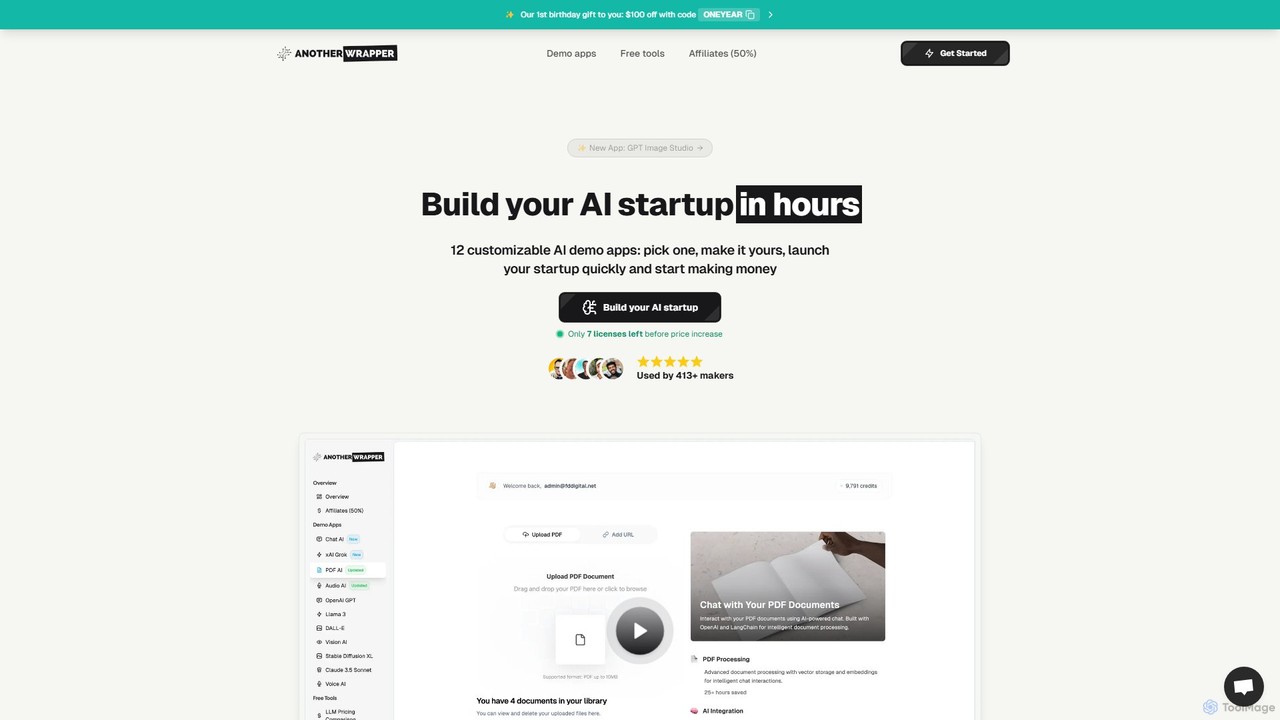
A Next.js AI starter kit with over 12 customizable templates, designed for developers and entrepreneurs to build and launch AI-powered SaaS applications in hours. It includes pre-built integrations for AI models, payments, authentication, and more, saving weeks of development time.

Boilerplate
Visits 63.7KFavorites 157Likes 129

About Launch Kits

Launch Kits are integrated platforms that bundle essential AI-powered tools and resources to accelerate the launch of a new product or startup. They leverage AI to automate tasks like creating landing pages, generating marketing copy, and managing email campaigns. This streamlined approach helps founders and marketers save significant time and resources during the critical go-to-market phase. By providing pre-built templates and guided workflows, these kits lower the technical barrier to executing a professional launch strategy.

Core Features

  • Integrated Marketing Suite: Combines tools for landing pages, email marketing, and social media in one dashboard.
  • AI Content Generation: Automatically creates compelling copy for websites, ads, emails, and press releases.
  • Pre-built Launch Templates: Offers a library of customizable templates for landing pages, email sequences, and promotional assets.
  • Audience Management: Includes features for lead capture forms, contact list segmentation, and automated outreach.
  • Analytics & Reporting: Provides a centralized dashboard to track key launch metrics like visitor traffic, conversion rates, and sign-ups.

Use Cases

These kits are ideal for early-stage startups, solo founders, and indie hackers launching new SaaS products, mobile apps, or digital goods. They are also valuable for marketers testing new product ideas or running crowdfunding campaigns, enabling them to quickly build a presence and validate market interest without a large team.

How to Choose

When selecting a Launch Kit, evaluate the scope of its integrated tools—does it cover all your needs from landing pages to email? Consider the quality and variety of its templates. Also, assess its AI content generation capabilities, integration options with other platforms, and the scalability of its pricing model as your project grows.

Launch Kits use cases

1

Accelerating a SaaS Product Launch

A solo founder with a new SaaS application needs to validate their idea and build a waitlist before the full product is ready. Using an AI Launch Kit, they select a 'Coming Soon' landing page template and use the AI copywriter to generate a compelling headline and feature descriptions. They embed a lead capture form to collect email addresses for a beta list. The kit's automation feature then triggers a welcome email sequence, keeping potential users engaged with development updates. This allows the founder to build an initial audience and gather feedback in days, not weeks, without needing separate tools for web design, copywriting, and email marketing.

2

Launching a Mobile App with a Press Kit

A small development team is ready to launch their new mobile app. To maximize media coverage, they use a Launch Kit to create a professional online press kit. The kit provides a template where they can easily add their app's description, high-resolution screenshots, video trailers, and founder bios. The AI content generator helps them draft a compelling press release in minutes. They can then share a single, professional-looking link with journalists and tech bloggers, ensuring all necessary information is easily accessible. This streamlines their PR outreach and increases their chances of getting featured, a task that would otherwise require significant manual effort and design skills.

3

Promoting an Online Course Launch

An independent educator is launching a new online course. They use a Launch Kit to manage the entire promotional campaign. First, they build a high-converting sales page using a provided template, with the AI assistant helping to write persuasive copy about the course benefits. Next, they set up an automated email sequence to nurture leads, offering an early-bird discount to subscribers. The kit's social media scheduler is then used to plan and publish a month's worth of promotional content across different platforms. By consolidating these tasks into one platform, the educator can focus on creating course content instead of juggling multiple marketing tools, ensuring a coordinated and effective launch.

4

Validating a New Product Idea Quickly

A product manager wants to test a new side project idea before committing to development. They use a Launch Kit to quickly create a validation funnel. Within an hour, they set up a simple landing page that explains the core value proposition, using AI to generate the initial copy. The page includes a single call-to-action: 'Join the Waitlist'. They then use the kit's built-in tools to create and run a small ad campaign on social media, directing traffic to the page. By tracking the number of sign-ups over a week, the manager can gather real-world data on market interest. This rapid, low-cost experiment helps them make an informed decision on whether to pursue the project further, saving potentially months of development time on an unvalidated idea.

5

Managing a Crowdfunding Campaign Kick-off

A hardware startup is preparing to launch a crowdfunding campaign. They leverage a Launch Kit to coordinate their pre-launch activities. They build a teaser landing page to capture emails from interested backers, promising exclusive updates and early-bird notifications. The kit's AI helps them draft consistent messaging for social media posts, email newsletters, and their campaign page description. Once the campaign goes live, they use the email automation feature to send out a launch announcement to their entire waitlist, driving a crucial initial surge of traffic and pledges. The integrated analytics dashboard allows them to monitor traffic sources and conversion rates in real-time, helping them optimize their promotional efforts throughout the campaign.

6

Coordinating a Digital Product Release

An author plans to release a new e-book. They use a Launch Kit to create a cohesive marketing campaign. A landing page is built to showcase the e-book cover, synopsis, and author bio, with an integrated payment gateway for pre-orders. The AI copywriter assists in creating engaging social media announcements and ad copy. An automated email sequence is set up to deliver a free sample chapter to new subscribers, nurturing their interest before the launch date. On release day, another automated email is sent to all subscribers and pre-order customers with the final purchase link. This centralized approach ensures all marketing channels are synchronized, maximizing visibility and sales for the new e-book.

Launch Kits FAQ

What are AI Launch Kits?

AI Launch Kits are all-in-one software suites designed to simplify and accelerate the process of launching a new product or startup. They bundle essential marketing and operational tools, often powered by artificial intelligence, into a single, cohesive platform. Key features typically include AI-driven landing page builders, automated email campaign managers, social media content generators, and press kit creators. They are built for speed and efficiency, enabling founders and small teams to execute a professional launch strategy without extensive technical skills or multiple subscriptions.

How do I choose the right Launch Kit for my startup?

Choosing the right Launch Kit depends on your specific needs. Consider these factors:

  • Scope of Tools: Does the kit include all the features you need for your launch, such as a landing page builder, email marketing, social media management, and analytics?
  • Ease of Use: Evaluate the user interface. A good kit should have an intuitive design and pre-built templates that allow you to get started quickly without a steep learning curve.
  • AI Capabilities: Assess the quality of the AI-generated content. Does it create relevant and high-quality copy for your specific industry and tone of voice?
  • Integration and Scalability: Check if it integrates with other tools you use. Also, consider if the pricing and feature set can scale with your startup as it grows.
What's the difference between a Launch Kit and using individual marketing tools?

The primary difference is integration and workflow optimization. Using individual tools (like a separate landing page builder, email service, and social media scheduler) requires manual integration, data syncing, and context switching, which can be time-consuming. A Launch Kit provides these functions in a single, pre-integrated environment. This creates a seamless workflow, from capturing a lead on a landing page to adding them to an email sequence, all managed from one dashboard. Launch Kits are specifically optimized for the goal of launching, offering guided steps and templates, whereas individual tools are general-purpose and require more configuration.

What key features should I look for in a Launch Kit?

A comprehensive Launch Kit should offer a suite of integrated tools. Look for these key features:

  • Landing Page Builder: A user-friendly, often drag-and-drop, editor with professional templates to create 'Coming Soon' or sales pages.
  • AI Copywriting Assistant: A tool that generates headlines, feature descriptions, and other marketing copy to save you time.
  • Email Marketing Automation: The ability to capture leads, segment them, and send automated email sequences (e.g., welcome series, launch announcements).
  • Social Media Management: Tools to help create and schedule promotional posts across multiple platforms from one place.
  • Centralized Analytics: A single dashboard to track website traffic, conversion rates, email open rates, and other vital launch metrics.
Who are AI Launch Kits best suited for?

AI Launch Kits are particularly beneficial for individuals and teams who need to launch a product quickly and efficiently, often with limited resources. This includes:

  • Early-Stage Startups: Teams that need to validate an idea, build a waitlist, and go to market without a large marketing department.
  • Solo Founders and Indie Hackers: Individuals who handle all aspects of their business, from product development to marketing, and need to maximize their productivity.
  • Marketers and Product Managers: Professionals testing new product concepts or launching side projects who require a rapid setup for a validation campaign.
  • Creators and Educators: Authors, course creators, and artists launching digital products who need a streamlined way to manage their promotional activities.