UI Domains
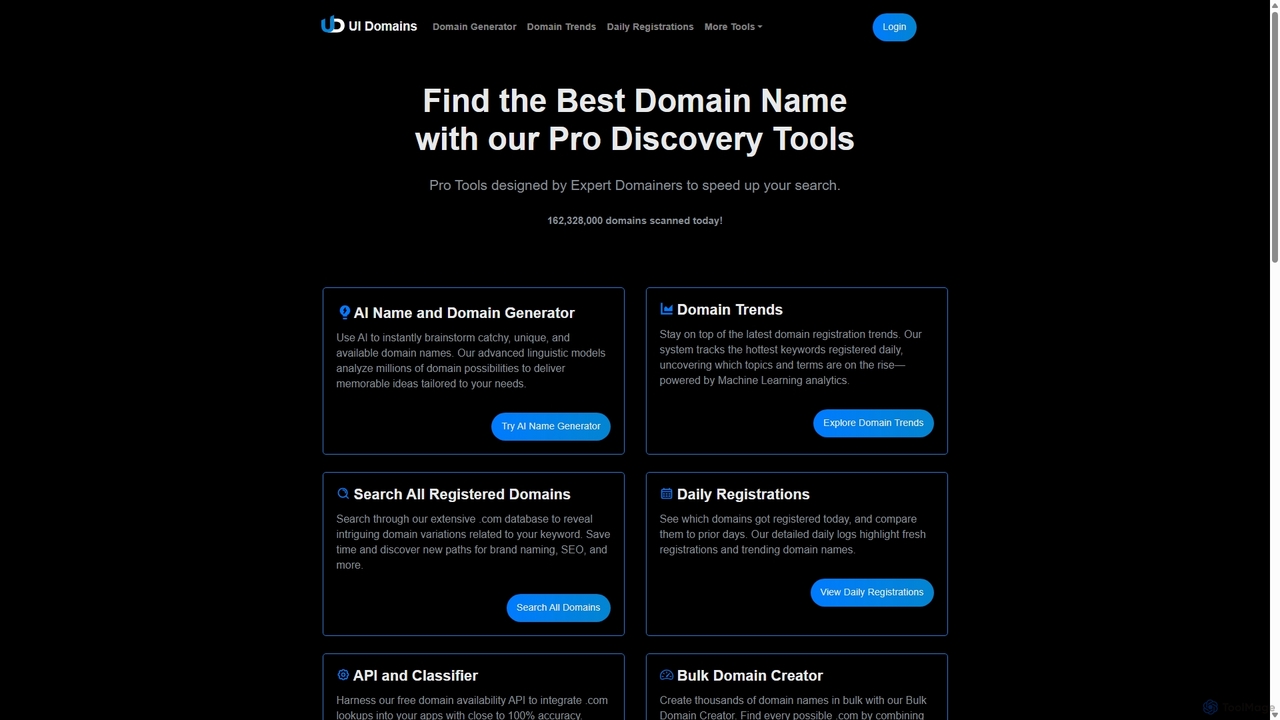
UI Domains is an AI-powered domain discovery platform that helps users find the perfect .com domain name. Leveraging …
UI Domains is an AI-powered domain discovery platform that helps users find the perfect .com domain name. Leveraging a massive, daily-updated database of available domains and machine learning-powered trend analysis, it generates creative and relevant name suggestions. It's an essential tool for startups, marketers, and entrepreneurs looking to build a strong online brand identity.
About Tooling
Tooling refers to the essential suite of software, platforms, and infrastructure solutions that startups leverage to build, operate, manage, and scale their businesses efficiently. These critical tools streamline workflows, automate repetitive tasks, and provide actionable insights, enabling rapid development, market responsiveness, and sustainable growth. From core development environments to sophisticated customer relationship management and data analytics platforms, effective tooling forms the operational backbone for any aspiring startup.
Core Features
- Integrated Development Environments (IDEs): Provide comprehensive facilities for software development, including code editing, debugging, and build automation.
- Project Management & Collaboration Platforms: Facilitate task tracking, team communication, and workflow orchestration across various departments.
- Cloud Infrastructure & DevOps Tools: Enable scalable hosting, automated deployment, continuous integration, and robust monitoring of applications.
- Marketing & Sales Automation: Automate lead generation, customer outreach, campaign management, and sales pipeline tracking.
- Data Analytics & Business Intelligence: Offer capabilities for collecting, processing, and visualizing data to inform strategic decisions and track performance.
Use Cases
Startups utilize tooling to accelerate their product development cycles, manage customer interactions effectively, and optimize internal operations. For instance, a nascent SaaS company might use a combination of cloud platforms for hosting, project management software for agile development, and CRM tools to nurture early adopters. This integrated approach ensures resources are efficiently allocated and growth opportunities are maximized.
How to Choose
Selecting the right tooling involves evaluating several factors: scalability to accommodate future growth, seamless integration with existing systems, cost-effectiveness within budget constraints, and ease of use for the team. Startups should prioritize tools that offer robust support, a strong community, and a clear roadmap for feature development, ensuring they align with long-term strategic objectives and minimize vendor lock-in risks.

ToolingUse Cases
Streamlining Software Development & Deployment
Engineering teams in startups leverage specialized tooling, including version control systems (e.g., Git), CI/CD pipelines, and testing frameworks, to accelerate code delivery, ensure quality, and manage complex deployments efficiently. This approach significantly reduces manual errors, automates repetitive tasks, and speeds up time-to-market for new features and product iterations, allowing developers to focus on innovation rather than operational overhead.
Automating Customer Relationship Management (CRM)
Sales and marketing teams in startups use CRM tools to manage leads, track customer interactions, automate email campaigns, and analyze sales performance. This helps in building stronger customer relationships from the initial contact, optimizing conversion funnels, and providing personalized support post-sales. Effective CRM tooling is crucial for nurturing early adopters and scaling customer acquisition efforts.
Optimizing Cloud Infrastructure & Resource Allocation
DevOps and operations teams in startups leverage cloud management platforms and infrastructure-as-code tools to provision, monitor, and scale computing resources dynamically. This ensures applications are highly available, performant, and cost-efficient, adapting to fluctuating user demands without manual intervention. Effective tooling in this area is vital for maintaining service reliability and managing operational costs as the startup grows.
Enhancing Team Collaboration & Project Management
Cross-functional teams in startups utilize project management software (e.g., Jira, Asana), communication platforms (e.g., Slack, Microsoft Teams), and document sharing tools to coordinate tasks, share updates, and collaborate on projects in real-time. This improves transparency, reduces communication silos, and keeps projects on track, fostering a productive and cohesive work environment essential for rapid iteration and problem-solving.
Accelerating Data Analysis & Business Intelligence
Founders and data analysts in startups employ BI tools and analytics platforms to collect, process, and visualize critical business data, such as user behavior, sales trends, and marketing ROI. This provides actionable insights for strategic decision-making, identifying growth opportunities, and optimizing product features. Effective data tooling transforms raw data into valuable intelligence, driving informed business strategies.
Managing Financial Operations & Accounting
Finance and administrative teams in startups use accounting software, expense tracking tools, and payroll systems to automate invoicing, manage budgets, process payments, and ensure compliance. This simplifies complex financial tasks, provides clear financial oversight, and supports sound fiscal management, which is critical for maintaining financial health and attracting investors.