Design Sparks
Design Sparks is an AI-powered ideation tool for designers and creators. It uses advanced AI and creative problem-solving …
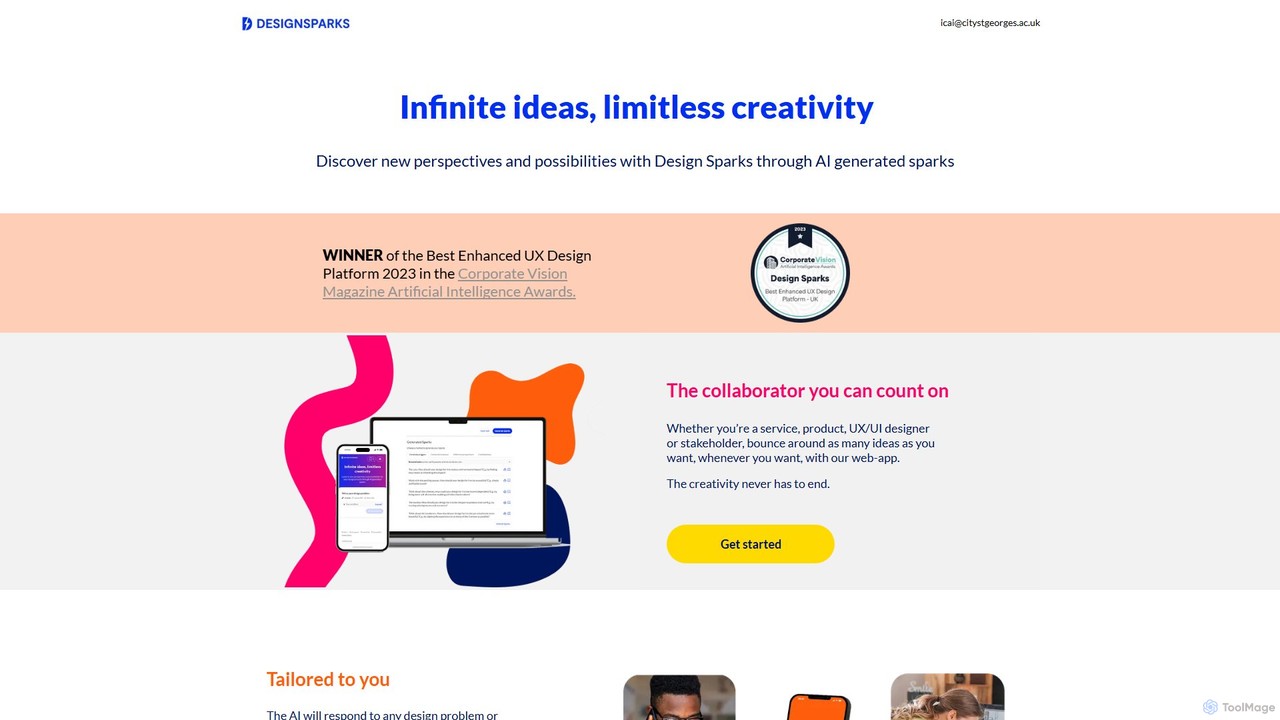
Design Sparks is an AI-powered ideation tool for designers and creators. It uses advanced AI and creative problem-solving techniques to generate innovative ideas, or "sparks," for any design challenge. Input your problem via text, URL, or PDF to overcome creative blocks, explore new perspectives, and foster sustainable, circular design thinking.
About Circular Economy
Circular Economy AI tools are a specialized category of software that uses artificial intelligence to design and manage systems that eliminate waste and promote the continual use of resources. They employ machine learning, computer vision, and predictive analytics to track material lifecycles, optimize reverse logistics, and identify opportunities for reuse, repair, and recycling. These tools empower businesses to transition from a linear 'take-make-dispose' model to a regenerative one, enhancing resource efficiency. Their core value lies in providing data-driven insights to close material loops within the broader sustainability framework.
Core Features
- Material Lifecycle Analysis: Tracks products and materials from creation to end-of-life to identify circular opportunities.
- Waste Recognition & Sorting: Uses computer vision to automatically identify and sort different types of waste for efficient recycling.
- Predictive Maintenance: Forecasts equipment failure to enable proactive repair and remanufacturing over replacement.
- Reverse Logistics Optimization: Plans the most efficient routes and processes for returning, repairing, and redistributing products.
- Circularity Design Simulation: Helps designers model the environmental impact and recyclability of new products before production.
Use Cases
These tools are crucial for manufacturing, waste management, retail, and product design sectors. For instance, a manufacturer can use predictive maintenance to extend machinery life, while a recycling facility can deploy AI-powered sorters to increase the purity of recycled materials. In retail, they help manage product returns for refurbishment and resale, creating new value streams from used goods.
How to Choose
When selecting a tool, consider its specific focus—whether it's supply chain, waste analysis, or product design. Evaluate its data integration capabilities with your existing systems (e.g., ERP, MES). Assess the accuracy of its AI models and its scalability to handle your operational volume. Finally, consider the user interface's complexity and the level of technical expertise required to operate it effectively.
Circular EconomyUse Cases
Automating Waste Sorting in Recycling Facilities
For waste management operators, accurately sorting mixed waste streams is a labor-intensive and costly challenge. An AI Circular Economy tool equipped with computer vision can automate this process. High-speed cameras scan conveyor belts, and a machine learning model identifies and classifies materials like PET plastic, cardboard, and glass in real-time. The system then directs robotic arms or air jets to sort these items into correct bins. This increases sorting accuracy to over 95%, boosts the volume of high-quality recycled materials, and reduces human exposure to hazardous waste.
Optimizing Industrial Equipment Remanufacturing
Manufacturers of heavy machinery aim to extend the lifespan of their products. An AI tool for predictive maintenance can analyze sensor data (e.g., temperature, vibration) from equipment in real-time. The AI model predicts when a specific component is likely to fail, allowing the manufacturer to schedule proactive maintenance or remanufacturing. Instead of discarding a faulty machine, they can retrieve it, replace only the necessary parts, and redeploy it. This process reduces the demand for new raw materials, cuts down on manufacturing waste, and creates a new revenue stream from servicing and reselling remanufactured goods.
Managing Reverse Logistics for E-commerce Returns
For e-commerce businesses, managing returns is a complex logistical challenge. An AI-powered reverse logistics platform can optimize this entire process. When a customer initiates a return, the AI determines the most cost-effective and environmentally friendly path for the product. It decides whether the item should be returned to a central warehouse, sent to a local refurbishment center, or donated. The AI analyzes factors like product condition, return shipping costs, and demand for refurbished items to make the optimal decision, minimizing waste and recovering maximum value from returned goods.
Designing Recyclable Products with AI Simulation
Product designers and engineers can use AI simulation tools to create products that are easier to recycle from the start. Before committing to a physical prototype, a designer can upload a 3D model of a new product into the AI platform. The tool analyzes the design's material composition, disassembly process, and component separability. It provides a 'circularity score' and suggests modifications, such as using mono-materials or replacing glue with screws, to improve the product's end-of-life recyclability. This 'design for circularity' approach prevents waste before it is even created.
Tracing Material Provenance in Supply Chains
For companies committed to using recycled content, verifying the origin and composition of materials is essential. An AI platform can use blockchain and IoT sensors to create a digital passport for materials. As a batch of recycled plastic moves through the supply chain, its data (origin, purity, processing history) is recorded immutably. Manufacturers can then scan a QR code on the material shipment to access its entire history, ensuring it meets their quality and sustainability standards. This provides transparency and builds trust in the circular supply chain, making it easier to source and use secondary raw materials.
Forecasting Demand for Secondary Raw Materials
For businesses that rely on recycled materials, supply can be volatile. An AI forecasting tool can analyze historical market data, collection rates, and economic indicators to predict the future availability and price of secondary raw materials like recycled paper or scrap metal. This allows procurement managers to make more informed purchasing decisions, hedge against price volatility, and secure a stable supply of materials for their production lines. By improving the market predictability for recycled goods, AI helps make the circular economy more economically viable and reliable for manufacturers.