ToolMage
Sign in

Best 1 Water Conservation AI tools for Sustainability

Popular Water Conservation AI tools in Sustainability include Quensus, helping you work more efficiently.

Quensus
Paid

Quensus

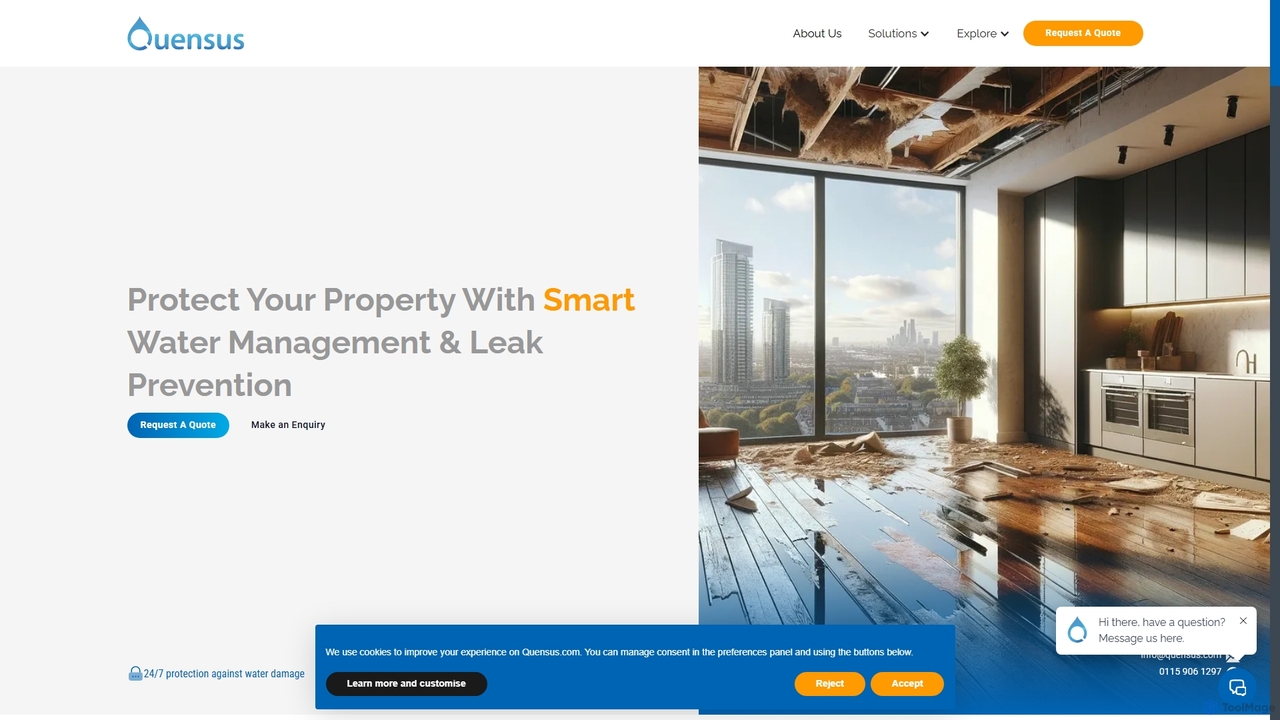
Quensus is an AI-powered intelligent water management and leak prevention system for commercial and residential properties. It combines smart hardware with machine learning software to monitor water usage in real-time, detect leaks and anomalies, and automatically shut off the water supply to prevent costly damage. The system helps reduce water bills, ensure regulatory compliance (BREEAM, JCoP), and promote sustainability.

Site Management
Visits 9.4KFavorites 144Likes 135

About Water Conservation

AI Water Conservation tools are a class of software that leverages artificial intelligence to monitor, analyze, and optimize water usage. These systems process data from sources like IoT sensors, weather forecasts, and satellite imagery to identify inefficiencies and predict future needs. Their primary value lies in providing actionable insights for agriculture, industry, and municipal management to reduce waste, cut operational costs, and support sustainable resource management. As a key component of sustainability technology, they offer precise, data-driven solutions for one of the world's most critical resources.

Core Features

  • Real-time Monitoring: Tracks water consumption, pressure, and flow rates continuously to provide an up-to-the-minute overview of the water network.
  • Leak Detection & Prediction: Uses machine learning algorithms to analyze data patterns and identify existing leaks or predict potential pipe bursts before they occur.
  • Predictive Demand Forecasting: Analyzes historical usage, weather patterns, and other variables to accurately forecast future water demand.
  • Optimized Irrigation Scheduling: Automates watering schedules for agriculture or landscaping by analyzing soil moisture, weather data, and plant needs.

Use Cases

These tools are crucial in sectors with high water consumption. In precision agriculture, they enable smart irrigation to maximize crop yield while minimizing water use. Municipal water authorities use them for managing urban water grids, detecting leaks, and forecasting demand. Industrial facilities apply them to optimize cooling processes and reduce water waste in manufacturing.

How to Choose

When selecting an AI Water Conservation tool, consider its compatibility with your existing sensors and data systems (e.g., SCADA). Evaluate the accuracy and reliability of its predictive models. Assess its scalability to cover your entire operational area, from a single farm to a city-wide network. Finally, examine the user interface for ease of use and the quality of its reporting and analytics features.

Water Conservation use cases

1

Smart Irrigation for Precision Agriculture

An agricultural manager responsible for a large-scale farm uses an AI water conservation platform to optimize irrigation. The system integrates real-time data from soil moisture sensors, local weather station forecasts, and satellite imagery indicating crop health. Based on this data, the AI calculates the precise amount of water each section of the field needs and automates the pivot irrigation system. This data-driven approach prevents overwatering and underwatering, leading to a 20-30% reduction in water consumption while improving crop yield and quality.

2

Municipal Water Network Leak Detection

A city's water utility department deploys an AI tool to proactively manage its aging pipeline infrastructure. The AI continuously analyzes pressure, flow rate, and acoustic sensor data from across the municipal water grid. By identifying subtle anomalies that deviate from normal patterns, the system can pinpoint the likely locations of hidden, non-surfacing leaks. This allows maintenance crews to be dispatched for targeted repairs before the leaks escalate into major pipe bursts, saving millions of gallons of water and preventing costly emergency repairs.

3

Optimizing Water Use in Industrial Cooling

A manufacturing plant manager uses an AI-powered system to optimize the performance of their industrial cooling towers, which are major consumers of water. The AI monitors water quality, conductivity, and temperature in real-time, along with ambient weather conditions. It then calculates the optimal cycles of concentration and blowdown rates to minimize water usage while preventing scale buildup and corrosion. This automated control reduces the plant's overall water footprint and lowers costs associated with water purchase and chemical treatments.

4

Smart Water Metering for Commercial Properties

A facility manager for a large commercial building complex implements an AI platform connected to smart water meters on each floor and for major tenants. The system provides a detailed, real-time dashboard of water consumption, allowing the manager to identify areas of high usage. The AI also automatically flags anomalies, such as a sudden spike in overnight usage, which could indicate a leak or malfunctioning equipment. This enables rapid intervention, prevents water damage, and helps in billing tenants accurately based on actual consumption.

5

Drought Management and Water Demand Forecasting

A regional water authority uses an AI platform for strategic drought management. The tool aggregates data on reservoir levels, snowpack depth, river flow rates, and long-range climate forecasts. It runs predictive models to forecast water availability months in advance. This allows the authority to make informed decisions about implementing water restrictions, launching public conservation campaigns, and managing water allocations for agricultural and industrial users, ensuring a more resilient and equitable water supply during dry periods.

6

Water Quality Monitoring for Compliance

An environmental compliance officer at a wastewater treatment plant uses an AI system to monitor effluent quality. The AI analyzes data from sensors measuring parameters like pH, turbidity, and dissolved oxygen. It learns the normal operating range and alerts the officer in real-time if any parameter deviates, indicating a potential compliance issue or process malfunction. This proactive monitoring helps ensure that discharged water meets regulatory standards, preventing fines and protecting local ecosystems.

Water Conservation FAQ

What are AI Water Conservation tools?

AI Water Conservation tools are specialized software systems that use artificial intelligence, particularly machine learning, to optimize water usage. They analyze data from sources like sensors, weather stations, and satellites to provide insights for reducing waste. Key functions include predictive leak detection, smart irrigation scheduling, and water demand forecasting for agriculture, municipalities, and industries.

How do AI tools for water conservation differ from general sustainability platforms?

General sustainability platforms offer a broad view of environmental impact, often covering energy, carbon emissions, and waste management alongside water. AI Water Conservation tools are highly specialized. They focus exclusively on water-related data, such as flow rates, pressure, and soil moisture, and use specific algorithms for tasks like leak detection and irrigation optimization. This specialization provides deeper, more actionable insights for water management than a generalist platform can offer.

What kind of data is required for an AI water conservation system?

The effectiveness of these tools depends on data quality and diversity. Common data inputs include:

  • Sensor Data: Real-time readings from flow meters, pressure sensors, acoustic sensors, and soil moisture probes.
  • Operational Data: Historical consumption records, pump schedules, and maintenance logs.
  • External Data: Local weather forecasts, precipitation data, and satellite or drone imagery.
  • Asset Data: Information about the water network, such as pipe material, age, and diameter.
The more comprehensive the data, the more accurate the AI's analysis and predictions will be.

Who are the primary users of AI Water Conservation tools?

These tools serve a range of users who manage large-scale water systems. The primary users include:

  • Farmers and Agricultural Managers: For optimizing irrigation and maximizing crop yield per gallon of water.
  • Municipal Water Utilities: For managing city-wide distribution networks, detecting leaks, and forecasting demand.
  • Industrial Plant Managers: For reducing water consumption in processes like cooling, cleaning, and manufacturing.
  • Commercial Property and Facility Managers: For monitoring usage in large buildings, golf courses, and campuses to control costs and detect issues.

How do you choose the right AI Water Conservation tool?

Selecting the right tool involves evaluating several key factors based on your specific needs. First, assess its integration capabilities with your existing hardware (sensors, meters) and software (SCADA, billing systems). Second, consider the scalability of the platform to ensure it can handle your current and future operational size. Third, evaluate the analytical features—does it provide the specific insights you need, such as leak localization or crop water stress analysis? Finally, review the user interface and support to ensure your team can effectively use the tool and get help when needed.