Sustainability Best in category 4 results Waste Reduction AI Tool

Popular AI tools in the Waste Reduction field of Sustainability include Mill、frigo_app、CookMate AI、PantryLab, etc., helping you quickly improve efficiency.

CookMate AI

CookMate AI

CookMate AI is an intelligent platform that provides personalized recipe suggestions based on your cravings, available ingredients, and …

3.1K
PantryLab

PantryLab

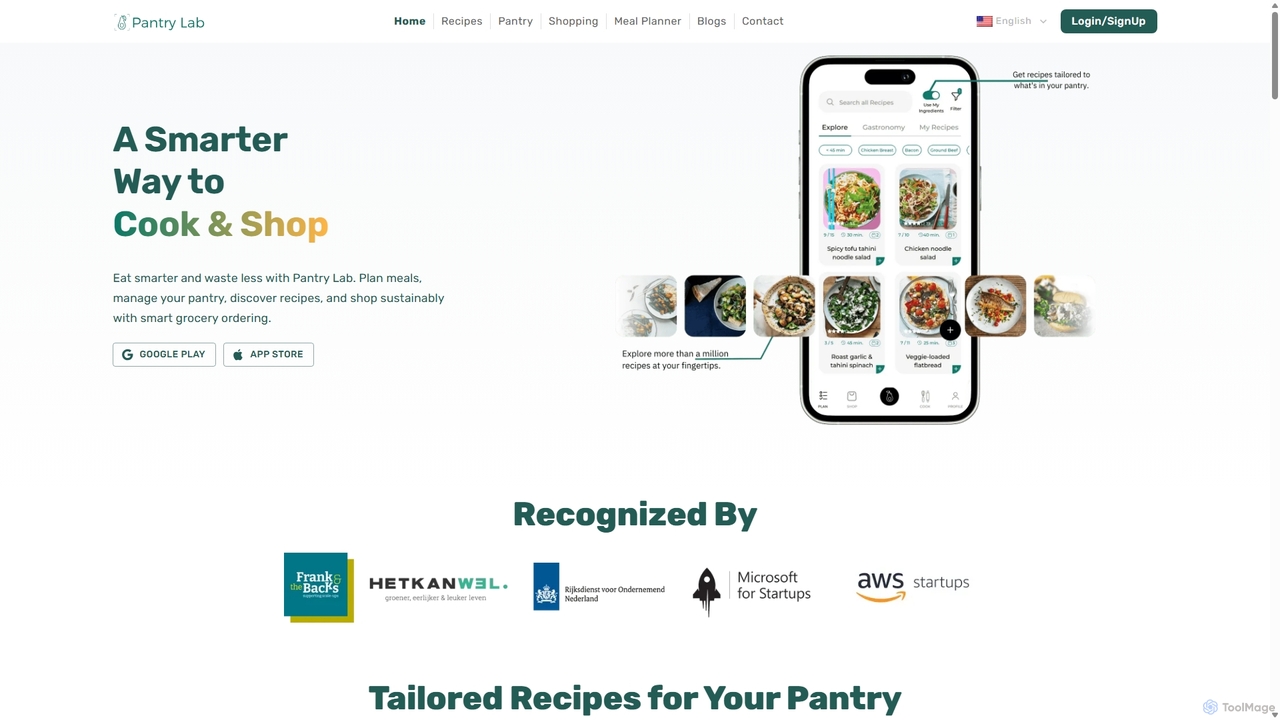
PantryLab is an AI-powered mobile app designed to combat food waste. It intelligently manages your pantry inventory, suggests …

3.0K
frigo_app

frigo_app

frigo_app is an AI-powered kitchen assistant designed to reduce food waste and save you money. Simply snap a …

3.1K
Mill

Mill

Mill is an intelligent, odorless food recycler for your kitchen. It automatically dries, shrinks, and grinds your food …

204.5K

About Waste Reduction

AI Waste Reduction tools are a class of software that leverages artificial intelligence to analyze, predict, and minimize waste generation. These tools employ machine learning, computer vision, and predictive analytics to identify inefficiencies in processes like manufacturing, supply chain management, and consumption. By providing data-driven insights and automation, they help organizations reduce material loss, lower operational costs, and achieve sustainability goals. Their primary advantage lies in shifting from reactive waste tracking to proactive waste prevention.

Core Features

  • Waste Stream Analysis: Uses computer vision and sensors to automatically identify, classify, and quantify different types of waste in real-time.
  • Predictive Forecasting: Analyzes historical data and operational variables to accurately forecast future waste generation, enabling better planning.
  • Process Optimization Recommendations: Identifies root causes of waste in production or logistics and suggests specific adjustments to improve resource efficiency.
  • Automated Sorting and Diversion: Powers robotic systems to sort mixed waste streams with high accuracy, increasing recycling rates and material recovery.

Use Cases

These tools are widely applied in manufacturing to reduce scrap material, in retail for minimizing food spoilage through demand forecasting, and in municipal services for optimizing waste collection routes. Construction and agriculture sectors also use them to reduce material debris and prevent crop loss, respectively.

How to Choose

When selecting an AI Waste Reduction tool, consider its industry-specific models and algorithms. Evaluate its data integration capabilities with your existing systems (e.g., ERP, IoT sensors). Assess the accuracy and reliability of its predictive analytics, and ensure the platform is scalable to match your operational growth.

Waste ReductionUse Cases

1

Optimizing Manufacturing Production Lines

A factory manager for an automotive parts manufacturer uses an AI waste reduction tool to minimize metal scrap. The system connects to sensors on the production line, analyzing real-time data on cutting speeds, material temperature, and machine performance. The AI identifies subtle patterns that lead to higher-than-average scrap rates and recommends micro-adjustments to machine settings. By implementing these suggestions, the factory reduces its raw material waste by 12% and improves overall equipment effectiveness without significant capital investment.

2

Reducing Food Waste in Supermarkets

A grocery chain implements an AI-powered demand forecasting system to reduce spoilage of perishable goods like produce and dairy. The tool analyzes historical sales data, weather forecasts, local events, and promotional activities to predict daily demand for each item with high accuracy. Store managers receive automated reordering suggestions, preventing both overstocking and stockouts. This proactive inventory management leads to a 30% reduction in food waste and improves profit margins on fresh products.

3

Automating Waste Sorting in Recycling Facilities

A municipal recycling facility uses AI-powered robotic arms equipped with computer vision. As mixed recyclables move along a conveyor belt, the AI system identifies and sorts different materials—such as PET plastic, HDPE plastic, cardboard, and aluminum—with over 98% accuracy. This process is significantly faster and more precise than manual sorting, increasing the facility's processing capacity and the purity of the recovered materials. The higher quality of sorted materials also commands a better price on the commodities market.

4

Minimizing Construction and Demolition Debris

A large construction firm uses an AI platform to optimize material usage and reduce on-site waste. By analyzing Building Information Modeling (BIM) data, the AI calculates the most efficient cutting patterns for materials like drywall and steel beams, minimizing offcuts. It also predicts potential waste generation points in the project schedule, allowing project managers to implement preventative measures, such as just-in-time material delivery. This approach reduces landfill-bound waste by up to 25% and lowers material procurement costs.

5

Precision Agriculture for Crop Loss Prevention

A large-scale farm operator employs AI-driven drones and satellite imagery to monitor crop health across thousands of acres. The AI analyzes images to detect early signs of disease, pest infestation, or nutrient deficiencies, often before they are visible to the human eye. This allows for highly targeted application of fertilizers or pesticides only where needed, rather than broad-spectrum spraying. This precision approach significantly reduces chemical waste, prevents widespread crop loss, and improves overall yield.

6

Optimizing Municipal Waste Collection Routes

A city's sanitation department uses an AI platform to create dynamic waste collection routes. Smart bins equipped with sensors report their fill levels in real-time. The AI algorithm processes this data along with traffic patterns and vehicle capacity to generate the most efficient collection route for each truck, every day. This system avoids unnecessary trips to half-empty bins and prevents overflows from full ones, leading to a significant reduction in fuel consumption, vehicle wear and tear, and operational hours, thereby minimizing resource waste.

Waste ReductionFrequently Asked Questions