ToolMage
Sign in

Best 1 Ideation AI tools for Design

Popular Ideation AI tools in Design include Design Sparks, helping you work more efficiently.

Design Sparks
Free

Design Sparks

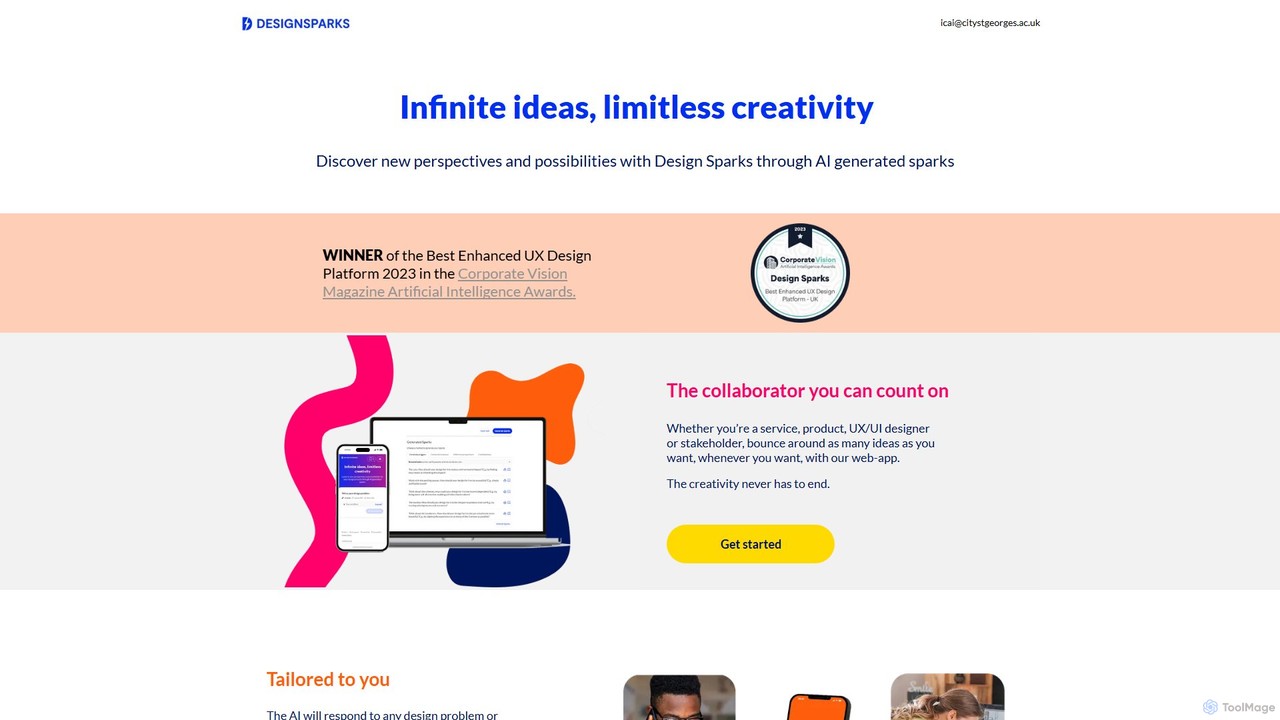
Design Sparks is an AI-powered ideation tool for designers and creators. It uses advanced AI and creative problem-solving techniques to generate innovative ideas, or "sparks," for any design challenge. Input your problem via text, URL, or PDF to overcome creative blocks, explore new perspectives, and foster sustainable, circular design thinking.

Ideation
Visits 4KFavorites 98Likes 98

About Ideation

AI Ideation tools are a class of software designed to generate, develop, and organize creative concepts as part of the initial design process. They leverage large language models and generative algorithms to transform simple prompts into a wide array of ideas, mind maps, and conceptual frameworks. These tools are invaluable at the beginning of a creative project, helping users overcome creative blocks and explore diverse possibilities before committing to a final direction. They act as a collaborative partner for brainstorming and strategic planning.

Core Features

  • Concept Generation: Produces numerous ideas, names, slogans, or topics from a single keyword or prompt.
  • Mind Mapping: Visually structures thoughts and shows relationships between different concepts, often with AI-suggested branches.
  • Idea Expansion: Takes a basic idea and elaborates on it, adding details, potential angles, or related themes.
  • Structured Brainstorming: Provides frameworks like SWOT analysis or "How Might We" questions to guide the ideation process.

Use Cases

Primarily used by marketing teams for campaign brainstorming, product managers for feature development, writers for content planning, and UX designers for initial concept exploration. They are essential in any field requiring rapid and diverse idea generation, from startups defining their brand to agencies developing client pitches.

How to Choose

When selecting an AI Ideation tool, consider the output formats (text, mind maps, diagrams), collaboration features for teamwork, the quality and diversity of generated ideas, and its ability to integrate with other project management or design software. Also, evaluate the user interface's intuitiveness for facilitating a smooth creative flow.

Featured tool rankings

Ideation use cases

1

Brainstorming Marketing Campaign Angles

A marketing manager for a new beverage brand needs fresh campaign ideas. They input the product's core attributes (e.g., "organic, energizing, fruit-infused") into an AI ideation tool. The tool generates hundreds of potential slogans, target audience profiles, social media content pillars, and promotional event concepts. The team can then filter, combine, and refine these AI-generated starting points, reducing brainstorming time by over 70% and uncovering unique angles they hadn't considered.

2

Developing New Software Features

A product team is tasked with improving user engagement for their mobile app. Instead of a traditional whiteboard session, they use an AI ideation tool. They input the core problem: "Users drop off after onboarding." The AI suggests potential features like gamified tutorials, a personalized dashboard, and proactive in-app chat support. It even generates basic user stories for each idea, providing a structured foundation for feature prioritization and backlog grooming.

3

Planning a Year's Worth of Blog Content

A solo content creator running a blog about sustainable living wants to plan their editorial calendar. They provide the AI ideation tool with their main topics, such as "zero-waste," "ethical fashion," and "urban gardening." The tool generates a comprehensive list of article titles, potential subheadings, and related keywords for each topic. This allows the creator to quickly build a 12-month content plan, ensuring a steady stream of relevant and SEO-friendly ideas.

4

Exploring User Experience (UX) Flow Concepts

A UX designer is starting a project for a new e-commerce checkout process. To explore different approaches, they use an AI ideation tool to generate conceptual user flow diagrams. By providing constraints like "one-page checkout" or "guest checkout priority," the AI visualizes several potential paths. This serves as a powerful starting point for discussion with stakeholders and for creating more detailed wireframes, accelerating the initial design exploration phase.

5

Generating Startup Names and Taglines

An entrepreneur is launching a new tech startup in the fintech space but is stuck on a name. They use an AI ideation tool, inputting keywords like "secure," "fast," "investment," and "simple." The tool produces hundreds of name suggestions, checks for domain availability, and generates corresponding taglines. This process transforms a week-long struggle into a few hours of creative exploration, helping find a memorable and available brand name.

6

Outlining a Script or Novel

A writer is experiencing writer's block while trying to outline a new science fiction story. They input their basic premise—"An AI gains consciousness on a Mars colony"—into an ideation tool. The AI helps by generating potential plot twists, character archetypes with conflicting motivations, and key story beats for a three-act structure. This doesn't write the story for them, but it provides a scaffold of ideas to break the creative deadlock and build a compelling narrative.

Ideation FAQ

What are AI Ideation tools?

AI Ideation tools are applications that use artificial intelligence to help users generate, develop, and organize new ideas. Unlike tools that produce final content, their primary purpose is to assist in the brainstorming and conceptualization phase of a project. They can produce lists, mind maps, and structured outlines from simple prompts, acting as a creative catalyst for designers, writers, and strategists.

How do I choose the right AI Ideation tool?

To choose the right tool, evaluate these four factors:

  • Output Versatility: Does it generate text lists, visual mind maps, or both?
  • Collaboration Features: Can you share and work on ideas with a team in real-time?
  • Quality of Suggestions: Does the AI provide relevant, creative, and non-obvious ideas?
  • Integration: Can it export ideas to your project management or design software (e.g., Miro, Figma, Notion)?

Your choice should align with your specific workflow and team needs.

What's the difference between AI Ideation and AI Writing tools?

The key difference is their purpose. AI Ideation tools focus on the quantity and structure of early-stage ideas, helping you explore possibilities (e.g., generating 50 blog post titles). AI Writing tools focus on the quality and completion of long-form content, helping you draft the actual article, email, or report based on a chosen idea. Ideation is for brainstorming; writing is for execution.

Who benefits most from AI Ideation tools?

Anyone involved in the early stages of creative or strategic work can benefit. This includes marketing teams brainstorming campaigns, product managers developing new features, content creators planning topics, UX designers exploring user flows, and entrepreneurs defining their business concepts. They are particularly useful for overcoming creative blocks and fostering innovation within teams.

How do AI Ideation tools work?

Most AI Ideation tools are powered by large language models (LLMs). When you provide a prompt or keyword, the model analyzes it and draws upon its vast training data to predict and generate related words, concepts, and structures. They often use specific techniques like semantic clustering to group related ideas or apply creative frameworks (like SCAMPER) to prompts to generate more diverse and structured output.