Trinka
Trinka is an AI-powered writing assistant and grammar checker specifically designed for academic and technical writing. It goes …
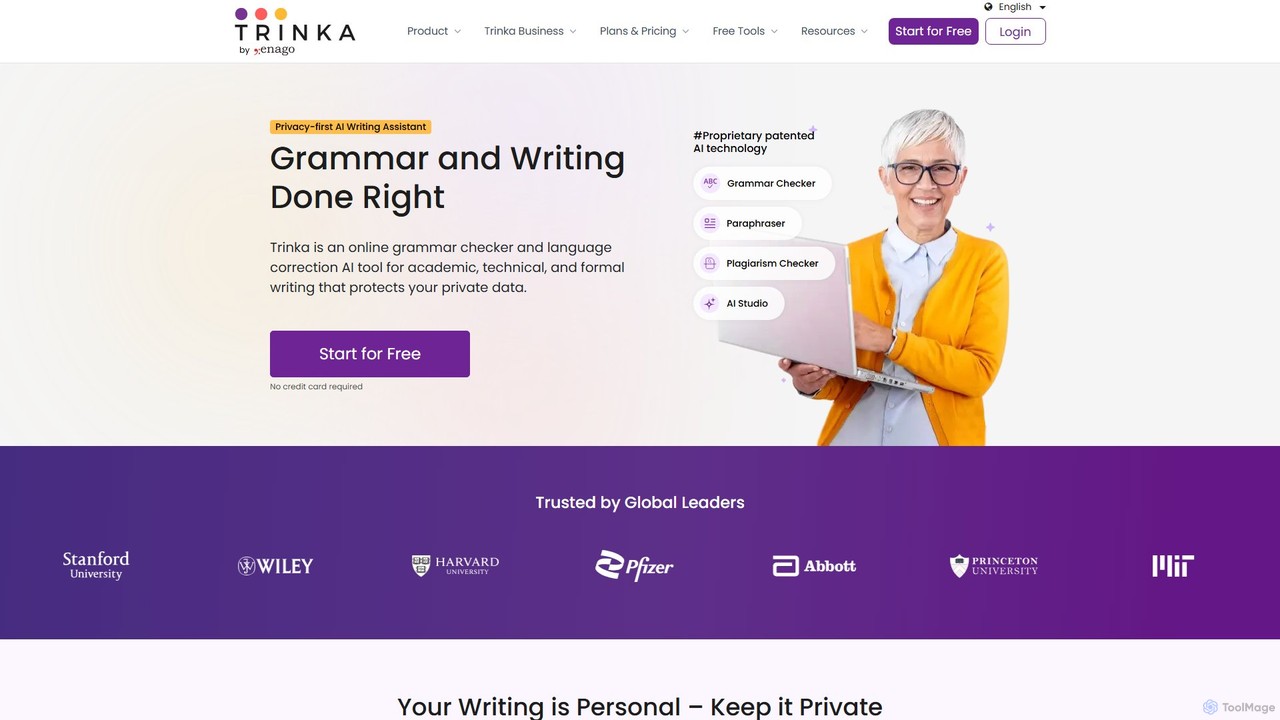
Trinka is an AI-powered writing assistant and grammar checker specifically designed for academic and technical writing. It goes beyond basic grammar correction to improve style, tone, and clarity. Key features include a LaTeX checker, plagiarism detection, and publication readiness checks, making it an essential tool for researchers, students, and professionals.
About Proofreading
AI Proofreading tools are specialized applications designed to detect and correct errors in spelling, grammar, punctuation, and syntax in written text. Leveraging advanced Natural Language Processing (NLP), these tools go beyond basic spell checkers by understanding context, tone, and stylistic nuances. They serve as the final quality check before publication, ensuring documents are professional, clear, and error-free. This focus on final-pass correction distinguishes them from broader AI text editing or writing assistant tools.
Core Features
- Advanced Error Detection: Identifies complex grammatical mistakes, punctuation errors, and contextual spelling issues that standard checkers miss.
- Style and Tone Suggestions: Analyzes the text for consistency, clarity, and formality, offering suggestions to improve readability and match the intended tone.
- Plagiarism Checking: Scans documents against a vast database of online content to identify potential plagiarism and ensure originality.
- Multi-language Support: Provides accurate proofreading capabilities across numerous languages, respecting their unique grammatical rules and conventions.
- Integration with Workflows: Offers plugins and extensions for popular word processors, browsers, and email clients for seamless real-time corrections.
Applicable Scenarios
These tools are essential for professionals and students who produce high-stakes written content. In academia, they are used to polish research papers and dissertations. In business, they ensure proposals, reports, and marketing copy are flawless. Content creators and authors also rely on them for a final check before publishing articles or manuscripts.
Selection Criteria
When choosing an AI proofreading tool, consider its accuracy and the depth of its suggestions. Evaluate the range of supported languages and the quality of its integrations with your existing software. Also, check for features like customizable style guides for team consistency and the comprehensiveness of its plagiarism checker. Finally, compare pricing models to find one that aligns with your usage frequency.

ProofreadingUse Cases
Final Review of Academic Papers
A graduate student preparing their dissertation for submission uses an AI proofreading tool as the final step. After completing all content edits, they run the entire document through the tool to catch any lingering errors. The tool identifies subtle punctuation mistakes, inconsistencies in hyphenation, and complex subject-verb agreement issues that were missed during manual reviews. This ensures the paper meets the high standards of academic publishing and presents the research in the most professional manner possible, avoiding rejections based on surface errors.
Polishing High-Stakes Business Communication
A marketing team uses an AI proofreading tool to finalize a major client proposal and a new website copy. The tool ensures all communication is free from grammatical errors and typos that could damage the company's credibility. It also provides suggestions for improving clarity and maintaining a consistent professional tone across all documents. By integrating the tool into their workflow, the team can confidently send out materials knowing they are polished and reflect the company's high standards, increasing the chances of securing new business.
Ensuring Quality for Content Creators and Bloggers
A professional blogger who publishes multiple articles per week relies on an AI proofreading tool to maintain quality and consistency. Before hitting 'publish' on their content management system (CMS), they paste the text into the tool for a final check. It quickly catches awkward phrasing, repeated words, and punctuation errors. This allows the blogger to focus on creating engaging content, secure in the knowledge that a reliable safety net will catch any surface-level mistakes, thereby upholding their reputation for high-quality writing.
Verifying Legal and Contractual Documents
A paralegal at a law firm is tasked with reviewing a batch of contracts before they are sent to clients. Precision is critical, as a single misplaced comma or typo could alter the meaning of a clause. They use an AI proofreading tool specifically trained on legal terminology to scan the documents. The tool flags ambiguous language, ensures consistency in defined terms, and catches grammatical errors that could create legal loopholes. This adds a layer of automated diligence, reducing the risk of human error in high-stakes legal writing.
Improving Multilingual Customer Support Scripts
A global e-commerce company maintains customer support scripts in five different languages. To ensure consistency and professionalism, the support manager uses an AI proofreading tool with strong multilingual capabilities. Before deploying new scripts or email templates, they are run through the tool for each respective language. It corrects grammatical errors, suggests more natural phrasing, and ensures that key terminology is used consistently across all languages. This helps maintain a high-quality, unified brand voice, improving the customer experience regardless of their location.
Final Polish for Author Manuscripts
An author has just completed the final draft of their novel after several rounds of self-editing and feedback from beta readers. As a last step before submitting to literary agents, they use an AI proofreading tool to perform a comprehensive sweep of the manuscript. The tool catches hundreds of small but distracting errors, such as inconsistent capitalization of fictional terms, incorrect punctuation in dialogue, and common typos. This final polish ensures the manuscript is presented in the most professional light, allowing agents to focus on the story itself rather than being distracted by correctable errors.