ToolMage
Sign in

Best 1 Writing Assistant for Text

Popular Writing Assistant in Text include Odyssey, helping you work more efficiently.

Odyssey
Paid

Odyssey

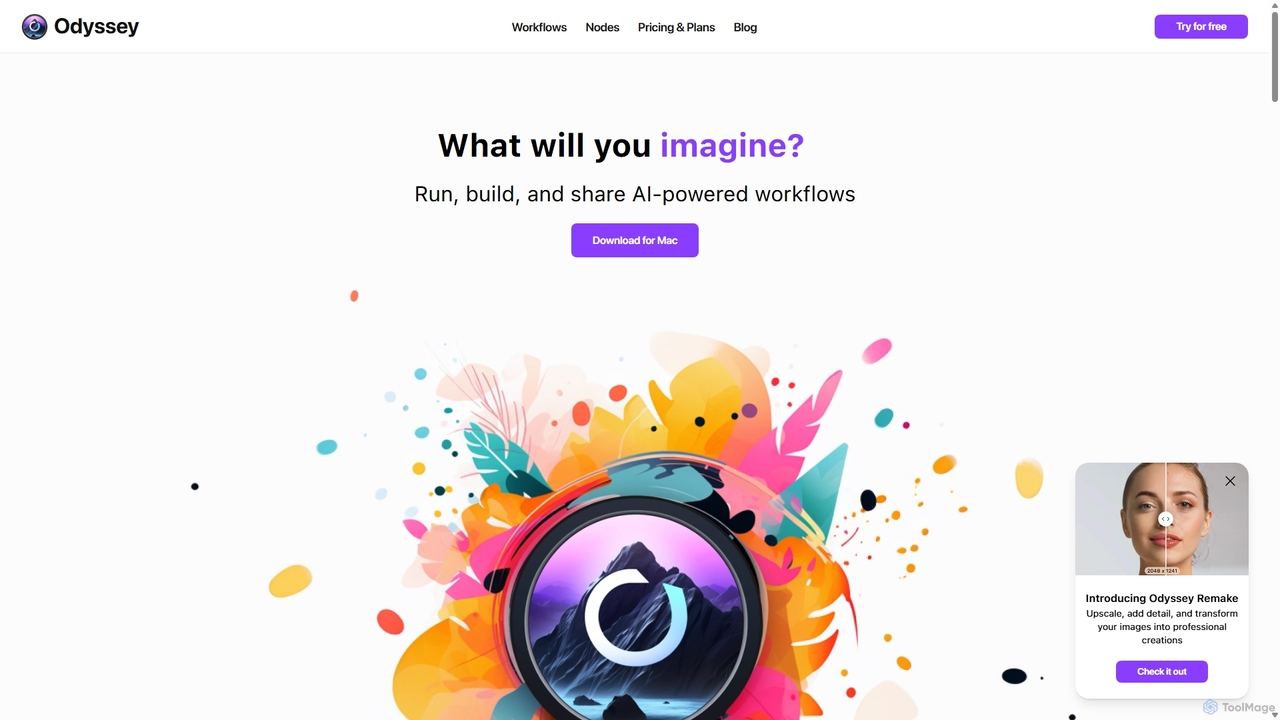
Odyssey is an all-in-one desktop application for macOS that empowers users to build, run, and share complex AI-powered workflows. It combines image generation, text processing, and powerful automation in a visual, node-based editor. With a focus on privacy, it runs major AI models like Stable Diffusion and Llama2 locally on your machine, ensuring your data remains secure. It's a one-time purchase for a lifetime license, designed for creatives, marketers, and developers.

Creative Assistant
Visits 10.3KFavorites 133Likes 125

About Writing Assistant

Writing Assistant is a category of AI-powered tools designed to enhance and streamline the creation, editing, and refinement of written content. Leveraging advanced natural language processing (NLP) and large language models (LLMs), these tools analyze text for grammar, style, tone, and coherence, offering intelligent suggestions or generating new content. They empower users to produce high-quality, engaging, and error-free text more efficiently, overcoming challenges like writer's block and ensuring brand consistency across various communication channels.

Core Features

  • Grammar & Style Correction: Identifies and corrects grammatical errors, punctuation mistakes, and suggests stylistic improvements for clarity and impact.
  • Content Generation: Assists in drafting outlines, generating initial paragraphs, or expanding on ideas for articles, emails, and marketing copy.
  • Tone & Readability Adjustment: Analyzes and suggests modifications to align text with a desired tone (e.g., formal, casual, persuasive) and improve overall readability.
  • Paraphrasing & Summarization: Rewrites existing text to avoid plagiarism or condenses long documents into concise summaries.
  • SEO Optimization Suggestions: Provides recommendations for keywords, headings, and content structure to improve search engine visibility.

Use Cases

Writing Assistants are invaluable for content creators, marketers, students, and business professionals. They are used to accelerate content production for blogs and social media, ensure academic papers meet high standards, and craft professional business communications. These tools help maintain a consistent brand voice and improve the overall quality of written output across diverse platforms.

How to Choose

When selecting a Writing Assistant, consider its accuracy in grammar and style suggestions, the breadth of its content generation capabilities, and its support for multiple languages. Evaluate its integration with your existing writing workflows (e.g., word processors, CMS platforms) and assess the customization options for tone and style. Finally, compare pricing models and ensure the tool's features align with your specific writing needs, whether for short-form copy or long-form documents.

Featured tool rankings

Writing Assistant use cases

1

Crafting Engaging Marketing Copy

Marketing professionals often need to produce high volumes of compelling content for social media, email campaigns, and advertisements. A writing assistant helps by generating multiple variations of ad copy, suggesting engaging headlines, and ensuring the brand's voice is consistent. This significantly reduces the time spent on brainstorming and drafting, allowing marketers to focus on strategy and performance analysis.

2

Accelerating Blog Post Creation

Bloggers and content creators frequently face writer's block or tight deadlines. Writing assistants can generate outlines, draft introductory paragraphs, or expand on bullet points into full sections. This provides a strong starting point, helps maintain a consistent publishing schedule, and ensures the content is well-structured and grammatically sound, improving reader engagement.

3

Refining Academic Papers and Essays

Students and researchers require precise language and adherence to academic standards. A writing assistant can meticulously check for grammatical errors, punctuation mistakes, and stylistic inconsistencies. It can also suggest improvements for clarity, conciseness, and academic tone, helping to elevate the quality of essays, research papers, and theses before submission.

4

Drafting Professional Business Communications

Business professionals, from HR to sales, frequently draft emails, reports, and internal memos. Writing assistants ensure these communications are clear, professional, and error-free. They can help adjust the tone for different audiences, summarize lengthy documents for quick comprehension, and even suggest polite yet firm phrasing, enhancing overall workplace communication efficiency.

5

Optimizing Content for Search Engines

SEO specialists and web content managers aim to rank higher in search results. Writing assistants equipped with SEO features can analyze text for keyword density, suggest relevant long-tail keywords, and recommend optimal heading structures. This helps in creating content that is not only engaging for readers but also highly visible to search engines, driving organic traffic.

6

Localizing Multilingual Content

Global businesses need to adapt their content for diverse linguistic and cultural contexts. While not a direct translation tool, a writing assistant can help refine translated text, ensuring it sounds natural and culturally appropriate in the target language. It checks for idiomatic expressions, grammatical nuances, and stylistic preferences, maintaining the original message's intent and impact across different markets.

Writing Assistant FAQ

What are AI Writing Assistants?

AI Writing Assistants are software tools that use artificial intelligence, primarily natural language processing (NLP) and machine learning, to help users create, edit, and improve written content. They go beyond basic spell-checkers by understanding context, suggesting stylistic enhancements, generating text, and ensuring consistency in tone and grammar. Their goal is to make writing faster, easier, and more effective for a wide range of applications.

How do AI Writing Assistants work?

AI Writing Assistants typically work by processing vast amounts of text data to learn patterns, grammar rules, and stylistic conventions. When you input text, they use algorithms to analyze it against these learned patterns. Large Language Models (LLMs) are at their core, enabling them to understand context, predict the next most probable words, and generate coherent, human-like text. This allows them to offer suggestions for corrections, rephrasing, summarization, or even generate entirely new content based on prompts.

What are the main benefits of using a Writing Assistant?

The main benefits include significant time savings in content creation, improved writing quality through advanced grammar and style checks, and enhanced consistency in tone and brand voice. They help overcome writer's block by providing initial drafts or ideas, and can optimize content for specific purposes like SEO. Ultimately, Writing Assistants empower users to produce more polished, professional, and impactful written communication with greater efficiency.

How should I choose the right AI Writing Assistant for my needs?

To choose the right AI Writing Assistant, consider several factors. First, evaluate its core functionalities: do you need extensive content generation, advanced grammar checks, SEO optimization, or specific tone adjustments? Second, check its accuracy and reliability. Third, assess language support and integration capabilities with your existing tools. Finally, compare pricing models and user interface to ensure it fits your budget and workflow. A free trial can often help determine the best fit.

What's the difference between a Writing Assistant and a traditional word processor?

A traditional word processor (like Microsoft Word or Google Docs) provides basic text editing, formatting, and simple spell/grammar checks. It's primarily a canvas for writing. In contrast, a Writing Assistant actively *assists* in the writing process using AI. It offers intelligent suggestions for improving clarity, tone, and style, generates content, paraphrases, and summarizes, going far beyond passive editing to proactively enhance the quality and efficiency of your writing.