aireads.co
aireads.co is an AI-powered reading assistant that transforms how you interact with text. It summarizes long articles, PDFs, …
aireads.co is an AI-powered reading assistant that transforms how you interact with text. It summarizes long articles, PDFs, and documents, allows you to ask questions directly to your files, and converts text into natural-sounding audio. Ideal for students, researchers, and professionals looking to accelerate their learning and research process.
Taidai.io
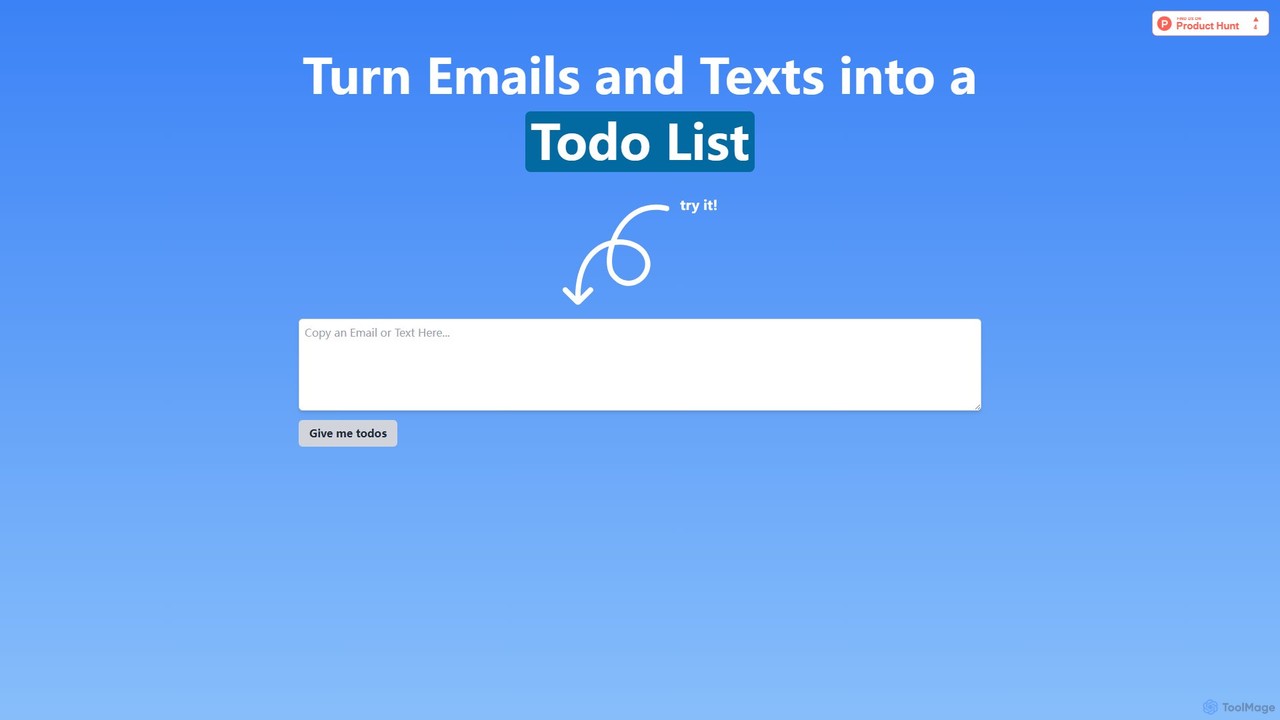
Taidai.io is an AI-powered tool that instantly transforms unstructured text, such as emails, messages, and notes, into organized …
Taidai.io is an AI-powered tool that instantly transforms unstructured text, such as emails, messages, and notes, into organized to-do lists. Powered by OpenAI's GPT-4o, it helps you save time and increase productivity by automatically extracting actionable tasks. The tool is privacy-focused, storing no user data.
iFLYTEK Paper
iFLYTEK Paper is an AI-powered academic writing and research assistant designed to streamline the entire process of paper …
iFLYTEK Paper is an AI-powered academic writing and research assistant designed to streamline the entire process of paper creation. It offers intelligent features for literature review, outline generation, full-text writing, proofreading, and citation management, empowering students and researchers to enhance their productivity and writing quality.
smudge.ai
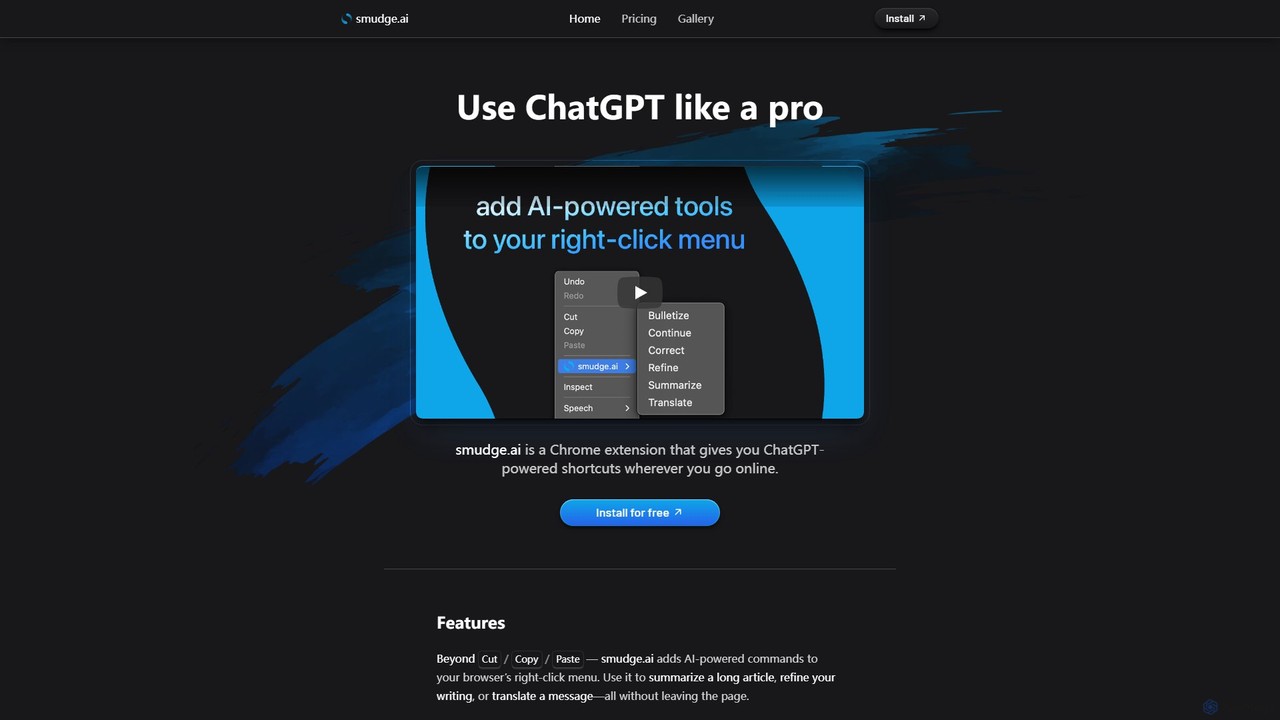
smudge.ai is a powerful Chrome extension that integrates ChatGPT-powered shortcuts directly into your browser's right-click menu. Instantly summarize …
smudge.ai is a powerful Chrome extension that integrates ChatGPT-powered shortcuts directly into your browser's right-click menu. Instantly summarize articles, refine your writing, translate text, and create custom commands without ever leaving your current page, streamlining your online workflow.
About Summarizer
AI Summarizers are tools that use natural language processing to automatically condense long texts into shorter, coherent summaries. They operate using two main methods: extractive summarization, which selects key sentences, and abstractive summarization, which generates new sentences to capture the core meaning. This allows users to quickly grasp the main points of articles, reports, and documents without reading the entire text. Advanced summarizers can also adjust summary length, focus on specific keywords, and handle various document formats.
Core Features
- Adjustable Summary Length: Control the output from a few key bullet points to a detailed paragraph.
- Extractive & Abstractive Modes: Choose between pulling key sentences directly or generating a new, human-like summary.
- Multi-Format Support: Process content from URLs, PDFs, DOCX files, or pasted text.
- Keyword Focus: Generate summaries centered around specific topics or keywords provided by the user.
- Multi-Language Capability: Condense texts written in various global languages.
Use Cases
These tools are ideal for researchers, students, journalists, and business analysts who need to process large volumes of information efficiently. Common applications include quickly reviewing academic papers, analyzing market research reports, monitoring news coverage, or creating concise meeting minutes from transcripts.
How to Choose
When selecting a summarizer, consider the supported document types (URL, PDF, text), the quality of its abstractive vs. extractive outputs, integration options like browser extensions, and its data privacy policy, especially for sensitive documents.

SummarizerUse Cases
Accelerating Literature Reviews for Academic Research
A graduate student needs to review dozens of research papers for their thesis. Instead of reading each one fully, they use an AI summarizer to generate a concise abstract for each paper. This process helps them quickly identify the most relevant papers for their study, saving many hours of reading time. By focusing only on the critical sources, they can dedicate more time to in-depth analysis and writing, significantly improving their research efficiency.
Condensing Market Reports for Business Strategy
A business analyst monitors industry trends by reviewing daily news, competitor press releases, and market reports. Using an AI summarizer with URL input, they quickly process this large volume of information. The tool provides daily executive summaries highlighting key market shifts and competitor moves. This enables the strategy team to make faster, more informed decisions without getting bogged down in excessive detail.
Creating Engaging Summaries for Social Media Content
A social media manager curates industry articles to share with their audience. To increase engagement, they use an AI summarizer to create short, compelling summaries of long-form blog posts. These summaries are then used as captions for Twitter, LinkedIn, and Facebook, providing immediate value to followers and encouraging them to click through to the full article. This strategy saves time and makes the shared content more accessible.
Generating Actionable Meeting Minutes from Transcripts
After a long project meeting, a project manager receives a full transcript of the discussion. Instead of manually reviewing the entire text, they paste it into an AI summarizer. The tool automatically extracts key decisions, action items, and deadlines. This transforms a dense transcript into a clear, scannable summary that can be shared with attendees, ensuring everyone is aligned on next steps without having to re-read the entire conversation.
Preliminary Review of Legal Contracts and Documents
A paralegal receives a large volume of legal documents, such as contracts or case files, for initial screening. They use an AI summarizer to get a high-level overview of each document, identifying key clauses, parties involved, and the main purpose. This initial triage helps prioritize documents for a detailed review by a lawyer, significantly speeding up the legal workflow and reducing manual reading time for non-critical sections.
Building a Personal Knowledge Base from Online Articles
An avid learner saves dozens of online articles weekly to their knowledge management system. To make this information more digestible, they use a browser extension summarizer. Before saving an article, they generate a summary and save it alongside the link. This practice makes their knowledge base easily searchable and allows for quick refreshers on topics without needing to re-read the full articles, creating a more efficient personal learning process.