Video Best in category 1 results Face Swapping AI Tool

Popular AI tools in the Face Swapping field of Video include Pseudoface, etc., helping you quickly improve efficiency.

Pseudoface

Pseudoface

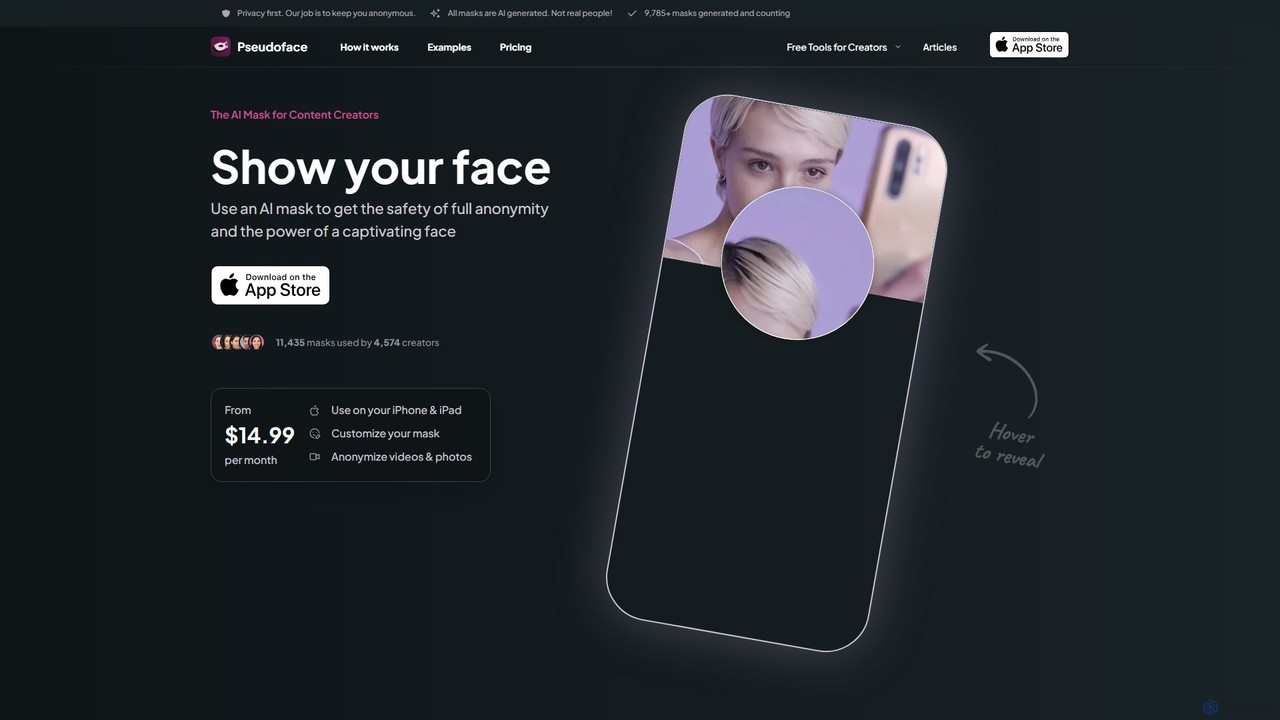
Pseudoface is an AI-powered tool for content creators that replaces their real face with a customizable, photorealistic AI …

5.8K

About Face Swapping

Face Swapping tools are a specialized category of AI video software that digitally replaces a person's face in an image or video with another. These tools utilize deep learning models, such as Generative Adversarial Networks (GANs), to analyze facial landmarks, expressions, and lighting to create a seamless and realistic composite. They enable users to generate entertaining content, visualize different appearances, or perform complex visual effects with minimal effort. Unlike general video editors, these tools focus specifically on the intricate task of facial manipulation, offering high-fidelity results and automated workflows.

Core Features

  • High-Fidelity Face Replacement: Accurately maps a source face onto a target video or image, preserving expressions and head movements.
  • Expression & Emotion Cloning: Transfers the facial expressions and emotions from the target video to the swapped face for natural results.
  • Multi-Face Swapping: Supports swapping multiple faces within a single image or video frame simultaneously.
  • Real-time Processing: Some advanced tools offer the ability to perform face swaps live on video streams or during video calls.
  • Identity Protection & Watermarking: Includes features to prevent misuse, such as applying visible or invisible watermarks to generated content.

Use Cases

Face Swapping tools are widely used in the entertainment and media industries for creating memes, viral social media content, and special effects in films. Marketers use them for creating personalized advertising campaigns. In film production, they can be used for pre-visualization or creating digital stunt doubles. They are also popular among individual creators for personal projects, parodies, and artistic expression.

How to Choose

When selecting a Face Swapping tool, consider the quality and realism of the output as the primary factor. Evaluate the processing speed—whether you need real-time capabilities or can work with offline rendering. Check the supported formats (image, video, GIF) and resolution limits. Crucially, review the platform's privacy policy and ethical guidelines, especially regarding data handling and the prevention of malicious deepfakes.

Face SwappingUse Cases

1

Creating Viral Social Media Content

A social media manager or content creator aims to boost engagement by producing a humorous short video. Using a face swapping tool, they can take a trending movie clip or meme and replace the main character's face with their own or a celebrity's. The process is automated: upload the source face and the target video. The AI handles the tracking and rendering, producing a shareable video in minutes. This approach significantly reduces the complexity of video editing and allows for rapid content creation that can capitalize on current trends.

2

Personalized Video Marketing

A marketing team wants to create a highly personalized ad campaign. They can use a face swapping API to allow users to upload their own photo and see themselves as the star of a short promotional video. For example, a travel company could let users put their face on a character exploring a vacation destination. This creates a deeply engaging and memorable experience, increasing brand affinity and the likelihood of conversion. The AI ensures that each user-generated video is created instantly and scales to handle a large number of participants.

3

Film & TV Pre-visualization

In the early stages of film production, a director or casting agent can use face swapping to visualize different actors in a specific role. By taking existing footage of a scene and swapping the actor's face with that of a potential candidate, they can get a quick and cost-effective impression of their performance and on-screen presence. This process helps in making more informed casting decisions without the need for expensive screen tests or reshoots, streamlining the pre-production workflow and saving significant time and budget.

4

Creating Educational or Training Content

An instructional designer can create more engaging training materials by swapping faces. For instance, in a corporate training video, the face of a well-known company leader can be swapped onto an actor demonstrating a procedure. This adds a familiar and authoritative presence, potentially increasing learner engagement. Similarly, in historical educational content, the faces of historical figures can be realistically placed into reenactments, making the content more immersive and memorable for students without requiring actors with specific resemblances.

5

Generating Memes and GIFs for Fun

For personal entertainment, users can quickly create funny memes and GIFs. By taking a popular GIF template, like a reaction shot from a TV show, a user can swap in their friend's face. The tool allows for quick selection of the source image (the friend's face) and the target GIF. The result is a personalized, humorous piece of content perfect for sharing in group chats or on social media platforms. This democratizes content creation, allowing anyone without technical skills to produce custom animations for casual communication.

6

Artistic Expression and Digital Art

Digital artists use face swapping as a creative tool to produce surreal or thought-provoking artwork. They can merge historical portraits with modern faces, combine features from different people to create entirely new characters, or animate static paintings. This technique allows for a new form of digital collage and character design. The AI's ability to blend lighting and textures seamlessly enables artists to focus on the conceptual aspects of their work rather than the technical challenges of manual photo manipulation, opening up new avenues for artistic expression.

Face SwappingFrequently Asked Questions