
ToolMage
Sign in

Best 1 Identity AI tools for Avatars

Popular Identity AI tools in Avatars include Pseudoface, helping you work more efficiently.

Pseudoface
Paid

Pseudoface

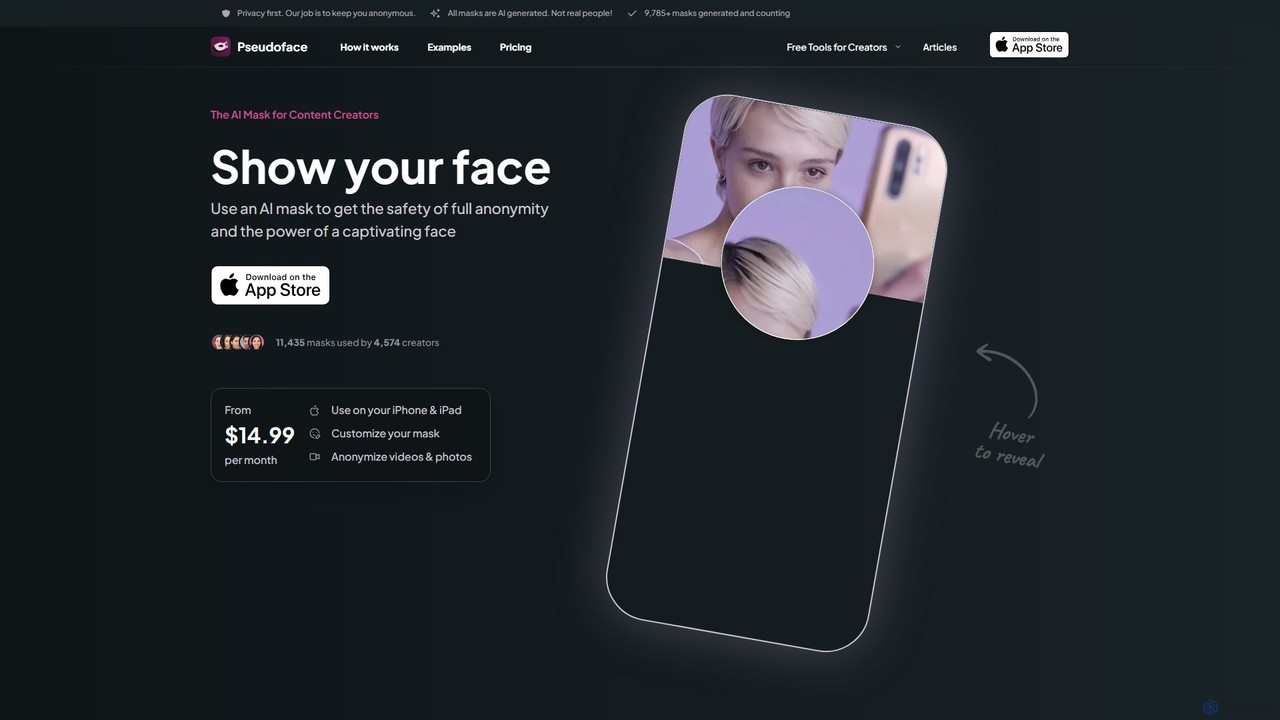
Pseudoface is an AI-powered tool for content creators that replaces their real face with a customizable, photorealistic AI mask. It enables creators to maintain complete anonymity while building a personal connection with their audience, boosting engagement and income without compromising privacy.

Identity
Visits 8.9KFavorites 157Likes 169

About Identity

Identity AI tools are specialized platforms that leverage artificial intelligence to create, customize, and manage the unique characteristics and personal attributes of virtual avatars. These tools utilize advanced generative models and facial recognition technologies to imbue digital representations with distinct features, expressions, and even personality traits. They enable users to craft highly personalized digital personas that accurately reflect desired identities across various virtual environments. This sub-category within Avatars focuses on the nuanced aspects of digital self-representation.

Core Features

  • Personalized Feature Generation: AI-driven creation of unique facial structures, hairstyles, skin tones, and other physical attributes.
  • Expression & Emotion Synthesis: Generating dynamic facial expressions and emotional states to convey personality.
  • Digital Persona Customization: Tools for defining and applying specific identity elements, such as age, gender, style, or even brand aesthetics.
  • Identity Consistency Management: Ensuring a consistent look and feel for an avatar across different platforms or applications.
  • Real-time Identity Mapping: Mapping real-world user features or expressions onto an avatar in real-time.

Use Cases

Identity AI tools are crucial for users seeking to imbue their digital representations with individuality and distinctiveness. They are widely used in virtual social platforms for self-expression, in gaming for personalized character design, and by businesses for consistent brand ambassador creation.

How to Choose

When selecting an Identity AI tool, consider the depth of customization offered for facial features and expressions, its integration capabilities with existing virtual platforms, the desired level of realism or stylization, and the overall ease of use for creating and managing digital identities.

Featured tool rankings

Identity use cases

1

Crafting Unique Social Media Avatars

Social media users leverage Identity AI tools to design highly personalized and expressive avatars that stand out, reflecting their individual style and personality for profiles and virtual interactions. This allows for a more authentic digital presence and enhanced engagement within online communities.

2

Developing Consistent Brand Mascots

Marketing teams utilize Identity AI tools to create AI-powered brand mascots or virtual influencers with consistent visual identities and emotional ranges across all digital campaigns. This ensures strong brand recognition and a unified message, enhancing marketing effectiveness and audience connection.

3

Personalizing Gaming Characters

Game developers and players employ Identity AI to generate unique character faces, expressions, and distinct features, allowing for deeper player immersion and diverse NPC design within virtual worlds. This enhances the gaming experience by making characters feel more alive and relatable.

4

Creating Digital Twins for Professional Use

Professionals use Identity AI to build realistic digital twins that accurately represent their appearance and expressions for virtual meetings, online presentations, or digital portfolios. This enhances their virtual presence, fostering trust and a stronger personal brand in remote work environments.

5

Enhancing Virtual Event Participation

Attendees of virtual conferences or events use Identity AI to customize their avatar's appearance and expressions, making their digital representation more engaging and reflective of their real-world persona. This fosters a more personal and interactive experience in large-scale virtual gatherings.

6

Designing AI Companions with Distinct Personalities

Developers create AI companions or virtual assistants with unique facial identities and expressive capabilities, allowing for more natural and empathetic interactions with users. This helps build stronger emotional connections and enhances the user experience with intelligent agents.

Identity FAQ

What are Identity AI tools?

Identity AI tools are specialized artificial intelligence applications focused on generating, customizing, and managing the unique characteristics and personal attributes of virtual avatars. They enable the creation of distinct digital personas with specific facial features, expressions, and styles, differentiating them from generic avatar generators. Their core purpose is to imbue digital representations with a sense of individuality and personality.

How do Identity AI tools differ from general Avatar generators?

While general avatar generators create basic digital representations, Identity AI tools delve deeper into personalization, focusing on nuanced facial features, expressions, and unique attributes that define a specific digital persona. They offer advanced controls for individuality, rather than just generic templates, allowing for a more precise and consistent representation of a desired identity.

What features should I look for in an Identity AI tool?

When choosing an Identity AI tool, prioritize features like advanced facial customization, expression synthesis, consistency management across platforms, and the ability to import/export various formats. Also consider the level of realism or stylization supported, the ease of use for both novices and professionals, and integration with your existing virtual environments or platforms.

Who benefits most from using Identity AI tools?

Content creators, social media influencers, gamers, virtual event participants, and businesses seeking unique brand ambassadors benefit significantly. Anyone needing a highly personalized, expressive, and consistent digital representation of themselves or a brand will find these tools invaluable for enhancing their online presence and engagement across various virtual platforms.

Can Identity AI tools create realistic human-like avatars?

Yes, many advanced Identity AI tools are capable of generating highly realistic, human-like avatars by leveraging sophisticated generative adversarial networks (GANs) and 3D modeling techniques. They can replicate subtle facial nuances and expressions to achieve photorealistic results, making digital personas almost indistinguishable from real individuals in certain contexts.