ToolMage
Sign in

Best 3 Narration AI tools for Video

Popular Narration AI tools in Video include Kveeky, Yueyin, and Cugent, helping you work more efficiently.

Cugent
Freemium

Cugent

Cugent is an AI-powered tool that transforms text scripts from PDF and Docx files into high-quality, human-like voiceovers. It features multilingual support, including German, Dutch, Italian, and French, and offers advanced voice cloning technology. Designed for content creators, Cugent streamlines the audio production process, enabling users to create professional narrations in minutes and reach a global audience with ease.

Text To Speech
Visits 4.4KFavorites 116Likes 112
Kveeky
Freemium

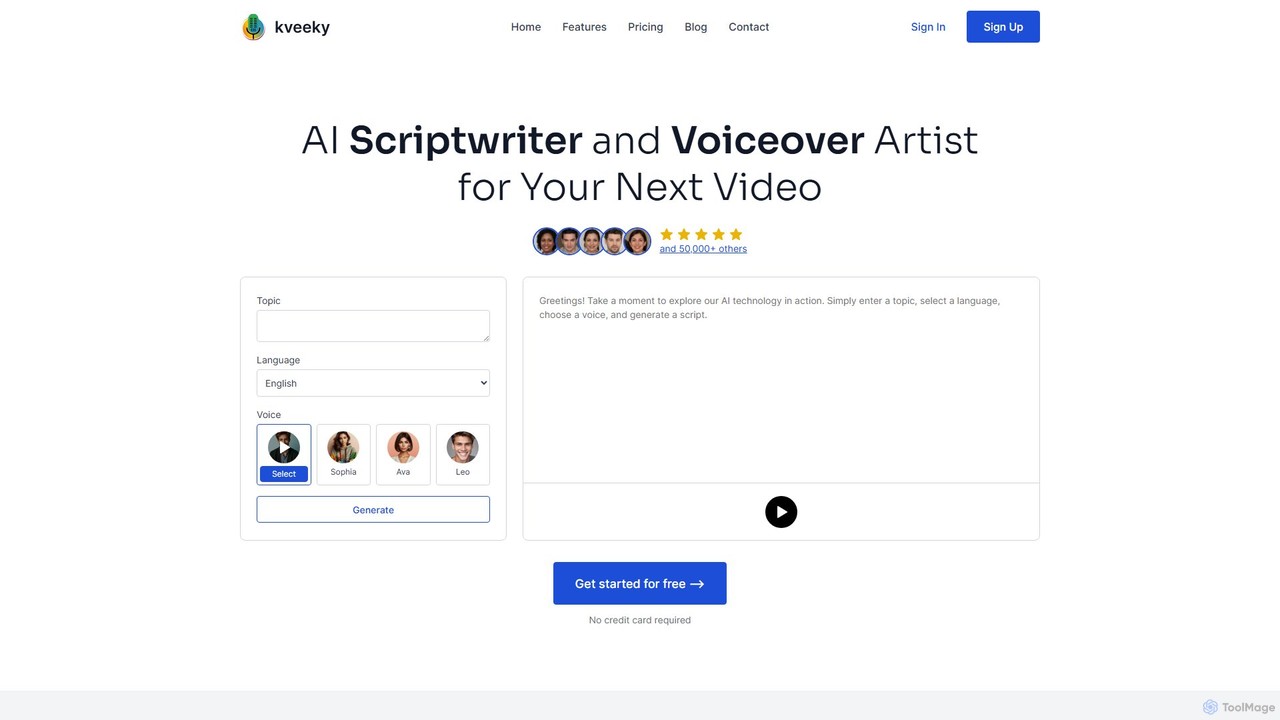
Kveeky

Kveeky is an advanced AI voiceover generator that transforms text into realistic, professional-quality audio. It supports multiple languages, accents, and emotional tones, allowing users to customize pitch, speed, and style. Ideal for content creators, marketers, and educators, Kveeky simplifies audio production for videos, podcasts, ads, and more, making it fast, affordable, and accessible.

Text To Speech
Visits 81.2KFavorites 128Likes 124
Yueyin
Freemium

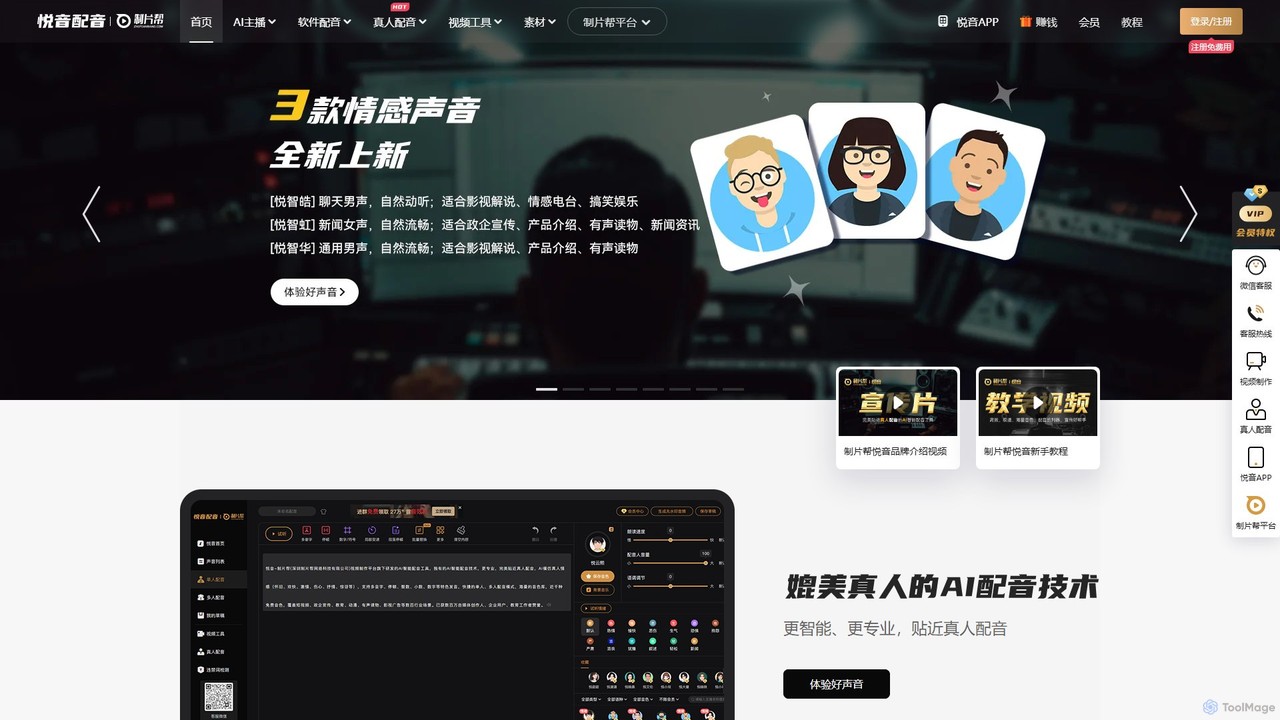
Yueyin

Yueyin is an advanced AI text-to-speech and voiceover platform, offering nearly a thousand hyper-realistic voices. It supports multiple languages, emotional tones, and detailed pronunciation controls. Ideal for content creators, marketers, and educators, Yueyin simplifies the creation of high-quality audio for videos, audiobooks, and advertisements, providing a cost-effective alternative to traditional voice actors.

Text To Speech
Visits 39KFavorites 137Likes 153

About Narration

Narration tools are AI-powered solutions designed to convert written text into natural-sounding spoken audio specifically for video content. Leveraging advanced text-to-speech (TTS) and voice synthesis technologies, these tools generate high-quality voiceovers with customizable voices, styles, and languages. They significantly streamline the video production process, enabling creators to add professional voice tracks without the need for hiring voice actors or setting up recording studios. This makes high-quality audio accessible for a wide range of video projects, from educational content and corporate training to marketing materials and documentaries, enhancing viewer engagement and comprehension.

Core Features

  • Text-to-Speech Synthesis: Converts written scripts into highly natural and expressive speech using a diverse range of AI voices, often indistinguishable from human speech.
  • Voice Customization & Styling: Offers extensive options to adjust voice gender, age, accent, emotional tone (e.g., happy, sad, serious), speaking rate, and pitch, allowing for unique character voices.
  • Multi-language & Dialect Support: Generates narration in numerous languages and regional dialects, often including automatic translation features to reach a global audience effectively.
  • Audio Editing & Synchronization: Provides tools for fine-tuning pauses, emphasizing specific words, correcting pronunciations, and precisely synchronizing the generated audio with video timelines and visual cues.
  • Character Voice Generation: Enables the creation and management of distinct voices for multiple characters within a single video project, ideal for animated series, audio dramas, or interactive content.

Applicable Scenarios

AI narration tools are indispensable for content creators, marketers, educators, and businesses aiming to produce engaging video content efficiently. They are essential for creating explainer videos, e-learning modules, marketing advertisements, and documentaries where professional voiceovers are crucial but traditional recording methods are impractical, time-consuming, or cost-prohibitive. These tools empower users to quickly iterate on scripts and voice styles, ensuring consistent brand voice across all video assets.

Key Selection Criteria

When selecting an AI narration tool, consider the naturalness and expressiveness of the generated voices, as this directly impacts viewer engagement. Evaluate the breadth of languages, accents, and emotional styles offered to match your target audience and content needs. Assess its integration capabilities with your existing video editing software, the flexibility of its pricing models (e.g., per-character, subscription), and the overall ease of use for script input, voice customization, and audio output. Furthermore, look for features like pronunciation dictionaries and SSML (Speech Synthesis Markup Language) support for advanced control.

Featured tool rankings

Narration use cases

1

Creating Explainer Videos & Tutorials

Educators and product marketers use AI narration to quickly produce clear, concise voiceovers for explainer videos and software tutorials. By simply pasting a script, they can generate a professional voiceover, adjust the pace, and synchronize it with on-screen actions, saving hours of recording and editing time while ensuring consistent audio quality across all learning materials.

2

Localizing Video Content for Global Audiences

International businesses and content platforms leverage AI narration tools to translate and voice over videos into multiple languages. This allows them to reach diverse global audiences with localized content without the expense of hiring multiple voice actors, significantly expanding market reach and engagement for marketing campaigns, corporate communications, and entertainment.

3

Developing E-learning Modules & Online Courses

E-learning developers and corporate trainers utilize AI narration to create engaging audio for online courses and training modules. They can generate consistent, clear voiceovers for lectures, quizzes, and interactive elements, ensuring a uniform learning experience. This accelerates course development and allows for easy updates to content without re-recording.

4

Producing Marketing & Advertising Videos

Marketing teams employ AI narration to generate compelling voiceovers for social media ads, product launches, and promotional videos. They can experiment with different voice styles and tones to match brand messaging and target demographics, quickly A/B test various audio versions, and produce high-quality advertisements on a tight schedule and budget.

5

Enhancing Accessibility for Visually Impaired

Content creators and publishers use AI narration to provide audio descriptions and voiceovers for videos, making them accessible to visually impaired audiences. This ensures compliance with accessibility standards and expands the reach of content, allowing a broader audience to consume information and entertainment through clear, descriptive audio tracks.

6

Generating Character Voices for Animation & Games

Independent animators and game developers utilize AI narration to create distinct character voices for their projects. By inputting dialogue scripts, they can generate unique voices for each character, adjusting pitch, tone, and emotion. This provides a cost-effective and flexible solution for bringing animated characters and game NPCs to life without traditional voice acting.

Narration FAQ

What are AI Narration tools?

AI Narration tools are software applications that use artificial intelligence to convert written text into spoken audio, specifically designed for integration into video content. They leverage advanced text-to-speech (TTS) technology to generate natural-sounding voiceovers, offering a range of customizable voices, languages, and emotional tones. These tools are primarily used to create professional audio tracks for videos without the need for human voice actors, streamlining production workflows.

How do AI Narration tools differ from general Text-to-Speech (TTS) software?

While both AI Narration tools and general Text-to-Speech (TTS) software convert text to audio, AI Narration tools are specifically optimized for video production. They often include features like precise audio synchronization with video timelines, character voice management, and advanced emotional styling tailored for storytelling. General TTS might focus more on basic reading assistance or accessibility, whereas narration tools prioritize the nuanced delivery and integration required for professional video content.

What are the main benefits of using AI Narration for video production?

The main benefits of using AI Narration for video production include significant cost savings by eliminating the need for voice actors and recording studios, and substantial time efficiency due to rapid audio generation and easy script revisions. These tools also ensure consistent voice quality and tone across multiple videos, offer extensive language localization options, and provide flexibility for experimenting with different voice styles to match specific content needs, ultimately accelerating content creation.

Can AI Narration tools generate emotional or expressive voices?

Yes, modern AI Narration tools are increasingly capable of generating emotional and expressive voices. Through advanced AI models and techniques like SSML (Speech Synthesis Markup Language), users can specify emotional tones such as happy, sad, angry, or excited, and control aspects like pitch, volume, and speaking rate. This allows for more dynamic and engaging voiceovers that can convey specific moods and enhance the storytelling aspect of video content, making the AI-generated speech sound more human-like.

How do I choose the best AI Narration tool for my project?

To choose the best AI Narration tool, first assess the naturalness and expressiveness of its generated voices, as this is crucial for audience engagement. Consider the variety of languages, accents, and voice styles available to match your project's requirements. Evaluate its integration capabilities with your video editing software, the flexibility of its pricing structure, and the overall user-friendliness of its interface. Also, look for features like pronunciation dictionaries, SSML support, and the ability to manage multiple character voices if your project demands it.